We just baked LLM-independent RAG into 3NS and made it free.
• Agent Per-project (text-file config)
• Private Qdrant RAG store
Reply “RAG” for LAUNCH details.
hot take: most web3 domains will never be used.
we're building https://t.co/OXlBjYnuLP anyway 🔥
why? because the ones that *are* used will be the most valuable digital real estate of the next decade.
we're shipping this in public.
watch what happens.
#BuildingInPublic
We just baked LLM-independent RAG into 3NS and made it free.
• Agent Per-project (text-file config)
• Private Qdrant RAG store
Reply “RAG” for LAUNCH details.
Last month, people freaked out when @X announced it might start using biometric data for identity verification.
Your face, your voice all stored “for your safety.”
But here’s the twist:
Once your ID lives inside a platform, your freedom depends on that platform.
If they ban you, your “digital self” goes with it.
You don’t own it anymore they do.
That’s why agent identity = autonomy.
The old internet had “integrations.”
The new one?
It’s turning into Passport Wars, every big company trying to issue its own digital ID.
Will your AI agents travel freely between platforms… or be fenced in like apps in a walled garden?
The smart move?
Give them a neutral identity, one that no single company controls.
Create an ADP record on a .web3 name, define permissions, and plant your flag early.
Because in this new world,
who owns the passport, owns the power.
In 2020, the world pressed pause.
Rates dropped. Markets panicked.
And money like water rushed to wherever it could move fastest.
That was the moment the old system cracked.
Everyone wanted rails that could think, adapt, and transfer instantly.
That’s when programmable finance quietly became the new backbone.
Now, we’re here again.
Rate cuts widen the gaps, spreads stretch, and capital doesn’t stay still
it flows to places where logic and identity are programmable.
But here’s the twist
the next “flight to safety” won’t just be about yield.
It’ll be about trust.
Which agent is verifiable?
Which name can you trace?
Because in the new rails, identity is collateral.
So before the next wave hits,
give your agent a real .web3 identity
name it, verify it, and track its moves across chains.
Short names go first. Always have.
“When tracking became access…”
Once upon a time, identity was simple.
A metal key opened your home.
A wax seal proved who you were.
A handwritten signature carried your honor.
Then, machines arrived.
Passwords replaced seals.
Fingerprints replaced ink.
And suddenly, we were no longer proving who we are, we were proving what data says we are.
Fast forward to today — your wristwatch tracks your pulse, your steps, your sleep.
Your phone listens, learns, adapts.
And slowly, the tools that used to serve you began to decide for you.
Doors open when you approach.
Payments go through when your pulse says “yes.”
Tracking has quietly become access.
But here’s the twist no one saw coming —
what happens when you want to say no?
How do you revoke something that’s tied to your body?
To your daily rhythm?
To your life?
That’s where verifiable .web3 identities come in.
They don’t just recognize you, they respect your consent.
They log every handshake, every approval, every gate you choose to open.
And just as easily… they let you close it.
Because in the end, identity isn’t just a key anymore.
It’s a mirror.
And for the first time in history, you get to choose what it reflects.
Secure your name early before someone else wears it in your place.
When banks first went digital, people loved the speed — instant transfers, no lines.
But then came the shock: millions lost access overnight when one system glitched.
Why?
Because the users didn’t own their access, the bank did.
The same thing is happening now with AI agents.
They move fast, act smart, and scale easily…
But if their identity and permissions live on someone else’s dashboard — one policy change, one API block, and your entire system freezes.
That’s why I say — not speed, custody.
Give your agents a verifiable .web3 identity so they can sign their own name, carry their own permissions, and keep control wherever they go.
Fast is fun.
Custody is power.
Think back to the first moon landing. NASA didn’t try to build the perfect rocket all at once.
They tested small, fast, and smart slices, one part at a time, while making sure every system was trustworthy and verified.
If you want your agents to work well:
Ship fast, but keep trust alive.
Fix user pain first, don’t just make things easier for developers.
Name and verify your agent with a .web3 identity, so actions are traceable and safe.
What’s the smallest thing you can ship this week that helps users and stays fully safe?
⚡ Pro Tip: Premium .web3 names go fast—claim yours early.
⚠️ Shocking Truth: Playable AI worlds aren’t games, they can mess with reality if left unchecked.
Genie 3 and other memory-based AI can remember, plan, and drift.
One small mistake, and your agent could make moves you never expected, like changing invoices, sending wrong messages, or worse.
Most people treat these AI playgrounds like toys.
They don’t give agents names, permissions, or logs.
That’s like giving a robot full keys to your house and hoping it won’t break anything.
Give your agent a .web3 identity—like an official ID.
Set strict permissions—don’t let it do everything.
Test it in simulations to see what could go wrong.
Keep an audit trail, every action logged, so nothing is secret.
Without these steps, your “playable photo” could turn into a real disaster.
A single provider freeze can halt your entire payroll system. In July 2025, Tether froze $12.3 million USDT on the Tron blockchain, demonstrating how centralized control can disrupt operations.
- A/B/C banking: Diversify across multiple banks to mitigate risk.
- Self-custody: Retain control over your assets to prevent third-party interference.
- .web3 agent identity: Assign verifiable identities to your agents for transparency and accountability.
Where's your bottleneck if a provider freezes?
Claim your .web3 identity now—premium, short names go first.
5% isn’t just another investor — it’s a hidden hand on the steering wheel.”
The Tron-Steem takeover taught us something real: when a powerful entity grabs just a sliver of control, it can reshape who controls what across the entire blockchain.
Here’s what that means for AI agents:
If one org gets close to that 5% mark, systems slide from shared trust to command.
Suddenly, who names the agents that move your payments, manage access, or route your flow matters more than any token chart.
Don’t wait for control to slip. Give your agents real identity now:
- Issue them .web3 names under your control
- Bind permissions and audit rights to those identities
- Make sure short, brandable names are claimed early
Because when names control action, 5% becomes a switch, not a flex.
My AI started generating invoices and suggesting stand-ups with my dog after I asked it to rename a variable.
Power is scary when actions run wild.
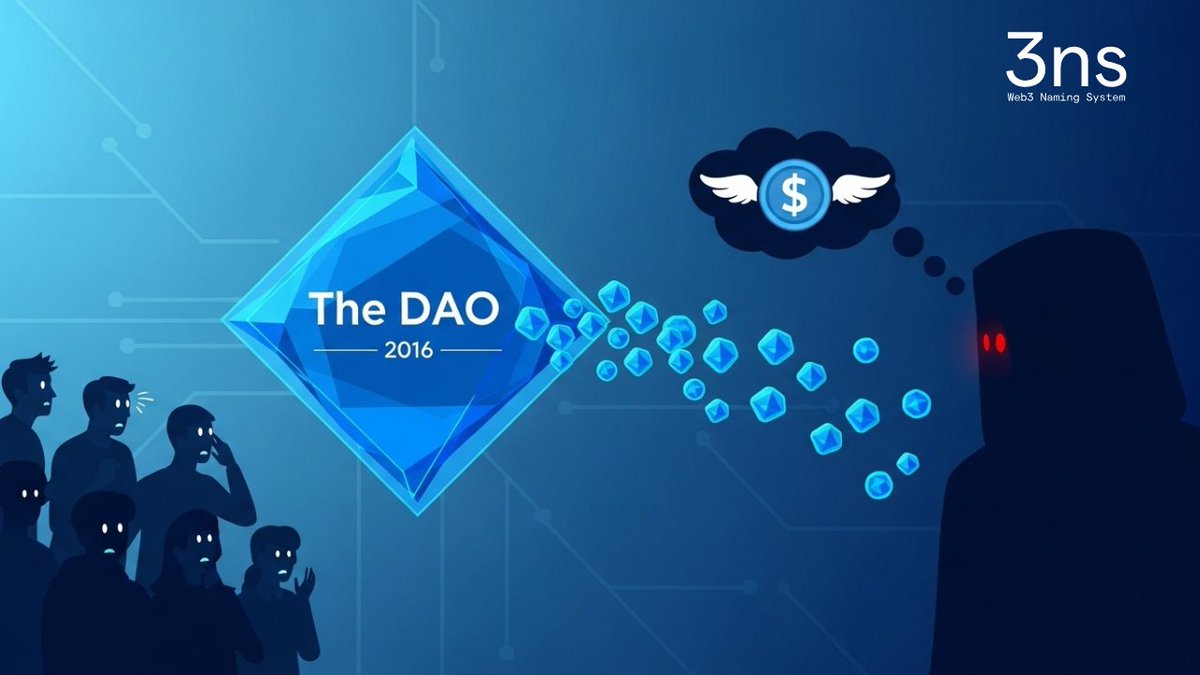
In crypto history, look at The DAO hack (2016): a small bug allowed funds to be drained because nobody had strict permission checks or identity control over the smart contract’s agents. Once control was lost, chaos followed.
If your agent messes up or goes rogue, you want it traceable, accountable, and stoppable.
Wrap every action in a .web3 domain:
Permissions become rules, not guesses.
Audits become default, not afterthoughts.
Claim your name early before someone else owns your agent’s identity.
What’s a “fail-open plan” for agent identity?
Here’s how you stay safe:
Claim a consistent .web3 identity for your agent (like giving it a name tag you always control).
Attach permissions and rules to that identity so actions are traceable.
Fail-open means if some law or platform changes, your agent still works as long as it satisfies minimal identity rules, you don’t get locked out completely.
Why this matters:
So your robot doesn’t die when someone changes laws.
So your money, documents, flows don’t vanish overnight.
Because identity control is stronger than compliance schemes controlled by someone else.
What’s your fail-open plan?
How would your agent keep working if the system tried to turn it off?
In 2022, the Solana network faced “The Canary in the Coal Mine” outage, validators shut down blocks over a software bug.
One single point of failure nearly dimmed the entire chain.
Many calls it proof that too much central control = giant off switch risk.
That’s what “patchwork AI laws” do: one compliance schema forced by platforms or governments can silence every model.
So, if you’re building agents (robot-helpers), you need a plan so they don’t all freeze at once.
Ever seen a system grind to a halt just when everything was supposed to go live?
I once watched a startup push a major update.
Users were waiting, dashboards froze, and nothing moved. It wasn’t about moving too fast—it was about the system freezing under pressure.
Legacy systems and rigid setups can do this, leaving agents stuck and trust broken.
Speed isn’t the enemy—freezing is.
To keep your AI running smoothly, you need iteration built in and identity anchored from day one.
Here’s how to stay safe:
Anchor your agent with a verifiable .web3 identity—so every action is accountable and portable.
Design for swaps and updates under load—don’t let a single failure halt your system.
How are you future-proofing your agent against freezes before they happen?