OpenAI and Cisco just open-sourced Shirudo, a security runtime that uses Linux eBPF to patch running systems against critical exploits without rebooting. Patching production zero-days usually takes days of development, canary testing, and risky rollouts.
Shirudo bypasses that cycle by injecting verified shield policies directly into the kernel, inspecting traffic and blocking malicious paths while leaving legitimate business requests untouched. In controlled tests, Codex-generated shields successfully stopped Java4Shell exploits on live Elasticsearch instances with zero downtime.
Every shield requires cryptographic signatures and TPM verification before loading to prevent malicious tampering. For infrastructure engineers who dread emergency midnight reboots during zero-day panics, this is a genuinely practical tool.
42 Macro has cut its Bitcoin exposure, with CEO Darius Dale stating the firm will hold off on buying until the sell-off runs its course.
Macro capital is de-risking and stepping aside. With buyers waiting on the sidelines for the move to finish, BTC faces continued downside pressure until the selling fully clears.
NASA has officially opened bidding for commercial space companies to build a nuclear reactor on the Moon. The agency is requesting proposals for Lunar Reactor-1, a compact fission system designed to be launch-ready before 2030, with a planned operational lifespan of at least five years on the lunar surface.
The 20-kilowatt fission reactor is designed to power future lunar habitats, rovers, and scientific instruments. Because a lunar night lasts roughly 14 Earth days, solar panels are ineffective for extended periods, making nuclear fission essential for continuous base operations. Proposals must meet Department of Energy nuclear safety standards, with a submission deadline of December 21.
Alongside this lunar surface system, NASA is also developing the SR-1 Freedom nuclear propulsion project, targeting a 2028 Mars demonstration mission. As deep space exploration moves toward permanent bases, nuclear power is shifting from science fiction concepts into hard engineering procurement.
The US Commerce Department officially placed Singapore-based Megaspeed on its trade entity list on Monday afternoon, cutting off its authorized access to American semiconductor technology. A total of seven affiliated entities across Singapore, Malaysia, and Thailand were blacklisted under a presumption of denial.
According to the official filing, regulators cited significant risks of these companies diverting advanced computing hardware to unauthorized end users. However, technology shipments that are already en route will still be permitted to proceed.
Megaspeed landed in the crosshairs after its former executive was linked to a high-profile scandal involving Nvidia head Jensen Huang. US authorities had already spent nearly two years investigating whether the firm acted as a conduit to funnel restricted AI chips into China. While Huang was just reinstated as CEO by Nvidia's board, the administration is clearly moving fast to shut down the offshore distribution channels.
Bitcoin and Ethereum spiked right after the Jensen Huang news, blowing out $375 million in shorts in the first 30 minutes, only to reverse and dump even harder a few hours later.
Flushing both sides on headline momentum shows there was zero spot follow-through behind the move. The bounce got completely sold off, and the immediate bias has turned bearish.
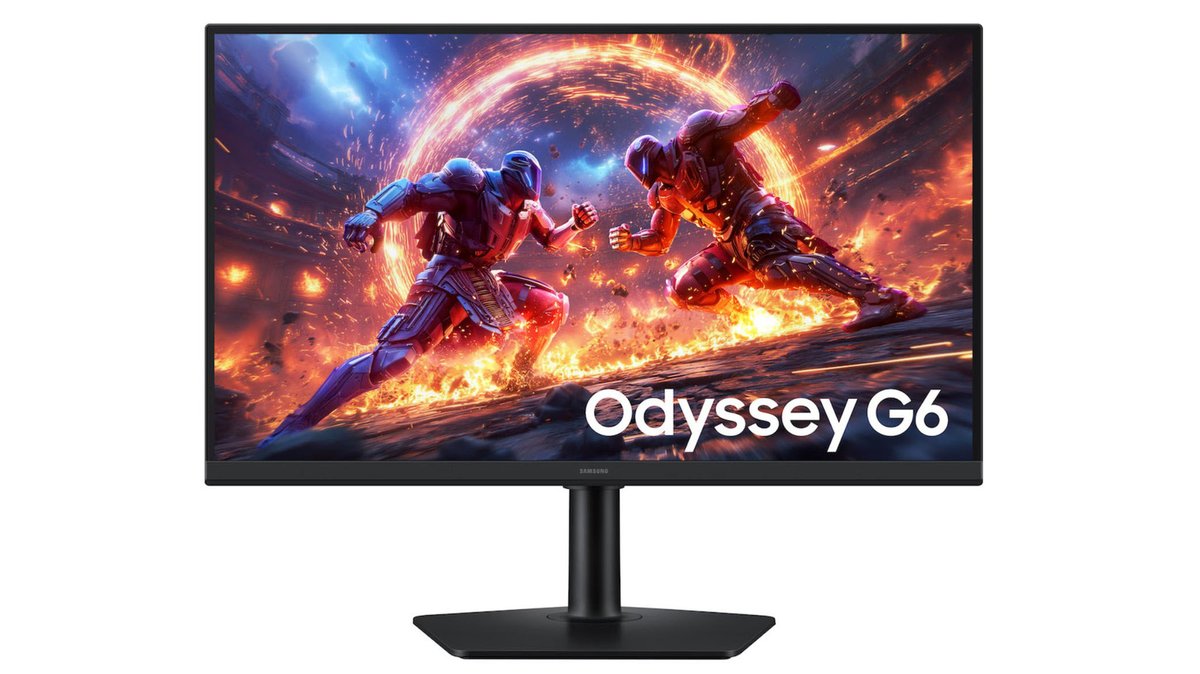
Samsung just unveiled the 27-inch Odyssey G6 G60H, claiming the title of the world's first 1,100Hz gaming monitor, but there is a massive catch.
To hit that insane 1,100Hz refresh rate, you have to run the monitor in 720p HD mode (1,280 x 720). The dual-mode IPS panel does support 1440p QHD, but in that higher resolution, the refresh rate caps out at 600Hz.
The monitor also packs a 1ms gray-to-gray response time, 400 nits brightness, HDR10+ support, and compatibility with both FreeSync Premium and G-Sync, alongside Samsung's proprietary motion blur reduction tech. While 600Hz at 2K already crushes nearly everything currently on retail shelves, downgrading all the way back to 720p just to flex an extra five hundred hertz shows just how absurd the display spec race has become.
Bitcoin broke below 60,000 as a massive wave of levered liquidations hit 850 million over the past 24 hours.
With that much forced selling clearing the books and a major round number lost, the near-term momentum is firmly tilted downward.
Toyota is giving its best-selling car in history a radical overhaul, and that includes the first fully electric Corolla. Since its debut in 1966, more than 57 million drivers have bought a Corolla across 150 countries.
Now, Toyota confirmed that the upcoming 13th-generation model will undergo the biggest transformation in its history. Built on a new multipathway platform, it will support gas, hybrid, plug-in hybrid, and 100% battery electric powertrains for the first time.
Project leads revealed that the new generation will look completely different from its predecessors, moving far away from the traditional compact look while retaining multiple body styles like sedans, hatchbacks, crossovers, and GR variants. Seeing Toyota finally electrify its ultimate mass-market badge shows even the most conservative legacy automaker can no longer ignore the shift.
F2Pool co-founder Wang Chun sold another 1,911 ETH at $1,781 during the overnight bounce, offloading 7,596 ETH across the past 3 days according to on-chain analyst Yu Jin.
OG mining capital actively using every dead-cat bounce to cut inventory keeps sell-side pressure heavy on ETH.
While everyone assumed AI finding bugs faster would make software safer, Microsoft CEO Satya Nadella warned that it will actually make global outages far more frequent. Speaking at the DealBook Summit in New York following a major Outlook outage, Nadella highlighted a dangerous new reality: AI now surfaces vulnerabilities faster than companies can safely test and deploy patches.
In critical banking systems, security fixes used to undergo a week of rigorous testing. Today, because exploits appear instantly in the wild, patches are forced straight into live production, creating widespread instability.
Nadella pointed out that the floor for cyberattacks has dropped, allowing almost anyone to run persistent, nation-state level attacks using AI models, all while massive amounts of connected infrastructure run on firmware that cannot be patched. When defense is forced to rush updates at machine speed, massive system collapses might simply become the cost of staying patched.
The CFTC is officially allowing regulated crypto markets to use Bitcoin, Ethereum, and stablecoins to meet financial reserve requirements.
Classifying crypto and stablecoins as valid reserve collateral puts them on the same operational footing as traditional liquid assets. It establishes direct balance sheet utility for the majors and provides a clear structural boost to institutional liquidity.
Microsoft has been pushing everyone hard to migrate to the New Outlook, only to break basic email attachment handling and have to tell users to go back to Classic. On November 20, users of the New Outlook started reporting that opening or uploading attachments had completely stopped working, with inline images failing to load shortly after.
Microsoft paused the rollout of the culprit client update, noting that changes supporting embedded web content had triggered unexpected issues. While engineers scrambled, Microsoft's official guidance for affected customers was blunt: switch to the web client, or fall back on Outlook Classic.
It took two rounds of fixes to fully restore normal service across all attachment types by November 21, requiring users to restart the app to take effect. Microsoft insists New Outlook is the undisputed future, even with Classic supported until at least 2029. But watching the company officially instruct people to retreat to the old warhorse just to open a regular email attachment is pure workplace comedy.
The CFTC has published a final rule establishing a data-reporting framework for certain fully collateralized event contracts.
Bringing event contracts under standardized trade reporting moves prediction markets further into the formal US financial framework, establishing clear compliance rails rather than leaving the sector in legal limbo.
BTC just pushed past 63K, breaking clean out of the local range.
The momentum is decisively bullish here—pullbacks are normal after a quick burst, but the trend has flipped upward and BTC has room to run higher from here.