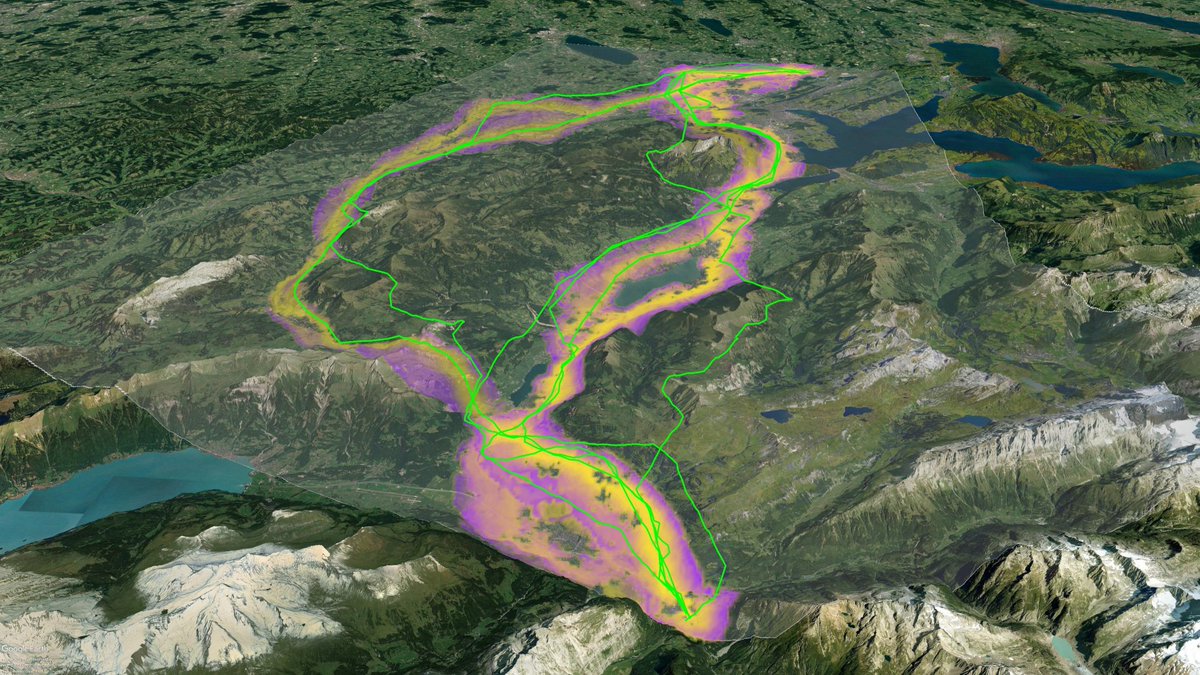
Grossartig, dass @swissgridag
eine #3D-Visualisierung unseres Planungssystems #3DDSS als header gewählt und unsere Software an der Jahresmedienkonferenz als gelungenes Projekt erwähnt hat, um die Ziele der #Energiestrategie2050 zu verwirklichen. #transmissionlines
Geschäftsjahr 2020: Trotz der Corona-Pandemie hat Swissgrid wichtige Meilensteine erreicht. Neue Marktprodukte erhöhen die Effizienz und schaffen Liquidität. Die Modernisierung der Netzinfrastruktur wurde vorangetrieben.
https://t.co/ZidtDIo8kR
Leitungsplanung einfacher denn je: Im Blogbeitrag von @swissgridag wird erklärt, auf welcher Grundlage unser 3D Decision Support System neue Hochspannungsleitungen modelliert und dabei die Meinungen mehrerer Stakeholder berücksichtigt.
3D Decision Support System @3d_dss: @joramschito von der @ETH Zürich erklärt, wie Algorithmen helfen, den passenden Platz für neue Höchstspannungsleitungen zu finden. Wie das genau funktioniert, erfahren Sie im Blog. https://t.co/raa6OJPRiU
Unsere neuste #Innovation, die das Planen von #Hochspannungsleitungen noch einfacher und schneller macht: Ein Ansatz, der die Masten anhand des Reliefs ideal platziert – und das in einer unschlagbar kurzen Zeit! #GIS#Energiewende
Der Abschlussworkshop des erfolgreichen Forschungsprojekts findet am 17.11.2020 über Zoom statt. Haben Sie sich schon angemeldet? Kontaktieren Sie für die Anmeldung oder für weitere Infos @joramschito.
In unserem neusten Artikel bei #GeomatikSchweiz erklären wir, wie unser #3DDSS (3D Decision Support System) Entscheidungsträgern hilft, den optimalen Verlauf einer #Hochspannungsleitung zu finden – schnell, zuverlässig und innovativen Ansätzen aus der #Geoinformatik.
Where should an #overheadline be laid underground? Where does it affect the #landscape most? We successfully tested a novel approach that tackles this issue. Experts' feedback was very positive since our #3D#Decision Support System identifies critical areas very precisely.
We are proud to announce that our #3D#Decision Support System is the first tool in the world capable of modeling every single step in #transmissionline planning: from the study area to the corridor to the exact position of the transmission towers – new also for combined lines!
Einen Beitrag zum #3DDSS-Projekt gabs heute auf #srf Schweiz aktuell: https://t.co/EfZn4YEBaw…. Wir minimieren sowohl die Magnetfelder als auch das Knistern der Leitungen, indem wir mit den neusten Methoden die geeignetsten Routen für neue #Hochspannungsleitungen finden.
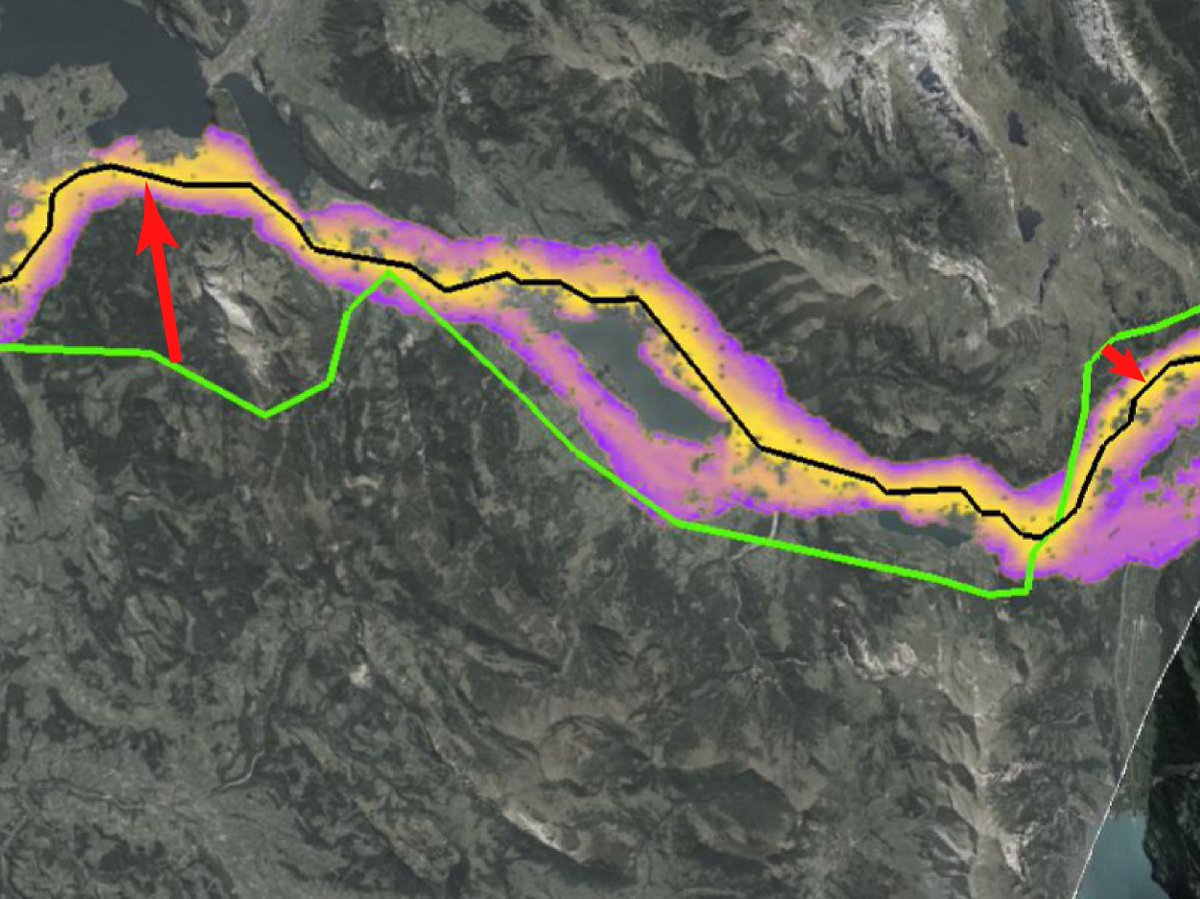
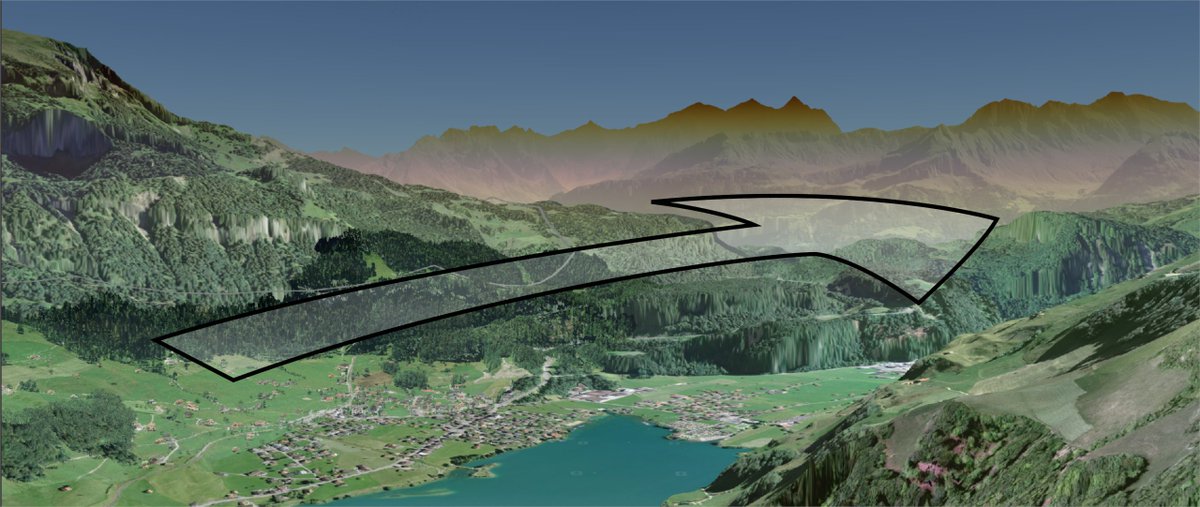
We successfully applied a part of @rastrau's valley-finding algorithm for determining feasible path alternatives for new #transmissionlines. This is a big leap, as it allows optimizing the alternatives w.r.t. a given objective very quickly. [The represented lines are fictitious]
Der Tagungsband des Wissenschaftsdialogs 2018 der @bnetza ist online! Unser Artikel erklärt auf 8 Seiten, wie das #3DDSS den #netzausbau fördert und optimale Leitungskorridore findet. Fragen sind herzlich willkommen. Mehr unter https://t.co/hlqh9kd0yt
@DanieleMonce
at the #SCCER-FURIES conference presenting why the determination of valleys is important for transmission line planning. A) costs can be reduced while staying in the same valley. B) path alternatives can be determined more distinctively than with other methods.
Great talk from @YvesBZumwald from @swissgridag who presented the #3DDSS project at the #SCCER-FURIES conference. We are glad that our project partner #swissgrid inspires us with new ideas how we can improve #transmissionline planning in Europe!
Congrats @DanieleMonce, who works on the #3DDSS project for being among the finalists of the best poster competition at #SCCER-FURIES! His Master thesis "What is a valley?" should improve finding alternatives in transmission line planning – especially in mountainous terrains.
Imagine you could place a power transmission line somewhere. Would you reconsider your choice if a system shows you a better path? We investigated this question and are glad that our paper regarding #decisionmaking by means of #visualanalytics has been accepted for publication.
Joshu Jullier from @Swissgrid and @joramschito explaining how the #3DDSS works and how it supports planners and decision-makers when planning new #transmissionlines. We thank @ENTSO_E and #RGI for hosting the webinar and the participants for their interesting questions.
Ready for the #3DDSS webinar next Monday, hosted by @ENTSO_E and @RenewablesGrid in collaboration with @swissgridag ! We are looking forward to seeing you next Monday! Infos and registration on https://t.co/4jEyHzZVCU
How can the route of a power transmission line be planned while considering the interests of different stakeholders? We know it and we are glad to present you our #3DDSS approach on a webinar organized by @ENTSO_E and @RenewablesGrid 🗓️
Register now on https://t.co/EhgOiRKSgF
❓How can we find the optimal route for new #power#transmission lines?
⚡@swissgridag and @3ddss_eth will answer this question during a joint @ENTSO_E & @RenewablesGrid webinar on 12 Aug.
🗓️ Register now https://t.co/eLLqLNz571
❓How can we find the optimal route for new #power#transmission lines?
⚡@swissgridag and @3ddss_eth will answer this question during a joint @ENTSO_E & @RenewablesGrid webinar on 12 Aug.
🗓️ Register now https://t.co/eLLqLNz571
@rastrau@swisstopo Regarding the MCE, we set default weights for the contributing factors based on legal requirements and based on the results of our former studies. Secondly, we use stakeholders' preferences regarding 10 objectives to determine a final weight for each factor.
The 3D DSS enhanced the degree of realism by implementing the swissBUILDINGS3D model from @swisstopo! We expect to get more precise predictions where #undergroundcables could be built by this new #3D environment.
@rastrau@swisstopo We repeatedly conduct user studies in which stakeholders assess the goodness of the modeled corridors. We then try to improve our model based on the insights we got from these user studies so that the suggested corridor fulfills experts' expectations.




![3d_dss's tweet photo. We successfully applied a part of @rastrau's valley-finding algorithm for determining feasible path alternatives for new #transmissionlines. This is a big leap, as it allows optimizing the alternatives w.r.t. a given objective very quickly. [The represented lines are fictitious] https://t.co/km7rmwcBY3](https://pbs.twimg.com/media/ERKAqVfW4AQHodb.jpg)