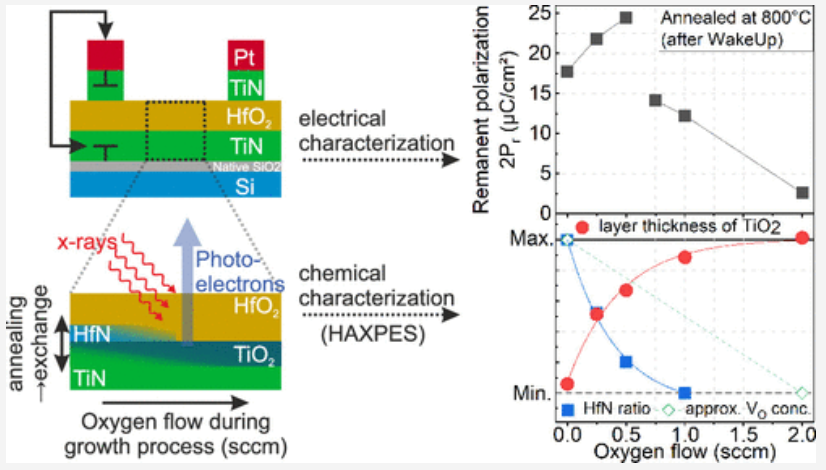
In hafnia based microscopic ferroelectric capacitors, synchrotron X-ray photoemission electron microscopy has revealed the formation and evolution of oxygen vacancies as a function of field cycling. @3eFerro#HfO2#H2020 https://t.co/bI4pvFsy2r
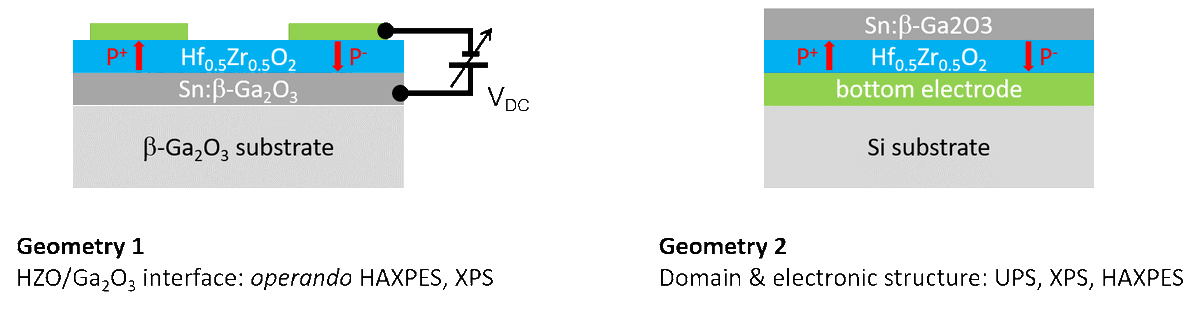
2 year post-doc at CEA to study the control of conductivity in β-Ga2O3 using the ferroelectric polarization of HfZrO2. The work focuses on the electronic structure at the interface using in operando photoelectron spectroscopy. CV to [email protected]
https://t.co/Zt8kljoieI
A funded PhD position is open to focus on the characterization and understanding of the chemical and electronic structure of the electrode/BaSrTiO3 interface in tunable capacitors for 5G applications with CEA Saclay, CV to [email protected].
https://t.co/0X5WosqKzx
Very proud that our article was the most downloaded (1454 times) in the dielectrics, ferroelectrics and multiferroics section of J. Appl. Phys. in 2020. Hopefully with the efforts of all these groups we’ll see new low power memories soon!
https://t.co/pF8d27dlSh
A perspective on semiconductor devices based on fluorite-structured ferroelectrics from the materials–device integration perspective
https://t.co/DXee9nAvRT
When gate induced drain leakage becomes the means to make a robust frequency doubling device using ferroelectric HfO2 based FeFET. #FE_HfO2#FeFET#NatureElectronics
https://t.co/t7spYMESeT
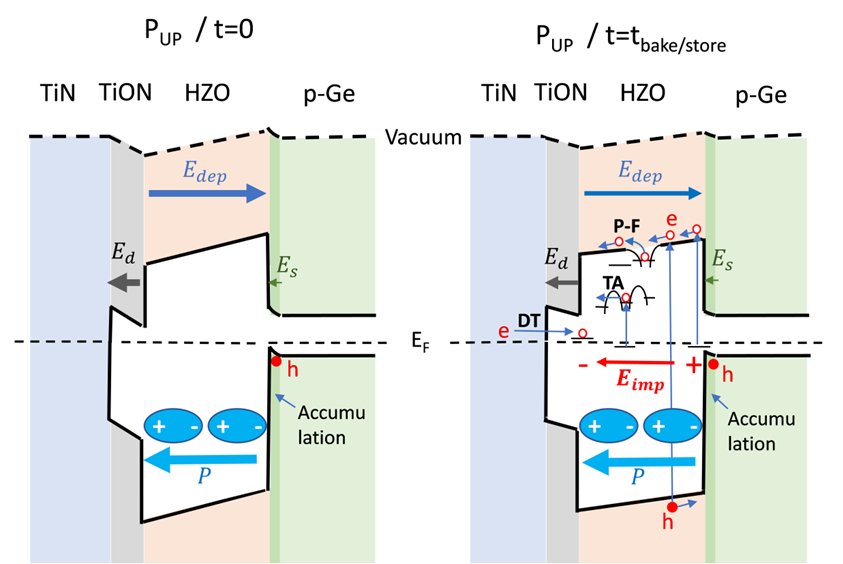
A comprehensive study of imprint in HZO MFS capacitors limiting reliability of FeFETs. Injection of carriers at the top interface dominate imprint but the clean Ge/HZO bottom interface helps reducing it. This depends on the crystallization annealing method
https://t.co/tgkZi2pvbF