From players to creators.
From NPCs to #AI Agents.
From games to autonomous economies.
Welcome to the next generation of virtual worlds.
Welcome to #3G Nexus.
#3G#AIAgents#GameFi
The next generation of games won't just be played.
They'll be co-created by AI Agents and humans.
Welcome to the future of AI-native gaming.
Welcome to 3G Nexus.
#3G#AIAgents#Gaming#Web3
🤖AI Agents.
🎮Gaming.
💵On-chain Economies.
#3G Nexus brings them together in a new AI-native GameFi ecosystem, where intelligent agents and players shape the future of virtual worlds.
2025: „A Google Cloud survey showed that 87% of videogame developers are using artificial intelligence agents to streamline and automate tasks, as the industry focuses on optimizing costs following a wave of record layoffs.“
2026: Hey Genie 4, create me a RPG game that’s close to Skyrim
Enter the 3G Era.
Where AI Agents, Gaming, and Web3 converge into one intelligent ecosystem.
3G Nexus is building the infrastructure for the next generation of virtual worlds.
#3G#AIAgents#Web3#Gaming
#AIAgents are no longer just tools.
They are becoming collaborators, strategists, creators, and economic participants.
#3GNexus is building the infrastructure where humans and AI Agents evolve together —sharing assets, executing strategies, and co-creating persistent virtual worlds.
The future isn’t Human vs AI.
It’s Human × AI.
#AI #AIAgent #Web3 #GameFi #3GNexus
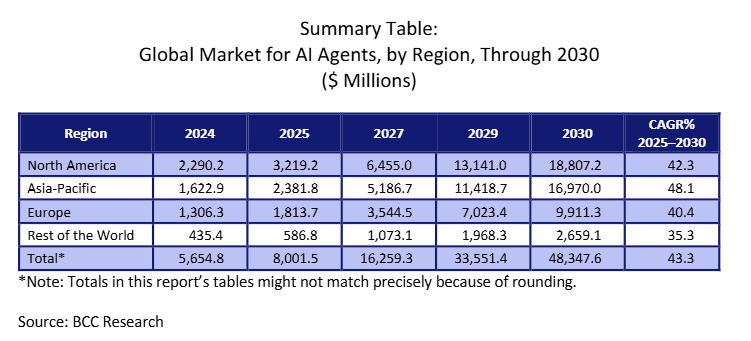
AI agents are exploding in popularity.
As the AI Revolution advances, we are seeing massive growth in Agentic AI.
Between 2025 and 2030, revenue in this market is set to grow at a CAGR of 43.3%, rising to ~$48.3 billion per year.
As a result, Nvidia's CEO Jensen Huang has described current market conditions as the "inflation point" in AI.
Today, HockeyStack has announced a $50M capital raise for AI Agents that effectively run businesses as investor capital increasingly rotates into the space.
Autonomy is the future of AI.
The future of #GameFi won’t be measured by #DAU.
It will be measured by:
– #Agent activity
– Economic complexity
– System evolution speed
#Ai#Agent#BSC#Agents
Agents are no longer a feature — they’re becoming infrastructure.
As enterprises move from tools to agentic workflows,
the real bottleneck shifts to:
identity, coordination, and economic alignment.
Dozens of agents. Fragmented systems. Shared data.
What’s missing isn’t capability —
it’s a native coordination layer.
This is where agent networks begin.
#3GNexus
Had meetings and a dinner with 20+ enterprise AI and IT leaders today. Lots of interesting conversations around the state of AI in large enterprises, especially regulated businesses.
Here are some of general trends:
* Agents are clearly the big thing. Enterprises moving from talking about chatbots to agents, though we’re still very early. Coding is still the dominant agentic use-case being adopted thus far, with other categories of across knowledge work starting to emerge. Lots of agentic work moving from pilots and PoCs into production, and some enterprises had lots of active live use-cases.
* Agentic use-cases span every part of a business, from back office operations to client facing experiences from sales to customer onboarding workflows. General feeling is that agentic workflows will hit every part of an organization, often with biggest focus on delivering better for customers, getting better insights and intelligence from data and documents, speeding up high ROI workflows with agents, and so on. Very limited discussion on pure cost cutting.
* Data and AI governance still remain core challenges. Getting data and content into a spot that agents can securely and easily operate on remains a huge task for more organizations. Years of data management fragmentation that wasn’t a problem now is an issue for enterprises looking to adopt agents. And governing what agents can do with data in a workflow still a major topic.
* Identity emerging as a big topic. Can the agent have access to everything you have? In a world of dozens of agents working on behalf, potentially too much data exposure and scope for the agents. How do we manage agents with partitioned level of access to your information?
* Lots of emerging questions on how we will budget for tokens across use-cases and teams. Companies don’t want to constrain use-cases, but equally need to be mindful of ultimate token budgets. This is going to become a bigger part of OpEx over time, and probably won’t make sense to be considered an IT budget anymore. Likely needs to be factored into the rest of operating expenses.
* Interoperability is key. Every enterprise is deploying multiple AI systems right now, and it’s unlikely that there’s going to be a single platform to rule them all. Customers are getting savvier on how to handle agent interoperability, and this will be one of the biggest drivers of an AI stack going forward.
Lots more takeaways than just this, but needless to say the momentum is building but equally enterprises are acutely aware of the change management and work ahead. Lots of opportunity right now.
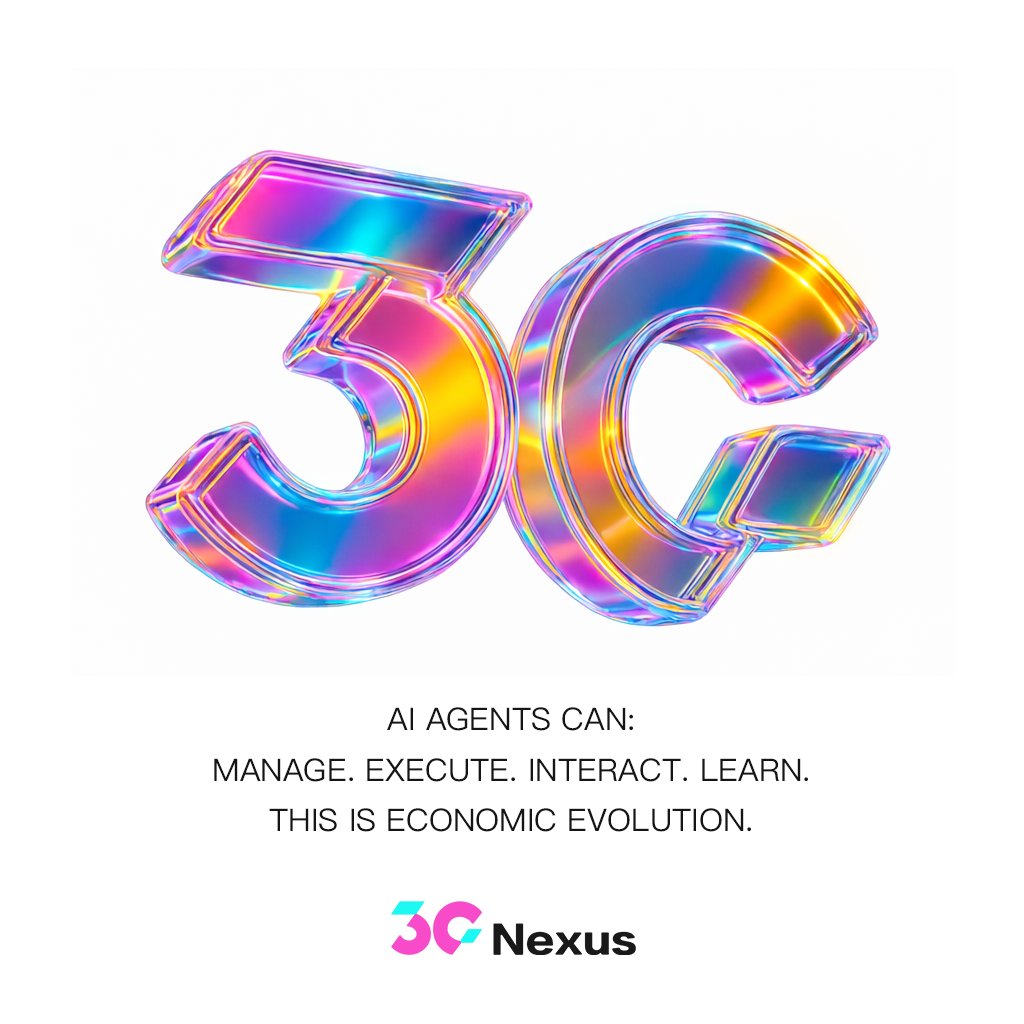
In #3G, #AIAgents can:
– Manage assets
– Execute strategies
– Interact with other agents
– Learn from outcomes
This is not NPC evolution.
This is economic evolution.
#BSC#BTC#ETH#Ai#Agent