"We're all told we don't stand a chance, and yet we stand. We break, but we keep going, and that is not a flaw. That's what makes us." https://t.co/B3wxCFT3rw
Instagram (owned by Meta) has no immediate plans to launch a new design on iOS with Liquid Glass, per Instagram head Adam Mosseri.
This is why big apps suck. We shouldn’t have to wait months (sometimes years) to get new iOS features. The summer beta cycle exists for a reason.
SwiftData by Example is out now, online free for everyone or available for purchase as a download edition! So many questions answered and common problems solved, with more to come as the book grows in the future. Start reading here: https://t.co/RaEaaWZ2F6
#TIL “Pulp Fiction brackets” is a term. 😀 No idea how long I’m late to the party, but there’re never too many pop culture references!
“Q: What are "Pulp Fiction brackets"?
A: Pulp Fiction brackets are < and >, also known as "angle brackets."
Source: https://t.co/vRO1aZkE9a
#iOS16, and this is still a thing, @AppleSupport! 🫥 I realize it may be difficult to maintain such customizable chaos code-wise, but I hope there's at least an improvement in #iOS17. My layout's so tightly, broadly organized that this time I decided to restore from a backup! 😓
Shortly after Steve Jobs returned as the CEO of Apple in 1997, he met with Jony Ive, Apple’s Senior VP of industrial design.
Apple had 40 products on the market.
“Jony, how many things have you said no to?” Jobs asked.
Ive was confused.
“You have to understand,” Jobs said,
“There are measures of focus, and one of them is how often you say no.”
“What focus means,” Jobs taught Ive, “is saying no to something that you—with every bone in your body—think is a phenomenal idea, and you wake up thinking about it, but you say no to it because you're focusing on something else.”
Jobs walked up to a whiteboard and drew a 2 x 2 grid. On top, he wrote “Consumer” and “Professional.” Down the side, “Portable” and “Desktop.”
Four products—meet Apple’s new radically focused product line, Jobs said.
After that meeting, over the next two decades, Jobs and Ive—focused on making a few high-quality products while saying no to everything else—transformed a dying, near-bankrupt company into one of the most valuable companies in the world, worth over $2.9 trillion.
Takeaway 1:
The philosopher Marcus Aurelius pointed out that the focus of doing less “brings a double satisfaction.”
You get the satisfaction of having fewer things to do. And…you get the satisfaction of doing those fewer things at a higher level.
You get “to do less, better.”
During Steve Jobs’ first visit to Jony Ive’s design studio, he looked around, and then he said, “Fuck, you’ve not been very effective, have you?”
It was clear to Jobs that Ive was full of ideas and potential he wasn’t able to execute or fulfill under Apple’s previous leadership.
In the Jobs era of “doing less, better,” Ive was very effective.
Some products he designed include: iMac, iPod, iPhone, iPad, Apple Watch, and AirPods.
Takeaway 2:
Even though he slashed the product line down to four products, Jobs loved to have and hear ideas.
“Steve used to say to me,” Ive said, “and he used to say this a lot, ‘Hey, Jony, here’s a dopey idea.’ And sometimes they were: really dopey. Sometimes they were truly dreadful.
But sometimes they took the air from the room, and they left us both completely silent.”
It made me think of what Jerry Seinfeld identifies as the ultimate skill of the artist: “taste and discernment.”
“It’s one thing to create,” Seinfeld says. It’s one thing to have ideas.
“The other is you have to choose. ‘What are we going to do, and what are we not going to do?’” What are we going to add to the product line, and what are we not going to add?
“This is a gigantic aspect of [artistic] survival,” Seinfeld continues.
“It’s kind of unseen—what’s picked and what is discarded—but mastering that is how you stay alive.”
- - -
“Everything just got simpler. That’s been one of my mantras—focus and simplicity.” — Steve Jobs
Follow @bpoppenheimer for more content like this!
I wrote about why #DX12 support and the Game Porting Toolkit is the biggest thing to happen to Mac gaming in over 30 years for @inversedotcom! Even with the performance "caveats," this is major and I'm so excited to see how this shakes out! https://t.co/RLnZAiXVZG
If you’re about to solidify everything you’ve tried while following along #CoreData documentation and tutorials, it’s still rather a practical step, given a seemingly quite distant widespread adoption possibility of #SwiftData, but signs are it’s looking very promising. #WWDC23
🔵🎉 #WWDC23 Sale! 30% off all of my #iOSDev courses at https://t.co/qHG8Z1L7tz. Offer expires June 12th. If you've enjoyed my courses, RT's appreciated 😀.
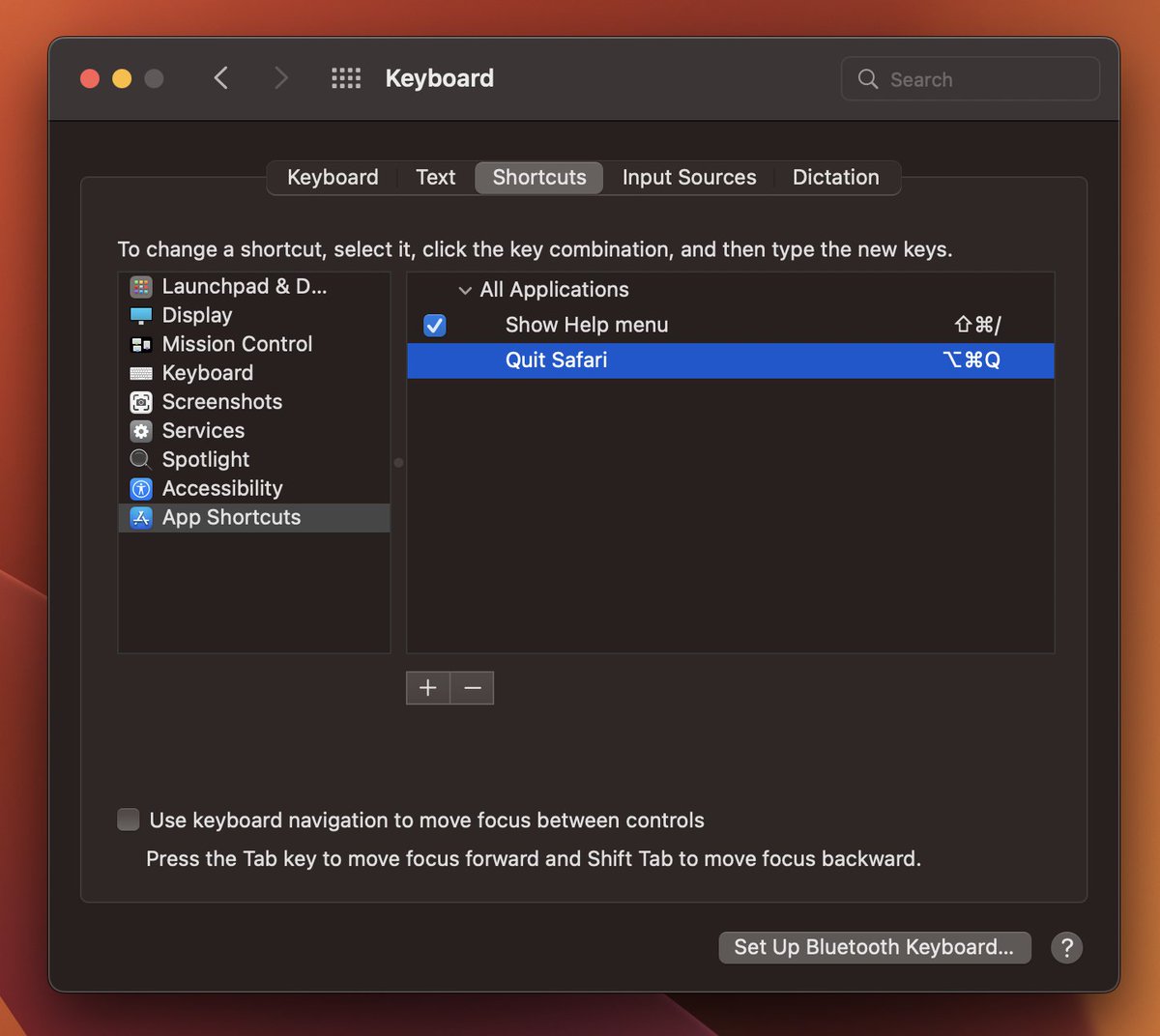
Recently I changed ⌘Q in Safari to be ⌥⌘Q, and it's been wonderful – I quit Safari maybe once a week at most, but close individual tabs/windows all the time, so this tiny change avoids at least half a dozen "Nooooo 🤬" moments each week.
🚨 On January 28th I'm running a one-day online workshop called Unwrap Live! Tickets cost $100, and we'll cover SwiftUI, networking, testing, and performance.
Best of all: Hacking with Swift+ subscribers can attendee free 🎉
https://t.co/He1wPQhy2U