It's a matter waiting things out. The activists have time on their side, #PaulBiya does not. Soon Biya's fight will be between him and death, not between him and the anglophones. We shall never give up. Wait and see. #Cameroon
If #Cameroon’s Biya thinks #Anglophone crisis can be solved by jailing activists, then he’s in cloud cuckoo land. Genie is out of the bottle & can only be suppressed for so long: if not today, tomorrow, next year, next decade #Justice4Nera10#FreeSisikuAyukTabe#FreeAllArrested
First African woman Vice-Chair in the ICC’s century-old history. 💃🏽💃🏽
My unfiltered, truth-to-power voice just got a much louder platform! Thanks for the trust @iccwbo!!
Middle East: Global Consequences if the Strait of Hormuz Were Blocked
The Strait of Hormuz, a strategic corridor located between Oman and Iran, is one of the most crucial maritime passages for the global economy. Every day, nearly 21 million barrels of oil pass through it—about 20% of the world’s traded oil, according to the International Energy Agency (IEA).
A disruption of traffic, a feared scenario amid current tensions in the Middle East, could trigger an immediate shock to energy markets. The price of Brent crude, already sensitive to regional conflicts, could surge by 30 to 50% within days, according to World Bank analysts. Such an increase would directly impact fuel and electricity costs worldwide, affecting both households and industries.
Major oil-importing economies in the Gulf region—the United States, Europe, and Asia—would be particularly affected. China and Japan, which rely on maritime routes for over 70% of their oil imports, could see their supply chains heavily disrupted. A prolonged closure of the strait might force some countries to tap into strategic reserves, though these typically cover only 3 to 6 months of consumption.
Beyond oil, the Strait of Hormuz is also a vital route for liquefied natural gas (LNG). According to the IEA, roughly 30% of global LNG exports pass through this corridor, meaning that a prolonged blockage would push gas prices higher and worsen the energy crisis already felt in several European countries.
Finally, the economic consequences would be accompanied by major geopolitical risks. Maritime security in the Gulf, already fragile, would become a central issue for international alliances. The United States, Europe, and some Asian countries might be compelled to intervene to ensure free passage for ships, raising the specter of a regional military escalation.
This now makes a lot of sense. I have always thought that Atanga Nji behaves like someone that never went beyond the halls of a primary school. #Cameroon
Atanga Nji: The Imaginary Banker: A Career Based on an Institution That Did Not Exist
"I have also trained young people who are today bank managers. Even the young people I recruited at Highland Corporation Bank now work in international banks,” Atanga claimed during his interview
But at the center of Atanga Nji’s self-mythology lies Highland Corporation Bank, the institution he claims to have joined as director in 1982 and later led as General Manager. According to him, this bank was the foundation of his expertise, the crucible that forged him into a finance authority respected across Africa.
The truth is very different.
Highland Corporation Bank did not exist in 1982.
It did not exist in 1983, 1984, or 1989.
There is no record—none—of such a bank operating anywhere in Cameroon’s regulated financial system in the 1980s or early 1990s.
Independent academic research, including a Cambridge University Press study of Cameroon’s political–business networks, places Highland’s founding in the mid-1990s, not the early 1980s. In fact, the research describes the bank’s creation as “unexpected,” noting that its founder had no established profile as a major entrepreneur before then.
This alone destroys the central pillar of his narrative.
If Highland did not exist in the early 1980s, then his claim to have been its director or general manager during that time is categorically false.
Worse still, Highland was not a licensed commercial bank at any point. It appears nowhere in COBAC’s listings of approved banks, nowhere in BEAC financial sector summaries, nowhere in IMF banking reports. It lived outside the regulatory structures that define legitimate banking institutions in the region.
What existed was not a bank, but a private financial vehicle whose operations were opaque and whose reputation quickly became toxic. Opposition media went as far as describing it as a “money-laundering outfit,” a term that—while politically charged—mirrors the absence of any official recognition of the institution.
For a man who insists he is a reference in finance, the cornerstone of his CV appears to be a fiction.
Read more: https://t.co/KhlyPMVdlT
POUR LE BIEN DES CAMEROUNAIS
LE RDPC DOIT DISPARAÎTRE 🔥🔥
LE RDPC DOIT DISPARAÎTRE 🔥🔥
LE RDPC DOIT DISPARAÎTRE 🔥🔥
LE RDPC DOIT DISPARAÎTRE 🔥🔥
LE RDPC DOIT DISPARAÎTRE 🔥🔥
LE RDPC DOIT DISPARAÎTRE 🔥🔥
💔 🇨🇲 Dècès du géant Anicet Ekane au Cameroun du tyran Paul BIYA.
En Afrique, être opposé à la tyrannie de nos dirigeants vous expose à la prison, ou à l’exil, ou à la mort, et parfois les 3 à la fois. Solidarité éternelle pour celles et ceux qui ont décidé de résister à la folie de nos potentats.
#TôtOuTardIlFeraJour
Tanzania 🇹🇿
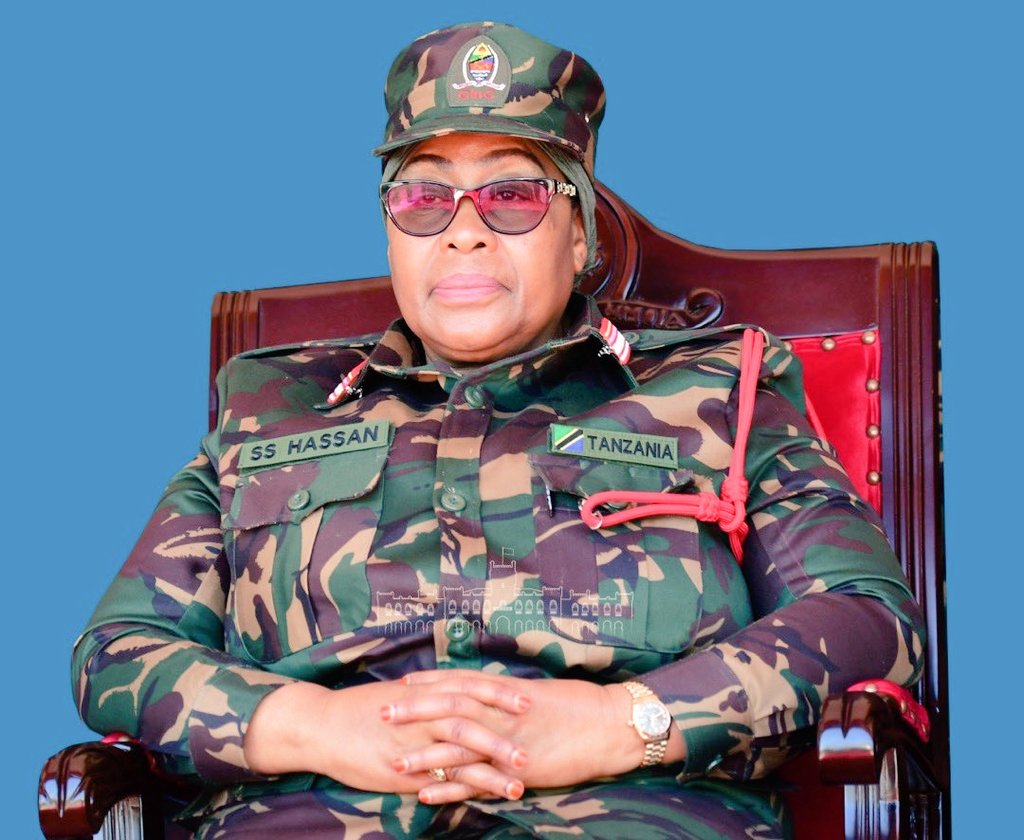
President of Tanzania Samia Suluhu Hassna is going viral for putting her entire family into her government
1. Minister of Finance - brother in law
2. Minister of Health - son in law
3. Deputy Minister of Education - daughter
4.Special seat MP - daughter
5. Minister of Defence - family friend who was the matchmaker of family marriage
6. Deputy Minister of Work - niece
This level of corruption in #Cameroon is a hemorrhage, it's not a leak!!
With this degree of thievery, #Cameroon is bound to remain on its knees economically until this gov't is kicked out.
Impossible Arithmetic: The Systemic Plunder of Cameroon's Resources from Gold to Oil
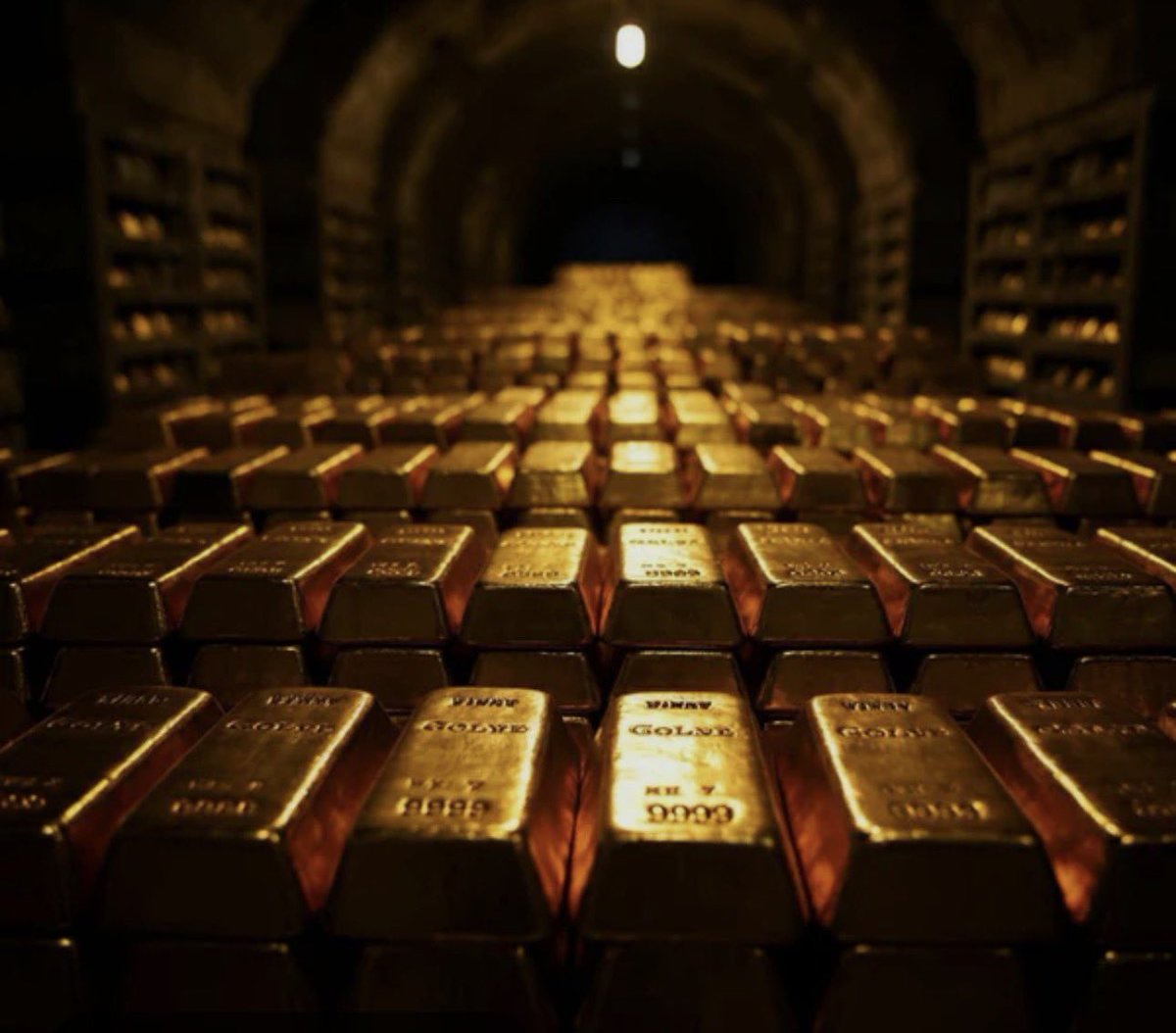
The staggering discrepancies in the gold trade between African nations and Dubai are not mere accounting errors; they are the defining signature of a sophisticated system of state capture and institutionalized corruption. The now-infamous case of Mali, where 50 tons of gold vanish from the Sahel annually while official exports to the UAE are a mere fraction, is a regional blueprint. In 2019, this "impossible arithmetic" saw Mali officially export negligible amounts, while Dubai recorded imports of **81 tons of Malian gold**. This is not an anomaly; it is a business model, and it is one that has been perfected in Cameroon across multiple resource sectors.
The Gold Sector: A Case Study in Brazen Illicit Flows
In Cameroon, this predatory system operates with similar audacity. The core discrepancy is both simple and damning: the value of gold imports declared by Dubai from Cameroon is hundreds of times higher than the value of exports declared by Cameroonian authorities.
A 2019-2020 analysis reveals the stark, undeniable evidence:
-Cameroon's declared exports to the UAE:A paltry $0.8 million USD (≈480 million XAF).
-UAE's (Dubai's) declared imports from Cameroon: A massive $340 million USD (≈204 billion XAF).
This represents a discrepancy factor of over 400 times—a figure so large it can only be explained by systematic, large-scale smuggling, under-invoicing, and the deliberate falsification of origin documents. This is not a leakage; it is a hemorrhage of national wealth, orchestrated by transnational criminal networks often operating with the complicity of corrupt officials.
A Familiar Pattern: The Oil Sector Parallel
This "impossible arithmetic" in the gold sector is a mirror image of the long-entrenched corruption within Cameroon's oil industry, managed by the National Hydrocarbons Corporation (SNH) and refined at the beleaguered National Refining Company (Sonara).
The same mechanisms of financial opacity and illicit profit are at play:
1. Opaque Deals with Commodity Giants: The 2022 global scandal involving Glencore is a prime example. The company admitted to a decade-long scheme of bribery across several African nations to secure crude oil deals. While the full extent of its operations in Cameroon remains shrouded, the pattern is unmistakable: multinational traders systematically funnel illicit payments to secure favorable terms, draining state revenues through corrupt commissions and manipulated contracts. Similarly, Vitol, another energy titan, has faced serious allegations of corrupt payments in other oil markets, highlighting a high-risk industry culture where such practices are a normalized cost of business.
2. **The Sonara Debacle and the Ghost of Reconstruction:** The 2019 fire that devastated **Sonara** was a national tragedy, but the aftermath has become a national scandal. **Years later, tangible plans for a full reconstruction remain elusive, raising serious questions about the commitment to restoring national energy sovereignty.** Instead of a transparent recovery, we now see the emergence of a new, potentially redundant project: a planned refinery in Kribi, advanced by the opaque tandem of **SNH** and the mysterious **CSTAR**. **This new project, emerging from the shadows of Sonara's failure, risks replicating the same corrosive patterns of non-transparent deal-making, creating a fresh avenue for the diversion of public funds without delivering tangible benefits for the Cameroonian people.*
Conclusion: A Unified and Continuing System of Corruption**
The parallel between the plunder of gold and the corruption in the oil sector is undeniable and ongoing. Whether it is Glencore and Vitol in the oil fields, unnamed traffickers in the gold mines, or the opaque SNH-CSTAR tandem in Kribi, the result is the same: a coordinated system that funnels Cameroon's resource wealth away from its people.
#Flash
Samuel Eto'o runs unopposed for the Fecafoot presidency
The candidacy review commission of the Cameroonian Football Federation (Fecafoot) has released the official list of contenders for the presidency of the body. The verdict: only Samuel Eto’o’s candidacy has been approved.
According to the published decision, all other applications were rejected for being incomplete. The former captain of the Indomitable Lions therefore finds himself running unopposed in the race for the Fecafoot presidency, following the administrative review of the candidacies.
Please stop calling it a contested election. Call it by its name. It’s a coup.
When the person elected by the people is forced into exile, when someone they did not choose installs himself anyway, and when security forces kidnap and shoot civilians to force the country to accept the lie, that’s not an “electoral dispute”. It’s a coup d’état.
#FreeCameroon 🇨🇲
@FFiatam@MimiMefoInfo Like seriously? If Brenda Biya can travel on a private jet to her dad's shame inauguration, then they should have money to do these things. Imagine the number of private jet being hired by the rest of the cabal...
Paul Biya completely lost, at the swearing-in ceremony today. Didn't know where he was.
Him: "Should I stand up?
Them: "Yes, Your Excellency, that's what he said. Because he is about to read the oath..." that's what he's going to read.
Him: "Like this?''
Them: "Yes."
The video is even more pitiable.
O ma se o! 🙆🏿♀️
@JoshuaOsih at the fake swearing in ceremony. I pity anyone who waste a second of their precious time going to cast a vote for this guy. Osih burried SDF without even waiting for it to di€.
I am currently watching the governor's electoral race for state of Virginia and they have a projected winner with only 51% of the results in. While in the Democratic Republic of #Cameroon you need 31,000 PVs and 15 days to determine the winner of an election.
@randzejude Hey man, the special forces are feeling it also. Everyone wants this cabal flushed out.
Don't be surprised it was the special forces that escorted ITB to safety...😂😂
Alert alert alert🚨🚨🚨🚨
According to inside sources,
there is a serious elder abuse going on now in the Presidency of the Republic of #Cameroon. The big man needs urgent medical attention, but they want to do everything to swear him in before getting rid of him.. #StayTuned