@j_oconnor37@celtic_ma1888 betray the dead. That perhaps explains why it was easier to get rid of the B Specials and why there's fewer people today rushing to the defence of the B Specials. The IRA didn't kill very many of them, outside of the early 1920s.
@j_oconnor37@celtic_ma1888 The killing of Sammy Devenny is hardly reason enough for a 30 year war. In the US, police kill 1,000+ civilians every single year. How should Americans respond to that issue? Should they start bombing their own cities and killing hundreds of cops? Is another civil war the answer?
@j_oconnor37@celtic_ma1888 IMO the IRA campaign actually made it harder to get rid of the UDR and for people to even criticise the UDR, as it allowed criticisms of the UDR to be twisted into justifications for the IRA. To criticise the UDR was suddenly to insult the dead. And to get rid of the UDR was to
@j_oconnor37@celtic_ma1888 I know that. I'm just highlighting that I'm less worried about my Catholic family members today than I would be if the IRA was still active, as a more active IRA means more aggressive and hostile security force operations, and a greater loyalist terrorist threat.
@j_oconnor37@celtic_ma1888 a massive threat. It was the loyalist paramilitaries within the UDR that were the main threat, and loyalist paramilitaries certainly do still exist. Apparently there's 12,500 of them. I don't fear for the Catholic half of my family, but would do if the IRA ended its ceasefire.
@j_oconnor37@celtic_ma1888 Again, it sounds like you feared your neighbours the most during the years when the IRA was active, and feared them the least in the years after the IRA went away. That suggests to me that the IRA campaign was increasing the threat rather than reducing it. The UDR itself wasn't
@j_oconnor37@celtic_ma1888 Internment was certainly a disaster that never should've happened. They probably thought it'd be a repeat of the 1950s when both governments North & South introduced internment and crushed the border campaign. But it had the reverse effect in 1971 & created many new IRA recruits.
@j_oconnor37@celtic_ma1888 Put it this way: if the IRA announced tomorrow that it was ending its ceasefire and renewing its armed campaign, would you feel more safe or less safe? Would it increase the likelihood of state violence or decrease it? Would it make loyalist violence more likely or less likely?
@j_oconnor37@celtic_ma1888 If there was evidence that the IRA campaign reduced violence by loyalists or by the state, I could see your point. But to me it seems like it only made that violence more likely. More IRA operations meant more arrests, more house searches, more checkpoints, more gun battles etc.
@j_oconnor37@celtic_ma1888 Did it ever occur to you that it was "the war" that made those things more likely? The IRA campaign was the reason that internment was brought in to begin with, so it seems a bit odd to credit the IRA for ending internment. The logic seems backwards.
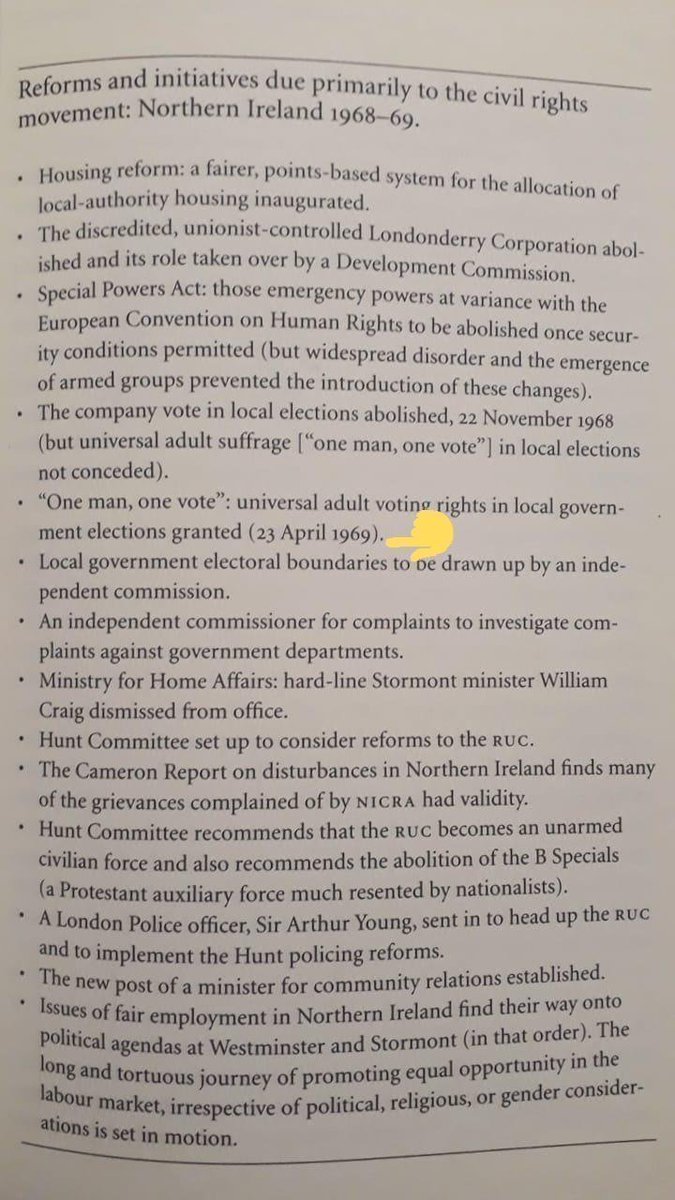
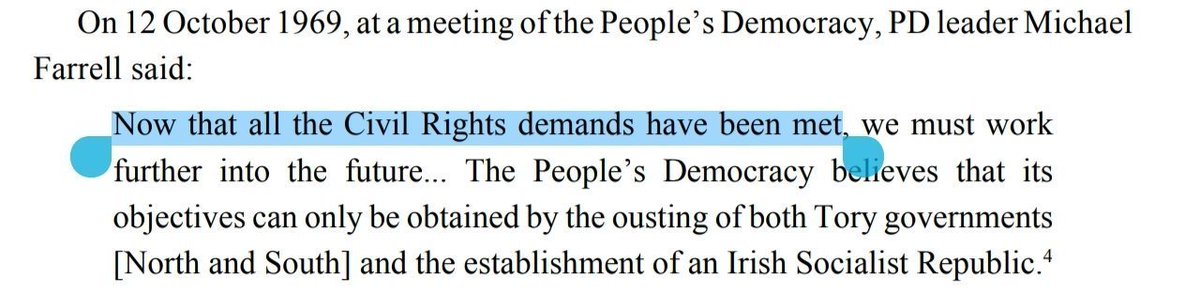
@j_oconnor37@celtic_ma1888 Though it's often forgotten that CRM was far more effective at achieving its goals than the IRA was. So much so that by Oct 69 the leader of People's Democracy said "all the civil rights demands have been met". Yet after 56 years and 2,000 deaths, the IRA's demand is still unmet.
@j_oconnor37@celtic_ma1888 "better a dead lion than a live rat"
Just to clarify, are you the live rat in this scenario? Judging by your bio, it sounds like you chose to become an engineer rather than take up a gun and fight as a lion.
@j_oconnor37@celtic_ma1888 It altered the political landscape by deepening the existing divisions between Protestants and Catholics, and between northerners and southerners. It didn't alter the path to Irish unity, which is the same today as it was 50 years ago, i.e. get a majority in NI to support it.
@j_oconnor37@celtic_ma1888 How can you say they helped to end the "British occupation" when the British never left? The British have always said that they'll only leave if a majority in NI want them to leave. The IRA tried to get them to abandon that precondition and unilaterally withdraw, but they failed.
@j_oconnor37@celtic_ma1888 What do you mean "this they certainly did". The so-called "British occupation" never ended. Northern Ireland still exists and is still part of the UK. The demographic changes that have made unionists a minority in Belfast had nothing to do with a hunger strike from 45 years ago.