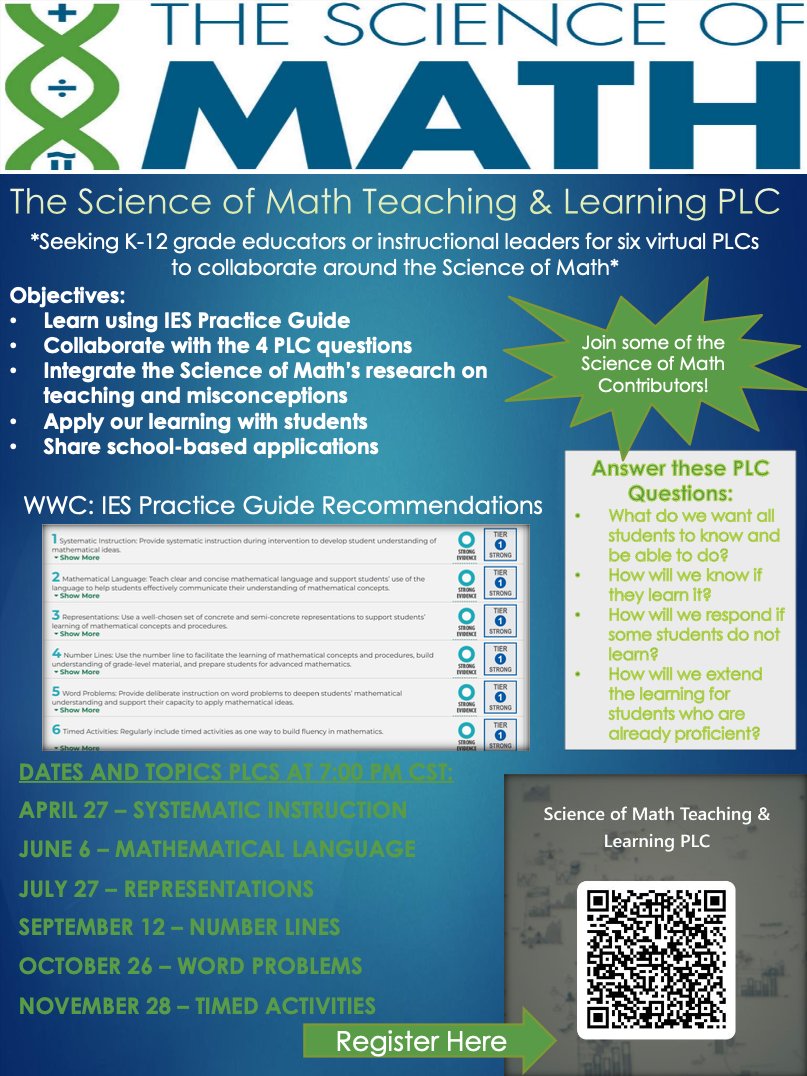
Hi teachers and instructional leaders! Join this group for a PLC on the IES practice guide recommendations for teaching math - particularly when students need extra help! Sign up using the RQ code.
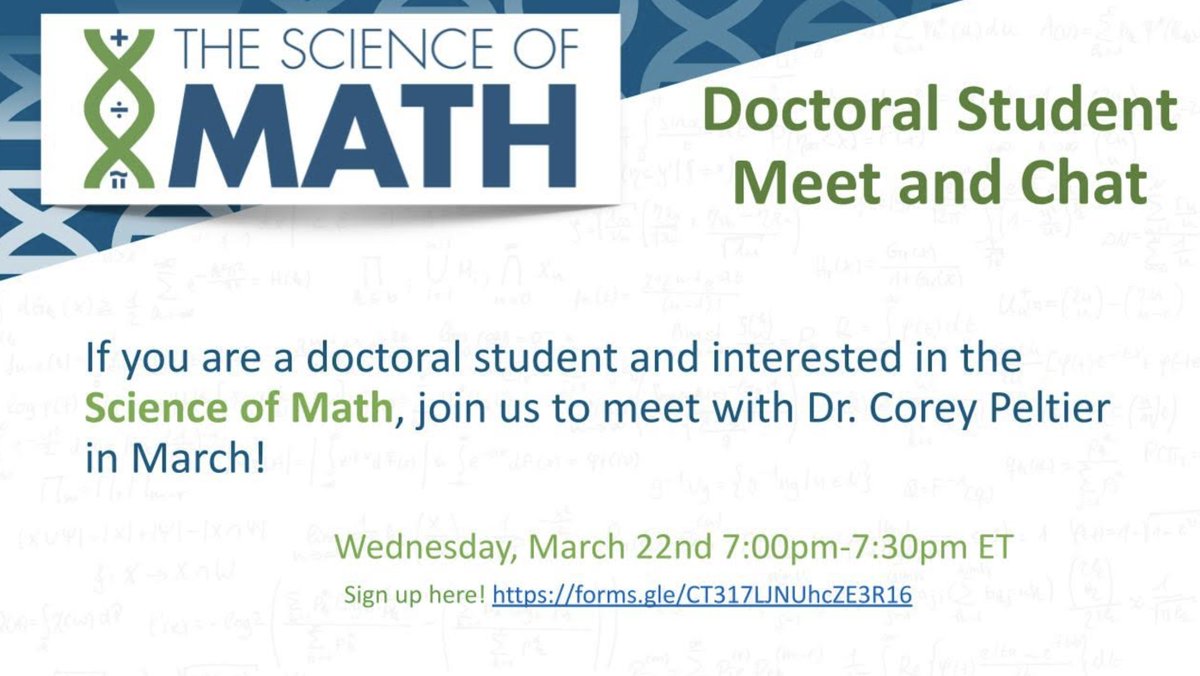
Calling all doctoral students! Join the Doctoral Student Meet and Chat as they talk about the Science of Math with @CoreyJPeltier. March 22nd at 7pm ET. Sign up here:
https://t.co/zEqSOyAWUV
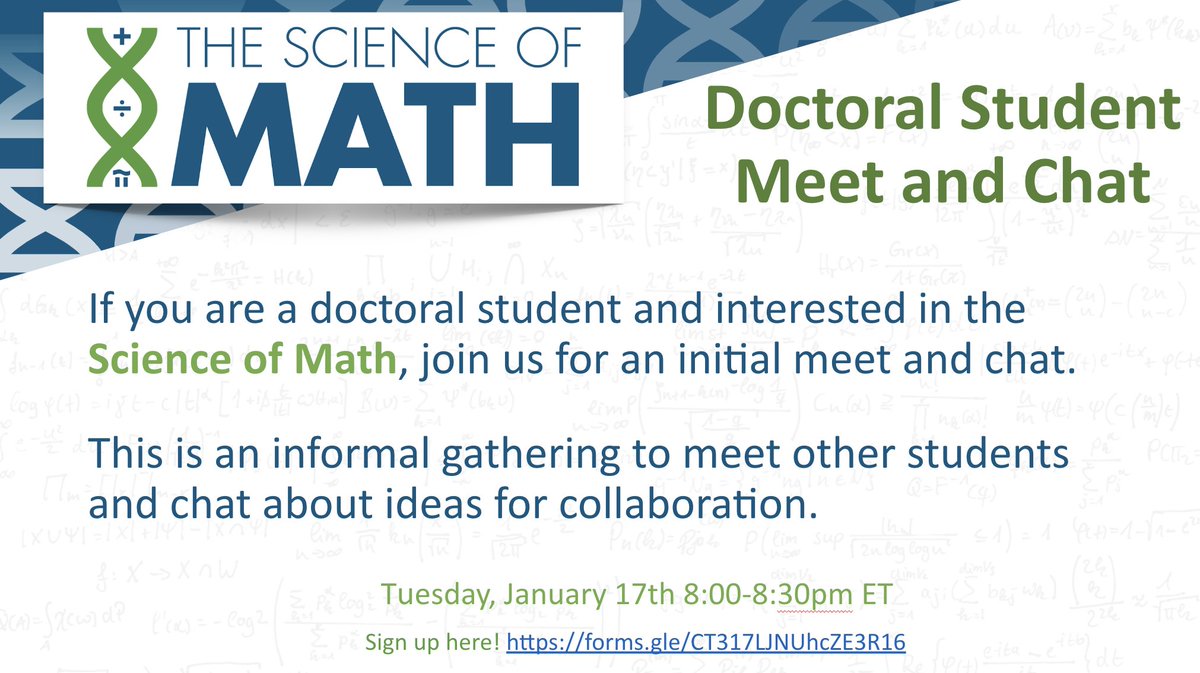
Are you a doctoral student and want to get involved in the Science of Math? Join us for an initial meet and chat! Tuesday, January 17th at 8:00pm ET. https://t.co/zEqSOyAWUV
Are you a doctoral student and want to talk with other students about the Science of Math? Join us for a kick-off meeting to discuss ideas for the spring of 2023. T January 17th at 8pm ET. Email [email protected] to get the Zoom link!
@GaleMorrisonEd There are five moderators. We try to keep up but there's a lot of content. It's helpful when people flag certain comments. If anyone wants to help, please reach out to me!
We saw this coming, folx. What can we do now? Focus on what science tells us about how children learn to read and do math! @4ScienceofMath@reading_league
'Largest score decline' in reading for nation's 9-year-olds, first-ever drop in math https://t.co/SvZNzElpiH via @usatoday
Thanks to @P_A_Kirschner for chatting with the Science of Math book study about the book "How Learning Happens." This is such a good read and generated so many conversations about mathematics learning and teaching! https://t.co/xLP3Czpkp7
Next Mon (4/25), we'll talk about Ch. 15 in our Book Study. This chapter talks about "mathemagenic" activities - those which give birth to learning. What are ways you create a mathemagenic environment for your students?
Next Monday (4/25), we'll talk about Ch. 14 in our Book Study. The authors discuss how "drill and kill" is criticized but yet practice is essential for learning. What are skills that are important for your students to practice in math?
For discussion in our Book Study on 4/25 - let's talk about Chapter 13 today! This chapter talks about the benefits of individual tutoring, but stresses we can't provide that tutoring to everyone. So, what strategies from individual tutoring do you use in teaching math to groups?
In next week's Book Study (on 4/25), we'll talk about Section 3 in "How Learning Happens." Did you read Chapter 12? The authors talk about providing support and then when and how to fade that support. What are ways you know when to fade support?
Join us on Monday (2/28) for our book study. In Chapter 5, they talk about using hands-on materials to help students experience math in multiple ways. What are some of your best hands-on materials?
For our book study next Monday (2/28), let's focus on Chapter 4. This chapter talks about knowledge that we have to learn through teachers and books - these are domain-specific. What are domain-specific skills students need to learn in math, and how do you teach these?
For our book study on Monday (2/28), let's talk about Chapter 3. There is a part in this chapter about taking notes via technology or by handwriting. What do you encourage with your students?
For our book study on Monday (2/28), let's chat about Chapter 2. How do you balance declarative, procedural, and conceptual knowledge in your math teaching?
Joining our book study next Monday (2/28)? This week, we focus on one chapter each day. In Chapter 1, we'll talk about how novices, often students, are not little experts. What ways do you change your math teaching based on the expertise of the student?