The National Campaign for Transit Justice works with grassroots organizers across the country to ensure Congress invests in the future of public transit.
Climate & Community's exciting new report, “Letting People Move,” focuses on measuring the real cost of highways and making policy recommendations for Congress, State Legislatures, and the DOT. https://t.co/fuV9eYoDgx
States have the ability to flex the majority of their federal highway funds from highways to transit, but collectively, from 2021 through 2023, states flexed less than 4% of their FHWA formula funds to the Federal Transit Administration.
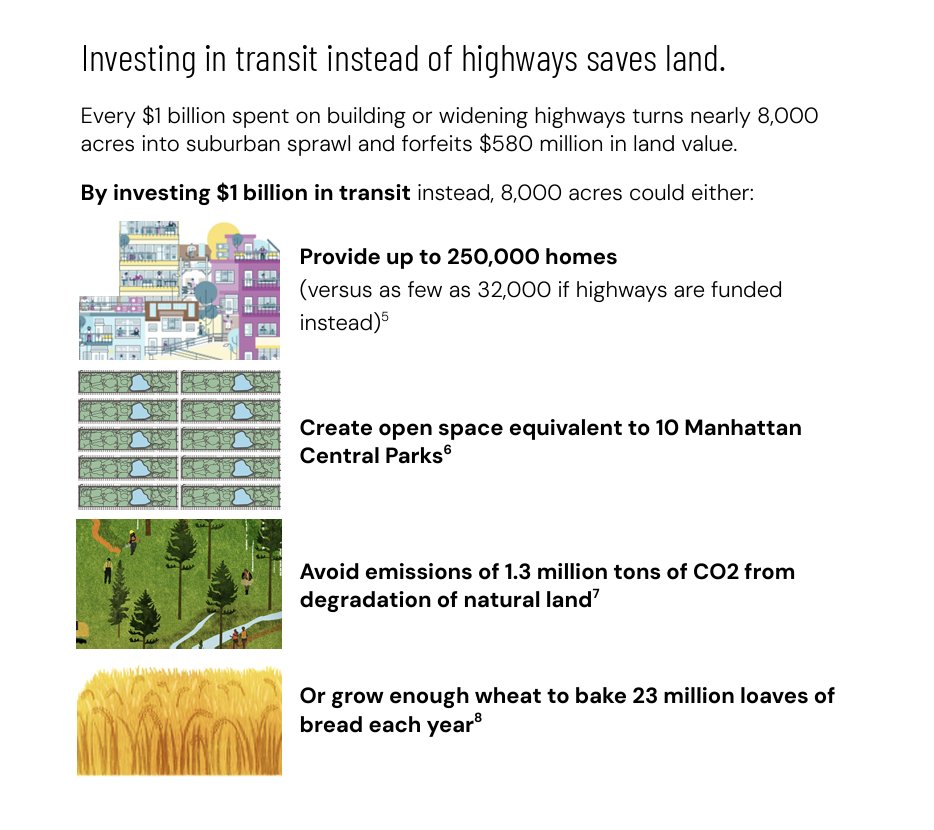
Shifting transportation wouldn't just mitigate harms-- it would also allow us to create better things. With the 8,000 acres saved from suburban sprawl in this model, we could provide more parks, homes, agricultural land—all while avoiding more emissions.
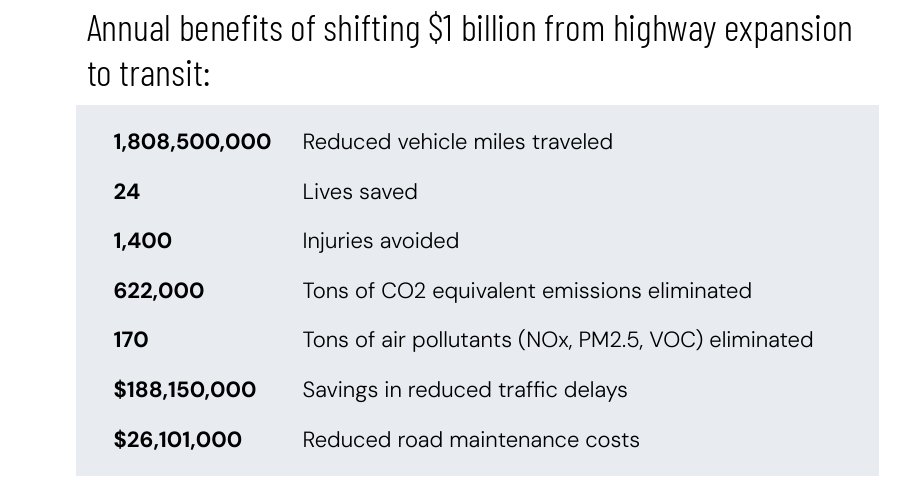
Decisions about whether to invest future transportation dollars in highways vs transit have huge implications. CCI modeling finds that every $1 billion shifted from highway expansion to transit saves at least $1.7 billion in social and environmental costs.
https://t.co/IPAZEFxq3F
What’s the best way to spend $1 billion for transportation?
Our latest report shows the positive impacts of every $1 billion shifted from highways to transit and identifies key policy levers to shift transportation investments away from highway spending.
Time with family shouldn’t be a luxury only drivers can afford.
Read Vanessa’s full story in our Working Families Ride The Bus report. https://t.co/NH7opySnZJ
Vanessa’s sister-in-law Belinda spends two hours a day on the bus, time she could spend helping her daughter with homework.
This is what the DC Transportation Equity Network calls a transportation time tax: the extra time transit riders lose because our system prioritizes cars.
Lawmakers ended the spring session without fixing the transit fiscal cliff. Now, CTA, Metra, and Pace are planning for 40% service cuts. Illinois needs a special legislative session this summer to secure $1.5 billion to fix and fund transit.
Take Action! https://t.co/bipVQOvH8A
What would happen if Chicago lost public transit? Research from MIT and Argonne shows the region would face more traffic, higher emissions, over $35 billion in annual costs, and serious harm to low-income and minority communities.
Concerned? https://t.co/bipVQOvH8A
Small Cities, Big Moves:📍Flagstaff, AZ
With school buses packed and drivers in short supply, the district turned to public transit. Now 1,000+ students ride city buses to school. Voters approved a 70% funding boost to keep it growing.
Read our report: https://t.co/tJIjRNAw7W
Ottawa, Kansas has just 13,000 people, but its public transit helped Will’s grandpa stay independent until age 99. Everyone should be able to get where they need to go, no matter their age or where they live—even if it’s just to the park.
Keep reading: https://t.co/g4IvFEcpOW
📍 Hampton, VA — Hampton Roads Transit honored Juneteenth with free fares on all services—bus, rail, ferry, and paratransit—celebrating freedom through mobility.
📍 Los Angeles, CA — Transit agencies, including LA Metro, teamed up with Pride events to make it easier (and more fun) to get there. Who says the party can’t start on the bus?
…Affordable. Access to transit should never be contingent on one’s ability to pay. Transit investment should establish programs that provide fare relief for those who need it.
We all want good transit. But what does "good transit" mean to The National Campaign for Transit Justice? Getting skipped by a packed bus? Waiting an hour in the rain with no shelter? Absolutely not. Good transit is...