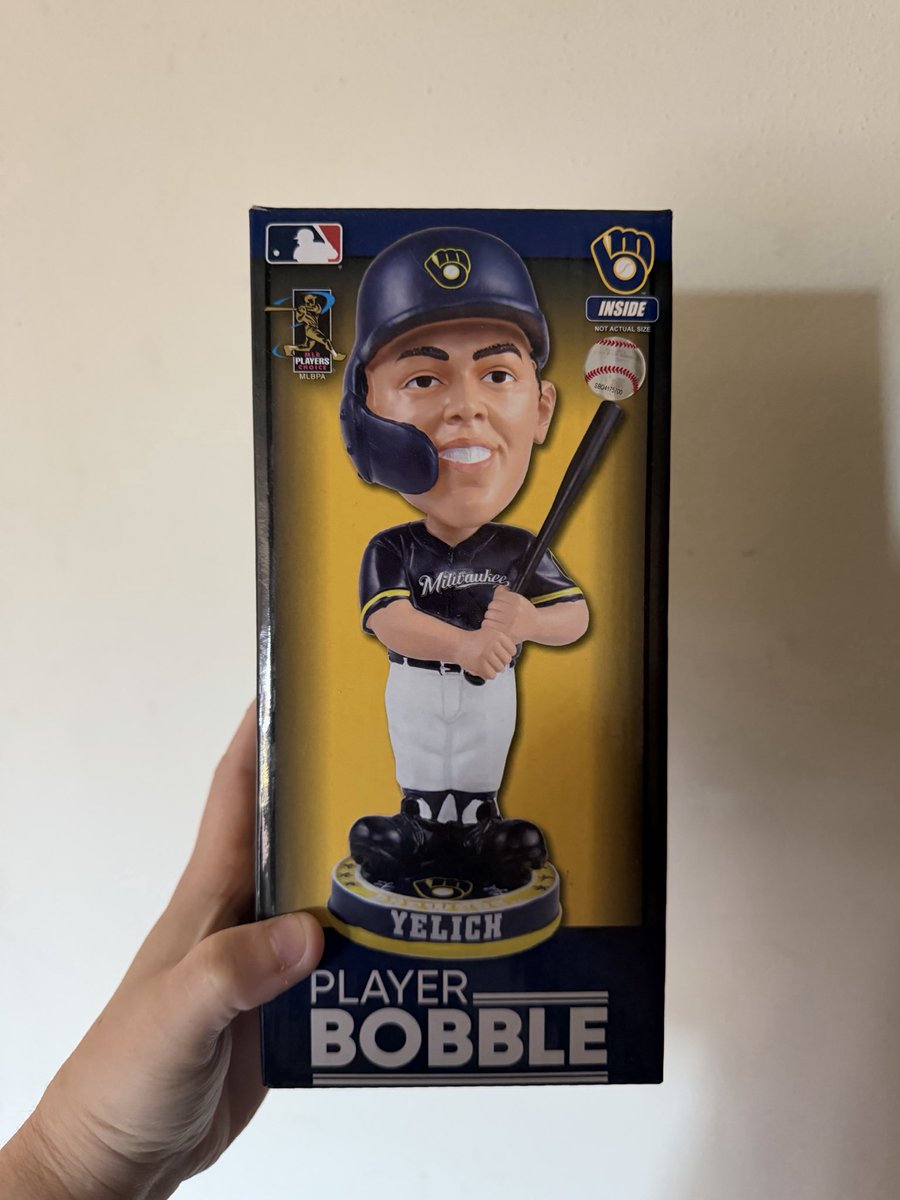
If Christian Yelich has a RBI in this #Postseason, I’ll give this bobblehead away to someone who FOLLOWS me and LIKES this post.
Reposts give you an extra entry!
#thisismycrew#winourway
If you were born between 1992 and 1999, studies show you got the rarest version of childhood.
People born between 1992 and 1999 belong to a unique micro-generation known as Zillennials. They experienced a rare cultural sweet spot because they are the last group to remember a fully analog childhood but the first to navigate a completely digital adolescence.
During their early years, life was fundamentally unplugged. They played outside until the streetlights came on, watched movies on VHS tapes, and used landlines to call friends. Entertainment required physical presence and imagination, creating a childhood detached from constant public scrutiny or online validation.
As they entered middle and high school, the world shifted beneath them. They witnessed the birth of the modern internet, the launch of the first smartphones, and the rise of early social media platforms like Myspace and Facebook. They did not grow up with tablets as toddlers, but they were tech-savvy enough to adopt new devices instantly as teenagers.
This specific timing created a generation that acts as a linguistic and cultural bridge. They understand the slow pace of the pre-internet era, yet they are entirely fluent in modern digital culture. This dual perspective gives them a rare form of adaptability, allowing them to relate equally to older adults and younger digital natives.
diarrhea Taylor Farms, salmonella chicken parm,
bags of frozen blueberries that straight-up kill your ass
heavy metal sourdough, listeria soup bowl
refreshing summer popsicle that's filled with shards of glass
we didn't start the fire...
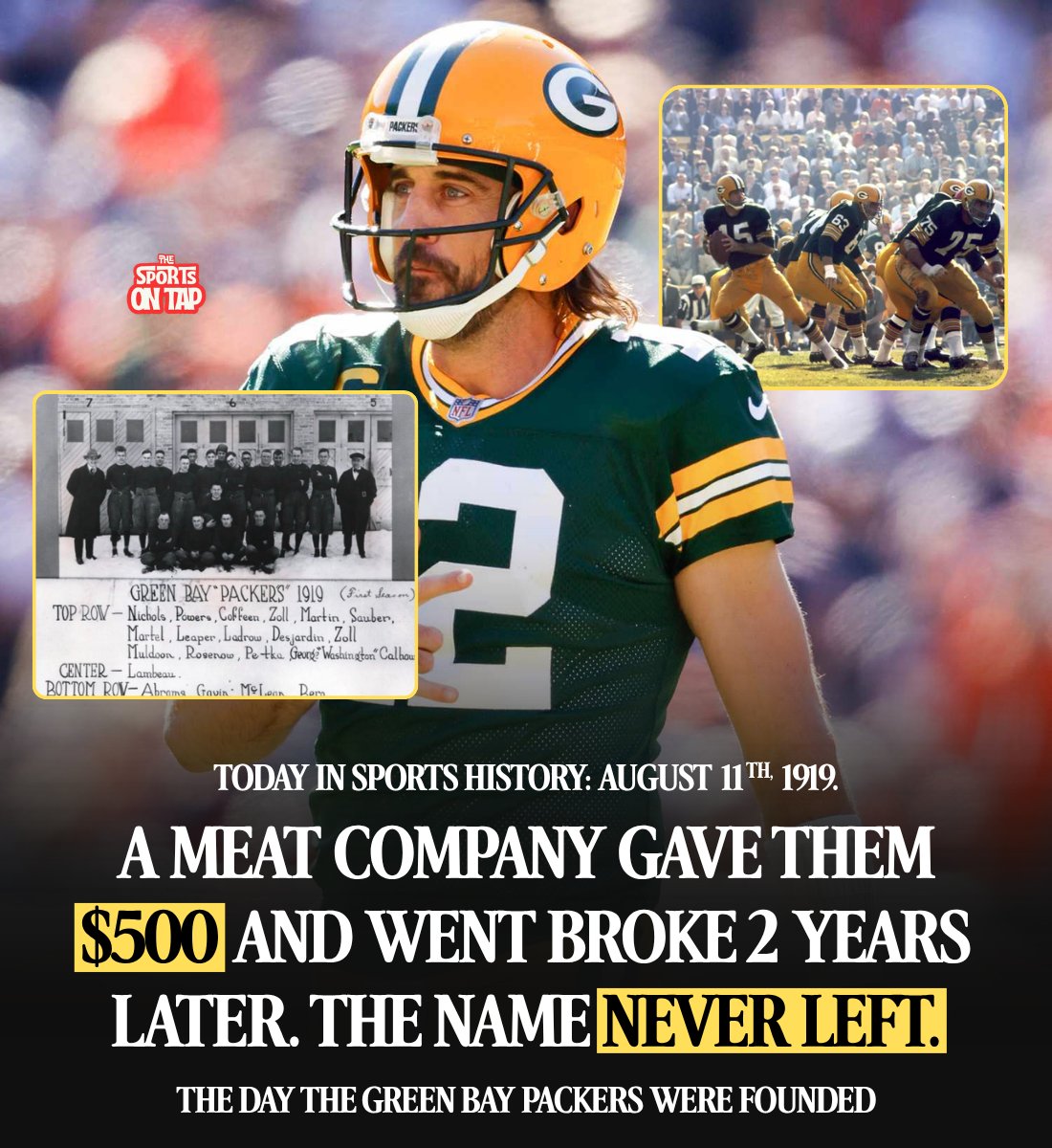
TODAY IN SPORTS HISTORY: 107 years ago today, a 21 year old shipping clerk talked his boss into giving him $500 for football uniforms.
That meat company went out of business two years later.
Its name is still on the field every Sunday.
August 11, 1919. Green Bay, Wisconsin. Population around 15,000.
A group of local athletes crowd into the editorial room of the Green Bay Press-Gazette. Most of them are former high school players from Green Bay East and West.
Two men called the meeting.
Earl "Curly" Lambeau was 21. He'd been a standout at Green Bay East, then went to Notre Dame and made Knute Rockne's varsity team as a freshman, before a brutal case of tonsillitis ended it and sent him home.
He needed a job, so he took one as a shipping clerk at the Indian Packing Company, a canned meat outfit.
But he still wanted to play football.
The other man was George Whitney Calhoun, the city editor at the Press-Gazette. A newspaperman who could put anything he wanted in front of the entire town.
They'd been talking about it all summer. Calhoun started running ads in his own paper inviting players to show up.
Then Lambeau went to his boss and asked for money.
The Indian Packing Company gave him $500 for uniforms and equipment, plus use of the company athletic field. There was one condition.
The team had to carry the company's name.
Two days later, the Press-Gazette referred to them in print as the Packers for the first time.
That's it. That's the whole origin. A canned meat sponsorship agreement.
They played home games at Hagemeister Park, which had no real seating. Fans stood along the sidelines and passed a hat around to pay the players.
They went 10-1 that first season.
In 1921 they joined the league that would become the NFL. They immediately went broke and forfeited the franchise, and Lambeau had to scramble to find new backers to get it back.
Meanwhile the Indian Packing Company was already gone. Sold to Acme Packing, and out of existence by 1921.
The sponsor lasted about two years. The name has lasted 107.
And the rest of it is the most improbable story in American sports.
Green Bay is the smallest market in the entire NFL, by an enormous margin, in a league where every other small market team folded or moved decades ago. The Duluth Eskimos. The Pottsville Maroons. The Canton Bulldogs. All gone.
The Packers survived because in 1923 they did something no other team has ever done. They sold shares to the public and became a community owned, non profit corporation.
No billionaire owner. No threat to relocate. The fans literally own the team.
That's why they're still there.
Thirteen NFL championships, more than any franchise in history. Four Super Bowls. Curly Lambeau won six titles as coach before he resigned in 1949, and the stadium carries his name. Vince Lombardi won five in seven years, and the Super Bowl trophy carries his.
Don Hutson. Bart Starr. Reggie White. Brett Favre. Aaron Rodgers.
All of it traces back to a 21 year old with tonsillitis asking a meatpacking plant for uniform money on this day in 1919.
The oldest team name still in use in the NFL belongs to a company that has not existed since Woodrow Wilson was president.
For more stories like this, follow us on any platform @thesportsontap
With tonight’s win, the #Brewers are now 2,261-2,261-1 all time in the National League.
The team was last at .500 as a member of the NL on 8/5/98 at 57-57 and was as many as 196 games under .500 before breaking even tonight.
#ThisIsMyCrew