What if teacher assessments were the most accurate measure of students' ability all along, and they only differed from exam results due to the deficiencies and limitations of those examinations?
On 12th June -10am–5pm.
After never having been charged with - & never having been found guilty of terrorism - Pro-Palestine activists will be sentenced for terrorism.
A first in UK history.
Please RT this until this travesty of justice is ended.
Thank you.
Robert Gros made £27m selling useless gowns via the VIP PPE Lane, of course he never paid back a penny, he bought 2 mansions instead.
RT and see if we can make him as famous as Michelle Mone.
Nigel Farage:
"Young people earning minimum wage should be paid less."
"Young people earning £100k should be paid more"
If you think this man cares about working class young people, your brain is pudding.
Painted in Eastville on a freshly buffed wall.Lots of people telling me how much they enjoy seeing my changing art in the area.The unofficial partnership between myself & the Bristol clean team seems to be working well.@wherethewall@BristolBestof@BristolLive@bristol247@LBC
Westminster may finally be about to have the argument it has spent 40 years avoiding.
If Andy Burnham returns to Parliament, the political class will know how to cover it. A leadership drama. Who is up, who is down, whether Keir Starmer can survive, whether Labour is once again turning inward. The familiar machinery of Westminster psychodrama will whirr into life.
That framing misses the larger point. Burnham’s possible return matters not because of what it says about Labour’s leadership, but because of what it reveals about the British state: what it can still do, what it has forgotten how to do, and what kind of country it must become if it is serious about resilience.
Britain is finally having a more serious conversation about national security. The Strategic Defence Review, the pivot back towards Europe, the recognition that hybrid warfare turns citizens, infrastructure and civic institutions into part of the front line: all of it marks a real shift in how the state thinks about its own survival.
But at the centre of that conversation lies a question that the defence establishment, and most of Westminster, still does not want to answer. What kind of society do you need to be before resilience is possible?
Finland is now the model everyone cites. Comprehensive security. Whole-of-society defence. Civilian preparedness woven into military planning. British strategists admire the Finnish system and ask how it might be copied. But the admiration stops short of the uncomfortable question: why does it work there?
The answer is not geography or history or some mysterious quality of Finnish national character. It is structural. Nearly 80% of Finns say they would defend their country if attacked. In Britain, the figure is closer to 33%. That gap is not an accident. It exists because Finland has spent decades building a society in which people have a genuine stake in what they are being asked to defend. Energy is affordable. Housing is available. Public services function. Institutions command trust. The Nordic welfare state is not a sentimental add-on to Finnish security policy. It is the foundation of it. You cannot ask people to defend a country that does not work for them.
Britain has spent 40 years building the opposite. The privatisation of essentials – energy, water, transport, housing – transferred wealth upwards from households to shareholders while making the basics of everyday life more expensive. The state, stripped of the tools to control costs at source, has been reduced to compensating after the fact.
Out of every pound the Government spends on housing, 88p goes to subsidising private rents. Just 12p goes to building homes. When energy prices spiked in 2022, the Government spent £40bn in a single winter cushioning the blow, not because it had a resilient energy system but because it lacked one. Debt interest now consumes more than £100bn a year. Britain has the highest debt servicing costs in the G7: the compounding price of financing failure rather than eliminating it at source.
This is what bond market dependency actually looks like. It is not an abstract fiscal condition. It is the consequence of a state that has been stripped of the supply-side tools that would let it cure the problems it now pays, indefinitely, to manage. And here is the paradox the Treasury refuses to confront. The countries that borrow most cheaply are often those that have retained the public investment model Britain abandoned. The spread between UK and Dutch borrowing costs has widened sharply not because markets fear public investment, but because they have lost confidence in a model that borrows to subsidise private failure while never addressing its causes.
This is the connection Britain’s defence debate is missing. The familiar framing, that social spending is what must be sacrificed to meet the NATO target, is not merely politically toxic. It is strategically illiterate. Cutting the foundations of social cohesion to fund the hardware of national defence is self-defeating. You end up with planes and no pilots, submarines and no crew, an army that cannot recruit because the society it is meant to protect has stopped believing in itself.
I think Burnham understands this. That is why his programme is more interesting than the leadership gossip suggests. What he has been building in Greater Manchester – public control of transport, expanded social housing, investment in the productive foundations of the city economy – is not a nostalgic rerun of postwar nationalisation. It is a proof of concept for a different kind of state.
The Bee Network is the most visible example, but the argument behind it travels. A state that can shape markets is not condemned to subsidise their failures. A state that produces affordable energy through public generation does not need to spend tens of billions cushioning every price shock. A state with a serious public housebuilding programme does not need housing benefit to rise endlessly in line with private rents. A state that builds institutions people can see, use and trust begins to restore the civic confidence on which resilience depends.
The real constraint on Britain is not money. It is capacity: the workers, institutions, supply chains and public purpose needed to turn national will into national renewal. Britain’s tragedy is not that it has run out of money. It is that after 40 years of hollowing out the state, it has made itself less able to act.
Burnham’s critics will reach for the familiar warning. Borrow more, spend more, spook the gilt markets, repeat the Truss disaster. But this misunderstands both the problem and the opportunity.
Bond markets do not have ideological preferences. They have functional ones. They prefer clarity, credible revenue streams, productive investment, and a state with a plan. What they punish is not public ambition but incoherence. A properly designed productive state programme would not be a leap into fiscal fantasy. It would be an attempt to end the much costlier fantasy that Britain can keep borrowing to compensate for broken markets while refusing to repair them.
The defence conversation and the economic conversation need to become the same conversation. Finland did not build national resilience by choosing between welfare and security. It built resilience by understanding that they are inseparable: that a country in which the basics work, where people trust one another and the institutions around them, is one that can face danger with something more than anxiety.
That is the deeper argument Burnham represents. Westminster will be tempted to treat him as a leadership story. It should resist the temptation. The question is not whether Burnham can return to parliament. It is whether Britain can return to the idea that the state should make life work. Because a country that cannot command the confidence of its people cannot truly defend itself.
Feargal Sharkey, "Water companies... The fines don't work, it's time we actually started upholding the law, and sending some of these executives and directors to jail"
Krishnan Guru-Murthy, "You think we should put them in jail?"
Feargal Sharkey, "If we put one water company boss in jail for six weeks the whole industry would transform itself"
Think of the rivers of blood spilled by all those generals and emperors so that, in glory and triumph, they could become the momentary masters of a fraction of a dot - Carl Sagan
I can no longer hold my tongue seeing the utter lies being spread about Britain, our history of migration, and how this country was built into what it is today. For those so deeply buried in fake news, manufactured outrage and billionaire‑funded propaganda, I’m going to lay out the truth – and exactly why you’re being fed all this poison.
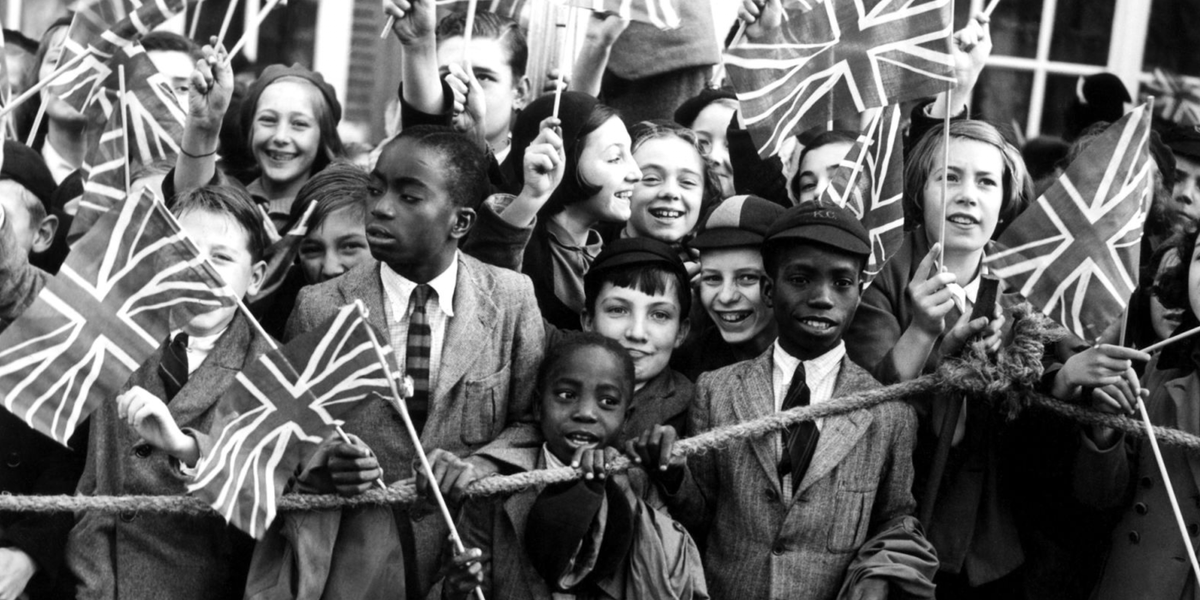
Britain was never a sealed white island. From Roman times there were African soldiers stationed on Hadrian’s Wall and living in British towns, people from across the empire walking these roads nearly 2,000 years ago. Through the Middle Ages and Tudor England you still find Black people in the records – sailors, craftsmen, servants, musicians – even Black musicians at the royal court and Africans being baptised, marrying and being buried in English parishes like anyone else. This isn’t some modern experiment; it’s older than half the castles people visit on their bank‑holiday tours.
As Britain went out into the world, the world came here. Sailors and traders from India, Yemen and beyond were arriving in British ports from the 1600s. Some of those men were practising a new faith to most Britons at the time, praying quietly in boarding houses near the docks while they worked brutal shifts in the engine rooms of British ships. Over the centuries, more people from North Africa, the Middle East and South Asia passed through and settled, bringing their languages, foods and beliefs into port cities that were far more mixed than today’s nostalgia merchants like to admit.
After two world wars, the truth is simple: this country asked the Commonwealth to come and rebuild it. People from the Caribbean, Africa and South Asia didn’t sneak in; they were recruited. They came to drive buses and trains, staff the NHS, work in mills and foundries, clean offices, run corner shops, open takeaways and small businesses, and yes, build prayer spaces and community centres alongside churches and temples in the neighbourhoods everyone now pretends were always “traditional” and “unchanged”. They did the work that kept Britain going while being told to go home, refused housing, and treated as permanent outsiders.
And what have they been paid back with? Scandals where people who’ve lived, worked and paid taxes here for decades get told they don’t belong. Policies designed to make life so hostile that some give up and leave. A media that uses their names, accents, clothes or places of worship as props in endless scare stories. The message is always the same: you might toil for this country, but you will never fully be of it.
So when you hear that “Britain was white until recently” or that the country has been “overrun”, understand that you don’t arrive at that belief by accident. You get there because your history has been deliberately ripped out and replaced with a comforting myth: that “real” Britain is white, homogenous, and constantly under siege from people who look, speak or pray differently.
Now look at when this myth has been turned up to max volume. Wages frozen. Housing a sick joke. Energy and food prices out of control. Public services hacked to pieces. At the same time, the number of people hoarding unimaginable wealth at the top has exploded. Funny, isn’t it, how every front page is about boats and “swarms” and “our culture”, and almost never about the landlords, hedge funds, private equity and offshore trusts quietly buying up your city and your future.
That’s because this isn’t just prejudice; it’s a strategy. If you’re sitting on a mountain of wealth, the last thing you want is ordinary people – of every colour and background – realising they have the same problems and the same enemy. Much safer if the factory worker is furious at the new family down the road. Much safer if the person who can’t see a doctor blames the nurse with an accent instead of the minister who cut the funding. Much safer if a man who can’t afford his rent spends his rage on the woman in a headscarf at the bus stop instead of the billionaire who owns half his city.
Racist rhetoric, religious dog‑whistling, all of it, exists to break solidarity. It turns neighbours into enemies and stops people seeing that Black, brown and white working‑class communities have far more in common with each other than any of them will ever have with the people flying in on private jets. It keeps you so busy policing skin colour, passports and prayer mats that you never get round to asking why your kids can’t afford a home, why your parents can’t get a hospital bed, why you’re working harder and standing still.
The real story of Britain is this: a crossroads, not a fortress. Africans on Hadrian’s Wall. Black people in Tudor courts and city streets. Sailors, traders and workers from South Asia, the Middle East and beyond in the ports. Caribbean, African and Asian workers rebuilding the country after the war, staffing surgeries and hospitals, driving cabs, running shops, cooking food, teaching kids. Today’s multi‑ethnic, multi‑faith working class is not a glitch; it is Britain. It built this place and it keeps it running.
If you’re genuinely angry about what’s happening to this country, good. You should be. But aim it where it belongs. Britain was never pure, never untouched, never “theirs” to take back. The people ruining your standard of living are not the ones risking their lives to get here, or the ones whose names you struggle to pronounce. They’re the ones buying politicians, owning media outlets, writing the story of this country so you never learn your own – and never realise who is standing beside you.
This is difficult to watch, it's embarrassing, it's enraging, it's shameful.
Emma Reynolds the Secretary of State for the Environment and David Hill the head of water at Defra appeared before MPs on Tuesday where they repeated the same old lie, that water company shareholders invest their money in the companies and we, the bill payers, pay them back over 10, 15, 20, 30 years.
Even Ofwat have owned up, that's a lie the £104 billion "private sector investment" is coming directly out of your pockets, your bank account. For God sake just tell the truth.
Barry Gardiner, you're a star. 👏👏👏