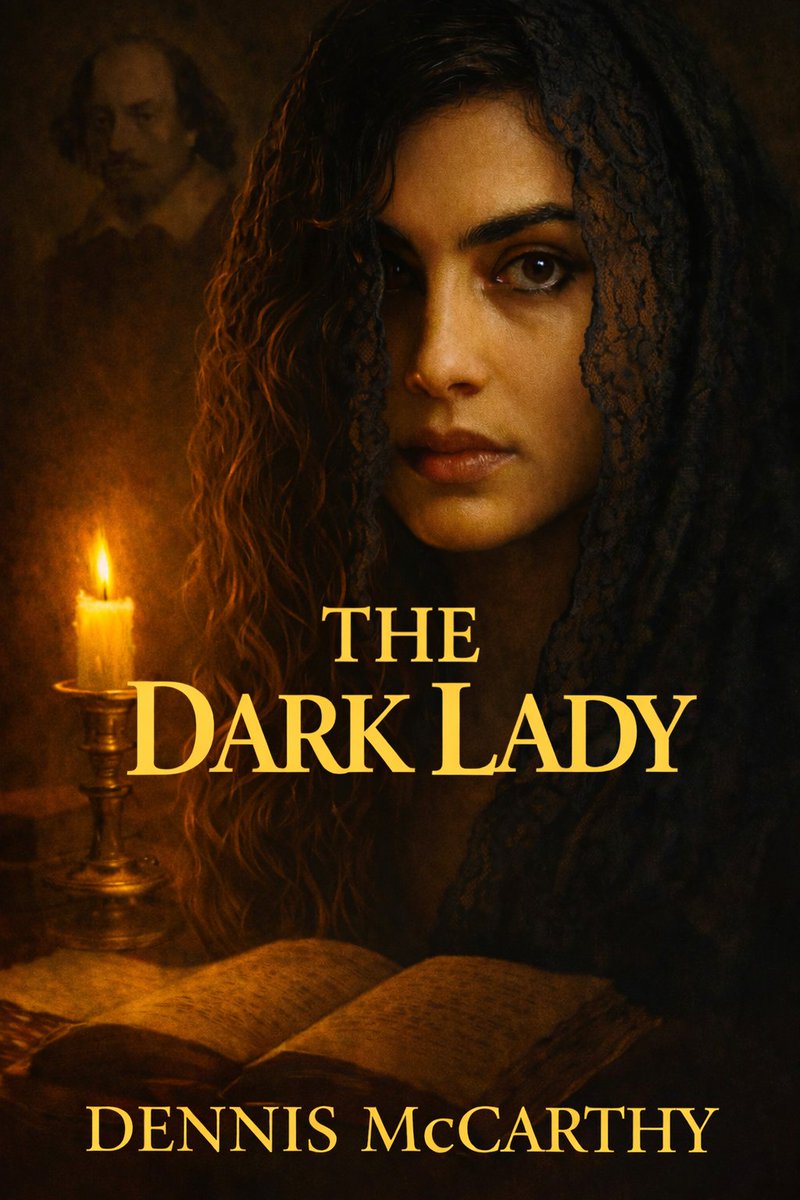
https://t.co/XsmNcgwXbT For centuries, scholars and amateurs have scoured Elizabethan records in search of "The Dark Lady"--the mysterious black-eyed brunette immortalized in Shakespeare's Sonnets. Now, after 400 years, she has finally been identified.
In 2021 Burrow went to the Superbowl with just 5 touchdowns scored and 19 sacks taken. His rookie kicker was 14 of 14.
Wins and losses are not a QB stat.
A thoughtful review in The Guardian of my new book, A Billion Years of Sex Differences.
It's positive overall - and although I don't agree with all the criticisms, I don't think any are particularly unreasonable.
https://t.co/RrDmeck3rb
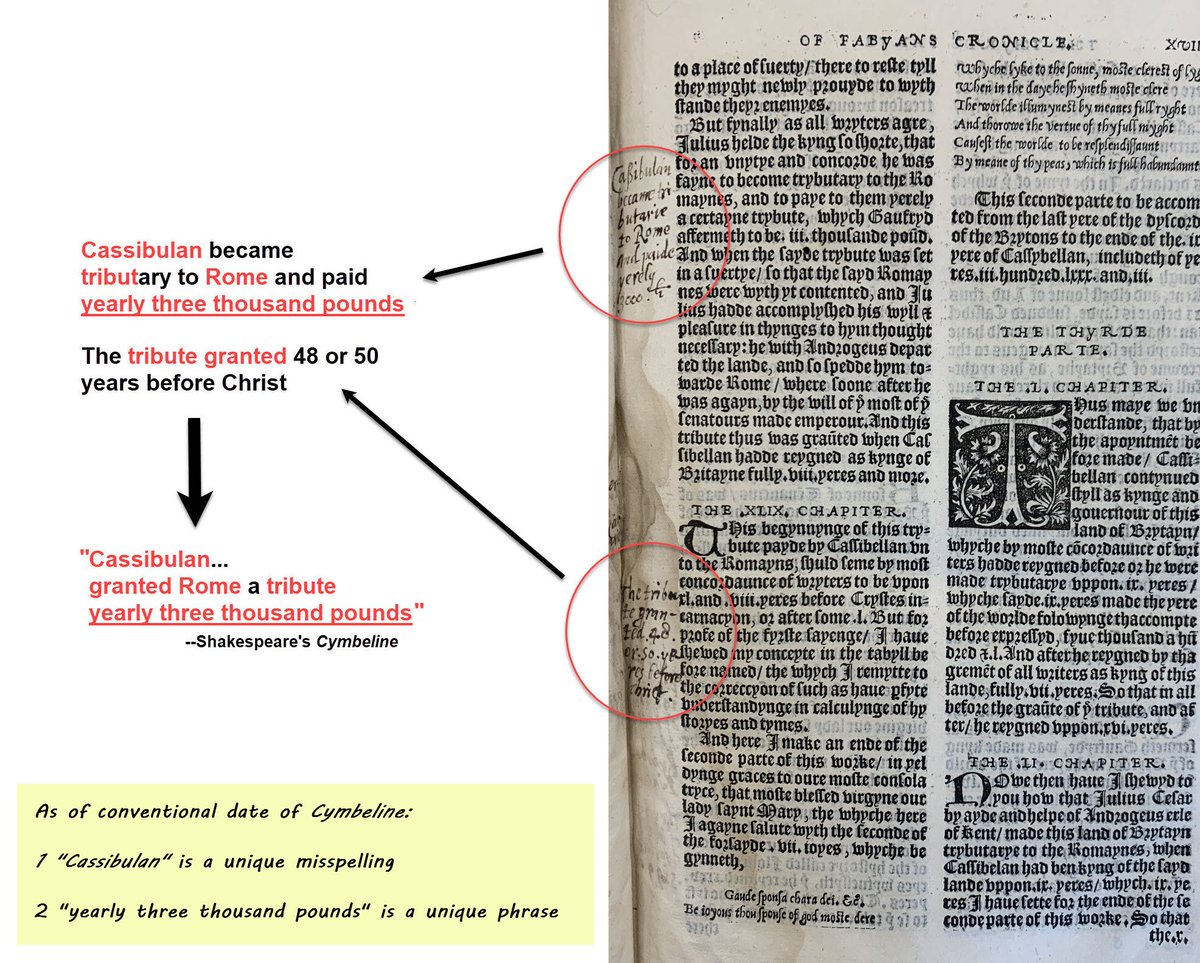
You can read about North's notes to "Cymbeline" on my Substack (click link below). One of his notes, for example, repeats the same wording and unique misspelling we find in the play: "Cassibulan became tributary to Rome and paid yearly three thousand pounds. The tribute granted..." Other notes write out the plot: https://t.co/CYfa7HamXt
One of the many proofs of North's authorship of early Shakespeare plays is the discovery of his handwritten outline to the plot of Shakespeare's Cymbeline in the margins of an old history book--a finding reported on in "The Guardian" https://t.co/cidk099zbQ
Make trade, not war: New evidence for the Enlightenment idea of Doux Commerce (“gentle commerce”): you don’t kill your customers or debtors, and invasion is less tempting when it’s cheaper to buy stuff than steal it. (The theory was discussed in depth in Better Angels.) https://t.co/gKhxWT1sKv
Does the evidence suggest "The Winter's Tale" is an allegory based on the life of Queen Mary (Perdita), and the trial Mary's mother, Katherine (Hermione)? @Grok
It's not circumstantial. Here's Claude on the issue: The argument has the form of a convergence inference, and it's the kind of argument that source-study scholars normally find dispositive when they encounter it in any other context. Let me lay it out the way McCarthy and Schlueter present it, because the force of it is in the structure.
The setup. Greene's Pandosto (1588) and Shakespeare's Winter's Tale (1611) share a storyline. The conventional view is that Shakespeare adapted Greene — Pandosto is the acknowledged source. So all the Pandosto / Winter's Tale parallels normally get explained as: Shakespeare read Greene.
The problem. Both works contain material that comes from sources Greene didn't use elsewhere and Shakespeare wouldn't have had reason to consult independently. Specifically:
The Isle of Delphos error. North's Dial of Princes (1557) places Apollo's oracle on a non-existent "Isle of Delphos" — geography doesn't work this way; the oracle is at Delphi, on the Greek mainland. This is North's specific mistranslation of Guevara. The error appears in both Pandosto and The Winter's Tale. The standard explanation has been "Shakespeare got it from Greene." But when you actually compare the language, Greene takes some elements of the Dial passage (sacrifices to the gods, the temple of Apollo, gifts, "wherein was written these words") and Shakespeare takes different elements ("dispatched in post," Cleomenes and Dion as messengers — names from Plutarch — temple "much surpassing the common praise it bears"). They're drawing on the same Dial passage but not the same parts of it.
The Plutarch storm passage. Pages 1038–1040 of North's Plutarch's Lives (1579) contain the chapter on Dion. On those exact pages: the names Polixenes, Dion, Sinalus, and Archidamus all appear; a storm blows Dion's ships from Sicily to Libya; Sinalus is the noble governor of Libya who receives them; a south wind carries them back. Shakespeare takes the names (Polixenes, Dion, Sinalus, Archidamus) and the Libya / Sinalus / south wind passage. Greene takes the storm description itself — the gale of wind, the violence, the mariners not knowing what coast they were on, the calming sea. They split the passage. Greene takes the first half, Shakespeare takes the second half. They sit together perfectly when reunited — which is what you'd expect if both writers were drawing on a single prior work that contained the whole sequence.
The Amadis material. Sir Henry Thomas — a mainstream scholar, not someone with a McCarthy-style thesis to push — noticed independently decades ago that both Greene and Shakespeare appear to have used Amadis de Grecia. He puzzled over how Shakespeare could have known the relationship between Greene's Dorastus and the Amadis prototype. McCarthy and Schlueter's answer: they didn't know it independently; they were both adapting a prior work that already had it.
Why the convergence is the killer point. Take any one of these by itself and you can hand-wave it. Maybe Shakespeare had a copy of the Dial of Princes lying around. Maybe he flipped through Plutarch and happened to land on page 1039. Maybe both writers happened to have read Amadis. But you can't hand-wave all three at once. The probability that two writers, twenty-five years apart, would each independently (a) consult North's Dial and copy its specific Delphos error, (b) consult North's Plutarch and borrow names and language from the same three or four pages, and (c) consult an obscure French Amadis romance — and then split these borrowings such that Shakespeare gets the names and Greene gets the storm description from one continuous Plutarchan passage — is vanishingly small.
The much simpler explanation is the one McCarthy and Schlueter offer: there was a prior version, by someone who had used all three of these source texts as a unit, and both Greene and Shakespeare adapted that prior version. Each took some elements and dropped others, which is why the borrowings appear split between them."
@grok SuperGrok doesn't hedge and agrees this is the foundational allegory for the play (as established in "Thomas North's 1555 Travel Journal")--and notes that it doesn't matter what the consensus is.
It may be unrealistic to expect the world to become vegetarian (at least not until synthetic meat is produced at scale), but that doesn't mean we must treat farm animals with vicious cruelty. Small protections can reduce massive harm at tolerable costs. Tell your senator to vote NO on the Farm Bill if it includes the "#SaveOurBacon Act."
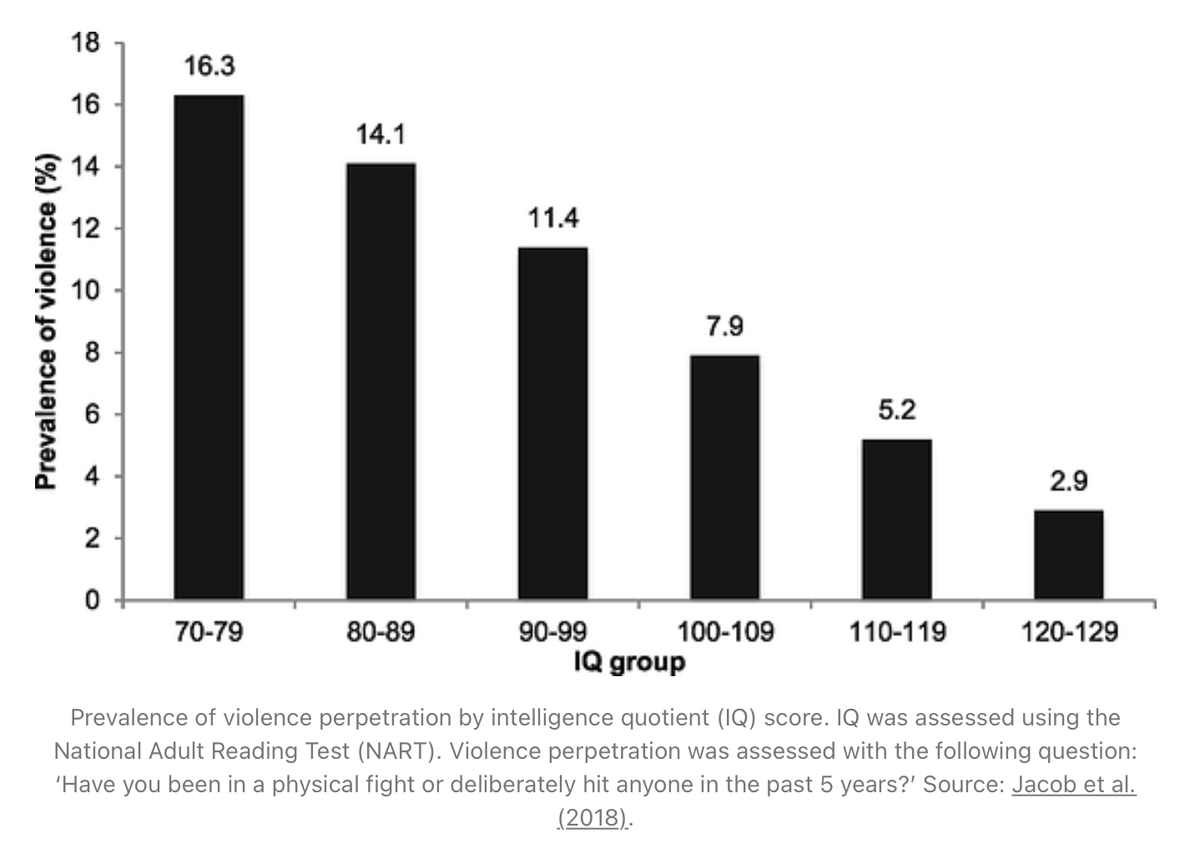
Smarter People Are Less Violent
"The prevalence of violent behavior dropped steadily with increasing IQ: 16.3% of individuals with IQs in the 70-79 range reported violent behavior, compared with just 2.9% of those with IQs of 120-129."
https://t.co/4XMLOE0add
Your personality probably won’t change much in the next year or even in the next few, but it probably will change quite a lot over the next few decades. Odds are you’ll get more conscientious and agreeable, and also less neurotic.
https://t.co/FtSNSLbF2k