@ledamalekina The youngman has taken after @RailaOdinga and you cannot take it from him. Whether he is @TheODMparty SG or independent candidate or whatever. Are you aware waheshimwa are going home like you've never seen before? The people shall elect their President. Continue with broadbase
"Whoever must govern Singapore MUST HAVE THAT IRON IN HIM" Does H.E @WilliamsRuto "HAVE THAT IRON IN HIM" to fire JurisPESA judges and jail dollar billionaires on a paltry civil service salary?
@gpdkaluma@WilliamsRuto@RailaOdinga Bigger than life! Stop this pettiness. The value of a man or woman should be their impact while they had the chance. The rest is vanity. Instead of the statue do a library.
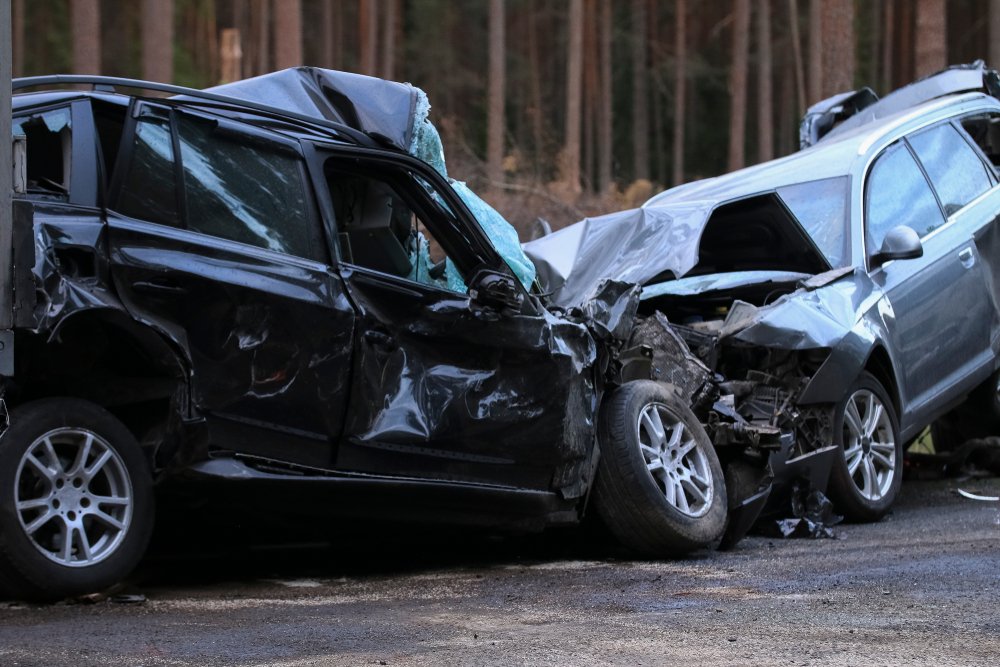
A woman and a man were involved in car accident.
It was a bad one, caused by the woman's reckless driving.😭
Both of their cars were badly damaged but amazingly neither of them was hurt.
After they crawled out of ... cars, the woman says;
“So, you're a man. That's interesting. I'm a woman.
Wow, just look at our cars! There's nothing left, but fortunately we are unhurt.
This must be a sign from God that we should meet and be friends and live together in peace for the rest of our days."
The man replied," I agree with you completely. This must be a sign from God!
The woman continued, "And look at this, here's another miracle.
My car is completely damaged, but this bottle of wine didn't break.
Surely God wants us to drink this wine and celebrate our good fortune."
Then she handed the bottle over to the man.
The man nodded his head in agreement, opens it, drinks half the bottle and then handed it back to the woman.
The woman takes the bottle, immediately puts the cap back on, and handed it back to the man.
The man asks, "Aren't you having any?"
She replies, "Nah. I think I'll just wait for the police to come and collect their evidence."
(drunk driver's offence)
" Adam ate the apple again! "😭
THE LONELY END OF A GOOD MAN; MZEE
This is the story of my high school friend, the guy we called “Treadmill.”
We played rugby together.
He was our scrum half.
Fast feet, low center of gravity, always pumping those legs like he was on a treadmill, but somehow, never moving forward. That’s how the nickname stuck.
We carried that name from high school into life. Into campus. Into careers. Into marriage and baby showers and group chats and road trips.
I watched him hustle.
I watched him win.
I watched him become a man.
What I didn’t know is that I would also watch him break.
Seven months ago, I attended the funeral of his father.
I got there early, the way you do when it’s someone close.
People were seated under tents, the red Nyahururu soil kicked up into the air, women cooking in one corner, pastors in shiny suits, the normal funeral chaos.
Then they called up the children of the late.
That’s when I noticed it.
His siblings walked forward.
Most of them were light-skinned, that soft brown you see a lot from Central.
Then there was Treadmill.
Dark.
Not “a bit darker.”
Dark-dark. Clearly different.
You could tell this had been the running joke all his life. You could almost hear the old aunties laughing in the background: “Uyu ni black sheep wa family.”
He stood there in a neat suit, broad from rugby and gym, successful, confident.
The second last born, but by far the most successful of them all.
He had done very well in life.
Engineering at the University of Nairobi.
Good job.
Money flowing.
Connections.
Married with kids (from two baby mamas, but that’s another story).
You’d think this funeral would be mechanical for him.
Go, bury, leave.
You have no idea.
Growing up, his mother adored him.
He went to better schools than his siblings.
Got the good uniforms.
The good shoes.
The extra attention.
He took it as love.
Which it was.
But it came with something else: poison.
Because every night around the kitchen fire, up in the slopes of the Aberdares, she would start.
She would talk about Mzee.
How he was never home.
How they picked coffee until their fingers cracked.
How they walked up and down those hills carrying sacs of beans to the coffee factory.
How they queued at the coffee factory until late at night and still went to school the next morning.
She would spit out the words: “He is in Nairobi with milayas, prostituting himself while we suffer here alone.”
She said it with tears.
With drama.
With conviction.
And kids believe their mothers.
Night after night, the fire popped and the smoke rose and her words sank deep into young hearts.
“Don’t ever be like your father.”
“Don’t ever chase women like him.”
“Don’t ever abandon your family the way he abandoned us.”
Treadmill loved his mother.
So he swallowed all of it like medicine.
Hate disguised as truth.
By the time we were in high school, he hated Mzee.
Hated him with a passion that looked righteous.
To him, Mzee was a useless man with a permanent cough and a selfish past.
Life rolled on.
He smashed KCSE.
Got into UoN Engineering.
Graduated top of class.
Got a solid job.
Money started flowing.
He became the guy who pays bills at the table without checking his M-Pesa balance.
He took care of his mother like a king.
Sent her abroad.
Paid for trips.
Let her see the world, countries she never imagined.
But he never did the same for his father.
He didn’t even send him past Nyahururu town.
Why? “Why waste money on a man who wasted us?”
To him, Mzee was the architect of their childhood suffering. End of story.
Then, about a month before the funeral, his father called.
He told him: “Even if this is my last wish, come spend one hour with me. I have something important to tell you.”
When he told me, he was angry.
Imagine being asked to go see the man you’ve hated for decades and sit with him one-on-one.
He felt disgusted.
Like the world was forcing him to drink dirty water.
He wrestled with it for days.