In a February 2022 opinion piece in The Globe and Mail, Mark Carney described the Freedom Convoy as “terrorizing” Ottawa residents, calling the demonstration “sedition” and “blatant treachery.” He claimed its true aim was to overthrow the elected government and urged authorities to “choke off the money” funding the occupation.
Donald Trump, by contrast, strongly praised the Canadian trucker protests that year, referring to the participants as “peaceful truckers” who were “doing more to defend American freedom than our own leaders.” He criticized Prime Minister Justin Trudeau’s handling of the situation and accused Canadian authorities of crossing a line by making arrests and clearing the demonstrations.
Carney has appealed the Federal Court ruling that found the invocation of the Emergencies Act illegal. The argument is that he is deliberately undermining trade talks with Trump because the Canadian government needs that court decision overturned and Trump’s statements discredited. Those statements cannot be allowed to stand, the reasoning goes, because they undermine the credibility of the entire Canadian government.
BREAKING OSTRICH FARM NEWS:
One B.C. party leader @Dallas_Brodie sends Premier David Eby & BC Conservative leader, John Rustad, a message after being taken aback by government overreach unfolding
at Universal Osrtich Farm.
Well, it finally happened. After months of dodging questions and hiding behind vague platitudes about “climate leadership,” Prime Minister Mark Carney’s official conflict-of-interest screen has been released by the Ethics Commissioner—and what it reveals is nothing short of staggering. Not five entities. Not a dozen. One hundred and three. That’s how many corporate and financial interests Carney has quietly acknowledged are too conflicted for him to touch.
At the center of this web? Brookfield Asset Management, the $1 trillion global investment firm where Carney was Vice-Chair before walking straight into Canada’s top political office. The very same Brookfield that owns energy projects, pipelines, nuclear companies, real estate empires, carbon offset schemes you name it, they’ve got a piece of it. And now, they’ve got a former executive running the country.
We’re told it’s all perfectly legal. We’re told Carney has “recused himself.” But what this disclosure actually shows is something much bigger: a government captured by finance, a prime minister with deep, ongoing entanglements in the very sectors his policies now enrich, and a climate agenda that’s beginning to look a whole lot like a money-printing operation for the global elite.
The deeper one digs into Prime Minister Mark Carney’s ethics disclosure, the clearer the picture becomes: what’s been framed as a climate leadership story is, in reality, a tightly wound web of commercial interest wrapped in green rhetoric. The 103-entity conflict-of-interest screen, ostensibly a shield against impropriety, instead serves as a road map of how thoroughly Canada’s top political office is entangled in the global green finance complex centered around Brookfield Asset Management.
As of Q1 2025, Brookfield reports $125 billion in assets under management (AUM) in its Renewable Power & Transition segment, a figure representing 12.5% of its overall $1 trillion portfolio. This segment alone encompasses most of the entities on Carney’s ethics screen: nearly 60 out of 103, even after accounting for duplicates. These aren’t passive holdings they’re the very projects, technologies, and subsidy-eligible vehicles Carney once oversaw directly as vice-chair of Brookfield and as co-lead of its $15 billion Global Transition Fund.
Brookfield’s renewables portfolio is vast: over 41.8 GW in installed capacity globally across wind, solar, hydro, and storage, with a 200+ GW development pipeline. A significant portion of this is owned or operated through the same SPVs and subsidiaries now appearing on the conflict list. Notable entries include Scout Clean Energy ($1B), Urban Grid ($650M), and Standard Solar ($540M). These acquisitions were all completed while Carney was at Brookfield, and they continue to generate revenue from U.S. and Canadian subsidy frameworks programs now shaped by the very government he leads.
Brookfield Renewable Partners L.P., the sector flagship, holds approximately $95 billion in total assets and generated $315 million in funds from operations in Q1 2025 alone. The firm is planning to add another 8 GW in capacity this year expansion that is, in part, subsidized through the same green transition policies Carney has promoted both in office and as a climate finance advocate.
The line between public and private interest blurs even further when examining the entities categorized under the "energy transition" banner; nuclear, CCS (carbon capture and storage), and so-called e-fuels. Carney’s screen includes Brookfield’s recent $8 billion acquisition of Westinghouse Electric Company, a nuclear power behemoth now positioned to benefit from Canada’s federal nuclear incentives and SMR (small modular reactor) program. Other flagged investments like Entropy and Carbon TerraVault fall directly into carbon credit and offset schemes—markets heavily influenced by federal regulation and incentive design.
Let’s stop pretending. What we’re witnessing here isn’t just conflict of interest, it’s a complete merger of state power and corporate ambition, all dressed up in the language of moral urgency. The Ethics Commissioner’s so-called “screen” for Mark Carney? It’s a joke. A checklist. A bureaucratic fig leaf meant to reassure you that everything’s above board. But it’s not.
Because here’s the truth: Carney is policing himself. He’s supposed to recuse himself from decisions that benefit the 103 entities he’s tied to many of which he helped create or oversee as Vice-Chair of Brookfield Asset Management. But who decides if he’s in conflict? He does. Or more accurately, the PMO does. The same PMO now drafting Dominion Barton-style focus groups to figure out how best to sell you the green grift. There’s no third-party oversight, no transparency on what’s actually in his so-called blind trust, and no disclosure of the carried interest he may still be entitled to from Brookfield’s billions in funds.
Meanwhile, the policy levers of government are being pulled in exactly the direction Brookfield bet on. Wind, solar, carbon capture, nuclear, every so-called “transition” sector that Brookfield spent years buying into is now flush with green subsidies, ESG guarantees, and taxpayer-backed investment shields. This isn’t the free market at work, it’s a strategic payoff, engineered by someone who’s now running one of the most powerful G7 economies.
And again, none of it is illegal. That’s the most damning part. Because legality isn’t the standard here. The standard is integrity, and that’s nowhere to be found. The scale of this overlap isn’t just large. It’s systemic. It’s built into the very foundation of the Carney government’s climate policy. The same man who structured these funds is now the man signing off on the policies that make them profitable.
Diana Fox Carney’s Quiet Role in the Climate Cash Machine
And just when you thought the web of influence stopped at the Prime Minister himself, along comes Diana Fox Carney, economist, climate consultant, and spouse of the most well-connected man in Canadian politics. While Mark Carney's direct financial entanglements with Brookfield Asset Management are now public record, his wife’s career trajectory paints an equally troubling picture of how the same elite networks driving Canada’s green spending are profiting in parallel, behind the curtain.
Diana Fox Carney currently holds a senior advisory role at Eurasia Group, the New York-based geopolitical risk consultancy that’s become a quiet powerhouse in shaping global ESG narratives. It’s also the same firm where Gerald Butts—Trudeau’s longtime fixer and architect of the federal climate playbook—now serves as vice chair. Add in former journalist Evan Solomon and even Conservative stalwart John Baird, and you’ve got a bipartisan consultancy stacked with Canadian political operators. Convenient? Maybe. Coordinated? You decide.
And what has this firm staffed with Liberal-era insiders received in return? Millions in untendered government contracts, including a $446,210 deal from Natural Resources Canada in 2024 for vaguely defined "geopolitical research." That’s nearly half a million dollars in taxpayer money handed out without competition, to a firm employing the sitting Prime Minister’s wife—and his former colleagues. Just coincidence, right?
But Eurasia Group is only the start. Diana’s reach extends far beyond advisory calls. She’s connected to:
BeyondNetZero, a climate equity fund backed by U.S. private capital giant General Atlantic.
Helios CLEAR, investing in African climate “resilience.”
ClientEarth U.S. and the Shell Foundation, both pushing aggressive environmental litigation and policy influence.
Canada 2020, a Trudeau-aligned think tank that’s pocketed over $1 million in federal grants.
Throw in indirect ties to Gates Foundation funding, Save the Children, and research networks influencing African agriculture, and you’re looking at a network of transnational climate consultants with deep, ongoing influence over the exact climate policies the federal government is now implementing under her husband’s leadership.
Now, legally, Diana is in the clear. She’s not a public office holder. But that’s the point. The rules weren’t designed for this new class of political operator—the dual-career globalist power couple, where one side signs the climate cheques while the other cashes them. No formal disclosure is required. No recusals. No transparency. Yet the influence is there. The access is there. The money is flowing.
Opposition Reaction: Pierre Poilievre Slams Carney's Hidden Conflicts, Demands Real Transparency
Conservative Leader Pierre Poilievre wasted no time responding to the bombshell ethics screen showing Prime Minister Mark Carney is recusing himself from dealings with over 100 companies, many tied to his former employer, Brookfield Asset Management. In a pair of direct and widely shared posts, Poilievre accused Carney of concealing critical financial entanglements from voters during the 2025 election, and warned that the Liberal leader is now either positioned to profit from federal decisions or paralyzed from making them.
“Mark Carney must explain why he kept these conflicts secret from voters until after the election,” Poilievre wrote. “Now he will be in a position to profit from big decisions or will be forced to sit out those decisions altogether. Either way, Canadians will pay the price.”
In a second post earlier that morning, Poilievre challenged the credibility of Carney’s so-called blind trust, urging the Prime Minister to liquidate his holdings entirely and hand the cash to a trustee who can invest it without Carney’s knowledge or influence:
“Otherwise, he will always know how political decisions can affect his personal wealth.”
These statements mark the strongest opposition rebuke yet of the Carney government's financial entanglements. Poilievre’s message echoes growing public criticism that the ethics screen is little more than window dressing, lacking third-party oversight, and that it fails to address indirect benefit through carried interest, deferred compensation, or spousal affiliations.
While Carney has claimed he is in full compliance with federal ethics laws, the fact that the disclosures were released only after the election is fueling outrage—not just among Conservatives but from broader accountability watchdogs. With over 100 entities flagged, many of them tied to green energy, infrastructure, and climate finance—the same sectors receiving billions in federal spending—the Conservative leader has positioned himself as the voice of those demanding a full forensic audit of the Prime Minister’s interests.
The message from the opposition is clear: if this were a Conservative leader, the media would be calling it a scandal. But because it's Carney—the global banker, the climate envoy, the Liberal savior—the establishment is looking the other way. Poilievre’s Conservatives aren’t. And they’re turning this into a defining issue of integrity and accountability in Canadian politics.
Let’s Call This What It Is
This isn’t subtle. This isn’t nuanced. This is what a grift looks like—on paper, in public, in black and white. Over one hundred conflicts of interest tied directly to Mark Carney. Entire portfolios of foreign and domestic holdings, billions in green investments, shell companies in Bermuda—and that’s before we even get to his wife’s global consultancy work, advising firms that quietly gobble up federal contracts without a single public tender.
And here’s the thing: we weren’t told any of this during the election. There was no press conference, no headline, no public vetting of the sprawling web of corporate and climate interests now tied to the highest office in the country. Why? Because it would have compromised the Liberal grip on power. Because the last thing this party wanted Canadians to know was that their new leader wasn’t just a banker—but a banker with a boardroom’s worth of financial strings still attached.
Now imagine—just for a moment—if it had been Pierre Poilievre. Or Andrew Scheer. Or any Conservative leader with over a hundred screened entities, global finance ties, offshore SPVs, and a spouse employed by a company collecting millions in government money. The press would be in a frenzy. The CBC would be running specials. They’d be calling him compromised, unfit, a foreign agent.
But because it’s their guy—because it’s the Liberal elite’s banker-in-chief—we’re told it’s fine. It’s all above board. Move along, nothing to see here.
Nonsense. Absolute nonsense.
This is not leadership. This is ideological grifting at the highest level. The Liberal Party, once the party of national unity and democratic accountability, has become a hollowed-out machine for elite interests. They’re not liberals. They’re grifters—grifting for green subsidies, globalist contracts, and personal access to power. They have no principle left. Just consultants, contracts, and a taxpayer-funded narrative to keep the game going.
Enough. Canadians didn’t vote for this. They weren’t told the truth. And now the entire climate agenda, the whole “just transition,” looks more like a get-rich scheme for the political class than any serious public mission.
It’s time for an election. Time to clear house. Time to drain this toxic, green-glossed swamp once and for all.
Stunning situation in #SenCA this week:
The Carney Liberal Government would not give senators ANY detail about $73 BILLION the Govt spent in Special Warrants, during the several months the Liberal Govt prorogued & dissolved Parliament.
On behalf of Cdn taxpayers, I pushed back:
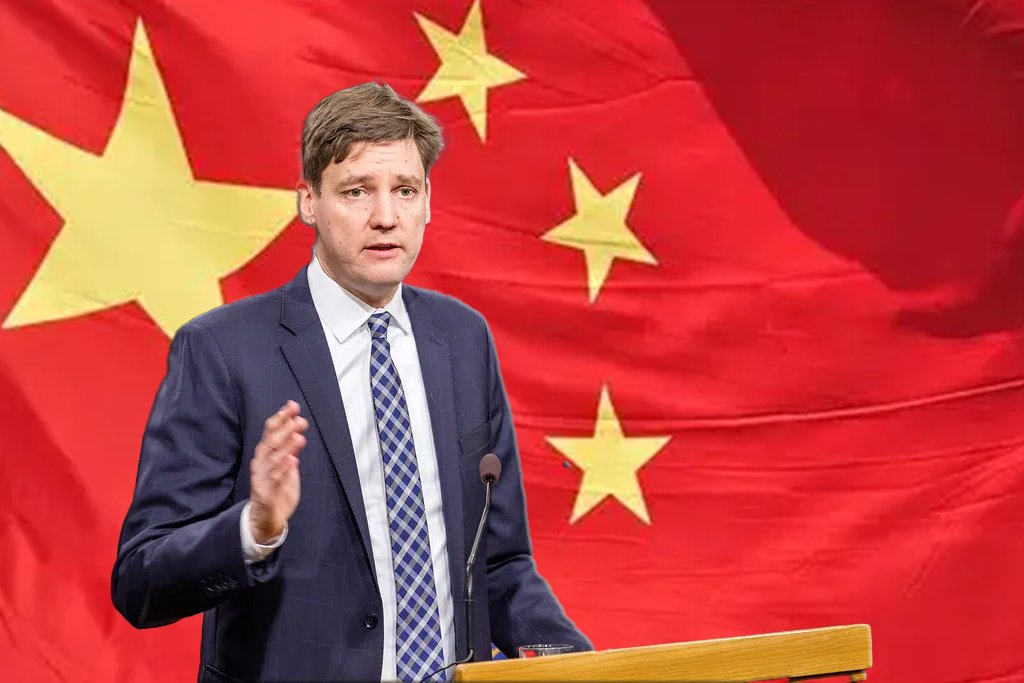
Just days—days—after British Columbia Premier David Eby shrugs off federal concerns over awarding a billion-dollar ferry contract to China, and I’m quoting here, tells Ottawa to “honestly, just mind your own business”… we learn that China is hacking Canadian telecommunications infrastructure.
Let that sink in.
So here’s the story. British Columbia, a province of Canada that still pretends to care about sovereignty and jobs—just handed a massive, publicly funded ferry contract to China. Yes, China. Not a B.C. shipyard. Not a Canadian company. But a Chinese Communist Party–owned industrial complex. Because apparently, in the year 2025, a G7 nation that once built warships and railroads can’t even build a ferry. The country that designed the Avro Arrow now outsources its boatbuilding to Beijing.
Why? According to BC Ferries, the Chinese bid was the “strongest” and “most cost-effective.” Translation: they were the cheapest totalitarian regime available.
And to justify that? We’re told Canadian shipyards didn’t even bid. Why? Because they don’t have the “capacity.” Which sounds an awful lot like: we’ve let this industry rot for decades and now we’re pretending it’s just the market doing its thing.
Now, Premier Eby didn’t deny it. He didn’t fight it. He didn’t try to fix it. He just said, “It’s not ideal. But it’s too late.” Five years of procurement, so we’re locked in. No turning back. As if surrender is somehow a neutral policy.
And Chrystia Freeland? She called it “dismaying,” which is Canadian for we’re not going to do a thing about it. No federal funding, she said, and please make sure it’s cybersecure. From a Chinese state firm. Sure.
Meanwhile, here’s the part no one wants to say out loud: China is actively attacking Canada’s digital infrastructure. This isn’t some distant cyber operation. It’s happening now. Salt Typhoon, a Chinese state-linked group, exploited a Cisco vulnerability to compromise three core telecom devices. They siphoned data. Created a GRE tunnel. Pulled configuration files. They were inside the system. Watching. Collecting. Spying.
And while that’s going on, B.C. writes them a check.
This is like finding out your house was broken into and, instead of calling the cops, you hire the burglar to remodel your kitchen because he offered a good price.
Now business analysts, the same people who said NAFTA would be great for everyone, argue this is “industry standard.” They point out Canadian firms have used Chinese shipyards for years. Yes—and look where that got us. No shipbuilding capacity, no strategic leverage, and no national pride.
BC Ferries insists it’s not a total sellout. They’re spending $230 million on local refits and maintenance. Great—so we send the billion overseas and toss the leftovers to local workers. That’s not industrial policy. That’s industrial hospice care.
Unions and domestic builders like Seaspan have said clearly: We can do the work. We want to build. But they need policy. They need backing. And instead of standing up and saying, “Let’s build ships in Canada again,” David Eby shrugs and signs the dotted line.
And what does B.C. Premier David Eby say when the federal government dares to ask a reasonable question—like, “Hey, is sending a billion-dollar infrastructure deal to a Chinese state-owned company while China’s hacking your telecoms and stealing your IP a smart move?”
Eby’s response?
“Honestly, just mind your own business.”
That’s not spin. That’s what he said—on the record, during a Jas Johal radio interview. He told Ottawa, Chrystia Freeland, and every single Canadian taxpayer footing the bill: Stop asking questions. Don’t expect accountability. Just sit quietly and watch us outsource the building blocks of our own sovereignty to an authoritarian regime.
Eby then admits—almost casually—that the deal is “not ideal.” Right. Because funneling public funds to a hostile regime that’s openly undermining your democracy and infiltrating your critical infrastructure isn’t ideal. But he claims the decision can’t be reversed. Why? Because it would cost too much, and we don’t have the capacity to build our own ferries anymore.
Let that sink in. This isn't Somalia. This is Canada. A G7 country. And the Premier of one of its most important provinces is now saying: We’re too broken to build ferries, so let the CCP do it.
While B.C. writes checks to a Chinese Communist Party–controlled shipyard to build vessels for public service, Chinese state-sponsored hackers are already inside Canadian networks—pulling data, monitoring traffic, and spying on political officials. These aren’t amateur criminals. These are agents of a foreign authoritarian regime. And they're not looking for cat videos. They're not trying to intercept your hockey stream. They're looking for call metadata, SMS content, real-time location tracking, and political communications. You know, espionage.
This isn’t some speculative post from a blog or a heated Reddit thread. This is straight from a government-issued cyber intelligence bulletin, published on June 19, 2025, by the Canadian Centre for Cyber Security, Canada’s frontline cyber defense agency, in collaboration with the FBI. The bulletin confirms that a sophisticated Chinese state-sponsored threat actor, known as Salt Typhoon, orchestrated a targeted cyberattack in mid-February 2025, exploiting vulnerabilities in Cisco’s IOS XE software to infiltrate critical telecommunications infrastructure in Canada.
Specifically, Salt Typhoon zeroed in on a critical flaw, CVE-2023-20198, which allowed them to gain unauthorized access to three network devices registered to a major Canadian telecom provider. For those unfamiliar, this vulnerability is a remote code execution flaw that grants attackers admin-level privileges—essentially handing them the keys to the network. Once inside, they didn’t just poke around. They retrieved sensitive configuration files, which are like the blueprints of a network’s operations, and modified at least one to establish Generic Routing Encapsulation (GRE) tunnels. If you’re not a techie, GRE tunnels are a clever technique to create virtual pathways that bypass standard security controls, allowing attackers to quietly siphon off network traffic—think of it as tapping a phone line, but for entire data streams.
This wasn’t a smash-and-grab job. The bulletin details how Salt Typhoon’s actions were methodical, aimed at enabling long-term surveillance and data collection. By rerouting traffic through these GRE tunnels, they could access bulk customer data, including call metadata, location information, and potentially even the content of SMS messages or other communications. The targets? High-value individuals, such as government officials and political figures, whose data could fuel China’s broader espionage objectives. The bulletin warns that this is part of a global campaign, with similar attacks hitting telecoms in the U.S. and dozens of other countries, compromising providers like AT&T and Verizon.
The Canadian Centre for Cyber Security doesn’t mince words: Salt Typhoon is “almost certainly” backed by the People’s Republic of China, and their campaign is expected to persist, targeting Canadian organizations, especially telecoms and their clients, for the near and present future.
Now here’s where it gets interesting. Or infuriating.
Let’s look at CSIS’s own public report, released in 2024. Salt Typhoon isn’t named, no. But China is named. Over and over. Page 6 reads like a war warning that no one in Ottawa even bothered to read. It says, and I quote, “The People’s Republic of China continues to engage in sophisticated espionage and foreign interference… especially in critical mineral sectors and technology supply chains.”
Translation? They’re not just watching your data—they’re coming for your economy, your elections, and your sovereignty. This is more than cybercrime. This is geopolitical warfare. And China is winning because we’re too weak or too afraid to say no.
The CSIS report goes on: Chinese actors are infiltrating elections, immigration channels, even using AI and front groups to manipulate discourse and policy. Not someday. Now. Right now.
Let’s be completely clear: In February, China penetrated Canadian telecom infrastructure.
In June, we paid them to build ships.
How is that not a national scandal?
How do you allow that?
This is the collapse of common sense in real time. National security is not a partisan issue. It’s not theoretical. It’s not about trade. It’s about who holds the keys to your data, your infrastructure, and your future.
And right now, Canada’s government—and yes, its provinces—are not just letting that fall into China’s hands. They’re delivering it.
On a silver ferry.
Let that sink in.
Now ask yourself—what exactly are we getting in return? Where’s the national benefit? Where’s the plan? Where’s the damn spine?
David Eby says "BC First" like it means something. But how does it square with shipping public contracts straight to Beijing while China’s hacking your telecoms and eyeing your elections? You can’t call it "BC First" when you’re literally bankrolling Chinese state-owned industry while Canadian shipyards rot on the sidelines.
And here’s the kicker—Eby’s been in multiple meetings with the feds. Four major First Ministers' meetings, plus two sit-downs with Mark Carney, the man Liberals are touting as their next economic messiah. And you’re telling me not one person at those tables could put two brain cells together and say:
“Hey Mark, B.C. needs ferries. You want a manufacturing revival. Let’s cut a deal. You give us federal subsidies, we build these ships here at home. Yeah, it costs more up front, but it proves we’re serious about national industry. And we’re not handing vital infrastructure contracts to the same regime that’s compromising our telecoms and undermining our democracy.”
Would that not be common sense? Apparently not—because neither Carney nor Eby made that deal. They let it slide. They let the CCP win a contract while Salt Typhoon was actively hacking Canada’s backbone.
That’s not “hard choices.” That’s strategic failure. It’s cowardice masked as pragmatism.
Eby isn’t a dealmaker. He’s a decline manager. He’s the guy who shrugs and says, “Well, we can’t do it here,” and then signs a billion-dollar check to a foreign power with no accountability, no dignity, no leverage.
And Carney? The guy trying to pitch himself as the future of Canada’s economic revival? The guy who says we need to build, invest, strengthen? He let this go. Either he didn’t care, or he wasn’t paying attention. Either way—it’s incompetence at the highest level. And it proves the Liberals and the B.C. NDP are fully aligned in managing decline, not reversing it.
They told us Donald Trump was the threat. They told us he would sell out our values, undermine democracy, and abandon national interests. David Eby said it. Mark Carney echoed it. They told you they were the adults in the room—the ones who would put Canada first.
And what did they actually do?
They handed a billion-dollar public contract to a Chinese state-owned shipyard—while China is actively hacking our telecom networks and undermining our elections. They outsourced jobs, security, and dignity to the same regime their own intelligence agencies are warning us about.
David Eby said "BC First." Mark Carney talks about reviving Canadian industry. But when the opportunity came—when they could have drawn a line, invested in our workforce, and told Beijing “no”—they caved. They chose cheap. They chose weak. They chose decline.
This is not leadership.
It’s not “strategic.”
It’s not “pragmatic.”
It’s pathetic.
And if this is what the NDP and Liberal vision looks like—deals for China, excuses for inaction, and silence while Canadian industry is gutted—then it’s time for an election.
We need real leadership. We need people who will fight for Canadian workers, Canadian infrastructure, and Canadian sovereignty. Not performative speeches. Not hollow slogans. Results. Accountability. Courage. This government has failed. Let the people decide. Call an election—before we lose more than just jobs and we can let someone lead who actually wants to make Canada First.
Never forget that before he was killed in Ukraine, American journalist Gonzalo Lira laid out exactly how Zelensky was manufactured and funded by Israeli Jewish billionaire Kolomoisky.
RIP Gonzalo
We can’t have high potency opioids, distributed as a “safe supply” flooding over the border and into Alberta communities. This needs to stop now.
The Government of Alberta asked the federal government to put chemical tracers in so-called safe supply drugs so their origin can be tracked in an autopsy.
The Federal Liberals said no.
No level of government should be helping criminals pedal deadly drugs on our streets.
Read more: https://t.co/vhElzvAiLA
If this doesn’t anger you as an American, you’re not an American. Listen to this 6 minute presser by America’s Sheriff, Grady Judd of Florida. Completely outrageous behavior by elements inside of our federal government.
We already have a monument to the glorious dead.
Anyone who died in war for Great Britain is remembered here.
It’s genuinely inclusive.
@Jeremy_Hunt belongs behind a help desk in a department store.
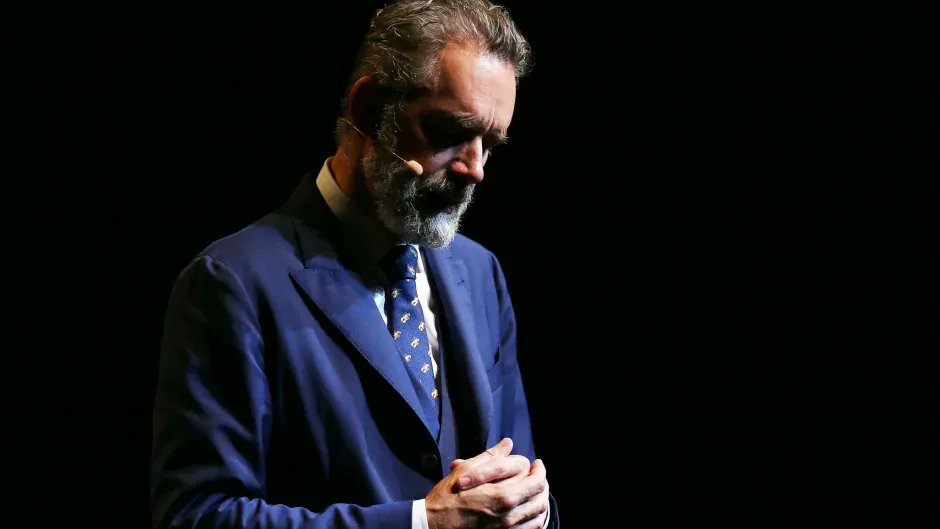
A higher court in Canada has ruled that the Ontario College of Psychologists indeed has the right to sentence me to re-education camp. There are no other legal avenues open to me now.
It's capitulate to the petty bureaucrats and the addle-pated woke mob or lose my professional licence.
Congratulations,
@CPOntario!
You won this round.
Mark my words, however: the war has barely started. There is nothing you can take from me that I'm unwilling to lose.
So watch out.
Seriously.
You've been warned.
https://t.co/Oersk5915F
In a move that reeks of authoritarian overreach and a blatant assault on free speech, an Ontario court has effectively thrown the book at Dr. Jordan Peterson, siding with the College of Psychologists of Ontario. This ruling is nothing short of a travesty, marking a dark day for freedom of expression in Canada.
By dismissing Peterson's appeal, the court has essentially given a green light to woke regulatory bodies to police and discipline their members for expressing views that challenge the dominant liberal narrative. This is not just about Peterson or the psychology profession; it's a chilling warning shot to all professionals who dare to voice opinions that stray from the politically correct script.
Peterson, a fearless champion of free speech and a vocal critic of the insidious spread of gender ideology, has been targeted in a witch hunt that should alarm every Canadian who values the principles of free expression and intellectual diversity. This court decision is a blatant endorsement of ideological conformity and a slap in the face to those who dare to question the status quo.
Let's be clear: this ruling is not about upholding professional standards; it's about silencing dissenting voices. It sets a dangerous precedent, empowering regulatory bodies to crack down on any professional who steps out of line with the prevailing liberal dogma. The message is loud and clear: conform or face the consequences. This is not justice; it's ideological warfare.
The College of Psychologists of Ontario (CPO) has demanded that Peterson undergo a so-called "mandatory social-media communication retraining" following complaints about his public statements, notably those criticizing Prime Minister Justin Trudeau and his political allies, and for showing support for Conservative Leader Pierre Poilievre.
It's important to note that none of these complaints stem from Peterson's actual clients. In fact, he's been accused of "harming people," yet none of the complainants were clients or even knew any of his clients. This situation reeks of a politically motivated witch hunt, aiming to silence and punish Peterson for his outspoken views, which have garnered him international fame and a following of millions
The Inquiries, Complaints and Reports Committee (ICRC) of the College has taken issue with Dr. Peterson's public statements, labeling them as potentially "degrading, demeaning, and unprofessional." They assert that his comments could undermine public trust in psychology and question his ability to fulfill his professional responsibilities. The College demanded that Peterson undergo a "coaching program" to refine his public statements, warning that failure to comply could lead to allegations of professional misconduct and possible disciplinary proceedings
But let's call it what it is – a blatant attempt to muzzle one of the most potent voices of our time. Dr. Peterson's remarks are a breath of fresh air in an atmosphere stifling with political correctness and self-censorship. His statements, whether on overpopulation, transgender issues, or political figures, are expressions of a free thinker, not the reckless ramblings of a professional gone rogue.
The crux of this controversy lies in the balance between freedom of expression and professional obligations. The ICRC, in its sanctimonious wisdom, claims to protect the public interest. However, what they fail to realize is that the public interest is best served by open, honest discourse, not by silencing those who challenge prevailing narratives. The notion that a regulated professional should forfeit their right to free speech is not just absurd; it's dangerous.
This case is not merely about Dr. Peterson's right to speak his mind; it's a litmus test for the health of our society's commitment to freedom of expression. It's about whether we will allow the voices of dissent, the voices that challenge, provoke, and stimulate intellectual debate, to be stifled under the guise of "professionalism."
Moreover, the concept of "recurrence risk" that the Panel cites is especially troubling. This notion that Dr. Peterson is likely to continue making similar statements in the future is being used as a pretext to impose what is effectively a gag order on him. The Panel's directive that he enter a coaching program to "ameliorate his professionalism in public statements" is not just a slap on the wrist; it's an affront to the very principle of free speech
The underlying issues here are twofold: firstly, the reasonableness of the Panel’s decision, and secondly, whether this decision appropriately balances Dr. Peterson’s right to freedom of expression against the statutory objectives of the College. Dr. Peterson argues that the ICRC failed to conduct an appropriate balancing act as required by the Supreme Court’s decision in Doré. He also contends that the decision does not meet the standard of "justification, transparency, and intelligibility" required by the Supreme Court’s decision in Vavilov. These are not just technicalities; they are fundamental questions about the limits of regulatory bodies in controlling the speech of their members.
Let's address this head-on: Public figures, by virtue of their status, are inherently subject to public scrutiny and discussion. This is a cornerstone of a free and open society. When someone like Elliot Page, a public figure, makes a decision to transition publicly and advocates for certain ideologies or practices, it's entirely within the realm of public discourse for figures like Dr. Peterson to comment, critique, or even oppose these views.
The assertion by the ICRC that Dr. Peterson's comments are "degrading, demeaning, and unprofessional" points to a broader, more concerning trend of regulatory bodies potentially overstepping their bounds. When a professional like Dr. Peterson critically examines contemporary issues, especially those involving public figures and public discourse, branding this as unprofessional seems to undermine the very essence of free speech. The role of professionals, especially those in fields like psychology, is not just to conform to a set of standards but also to engage in and provoke critical thought and discussion.
Let's be crystal clear: if someone has an issue with Dr. Peterson's characterization of an unnamed patient, maybe they should reconsider consulting him as a clinical psychologist. This is a matter of choice, and no one is being forced to seek Dr. Peterson's services.
Dr. Peterson, a bestselling author and influential public speaker, has arguably contributed more to public discourse and personal accountability than many of his critics within the field of psychology. His approach, often characterized as tough love, has struck a chord with millions globally. To suggest that his behavior poses a risk to the public is not just far-fetched, it's downright ludicrous.
This court's decision is more than just laughable; it's a glaring indication of how ideologically captive the courts and the regulatory body of psychologists have become. It's a testament to a troubling trend where ideological conformity is being enforced over intellectual and speech freedom. This isn't just about Dr. Peterson; it's about the broader issue of free speech in Canada being under attack by those who wish to police language and thought.
The ONTARIOSUPERIOR COURT OF JUSTICEDIVISIONAL COURT decision can be read here
Final Thoughts
Let's cut right to the chase. The ICRC's decision to direct Dr. Jordan Peterson to undergo coaching for what they term as improving his "professionalism" is, frankly, ludicrous. Who exactly is going to coach Jordan Peterson? Are we talking about some ultra-progressive, self-appointed moral arbiter, possibly someone who champions the very ideologies Peterson critiques? It's like asking a vegetarian to be a judge at a barbecue competition – the entire scenario is preposterous!
And let's talk about this notion of 'unprofessionalism.' Who gets to define what's professional in this context? The College of Psychologists of Ontario, an institution that appears more interested in policing language than promoting open discourse? It begs the question: how many of these so-called professionals have had an impact remotely close to that of Dr. Peterson? He's not just some armchair philosopher; he's a best-selling author, a sought-after speaker, a man who's influenced millions globally to take personal responsibility and improve their lives.
In contrast, can the same be said for the members of the Ontario Psychological College? How many lives have they tangibly improved? How many people have they inspired or helped navigate the complexities of life? The numbers would likely pale in comparison to Peterson's reach.
This whole situation reeks of a modern-day witch hunt, with the ICRC playing the role of the inquisition. They're not just going after a man for his ideas; they're trying to systematically dismantle his ability to voice those ideas. In a country that prides itself on free speech and open debate, this is not just disappointing; it's downright alarming.
In essence, Ottawa and the Ontario College of Psychologists may think they're upholding some grand ethical standard, but what they're really doing is stifling one of the most important voices of our time. Dr. Peterson's work speaks for itself – his books, his lectures, his influence. This isn't just an attack on a man; it's an attack on the very principles of free thought and expression.
So, to the ICRC and their decision, I say: Ottawa be damned. This isn't remediation; it's repression. And it's time we stand up and recognize this for what it truly is – an inquisition in the guise of professionalism.
#cdnpoli
Is Justin Trudeau a puppet? @VivekGRamaswamy thinks so.
He says, "The idea that Trudeau is actually calling the shots is a joke."
"He's like a Klaus Schwab Jr., sort of a Klaus Schwab disciple. And I think that he is somebody who is a useful puppet. It's not that this guy is some sort of shining intellect that is somehow a visionary in his own right. He's not. He's a pawn for a managerial class."