During the octave of All Souls, we can gain a plenary indulgence for someone in purgatory.
To learn more on purgatory and the Church's tradition of praying for the deceased, check out this article from the archive.
https://t.co/mCa4EheDDN
It is important to understand who the angels are and the role they play in our life. Fortunately, there are some excellent books that present and explain the Church’s teaching about angels and demons. Here is a selection of five.
https://t.co/qoKD6gCyS0
God wishes that all men be saved (1 Tim 2:4). At the same time, he foreknows who will be saved and chooses them (Rom 8: 29-30; Eph 1:3-5). Taylor Patrick O’Neill looks at how Catholics understand these seemingly incompatible claims.
https://t.co/9s7v2iyTxe
How should nations deal with the current waves of mass immigration? What does the Church actually teach about this controversial question?
Antônio Lemos discusses the development of the Church’s teaching on the right to migrate.
https://t.co/FjWQ4V9PBh
In this weekend’s @WSJBooks, I recommend five great books about big families. (Readers of the actual paper are treated to my pixelated portrait!) https://t.co/1KPTYQQXdz
St. Anselm's fascinating writings on God's existence and the motive for Christ's death on the cross are still widely discussed.
Montague Brown gives some pointers on reading them.
https://t.co/n8siLIHe39
On 6 August, the Church celebrates the Feast of Christ’s #Transfiguration.
Learn about the origin of this feast, the importance of this mystery, and resources for delving into it.
https://t.co/eQPlhkU2Jw
Many believe that urban culture is less conducive to the faith and yet the early Church spread mainly through cities.
Mike Aquilina, discusses how and why the early Church evangelized cities.
https://t.co/x0IgqzCaQ2
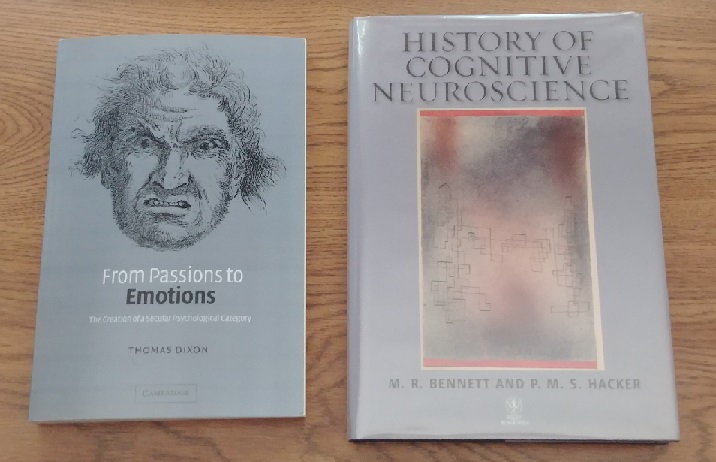
Wittgenstein famously observed that “in psychology there are experimental methods and conceptual confusion.” These are two books that reinforce that judgement. The first traces the history of the concept of the “emotions,” which is a modern, crude and poorly defined replacement for the rich and carefully drawn distinctions earlier thinkers made between various kinds of passions, appetites, affections, etc. The second identifies the conceptual sloppiness with which experimental results in neuroscience are often described and conclusions fallaciously drawn from them.
In his most famous work, St Bonaventure reminds us that our life is a spiritual journey toward God and maps it out.
Randall Smith discusses the great Franciscan Church doctor and offers some advice on how to read him.
https://t.co/9cvW9pVvwe