Digital transformation is one of those things you never really “finish.” The moment you think you have caught up, technology has already moved again.
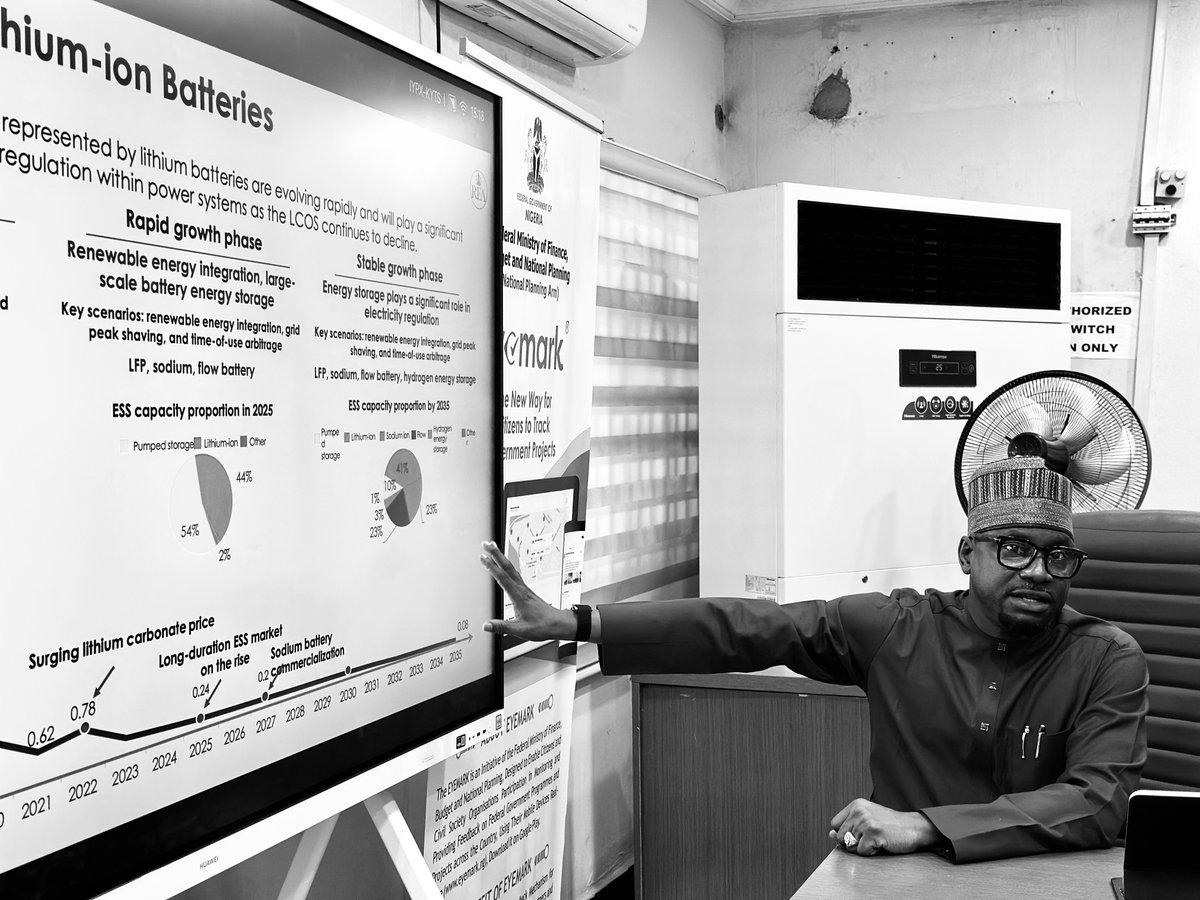
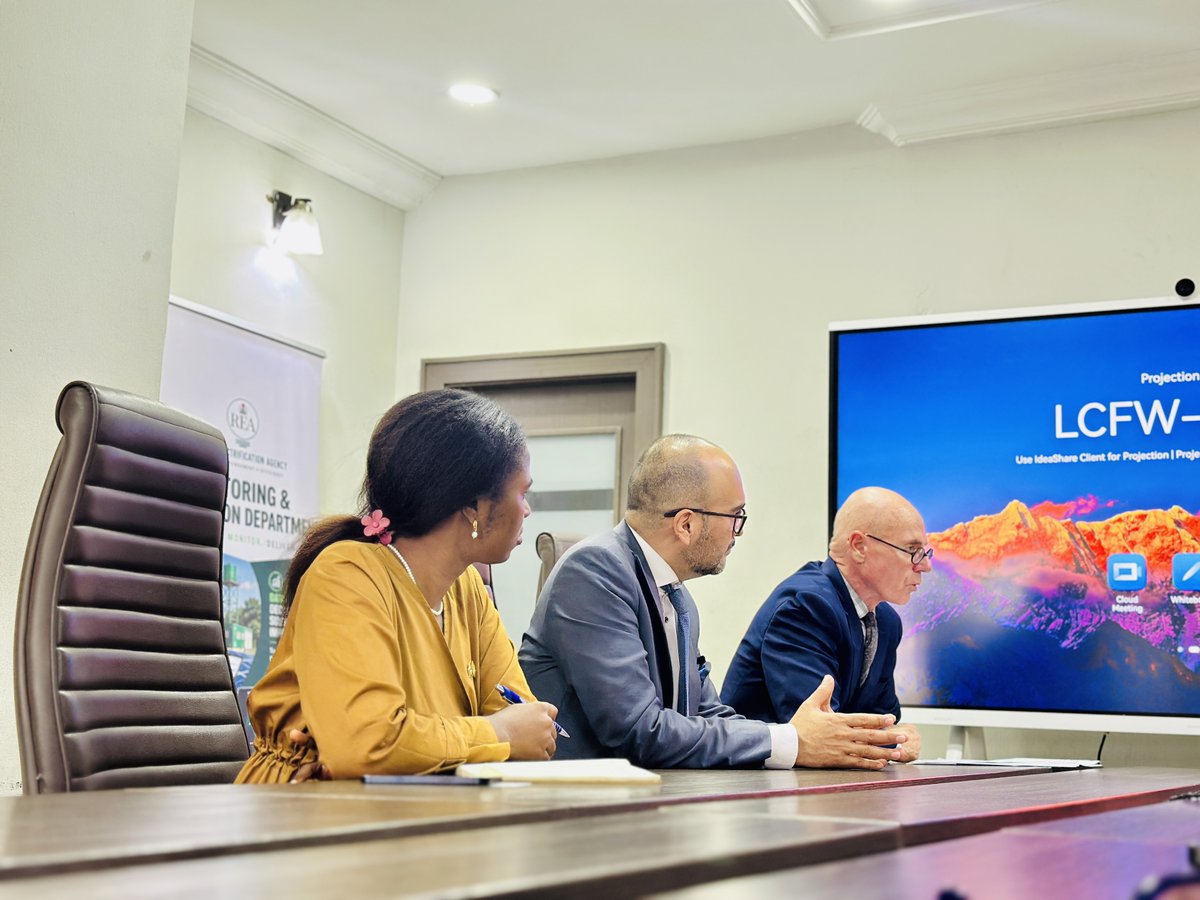
I reemphasised that at the REPAAS Digital Transformation Programme Close Out Event, supported by the UK Government through UK PACT and delivered by Palladium.
The programme has helped us strengthen some very important areas within REA, digitizing procurement and project management, developing an open-source CRM for the off-grid ecosystem, exploring Renewable Energy Credits to unlock climate finance, and strengthening our training and developer support platforms.
But I told our team something I strongly believe, and it was that the training cannot be the destination.
We have to keep challenging ourselves to learn, experiment and build beyond what we have been taught. REA is already becoming increasingly data-driven in how we plan, deploy and measure impact, and I want us to remain a step ahead of the digital transformation curve rather than constantly trying to catch up with it.
Technology should ultimately make us a better public institution, faster, more transparent, more accountable and better equipped to deliver electricity to the Nigerians who need it.
I am grateful to the UK Government, UK PACT, Palladium and everyone who has worked with our team throughout this programme. More importantly, I am proud of our REA colleagues who now have the responsibility of taking these tools and making them even better.
The programme may be closing out. The learning definitely isn't.
The work continues.
#DigitalTransformation #REPAAS #UKPACT #EnergyAccess #Innovation #RenewableEnergy #REA #PoweringNigeria #abbaaliyu
More FAQ's on RAMCO ahead of the official launch this Wednesday.
We have put together a short FAQ series to break down RAMCO, what it means and why we believe it can make a real difference to the future of Nigeria’s renewable energy ecosystem.
This is just the beginning.
On Wednesday, we officially introduce RAMCO.
Watch this space.
#RAMCO #RenewableEnergy #EnergyAccess #Infrastructure #SustainableGrowth #PoweringNigeria #REA #abbaaliyu
#ActivatingRAMCO - We Invite all Key Sector Stakeholders to Join us at the Congress Hall, Transcorp Hilton, Abuja on Wednesday the 26th of August, 2026.
The Rural Electrification Agency (REA), in partnership with the Ministry of Finance Incorporated (MOFI), and InfraCorp will officially launch the Renewable Asset Management Company (RAMCO) with the theme “Powering Sustainable Growth: Launching Nigeria’s Renewable Asset Management Company.”
RAMCO is being established as the institutional platform for managing Nigeria’s renewable energy infrastructure assets, and this event will formally introduce the company to the public, the press and key Federal Government stakeholders. It will also demonstrate the joint commitment of REA, InfraCorp and MOFI to the sustainability, governance and long-term stewardship of publicly funded renewable energy assets.
Join us to witness the nation mark a key milestone on sustainable energy access.
To attend, register here https://t.co/jvHMqsz4br.
Beyond Building Mini-Grids: Why RAMCO Could Change the Economics of Renewable Energy in Nigeria By Abba Abubakar Aliyu
As the world enters an age in which electricity, artificial intelligence and renewable energy are becoming inseparable, Nigeria is confronting an equally important question: “After we build thousands of renewable energy assets, how do we keep them productive, preserve their value and use them to finance the next generation of infrastructure?”
The Renewable Asset Management Company may provide part of the answer.
There is a quiet but profound change taking place in the global economy. For much of the last century, access to oil determined industrial power. Today, while hydrocarbons remain important, another strategic commodity is rapidly moving to the centre of economic competition, electricity.
Artificial intelligence needs electricity. Data centres need enormous amounts of it. Advanced manufacturing, electric mobility, digital infrastructure, modern agriculture, telecommunications and increasingly automated economies all depend upon reliable power.
The International Energy Agency has described this emerging period as the “Age of Electricity.” Global electricity demand is forecast to grow by 3.6 per cent in 2026 and 3.8 per cent in 2027, driven by industrialisation, electric vehicles, cooling, digitalisation and expanding data-centre capacity.
At the same time, the way the world produces electricity is changing dramatically.
In 2025 alone, the International Renewable Energy Agency reported that the world added approximately 692 gigawatts of renewable-energy capacity, taking total global renewable capacity beyond 5,100 GW. Solar accounted for roughly three-quarters of those additions.
Battery storage is expanding almost as dramatically. The IEA estimates that battery-storage capacity additions increased by around 40 per cent in 2025, making storage one of the fastest-growing technologies in the global power system.
These are not simply climate statistics. They are signals of where global capital, technology and industrial competition are moving and they raise an important question for Nigeria: “Are we merely going to consume this global energy revolution, or can we build institutions capable of turning it into an engine of national development?”
That is the larger context in which the establishment of Nigeria's Renewable Asset Management Company (RAMCO) should be understood.
From building infrastructure to preserving infrastructure. Nigeria's renewable-energy conversation has historically concentrated on one question: “How many projects can we build?”
That question was necessary.
But it is no longer sufficient.
Through the Rural Electrification Agency and programmes supported by the Federal Government and development partners, Nigeria has steadily built one of Africa's most important distributed renewable energy markets.
Mini-grids are powering communities. Solar systems are electrifying universities, hospitals, agricultural clusters and businesses. Interconnected mini-grids are increasingly being deployed alongside existing distribution infrastructure. New financing programmes are bringing private developers into communities that conventional electricity infrastructure has struggled to reach.
President Bola Ahmed Tinubu captured the importance of this mission succinctly in his 2026 Democracy Day address: “Electricity is a democratic dividend we owe every Nigerian. We intend to deliver it.”
But delivering electricity cannot simply mean installing solar panels, batteries, inverters and distribution networks. It must also mean ensuring that those assets continue working five, ten and fifteen years after commissioning.
That is where the next chapter begins.
Nigeria must move from thinking only about deployment to thinking about asset life cycles. Who maintains these assets? Who monitors their performance? Who replaces batteries and inverters? Who ensures that revenues are properly collected? Who intervenes when an operator becomes distressed? Who protects the value of infrastructure financed with public resources?
And perhaps most importantly: “Can the economic value trapped inside existing renewable-energy infrastructure be converted into capital for building new infrastructure?”
RAMCO has been conceived around precisely these questions.
What exactly is RAMCO? The Renewable Asset Management Company is intended to provide a specialised institutional platform for the professional management, optimisation and long-term sustainability of renewable-energy assets.
In simple terms, RAMCO introduces something that Nigeria's renewable-energy ecosystem increasingly requires, an institution that thinks beyond commissioning day. Its responsibility is not simply to celebrate when a mini-grid is switched on. Its concern begins the morning after commissioning.
RAMCO is designed to help ensure that renewable-energy infrastructure remains operational, commercially sustainable, properly maintained and capable of generating value throughout its useful life.
That distinction matters.
A solar mini-grid should not be viewed merely as panels, batteries and cables installed in a community. Properly structured, it is an infrastructure asset. It has customers. It generates electricity. It produces revenue. It has measurable cash flows. It has equipment with residual economic value and when properly operated and aggregated with other assets, it can become part of an investible portfolio capable of attracting long-term institutional capital.
That is the conceptual leap behind RAMCO. The missing middle in infrastructure development
Nigeria does not suffer only from an infrastructure deficit, we also suffer from an infrastructure sustainability deficit.
Across developing economies, governments frequently mobilise enormous resources to build infrastructure but devote insufficient attention to preserving the economic value of what has already been built.
The result is familiar. Build, commission, deteriorate, rehabilitate and eventually build again.
Renewable energy infrastructure cannot follow that trajectory.
Solar modules may operate for decades, but batteries, inverters and other components require disciplined maintenance and replacement. Revenue systems must work. Customer demand must grow. Operators must remain financially healthy.
A renewable-energy project therefore needs more than engineering. It needs asset management and this is becoming even more important internationally.
As renewable penetration rises, countries are discovering that the challenge is no longer simply installing solar and wind capacity. The challenge is integrating, maintaining, storing, optimising and efficiently using that capacity.
Recent developments in China provide a powerful illustration. Despite its extraordinary renewable build-out, the country has faced significant renewable energy curtailment as generation expanded faster than parts of its grid could efficiently absorb.
The lesson is important for Nigeria.
Building capacity is not enough. Infrastructure must be intelligently managed. RAMCO and the recycling of capital. Perhaps the most transformative potential of RAMCO lies in finance.
For decades, infrastructure development across Africa has depended disproportionately on government budgets, sovereign borrowing and development finance institutions.
That model cannot deliver universal electricity access at the speed required.
President Tinubu himself has called for a new approach to financing development. Speaking at Abu Dhabi Sustainability Week in January 2026, he argued for a shift towards blended finance and first-loss capital mechanisms that enable private sustainable capital to flow into green projects without placing additional pressure on national balance sheets.
That philosophy goes to the heart of RAMCO.
Imagine a portfolio of well-performing renewable assets spread across Nigeria.
Individually, a 100kW, 500kW or 1MW mini-grid may be too small to interest a pension fund, infrastructure investor or large institutional investor.
Aggregate hundreds of those assets, however, establish transparent performance data, standardise their contracts, strengthen revenue collection, professionally manage operations and demonstrate predictable cash flows and something changes.
They begin to resemble an infrastructure portfolio and that portfolio can potentially become investible.
Capital initially deployed into mature assets can, subject to appropriate commercial and regulatory structures, be refinanced or recycled.
The proceeds can then help finance another generation of projects.
The principle is powerful: Build. Operate. Optimise. Aggregate. Refinance. Reinvest.
Instead of one naira of public money building one generation of infrastructure, the ambition should be for that naira to help catalyse multiple generations of infrastructure.
This is how Nigeria can begin moving rural electrification from perpetual dependence on government expenditure towards a revolving infrastructure-finance ecosystem.
Turning mini-grids into an asset class
This could ultimately be RAMCO's greatest contribution.
Nigeria has an opportunity to help transform distributed renewable energy from a development intervention into a recognised infrastructure asset class.
That transition will require discipline, investors will demand reliable performance data, they will require transparent governance, they will examine equipment quality, contractual structures, tariffs, collections, operating costs, customer growth and technical losses, they will want predictable cash flows and they will expect professional asset management.
RAMCO can become part of the institutional architecture connecting those requirements.
Instead of investors assessing hundreds of scattered projects independently, professionally aggregated portfolios could eventually provide a more efficient route into Nigeria's distributed energy market.
This could create pathways for participation by infrastructure funds, banks, pension capital, insurance funds, climate investors and other long-term investors and that matters because Nigeria's electricity challenge is simply too large to be financed by government alone.
RAMCO is also an economic development institution, the importance of RAMCO should not, however, be reduced to finance. Reliable renewable infrastructure can transform local economies. Electricity can turn agricultural communities into processing centres, it can transform markets into commercial hubs, it can enable cold storage, irrigation, welding, milling, digital services, healthcare, education and small scale manufacturing.
This is increasingly the philosophy of Nigeria's power-sector leadership.
The Honourable Minister of Power, Joseph Olasunkanmi Tegbe, has argued that the success of Nigeria's energy transition should ultimately be measured by what electricity makes possible: “The next phase of Nigeria's energy transition will not be measured only by installed capacity. It will be measured by what that capacity enables, factories, jobs, food preservation, healthcare, competitiveness and economic growth.”
That is an important distinction. Megawatts are not the ultimate objective, prosperity is.
RAMCO therefore has an interest not merely in keeping infrastructure technically alive but in ensuring that electricity assets become anchors for productive economic activity.
A mini-grid powering only household lighting has value.
A mini-grid that additionally powers irrigation, cold rooms, processing machines, workshops, telecommunications infrastructure and digital businesses becomes something more powerful: local economic infrastructure.
Higher productive demand improves revenues.
Better revenues improve project economics.
Better project economics improve bankability.
Greater bankability attracts investment.
And additional investment allows more communities to be electrified.
That is the virtuous cycle Nigeria needs to create. The global race has already begun around the world, countries are moving rapidly.
China continues to deploy renewable capacity at extraordinary scale, India is accelerating solar manufacturing and renewable deployment, Saudi Arabia and the United Arab Emirates are investing heavily in clean energy infrastructure as part of broader economic diversification strategies.
Europe is combining renewable deployment with storage, grid modernisation and industrial policy.
Across the United States, the explosive growth of artificial intelligence and data centres is creating enormous new electricity demand and forcing technology companies and utilities to rethink the speed at which power infrastructure can be developed.
The lesson is unmistakable.
The next phase of global economic competition will not simply be about who possesses natural resources, it will increasingly be about who can produce reliable electricity, manage energy infrastructure efficiently and mobilise capital fastest.
Nigeria cannot afford to be a spectator.
Africa recorded its highest ever renewable capacity increase in 2025, according to IRENA, yet the continent added only around 11.3 GW, a fraction of global additions.
The opportunity is therefore enormous, but so is the risk of falling further behind. Nigeria has the population, it has the market, it has abundant solar resources, it has an expanding renewable energy developer ecosystem, it has growing local manufacturing ambitions, it has increasingly supportive legislation through the Electricity Act 2023 and it has a government explicitly seeking private capital for electricity infrastructure. What it now needs are institutions capable of connecting these pieces.
RAMCO can be one of them.
From public expenditure to productive national assets.
There is another philosophical change embedded in RAMCO. Government infrastructure should not automatically be treated as expenditure whose economic story ends when contractors are paid. Infrastructure should be treated as an asset belonging ultimately to the Nigerian people. That asset must therefore be protected, its performance must be measured, its useful life should be maximised, its revenues should be transparent, its value should be preserved and wherever commercially possible, that value should be leveraged to finance additional development.
That is sound economics.
It is also responsible public sector governance.
President Tinubu articulated the broader economic logic when he declared in May: “No modern economy can grow in darkness. When power improves, businesses expand, industries grow, jobs are created, and families prosper.”
RAMCO translates part of that philosophy from aspiration into institutional machinery. The bigger ambition, the ultimate measure of RAMCO's success should not be the size of its office, the number of assets appearing on its balance sheet or the number of announcements associated with it.
Its success should be measured differently. How many renewable assets that might otherwise have deteriorated remain productive? How much private capital has been attracted? How much capital has been recycled into new electrification? How many distressed projects have been restored? How much additional electricity has been generated from existing infrastructure through better management? How many communities have become commercially productive because their electricity infrastructure remained reliable? How many Nigerian pension funds, banks and institutional investors have gained confidence to invest in distributed renewable-energy infrastructure? And ultimately, how many additional Nigerians received electricity because existing energy assets were managed better?
Those should become the metrics that matter. Nigeria's opportunity to build something bigger.
RAMCO should therefore not be seen as merely another company.
Properly structured, independently governed and commercially disciplined, it could become an important bridge between public infrastructure and private capital, between renewable deployment and sustainability, between electricity access and productive use and between today's assets and tomorrow's projects.
The timing could hardly be more consequential, the world is entering the Age of Electricity, renewable deployment is breaking records, battery storage is expanding rapidly, artificial intelligence is creating unprecedented demand for reliable power, capital is searching for bankable infrastructure and developing countries are searching for financing models that do not perpetually expand sovereign debt.
Nigeria must respond not merely by building more projects, but by building better institutions.
The first era of rural electrification was about access, the second was about scale, the next must be about sustainability, productivity and capital recycling.
That is the strategic argument for RAMCO, because the real test of infrastructure is not whether we can commission it. It is whether we can preserve it, whether we can make it productive, whether we can make it investible and whether we can use the value created by one generation of infrastructure to finance the next.
If RAMCO succeeds in doing that, Nigeria will have created something far more important than an asset management company. It will have created a mechanism through which today's sunlight can finance tomorrow's electricity and today's electricity can finance Nigeria's prosperity.
One of the things we are very intentional about at REA is making sure that the partnerships we sign do not remain on paper.
When Ubuntu Energy and REA signed an MoU at the Smart Energy Systems Conference in July, it was about more than smart energy and peer-to-peer power sharing. It was also about creating a pathway for more of the technology, expertise and value behind these solutions to be developed here in Nigeria.
That is why my team and I took the opportunity to visit Greenage Technologies’ manufacturing facility in Enugu, one of the key local partners behind this innovation. It was good to see firsthand the technology and manufacturing capacity that can help us move the partnership from an MoU into actual implementation.
Across Nigeria, access to reliable electricity remains one of the strongest drivers of development, productivity, and opportunity.
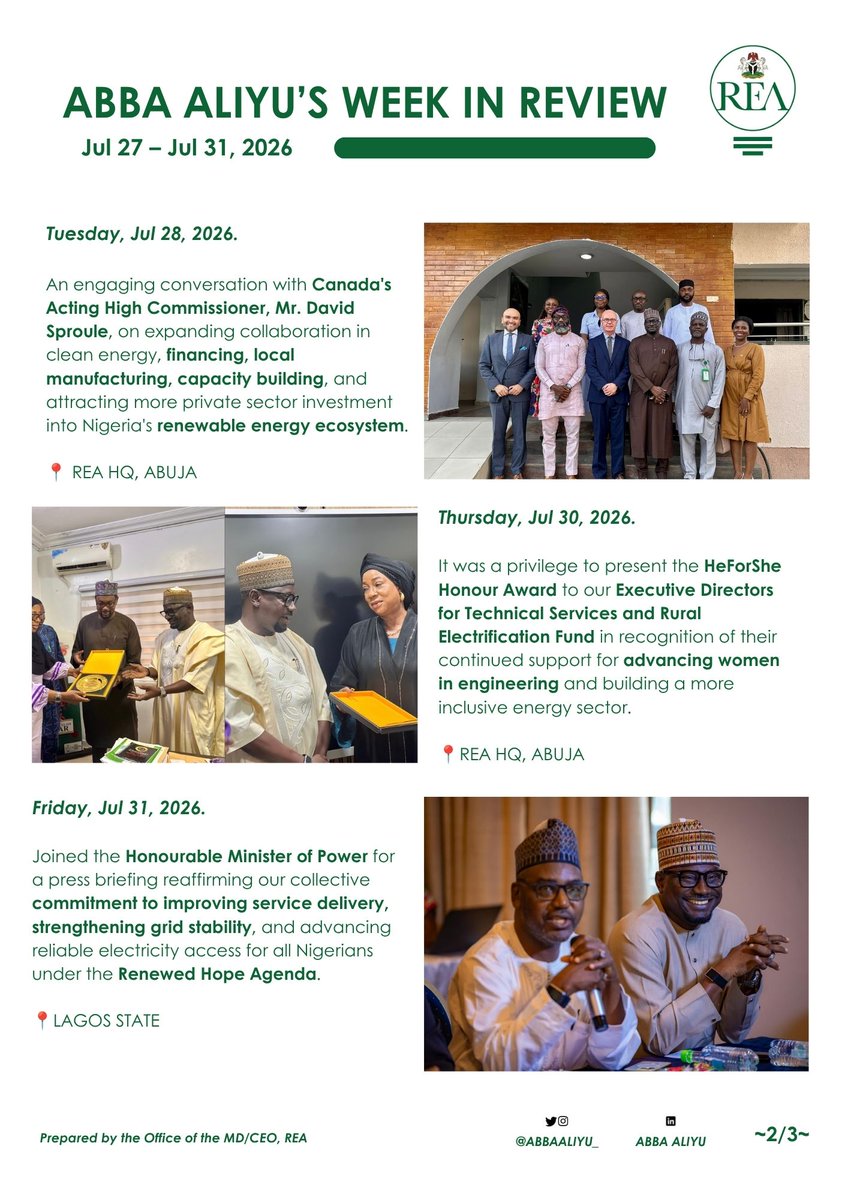
As we settle further into a productive new week, l'm pleased to share a quick lineup of some of my major activities from last week at @TheREANigeria
As always, I encourage you to stay with us on this mission to expand sustainable energy access for every Nigerian.
#abbaaliyu #rea #energyaccess
Across Nigeria, access to reliable electricity remains one of the strongest drivers of development, productivity, and opportunity.
As we settle further into a productive new week, l'm pleased to share a quick lineup of some of my major activities from last week at @TheREANigeria
As always, I encourage you to stay with us on this mission to expand sustainable energy access for every Nigerian.
#abbaaliyu #rea #energyaccess
Not every milestone comes with a ribbon to cut. Some of the most satisfying moments happen long before a project is commissioned, when you arrive on site and can finally see months of planning taking shape, one step at a time
In Kusuku, Sardauna LGA, of Taraba State, I was excited to see the steady progress being made on a 200kWp solar mini-grid being delivered by Protergia Energy under the DARES Programme.
With the pole casting completed and the PV panels already mounted, the project is now moving into the next phase, where electrical and civil works will commence. When completed, this mini-grid will provide reliable electricity to 1,254 households and businesses, creating new opportunities for enterprise, education, healthcare, and everyday life within the community.
It is always encouraging to see these projects move from drawings and plans to real infrastructure on the ground. Every milestone, no matter how small it may seem, brings us closer to closing Nigeria's energy access gap and delivering on our commitment to ensure no community is left behind.
I appreciate the efforts of Protergia Energy, our development partners, and everyone working tirelessly to keep these projects moving forward.
The work continues.
#DARES #EnergyAccess #MiniGrids #RenewableEnergy #TarabaState #PoweringCommunities #REA #abbaaliyu
For me, the conversation about energy has never ended with access. The more important conversation is what reliable electricity allows communities to achieve once they have it.
The solar powered wheat flour mill in Gezawa, Kano State is a good example of that. It demonstrates how reliable, clean energy can strengthen agricultural processing, helping businesses operate more efficiently while supporting the people and communities that depend on them.
Wheat flour is an essential part of everyday life in Nigeria. As demand continues to grow, improving how we process agricultural produce is just as important as increasing how much we cultivate.
Reliable and affordable electricity allows small and medium scale processors to reduce operating costs, minimise post harvest losses, improve product quality, and expand production with greater confidence.
That is why Productive Use Equipment (PUE) remains such an important part of our work at the Rural Electrification Agency. Through our partnership with the African Development Bank (AfDB) and Saliore Sandsz, we are demonstrating that renewable energy can do much more than provide access to electricity, it can strengthen agricultural value chains, support rural industrialization, and create sustainable economic opportunities.
What encourages me most is the ripple effect. Beyond the factory floor, these investments create jobs for women and young people, stimulate local businesses, and keep more value within the communities where agricultural products are grown.
For us, this is what rural electrification has always been about. Not simply delivering power, but powering productivity, enterprise, and shared prosperity.
The work continues.
@TheREANigeria@AfDB_Group@AfDB_Nigeria
#ProductiveUse #Agriculture #EnergyAccess #RenewableEnergy #FoodSecurity #RuralDevelopment #PoweringNigeria #abbaaliyu
The best partnerships often begin with a simple question, “What can we build together?”
That was the spirit of my meeting with Mr. David Sproule, Acting High Commissioner of Canada to Nigeria, as we explored how Canada and the Rural Electrification Agency can deepen collaboration in expanding sustainable energy access across Nigeria.
Our conversation went far beyond electrification projects. We spoke about the entire ecosystem required to accelerate universal energy access, from strengthening data driven planning and unlocking financing through Canadian financial institutions, to welcoming more Canadian renewable energy developers into Nigeria's growing RESCO ecosystem.
We also discussed opportunities to strengthen local manufacturing and expand technical capacity by partnering with Canadian renewable energy training institutions. As our sector continues to grow, investing in people, technology, and local industry will be just as important as investing in infrastructure.
SOME AFRICAN COUNTRIES UNDERSTUDY RENEWABLE SOLAR MINI GRIDS DEPLOYMENT IN RURAL NIGERIA
Nigeria's growing success in expanding electricity access through renewable energy is attracting the attention of African countries.
Joshua Ojito reports that a delegation from Zanzibar, in Tanzania is in Abuja to understudy the Rural Electrification Agency's achievements in developing and deploying solar mini-grids as part of efforts to strengthen electricity supply in the East African island.
If there's one conversation I'll happily have over and over again, it's about electricity access in Nigeria.
I genuinely enjoy talking about the work we're doing at the Rural Electrification Agency @TheREANigeria because it isn't built on promises, it is backed by data, measurable impact, and real communities whose lives are changing through reliable electricity.
I'm grateful for the opportunity to share that story during my interview on @NTANewsNow and, more importantly, to highlight the progress being made under the Renewed Hope Agenda of President Bola Ahmed Tinubu @officialABAT . There is still much to do, but every conversation is another opportunity to show Nigerians that purposeful public service can deliver meaningful results.
The work continues.
@RenewedHopeUK
#RenewedHopeAgenda #EnergyAccess #REA #abbaaliyu
Last year, we had the pleasure of welcoming a delegation from Mozambique to the Rural Electrification Agency for a South–South Knowledge Exchange. At the time, I remember thinking, "This is exactly how Africa should grow, by learning from one another."
Fast forward to today, and it was wonderful to welcome another delegation, this time from the Zanzibar Utilities Regulatory Authority (ZURA). It is incredibly rewarding to see these exchanges becoming a regular part of REA's journey. Beyond delivering projects across Nigeria, we are gradually becoming a place where conversations about Africa's energy future are taking shape.
We had honest conversations about what has worked, what has challenged us, and what we continue to learn as we expand electricity access through renewable energy.
From financing and investment mobilisation to policy, system operations, grid stability, sustainability, and implementation, there was a shared understanding that Africa's energy future will be built faster when we learn from one another rather than work in isolation.
Nigerian billionaires are funny sha. 😂
You bought a piece of land worth maybe ₦50 million.
Spent another ₦200 million building a mansion.
Parked cars worth over ₦500 million inside the compound.
Then you hired a gateman to protect properties worth well over ₦1 billion... and you're paying him ₦70k a month.
The same chef that cooks every meal you eat and literally controls what enters your body and determines the next minute you will stay on this earth is earning ₦100k monthly.
Sometimes I just sit down and wonder.
You trust these people with your life and your entire wealth, yet you pay them salaries that can barely take care of them.
Anyways... pray your enemies never come in contact with them sha 😊.
Some of the most important conversations happen long before a project is commissioned.
I had the pleasure of meeting with the Executive Governor of Taraba State to discuss the next phase of renewable energy investments that will expand electricity access and unlock economic opportunities across the state.
Our discussions focused on the planned groundbreaking of 16MW of interconnected mini-grids, the ongoing development of 41 isolated mini-grids, and preparations for the REA State Roundtable, a platform designed to connect state governments with private developers, financiers, and development partners to accelerate investment in the power sector.
I was encouraged by the Governor's forward thinking approach and his clear commitment to positioning Taraba as a destination for sustainable energy investments. This aligns strongly with President Bola Ahmed Tinubu's Renewed Hope Agenda, which recognises that reliable electricity is fundamental to economic growth, job creation, and improved quality of life.
I look forward to working closely with the Taraba State Government as we translate these conversations into projects that will power communities, strengthen businesses, and create lasting impact for the people of Taraba.
#RenewedHopeAgenda #EnergyAccess #MiniGrids #RenewableEnergy #TarabaState #REA #AbbaAliyu
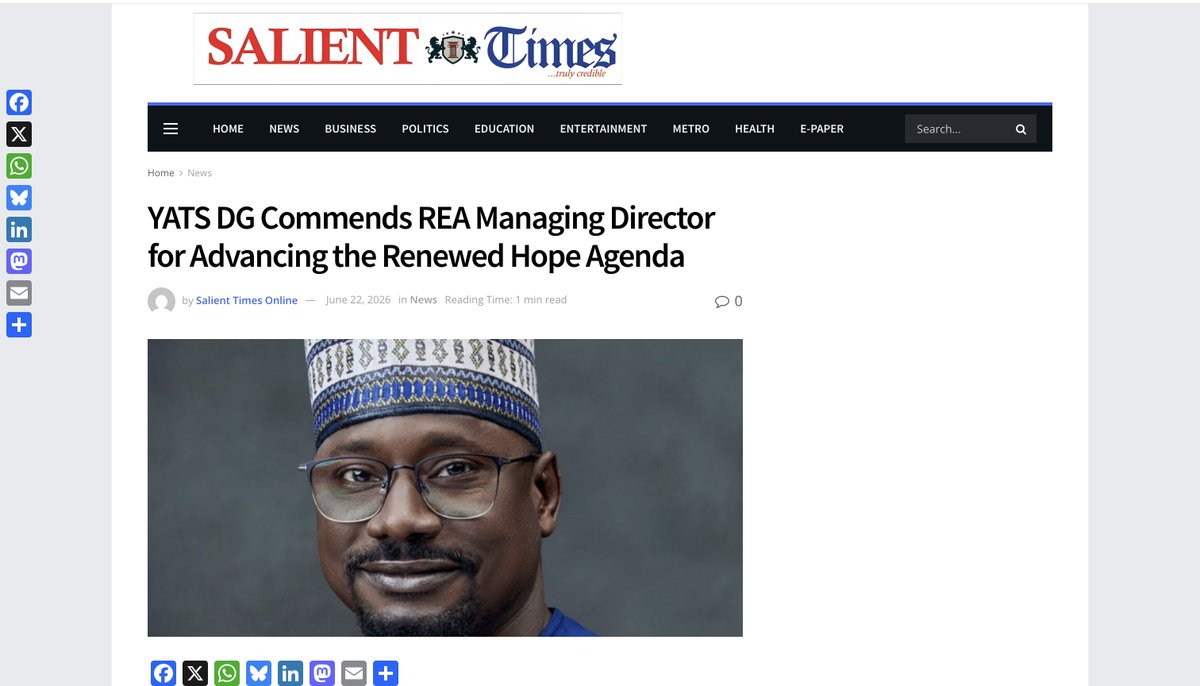
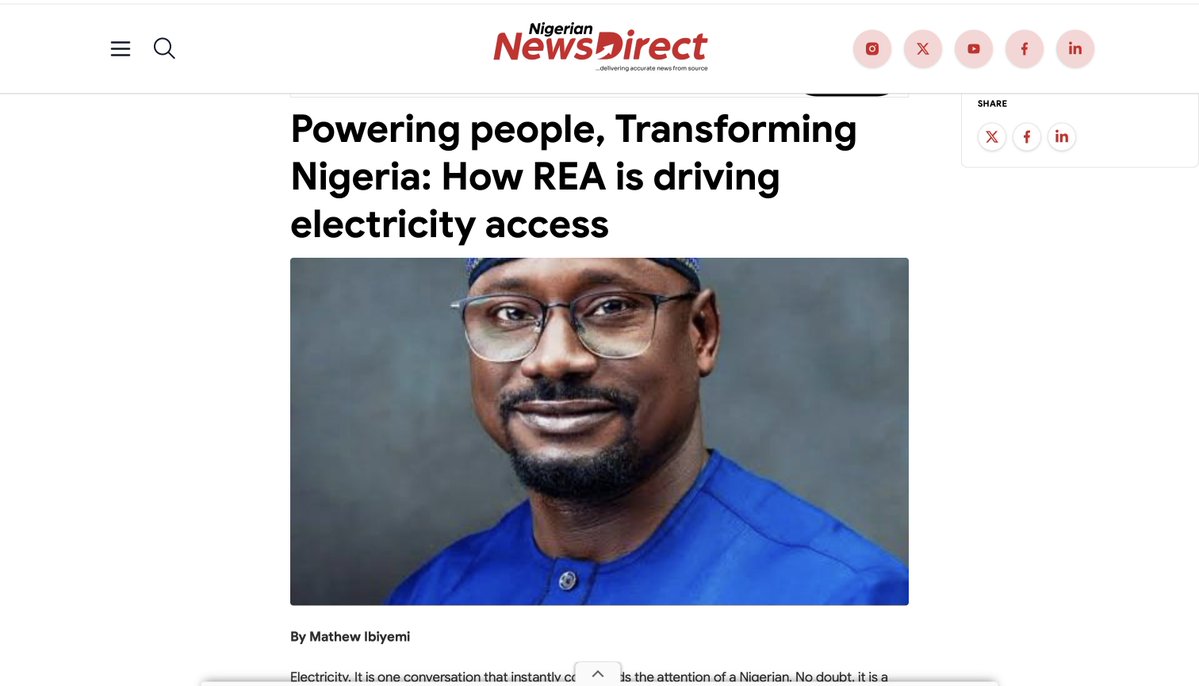
I am grateful for the recognition, but the real story is not about any individual. It is about the thousands of communities, businesses, schools, and healthcare facilities whose lives are being transformed through access to reliable electricity.
I encourage everyone to take a moment to read these articles and learn more about the work the Rural Electrification Agency is doing under President Bola Ahmed Tinubu's Renewed Hope Agenda.
Across the country, public institutions are working every day to deliver measurable impact, and I believe Nigerians should have confidence that meaningful progress is possible when vision, commitment, and execution come together.
The work continues.
#RenewedHopeAgenda #EnergyAccess #RuralElectrification #PoweringNigeria #PublicService #Impact #REA #abbaaliyu
Links:
https://t.co/nrzIJ7MWal
YATS DG Commends REA Managing Director for Advancing the Renewed Hope Agenda https://t.co/DvgFSf1t2J
https://t.co/RGkknIQFWW
There are moments when you witness a project and immediately understand that its impact will extend far beyond the site itself.
I had the privilege of accompanying the Honourable Minister of Power for the official handover of 500 hectares of land for the development of a 200MW solar power project that will power Abuja Steel Mills in Niger State.
What makes this project particularly exciting is the scale of ambition behind it. A 200MW solar-powered industrial energy project is not just about generating electricity. It is about creating a model for how renewable energy can directly support industrial growth, local manufacturing, job creation, and economic transformation. It demonstrates that energy access and industrialization are not separate conversations but are deeply connected.
As Nigeria continues to pursue the objectives of President Bola Ahmed Tinubu's Renewed Hope Agenda, projects like this show what is possible when government creates the right enabling environment and the private sector responds with bold investments. Reliable power remains one of the most important ingredients for industrial competitiveness, and seeing renewable energy positioned at the center of that vision is encouraging.
I was particularly inspired by the level of collaboration on display. The convergence of the power, steel, industry, and investment ecosystems around a common objective reinforces the importance of partnership in achieving sustainable development. The future of Nigeria's economy will be built through this kind of coordinated thinking and execution.
My sincere appreciation goes to the Honourable Minister of Power, Joseph Tegbe, His Excellency, Governor Mohammed Umaru Bago of Niger State, the Honourable Minister of Steel Development, Prince Shuaibu Abubakar Audu, the Honourable Minister of State for Industry, Senator John Owan Enoh, Mr. Raj Gupta and the entire African Industries Group team for their vision and commitment. Together, they are helping to demonstrate how strategic collaboration can unlock investment, strengthen industry, and accelerate Nigeria's journey towards sustainable economic growth.
#RenewedHopeAgenda #RenewableEnergy #Industrialization #SolarPower #EnergyAccess #SteelDevelopment #PoweringNigeria #EconomicGrowth #NigerState #CleanEnergy #AbbaAliyu