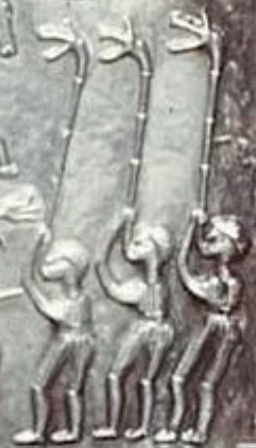
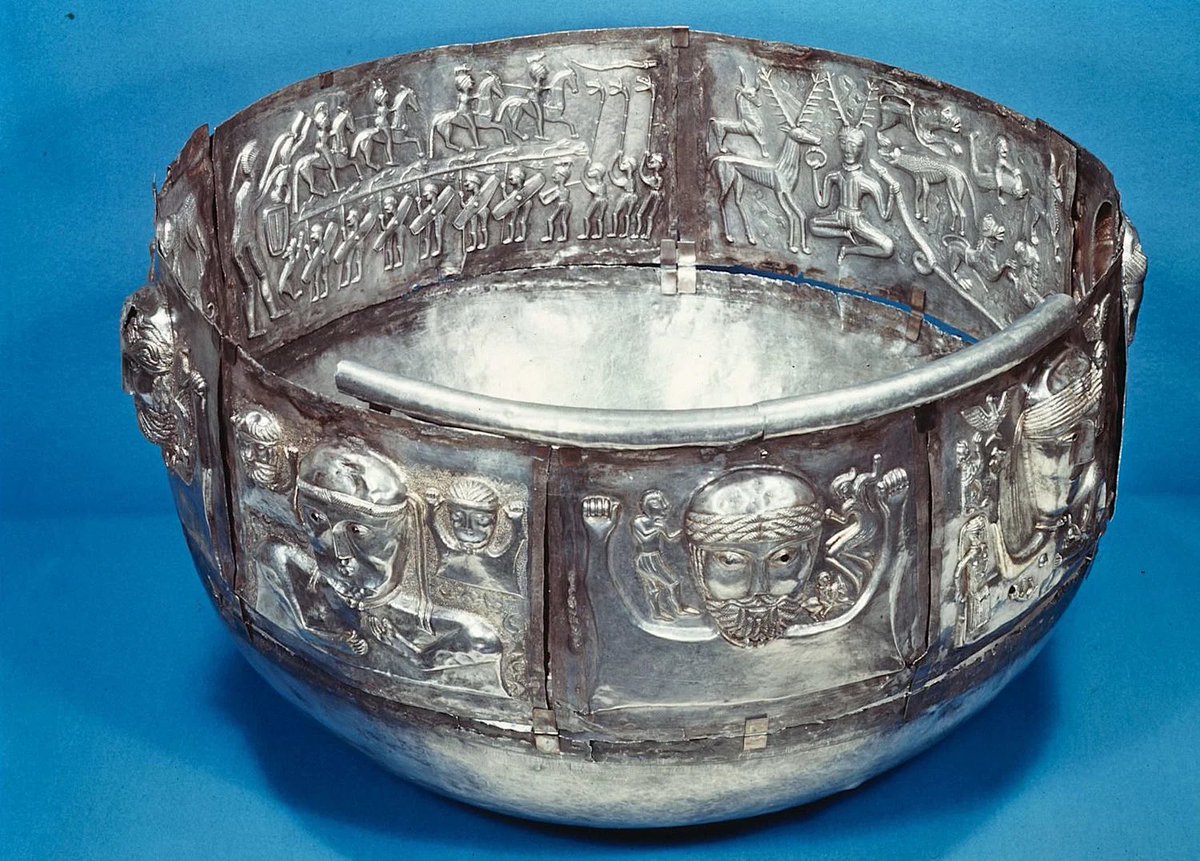
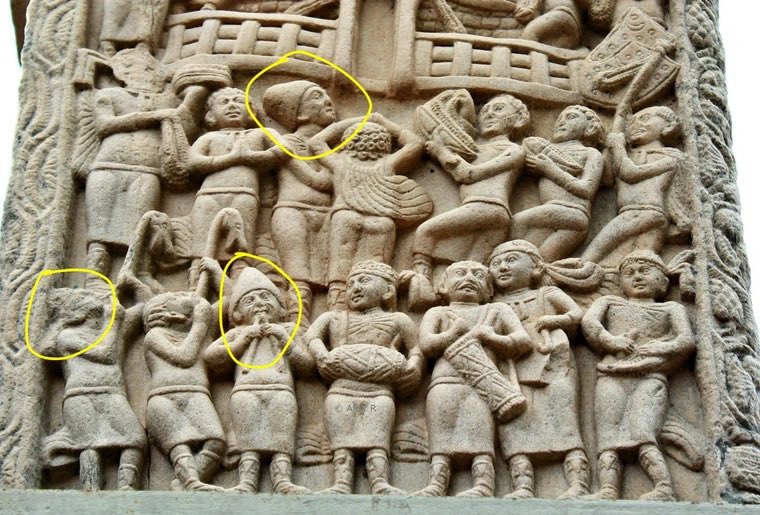
Scythian War Horn.
aka Carnyx or Ransingha
Polybius (Greek historian) described how the Celts used these horns to create a "terrifying cacophony" before battle. The height of the tube allowed the sound to scream over the heads of the soldiers.
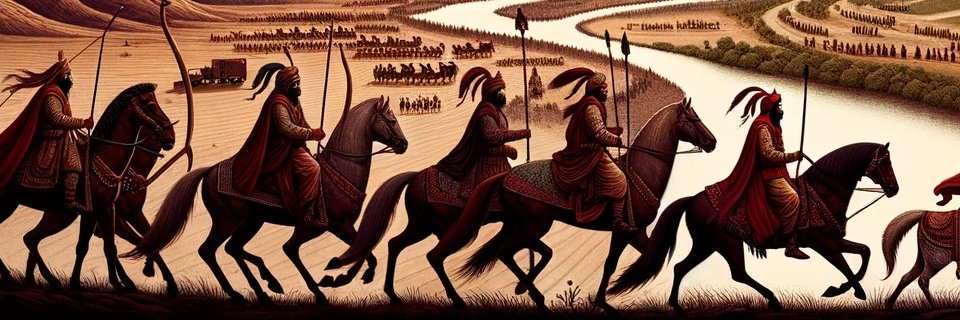
In India, it adopted a Sanskrit descriptor: Ran (Battle) + Singha (Lion/Horn) = Ransingha (War Horn). The Nihang Singhs (the armed Sikh order) preserve the most martial form of this tradition. As seen in video, they use the Ransingha exactly as the ancient Celts and Scythians did: to announce movement, signal battle, and instill a sense of martial prowess.
@beaker_the12224@KPabroad@Ugra___ I think It’s much more complex than that. For example, Buddha is called Shakysmuni, Indian official calendar is Saka calendar and of course the Saka coins with Vedic/Indic deities along with Greek.
This is not correct.
The reappearance of R-Y2 (previously seen in Abashevo Bronze Age sample R-AM00479 from Verkhniy Olgashi) within Scythian contexts highlights continuity of this branch across a millennium. This lineage was later found in Sarmatians (DA136, 350 BCE) and medieval India (I6942, 774-885 CE). Modern carriers of R-Y2 are predominantly from South Asia (India, Pakistan) and the Arabian Peninsula, with only rare carriers in Eastern Europe.
Source: Genetic History of Scythia - https://t.co/IUspjwUwQz
Completely agree.
Let’s be done with the Francophone-Anglophone animosity.
Leave your Protestant Orange marches back home.
Let’s revisit Canada’s constitutional protection for Catholic schools.
Or are we talking about immigrants from only some parts of the world?
If only I’d kept a penny for every time some ‘old stock’ Canadian said this to me…
42 years after the Government of India’s June 1984 attack on Sri Harmandir Sahib and Akal Takht, we remember the victims and the enduring pain felt across the Sikh community.
Truth, justice, and remembrance must continue to guide us.
Hindu scriptural sources don't treat Punjab as part of the broader Hindu world - they explicitly define it as outsidethe boundaries of Āryāvarta (the land of the Āryas).
Śatapatha Brāhmaṇa 9.3.1.24 speaks in directly negative terms about "the inhabitants of the region of the seven rivers that flow westward, i.e. the Punjab," calling them ruffians and barbarians whom one should avoid.
The Dharmasūtras (Baudhāyana 1.1.2.9, Vāsiṣṭha 1.8-9) define Āryāvarta's western boundary at the spot where the Sarasvatī disappears - around modern Patiala - placing Punjab at or beyond the edge of ritually pure territory.
Manusmṛti 10.43-44 lists the Kambojas, Yavanas, and Śākas (all Punjab/northwest-associated groups) among degraded peoples who fell from proper status "due to the absence of Brahmins among them."
There's even the well-known rule that crossing certain rivers (like the Yamuna westward) required śuddhi (purification) upon return - Punjab was treated as ritually contaminating territory.
@GhoshSamyak@The_Equationist Indian State itself does not want proper historical research done. There is a reason they have not realeased the Genetic samples.
Not to mention
https://t.co/GGKw9moQ18
42 years ago, the attack on Sri Harmandir Sahib and Akal Takht Sahib forever changed the Sikh psyche. Innocent pilgrims detained and killed. A state-imposed media blackout. The Sikh Reference Library destroyed. Revered ground, left in ruins. 1/2