Manchester United
The 23–0 Rout That Sparked a Dynasty
Manchester United captured the inaugural FA Youth Cup in 1953, launching the legendary era of the Busby Babes. Guided by youth coach Jimmy Murphy, the young Reds announced their dominance during the knockout stages with a record-breaking 23–0 demolition of Nantwich Town, before overwhelming Wolverhampton Wanderers 9–3 on aggregate in the two-legged final. Future icons Duncan Edwards, Eddie Colman, and David Pegg powered this historic triumph, sparking an unprecedented dynasty of five consecutive Youth Cup titles for Old Trafford.
Mike Duxbury wasn’t the biggest name at Manchester United in the 1980s. But he made 378 appearances for the club and left Old Trafford with two FA Cup winners’ medals.
He joined United as a teenager, signing trainee forms in July 1976 and turning professional three months later. Getting into the first team took time. His senior debut finally came on 23 August 1980, when he came off the bench against Birmingham City in a 0-0 draw. He wasn’t an overnight success. Competition for places was strong, and he initially had to fill in at centre-back before establishing himself as a full-back.
He eventually became a regular under Ron Atkinson, and his 1982/83 season was particularly important. Duxbury featured in every one of United’s 42 league matches as well as their run to two domestic cup finals. The first was the 1983 FA Cup final against Brighton. The original match finished 2-2, with Gordon Smith almost winning it for Brighton in the closing moments. United survived and won the replay 4-0 five days later. Duxbury started both matches.
Two years later he collected another FA Cup medal. United faced Everton in the 1985 final, but things took a difficult turn when Kevin Moran was sent off in the 78th minute. With United down to ten men, Duxbury came on for Arthur Albiston at the start of extra time. Norman Whiteside scored the winner in the 110th minute to give United a 1-0 victory.
He also earned recognition at international level. He made his England debut against Luxembourg in November 1983 and went on to win 10 caps. He wasn’t just a defender who filled in when needed. Across the 1983/84 season alone he made 55 appearances for United in all competitions.
He stayed at Old Trafford until August 1990, when he moved to Blackburn Rovers on a free transfer. His final Manchester United record was 378 appearances and seven goals.
Two FA Cups. Ten England caps. A decade at Old Trafford. Mike Duxbury might not get the same attention as some of his more famous teammates from that era, but he was there through some important years in United’s history. And he certainly wasn’t just making up the numbers.
Greatest manager of the Premier League era. 40 years ago today Alex Ferguson started at Manchester United. 13 titles, 2 Champions Leagues, 1 Cup-Winners’ Cup, 5 FA Cups, 4 League Cups. 1500 games. 11x PL Manager of the Season. Knighthood, statue, stand, legend. #MUFC
🔴 A #MUFC debut 55 years ago today…
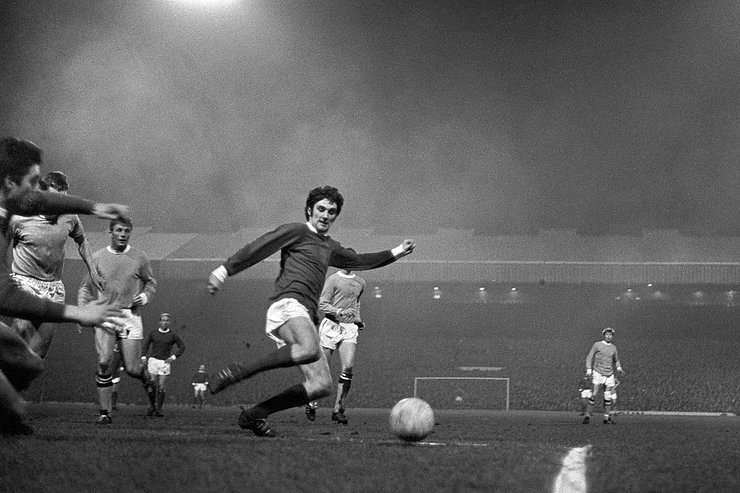
#OnThisDay, on 06/11/1971 , midfielder Sammy McIlroy made his full debut v Manchester City .
📖 Discover Sammy McIlroy’s biography, career and record:
https://t.co/dxCGBRQgMI
⚽ Post your thoughts on Sammy McIlroy 👇
#ManchesterUnited #MUFCHistory #manutd
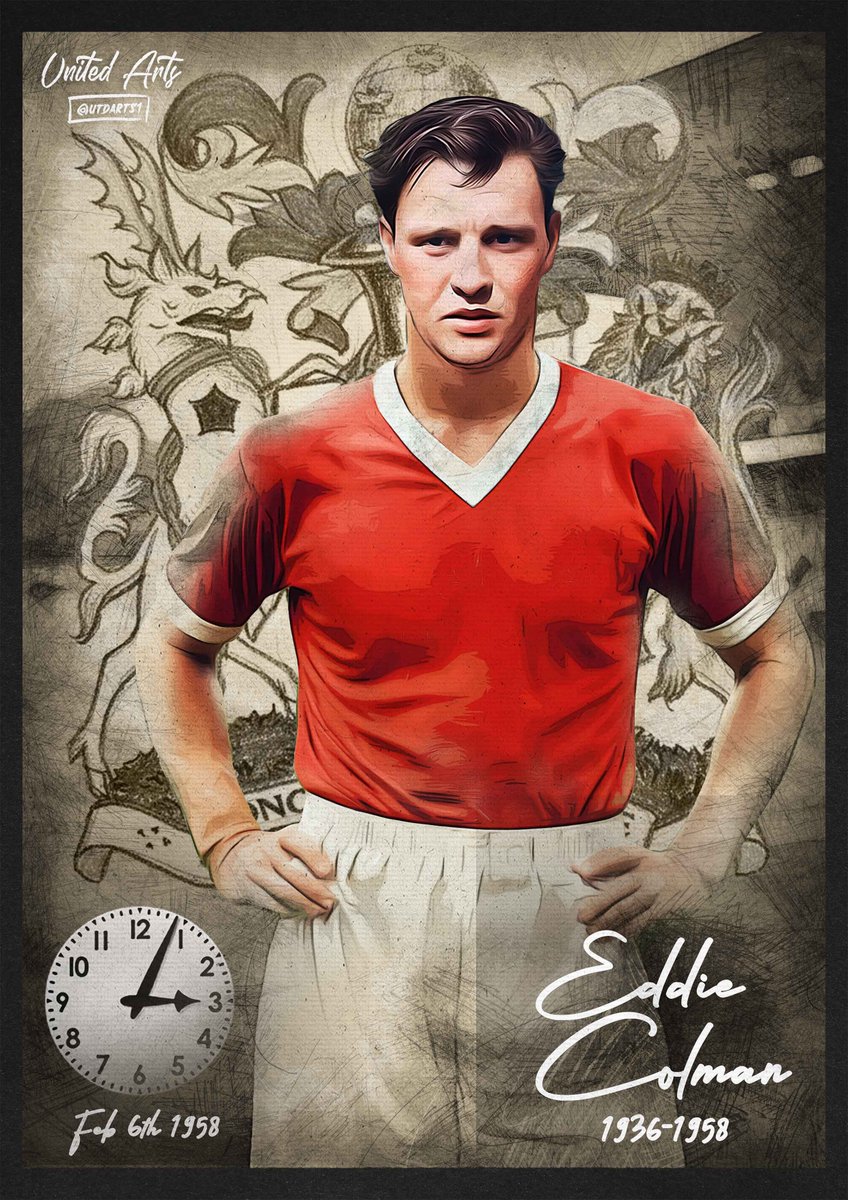
🌹 Happy heavenly birthday to Busby Babe Eddie Colman, born on this day in 1936
The Salford lad with snake hips and a smile that could light up Old Trafford. Eddie Colman was just 21 when his life was cut short at Munich, but in those few years, he'd already captured the heart of Manchester United.
Jimmy Murphy called him "the best tackler in the game," and that meant something coming from Jimmy. But Eddie was so much more than a tackler. Sir Bobby Charlton put it beautifully: "If Busby envisioned United as a masterpiece, Duncan Edwards was adding the bold brush strokes while Eddie was creating a series of inspired squiggles." Those squiggles were pure magic, the wiggle of the hips that sent defenders the wrong way, the grace that made tackling look like dancing.
They called him 'Snake Hips' for good reason. Murphy once said Eddie moved "like Marilyn Monroe", high praise in the 1950s. But while others might have been embarrassed by the comparison, Eddie would have laughed it off with that cheeky Salford grin. He knew he was good, but he never let it go to his head.
Eddie was United through and through. A local boy who lived with his mum and dad in Archie Street, Ordsall, right in the shadow of the ground. He'd walk to training, pop home for his tea, then head out with the lads. Wilf McGuinness, his closest mate, remembered: "Inevitably, Eddie became our social secretary. He enjoyed listening to Sinatra and all the new rock 'n' roll tunes. He was a fantastic dancer, unlike Bobby Charlton and me."
While other players were still finding their feet in the first team, Eddie was already a style icon. Drainpipe trousers, velvet collars, the full teddy boy look, he was ahead of his time. In an era when footballers were still seen as working-class lads who happened to play sport, Eddie understood that life was for living, and living meant style, music, laughter, and yes, the occasional pint.
Matt Busby had a special fondness for Eddie. The manager saw something of himself in the young Salford lad, the working-class roots, the love of the game, the understanding that football was about joy as much as winning. Busby once said Eddie had "the heart of a lion and the feet of a ballet dancer."
What many don't know is that Eddie was earning just £15 a week when he died, the maximum wage allowed at the time. Money never mattered to him. He had his family nearby, his mates, his football, and his music. That was enough.
On the pitch, he formed an almost telepathic partnership with Duncan Edwards in that midfield. While Duncan was the powerhouse, Eddie was the artist. He'd win the ball with a perfectly timed tackle, never dirty, always fair then glide past two or three players before laying it off with precision. At just 5'7", he proved you didn't need to be big to be great. You just needed heart, skill, and that Salfordian determination.
His teammates adored him. Bobby Charlton said years later, "Eddie was always smiling, always joking. Even on the plane to Belgrade, he was keeping everyone's spirits up." Harry Gregg, the goalkeeper who survived Munich, recalled, "Eddie had this way of making you feel better just by being around. The dressing room was never the same after we lost him."
Eddie made 108 appearances for United, winning a First Division title in 1956 at just 19. He should have had many more years ahead of him.
But on 6 February 1958, Eddie Colman's dance ended. He was the youngest of the eight Busby Babes lost that day, born just a month after Duncan Edwards in November 1936.
Eddie's spirit lives on at Old Trafford. You feel it when a local lad makes his debut and plays with pure joy, remembering where he comes from.
Salford born, United through and through, gone far too soon, but never forgotten 🌹⚪️⚫️
#EddieColman #MUFC #FlowersOfManchester
@UtdDistrict@BBCSport Visited just a week before on Tuesday 20th - Truderling area inc. Manchesterplatz has gone ‘upmarket’ so this is a big surprise and absolutely disgusting behaviour after all these years
#RIPBusbybabes
🇾🇪 Hard as nails. Tough as old boots. A tribute to Nobby Stiles who sadly passed away six years ago on this day
🔴 Norbert "Nobby" Stiles cut a unique figure - "a half-blind dwarf who was bombed by the Germans and run over by a trolley bus when he was one" in his own words. But this diminutive, prematurely balding man with thick glasses was an absolute warrior on the pitch.
⚪️ Stiles came up through the youth ranks at Manchester United, making his league debut at just 18 years old in 1960. The discipline from his early dabbling in boxing served him well, as he quickly established himself with 31 appearances that first season.
⚫️ "Nobby was a top player and a top man," recalled teammate, the late great Denis Law. "He was such a popular guy in the dressing room. Everyone knew Nobby would be there when the going got tough on the pitch, but you shouldn't underestimate what a good footballer he was too."
🔴 The "Toothless Tiger" earned a reputation as Britain's premier man-marker, never letting his opponent forget his presence. His tough tackling complemented his creative passing to stars like Best, Law and Charlton, playing a crucial role in United's 1965 title triumph.
⚪️ Stiles brought that tenacious style to the international stage too, becoming an Alf Ramsey midfield staple for the 1966 World Cup run. However, his rough challenges drew criticism, including an incident that side-lined French playmaker Jacques Simon. "By all accounts the FA committee told [Alf] in no uncertain terms I couldn't play...I was a liability, they said," Stiles later reflected. "Alf told them he'd resign if he couldn't pick who he wanted. He was prepared to resign in the middle of a World Cup over me. I never found that out till he'd died. Alf, what a man."
⚫️ For the semi-final, Ramsey tasked the "bustling midfield terrier" with marking Portugal's deadly Eusebio. When instructed to "take Eusebio out of the game", the ever-cheeky Stiles responded: "Do you mean for life, Alf?" His dogged marking was "technically and morally brilliant" per George Cohen as England advanced.
🔴 “There was ballyhoo about before about how I would mark Eusebio”, said Stiles.” People were suggesting I was a clogger. One paper said he had asked the ref for protection. But I respected Eusebio and never went out to kick him – and I always found him to be alright with me.”
⚪️ Stiles' performances and iconic celebration of kissing the World Cup trophy and clutching his false teeth cemented his legendary status.
⚫️ Two years later, Stiles was pivotal again as United became England's first European champions by beating Benfica after he shackled Eusebio once more. This made him one of just three Englishmen, alongside Bobby Charlton and Ian Callaghan, to win a World Cup and European Cup.
🔴 Injuries ultimately curbed Stiles' United career after over a decade as one of Matt Busby's bedrock players. In 1971 her parted ways with United, after the club transferred him to Second Division side Middlesbrough for a fee of £20,000.
1/2
#NobbyStiles #MUFC #MachesterUnited
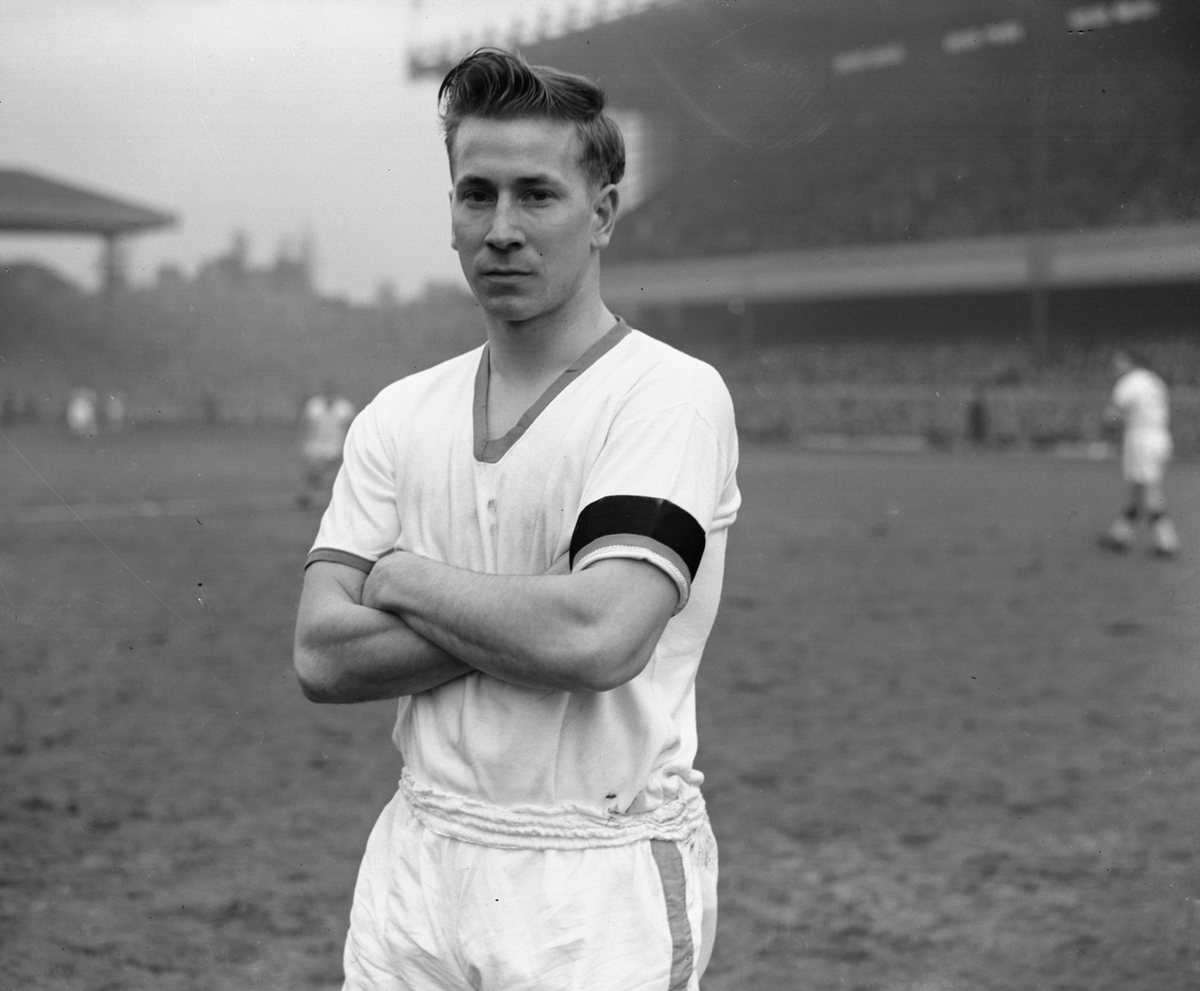
Sir Bobby Charlton is pictured as a young Manchester United player in early 1958, wearing a black armband at Highbury ahead of a match against Arsenal.
🇾🇪 The Greenhoff Brothers 🇾🇪
There's a version of history where none of it happens. Where a November storm in 1976 passes over Stoke without doing much damage, the Victoria Ground roof stays intact, and two brothers from Barnsley never get to share the greatest afternoon of their lives together at Wembley.
Stoke sold Jimmy mid-season because they needed £250,000 to repair their ground after a powerful windstorm ripped through it. He was their most beloved player having scored almost a century of goals for them since 1969. He refused to leave. Until the phone rang.
Sir Matt Busby had called the club personally, asking "Is it right you're selling Jimmy Greenhoff?" and that was enough to change everything. The idea that Sir Matt had picked up the phone on his behalf that settled it immediately. Jimmy joined Tommy Docherty's United in November 1976 for £120,000. An absolute bargain.
What often gets forgotten is how decorated Jimmy already was before he pulled on a red shirt. He'd won the Inter-Cities Fairs Cup with Leeds in 1968 and the League Cup with Stoke in 1972. A volley against Birmingham in December 1974 was voted ITV's Goal of the Season. He was 30 when he signed for United, and in many ways at the very peak of his craft.
And waiting for him at Old Trafford was his younger brother.
Brian had been there since 1968, signed as a youth player by the legendary scout Joe Armstrong, the man who had also spotted Bobby Charlton and Duncan Edwards. He'd had to be patient too. His debut didn't come until September 1973. But once Docherty saw what he had, Brian was rarely out of the side. Upon first greeting him, Tommy said: "I've got you at last. The long way round, but I've got you at last."
Brian had frankly admitted as a child that he hero-worshipped Jimmy, who had preceded him through local teams as both brothers worked towards professional careers, urged on by their father who was their most demanding supporter. Now they were teammates. For Brian, it must have felt like the world had arranged itself perfectly.
Brian's United career to that point had already been quietly remarkable. He played in every single outfield position for the club, and even went in goal once when Alex Stepney was injured at Birmingham City.
He'd been named Supporters Player of the Season in 1973–74, the very year United were relegated. He had played well enough in a struggling team to win the fans' hearts anyway. And there is a photograph from the 1976 FA Cup Final, Brian in tears after Southampton beat United, consoled by Docherty, that tells you everything about how deeply he cared. He walked back to the hotel and threw his loser's medal across the room, telling his wife he'd wait for a winners' medal next year. He was as good as his word.
By the time Jimmy arrived, Brian had formed a famous defensive partnership with Martin Buchan, his blond locks flying as he set up the wide men Steve Coppell and Gordon Hill in counter-attack. Martin Buchan later described Jimmy's arrival in terms that still resonate: "Jimmy Greenhoff, in a way, was our Eric Cantona, he nurtured the young kids. He calmed things down. He had a great understanding with Stuart Pearson, and I always felt if I had the ball at my feet in the back four, I could close my eyes and play it forward and either Stuart or Jimmy would be on the end of it."
In February 1977, Jimmy scored a hat-trick against Newcastle with the whole ground chanting his name, and becoming the first United player to score three in a game in almost three years. Then came Wembley.
1/2
#JimmyGreenhoff #BrianGreenhoff #ManchesterUnited