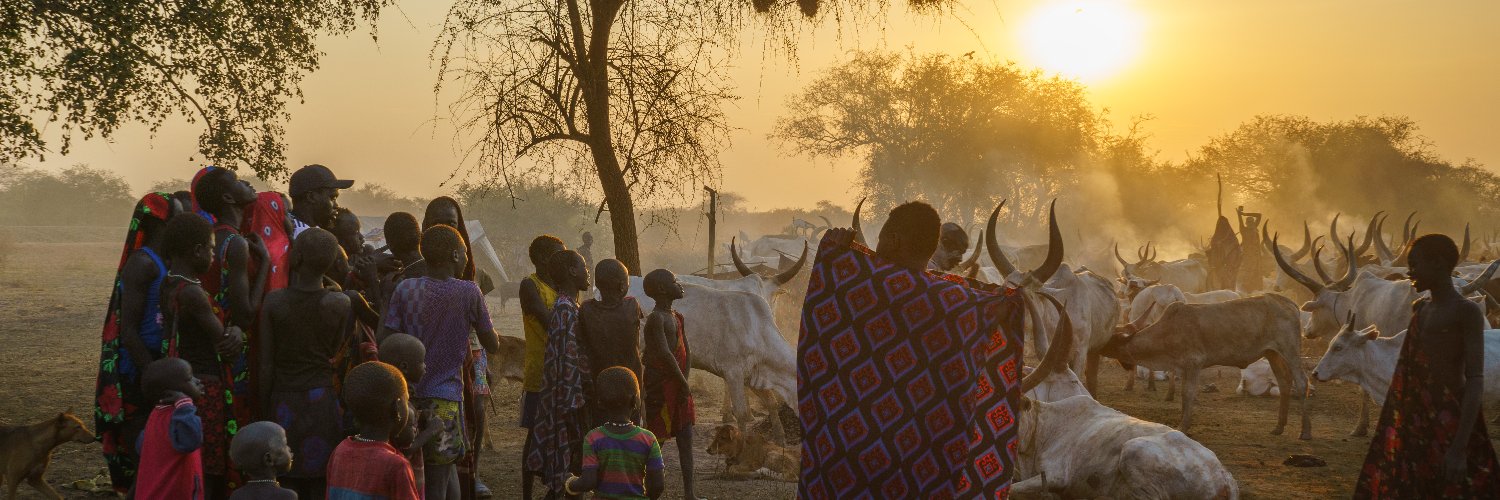
For more than a thousand years, my Dinka (Jieng) people of South Sudan and other semi-nomadic Nilotic pastoralists have moved with their cattle across the region's vast floodplains, a rhythm of life dictated by the seasonal rains and the rise and fall of the Toch Wetland (Sudd).
Cut off by distance, conflict, and geography from the rest of humanity, our cattle-centered way of life has remained largely unchanged for centuries.
Until now.
That isolation, long a source of protection from the outside world, is beginning to fade.
Having returned to film over the last 3-4 years, I can finally share this short film, which explores daily life at my Dinka Bor (Pathuyith) cattle camp. As the modern world edges closer and closer, a friend and I wanted to capture and document a way of life I experienced as a young boy. It is a dying culture suspended between ancient tradition and encroaching change.
All Rights Reserved.
#Nilotic #Dinka #SouthSudan #CattleCamp #Nomadic #pastoralism #Cattle #Herding #DinkaBor #Cattlekeeping #Cows #Change #Modernity #Pathuyith #75Meja #SouthSudanese #BorCounty #Bor
Coming across Junubin debates about what epithets should or shouldn’t be part of the national image, I’m afraid it will take a generation or 2 before the idea of a nation-state takes root.
A cow statue at the airport shouldn’t generate so much opposition. Does it mean everyone is a cattle keeper? Absolutely not. But pastoralism is the main differentiating image the world notices about us. It’s what sets us apart from all the cabbage farmers in our region. That’s what tourists notice or care about.
The Mundari are less than $0.5M, fewer than many groups, but have exploded in global popularity in recent years for the same reason. Helped mostly by the proximity to an international airport. Are they imposing themselves and their culture at the expense of other smaller groups?
“An estimated 35%-50% of all Sub-Saharan population either prefer or accept first-cousin marriages. And it’s extremely common in the Middle East and in South Asia.” Some UK MP.
I’m seeing a pattern here. Folks from the Indian subcontinent (Bangladesh, India, Pakistan), frequently invoke Africa’s name when discussing their social vices and issues in their community. Africa is the yardstick for ‘bad’. Africa has to be dragged in even when the issue at hand is exclusively a them-problem.
Incest and inbreeding are unheard of in much of Sub-Saharan Africa. First-cousin marriage is an Islamic practice and Sub-Saharan Africa is mostly Christian.
In the UK, a Muslim MP voted IN FAVOR of first cousin marriage, citing cultural practices.
Inbreeding is such a big problem in the British Muslim community, that the government is now trying to ban it.
The majority of disabled children in the UK are born to Muslim parents.
Defending “Africa” from this imaginary cultural attacks is a sneaky strategy to look morally upright while supporting something wrong.
Imagine listing Sub-Saharan Africa as the problem child in your defence of consanguinity? And the actual owners of that culture are simply added as “other” 🤣
I just used this example to point out how folks in subcontinent tend to invoke Africa as a stooping yardstick when discussing their issues.
I see Indians writing things like this: “We’re the 4th largest economy in the world, our cities shouldn’t look like Africa”(referring to street garbage, poverty and public infrastructure decay)
Defending “Africa” from this imaginary cultural attacks is a sneaky strategy to look morally upright while supporting something wrong.
Imagine listing Sub-Saharan Africa as the problem child in your defence of consanguinity? And the actual owners of that culture are simply added as “other” 🤣
The Maasai of Kenya and Tanzania are closer to the Bari-speakers or the Karo of Central Equatoria (South Sudan) than you might have even thought.
Word Bari Maasai
Water pɪɔŋ / kare (river) en-kare
Sun kɔlɔŋ en-kɔlɔŋ
Moon yapa ol-apa
Cow kɪtɛŋ (pl. kɪsuk) en-kitɛŋ (pl. in-kishu)
Goat kɪnɛ en-kine
Elephant tɔmɛ ol-tome