Angela Rayner - £40k underpaid stamp duty - repaid. Lost jobs in Cabinet and Dep. PM.
Peter Murrell - £400k theft from SNP - going to prison
Huge coverage of both
Nigel Farage - £5m undeclared bung (possibly more) - goes to ground for a month.
Media coverage? You judge.
if we have a bunch of students using AI to write papers and professors are using AI to grade the papers and the only thing that seems to stay the same in higher education is the tuition and the debt then what the fuck are we doing
Louth have upended the Dubs in Croke Park 🤯
The Wee County have earned their first championship win over Dublin since 1973, overcoming them on a 4-18 to 1-24 scoreline 🔥
My favorite thing about Irish people is that they'll have lived in Dublin for 14 years, own a house, have a GP and a child in crèche, and still say they’re "going home" for the weekend meaning Leitrim
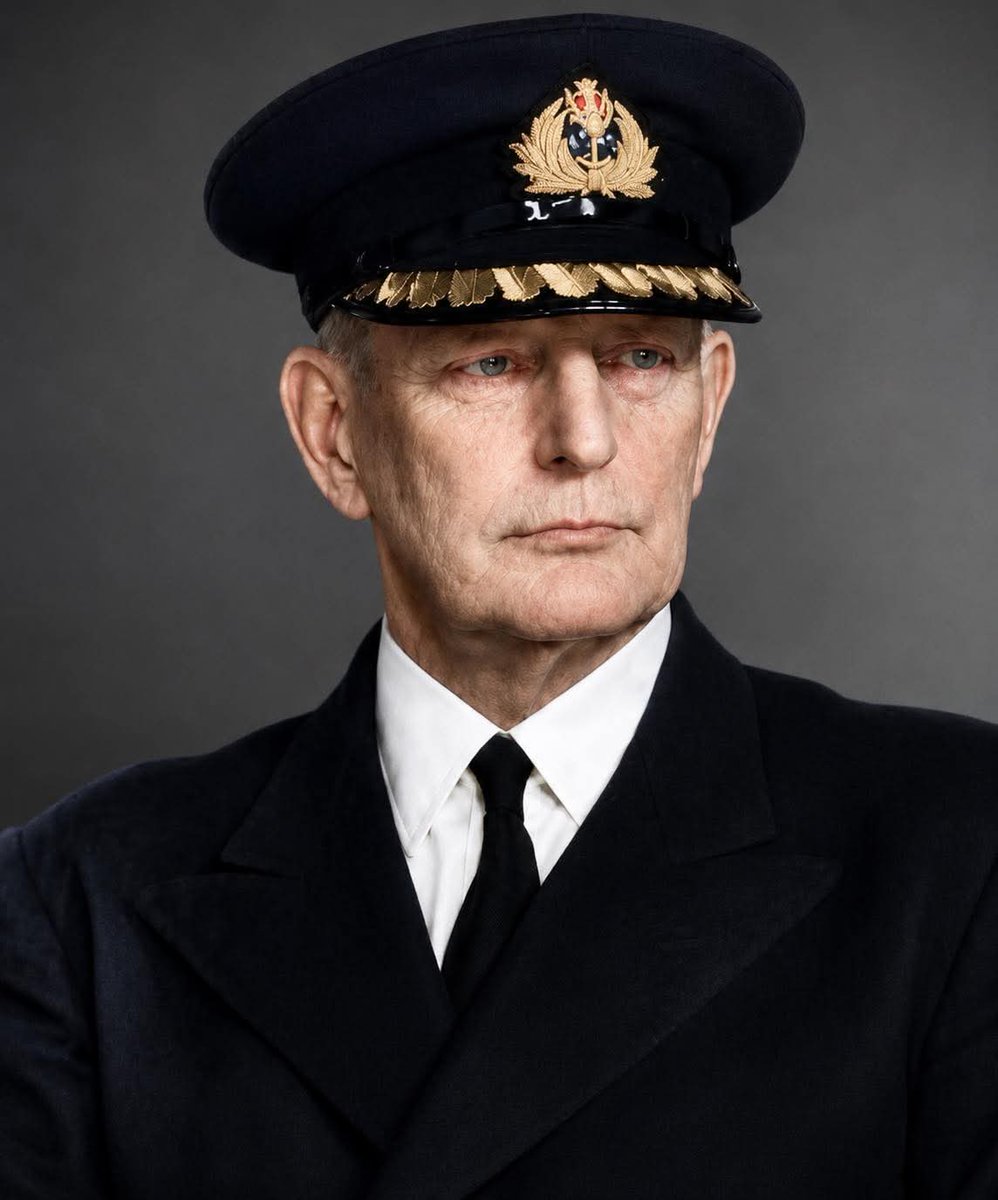
For nearly six years in German prisoner-of-war camps, he did not utter a single word in German.
And this despite the fact that he was born in Germany, grew up in a German-speaking environment, and served in the Imperial German Navy.
His name was Józef Unrug.
His story is one of the most remarkable examples of loyalty to one's country during World War II.
Unrug was born in 1884 in Brandenburg an der Havel, in Prussia, to a family of both Polish and German heritage. German was his native language. He graduated from prestigious naval academies of the German Empire and served as a naval officer during World War I, commanding submarines.
But after the war, his life took a different course.
In 1918, after more than a century of partition, Poland regained its independence. It was then that Unrug made the decision that would define the rest of his life.
He left the German Navy and joined the newly created Polish Navy.
In fact, he became one of the founders of Poland's naval forces, which had to be built almost from scratch. Unrug not only served the new state but also supported the development of the navy with his own money.
In 1925, he became commander of the Polish Navy.
When Germany invaded Poland on September 1, 1939, Unrug was responsible for the defense of the Polish coast and the Hel Peninsula. Despite overwhelming enemy superiority, his forces resisted for more than a month.
Only on October 2, 1939, was he forced to surrender.
Years of captivity followed.
The Germans held him in several officer prisoner-of-war camps, including Oflag II-C Woldenberg, Colditz Castle, and Oflag VII-A Murnau. They knew his background well, including his service in the German Navy and his German roots.
For that reason, they repeatedly tried to persuade him to cooperate.
Former colleagues offered him privileges, special treatment, and high-ranking positions.
Unrug always refused.
Then came the episode that made him a legend.
During one visit, his cousin, German General Walter von Unruh, addressed him in German. It seemed perfectly natural: two relatives who had grown up in the same culture and spoken the same language all their lives.
But Unrug replied in French.
When asked why, he gave the answer that became famous:
"On September 1, 1939, I forgot the German language."
From that moment on, he adhered to this principle until the end of the war.
Unrug understood German perfectly, but he demanded an interpreter for all official conversations. He answered German officers only in Polish or French.
It was not a question of language.
It was a matter of principle.
After the invasion of Poland, he refused to use the language of the state that had occupied his country.
His resistance was not armed.
It was expressed through discipline, consistency, and unwavering loyalty to his convictions—day after day, year after year, throughout nearly six years of captivity.
In 1945, the Murnau camp was liberated by American forces.
But the end of the war did not mean a return home.
Poland had fallen under a communist regime dependent on Moscow, and the admiral chose to remain in exile.
He lived in the United Kingdom, Morocco, and France, leading a modest life far from fame and high office.
Józef Unrug died in 1973.
Before his death, he expressed one final wish: to be buried in a free Poland alongside his sailors.
His wish was fulfilled only 45 years later.
In 2018, the admiral's remains were ceremonially reburied in his homeland.
For years, Józef Unrug refused to speak a language he knew perfectly.
For many, it was a symbolic gesture.
For him, it was a matter of honor, dignity, and loyalty to the country he had consciously chosen as his homeland.
We are now in a weird era where a guy gets publicly shamed for running his sprinklers on a Tuesday, while a data center the size of a Costco quietly drains a reservoir so AI can generate a picture of your cat as a medieval knight. And the data center gets a tax incentive for it.
How can the UK simultaneously have a crisis of young people not in education or work *and* a shortage of staff in the health, care, construction and IT sectors?
Nigel Farage - the leader of Reform UK - is under investigation for failing to declare a £5 million 'gift'.
Please RT this until the BBC gives this story the same level of blanket coverage - as it would for the leader of any other UK political Party.
The boomers that spent the 80s drunk driving to $5 steak dinners, buying houses on factory salaries, and retiring at 60 with a pension wants to explain to me why I’m bad with money.
They lived like rockstars on a forklift salary and called it discipline.
I live like a monk on a corporate salary and still can’t afford what they had at 28.
The advice didn’t age well.
Neither did the economy it was built on.