@p_bello17@Somhiseremfcb Nos va a costar un ojo de la cara, pero no es mala opción del todo. No lo veo de punta directamente, pero puede encajar relacionándose con el resto de atacantes de forma menos reglada que un punta tradicional.
For those exploring the concepts as Jamie Hamilton wrote:
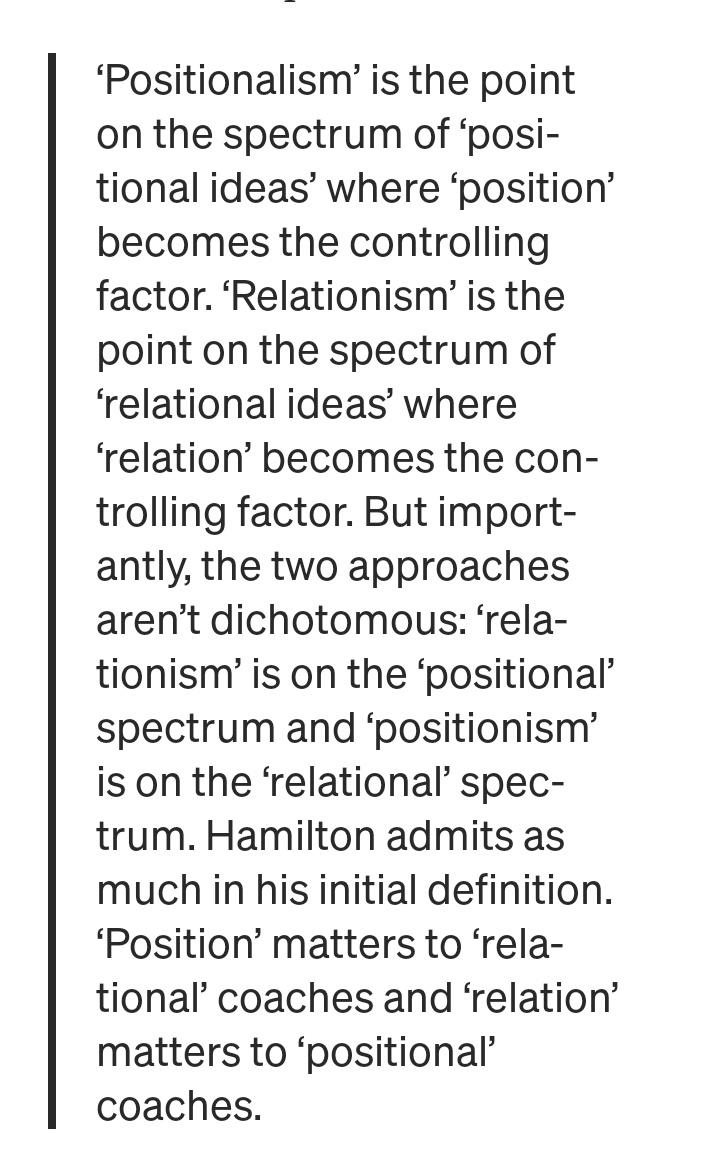
POSITIONISM: where all possible relations are a function of positions
RELATIONISM: where all possible positions are a function of relations
You can read my full article on Positionism vs Relationism in my pinned tweet or here: https://t.co/4UAbKq9FP3
Both Positionism & Relationism are NOT mutually exclusive but here's a detailed rundown of terms...
Positionism (Positional Play)
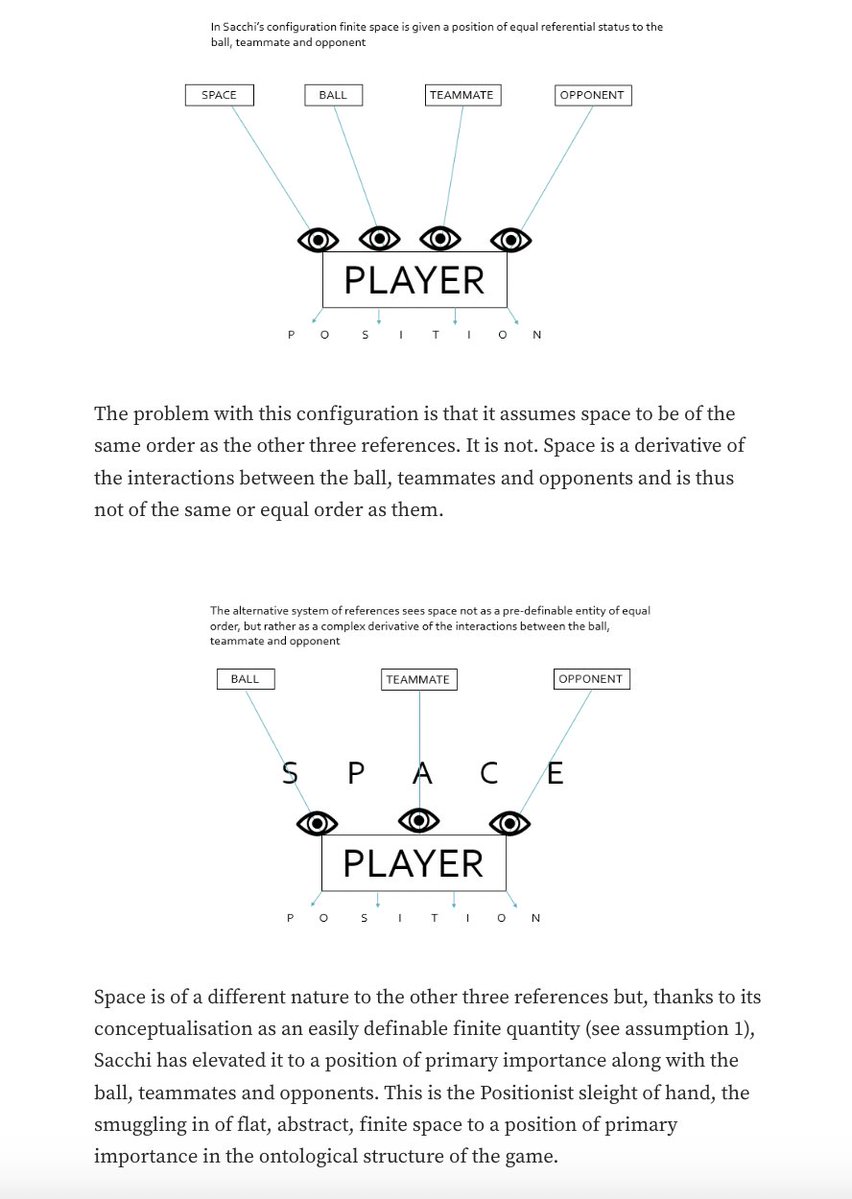
Positionism prioritizes space as the primary reference point. The pitch is treated like a grid or map divided into zones/sectors. Players are assigned or encouraged to occupy specific positions or areas, and the team's structure is built around controlling and exploiting those spaces rationally and systematically.
Core ideas:
-Structure comes first. The coach designs a positional framework (e.g., specific shapes in build-up, midfield, and attacking phases).
-Players occupy designated zones and make relatively small, structured movements within or between them.
-The ball moves to the players in their positions (famously paraphrased from Pep Guardiola: “the players don’t move, the ball moves to the players”).
-Emphasis on repetition, automations, clear passing lines between zones, and creating superiorities through positioning rather than individual improvisation.
-Organization is largely top-down and pre-defined: principles are taught so players know the "correct" or rational way to occupy space.
This approach aims for control, predictability, and efficiency through spatial discipline. It became dominant in much of Europe thanks to influences from Johan Cruyff, Arrigo Sacchi, and especially Pep Guardiola’s Barcelona and later teams. The classic juego di posicion or positional play
Typical characteristics:
-Zonal attacking and defending structures.
-Equidistant or rational spacing.
-Players often "wait" in positions for the ball or make prescribed rotations.
-Strong rest-defense (structured shape when attacking).
Examples: Pep Guardiola’s Manchester City, Mikel Arteta’s Arsenal, many modern high-pressing European sides.
Relationism (Relational / Functional Play)
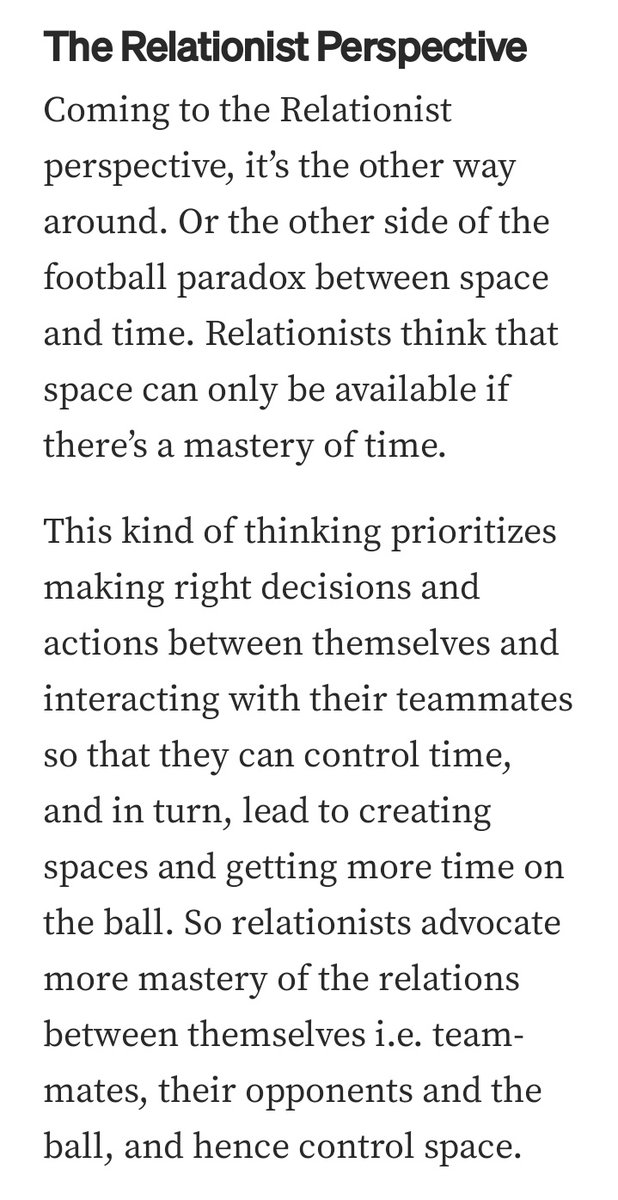
Relationism flips the priority: relationships between players, the ball, teammates, and opponents come first, and positions emerge from those relationships in real time.
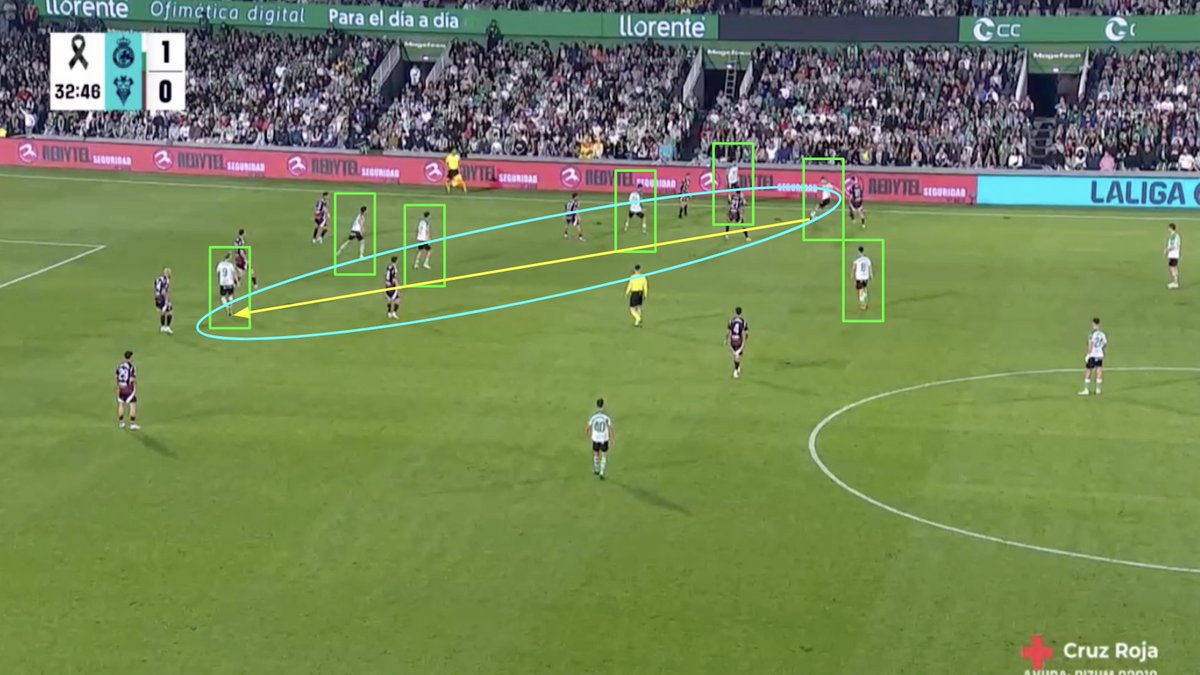
Instead of starting with a fixed spatial structure, the team organizes through dynamic interactions. Players move fluidly based on connections, creating local overloads, combinations, and patterns that arise organically rather than being pre-scripted.
Core ideas:
-The ball and player relationships are the primary reference points.
-Organization is more emergent and bottom-up — it "becomes" through play rather than being imposed from the start.
-Players actively move toward the ball or each other to create connections (e.g., clustering/tilting on one side of the pitch).
-Greater emphasis on intuition, real-time communication (gestures, signals, timing), and adaptability.
-Less concern with perfect zonal spacing; more focus on proximity, asymmetry, and functional movement.
Relationism embraces a degree of fluidity and even controlled chaos, trusting players to solve problems through their relationships rather than strict positional rules.
Typical characteristics:
-Non-zonal or fluid attacking organization.
-Players "gather" or tilt toward the ball to create overloads.
-Frequent use of patterns like toco y me voy ("pass and move"), tabela (wall passes/one-twos with timing and understanding), diagonal structures, and deceptive movements.
-More spontaneous clustering and switching of play.
Examples: Fernando Diniz’s Fluminense (the most cited modern exponent), elements of Carlo Ancelotti’s Real Madrid, some aspects of Lionel Scaloni’s Argentina, and various Brazilian/Argentine traditions
However we're seeing a huge shift of hybrid Positionist & Relationist philosophies at this World Cup.. stay tuned for my article! On my Medium @aftertheftw
#WorldCup
Lo mejor de la jornada 1:
🇺🇸 El ataque posicional estadounidense
🇦🇷 El relacionismo argentino
🇫🇷 El poderío ofensivo francés
🏴 El equilibrio de Tüchel
🇲🇦 El mediocampo marroquí
🇲🇽 Lira-Quiñones
🇯🇵 La flexibilidad japonesa
🇨🇮 Yan Diomande
🇸🇪 La doble punta sueca
🇳🇿 Chris Wood
🇦🇺🇨🇻🇪🇬🇨🇩 sus planes defensivos
Comienzo los hilos de la evolución táctica de las selecciones a través de todos los Mundiales que han disputado con México desde Uruguay 1930 hasta Qatar 2022.
From all the 48 World Cup teams I’ve been watching, Saudi Arabia has been the biggest surprise.
Their relational style stands out, with combinations in very short distances and constant connections around the ball.
An incredible bit of sports journalism by The Guardian here. A short summary of the playing style of all 48 World Cup nations and a short profile of all 1248 World Cup players. Bookmark and refer to the resources when watching the obscure matches: https://t.co/tdLGq8en0o
Unai Emery on being told how hard he works:
🗣️ “Well I love my job. I have no problem working from 8 am to 8 pm, in front of a laptop, analyzing our team or other football teams, or preparing training sessions.”
“Look, I have a principle: in football, you can work 24 hours a day. There is always something you can do. For example, if you need a striker, you can watch every match of every potential striker you might want to sign.”
“It is possible, however, because the staff and I are not served by football; we serve football.”
[Podcast: ‘Despejados’ on YT] #AVFC
Hull City'nin de adam adama baskılar karşısında Brighton'la benzer çözüm yollarını izlediğini görebilirsiniz. İki takım da rakip baskıyı oldukça benzer prensiplerle manipüle ediyor.
🎥 @hsolofutbol
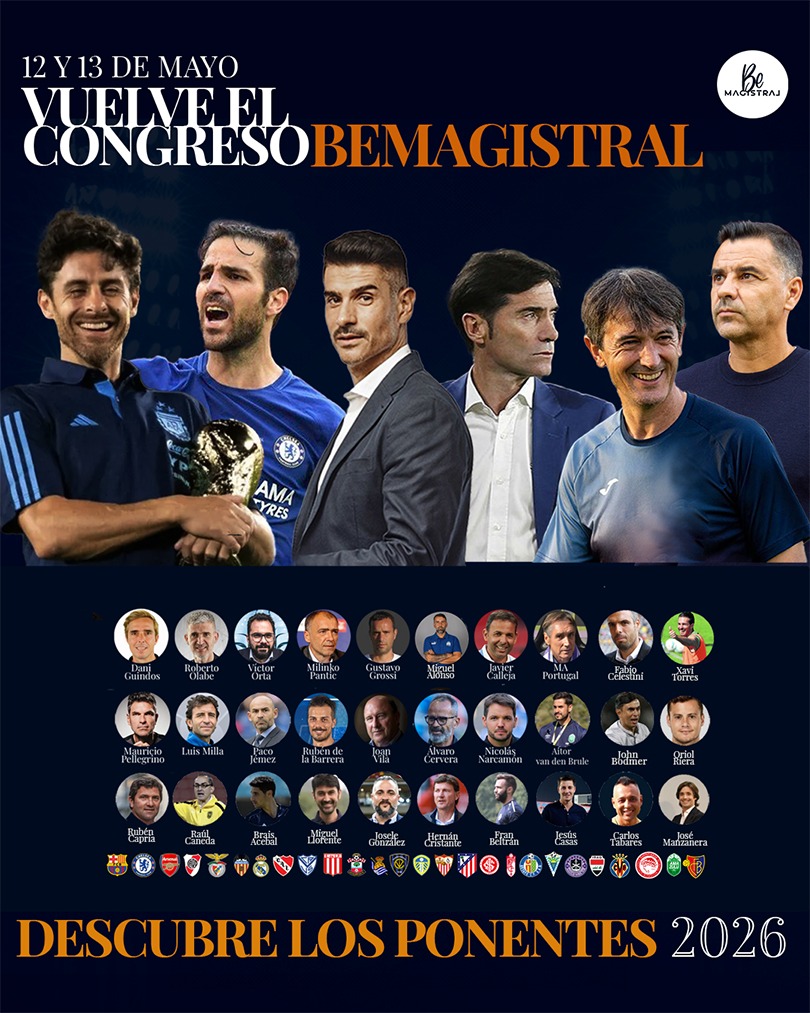
⚽️ ¡𝐕𝐮𝐞𝐥𝐯𝐞 𝐞𝐥 𝐂𝐨𝐧𝐠𝐫𝐞𝐬𝐨 𝐌𝐚𝐠𝐢𝐬𝐭𝐫𝐚𝐥! El punto de encuentro de la mayor comunidad del fútbol del mundo.
El 12 y 13 de mayo disfruta en abierto de la élite del fútbol.
📲 Regístrate gratis en https://t.co/Mb2fQAiCST
1️⃣ Etiqueta a 2 amigos
2️⃣ Repostea
Más⬇️
✍️🏼 Estamos muy felices de anunciar a Óscar Cano como ponente del #CongresoMagistral2026
🚀 La élite del fútbol en tu pantalla y gratis, el 12 y 13 de mayo ¡Inscríbete ya!
🔏 Además, desbloquea ventajas y contenido exclusivo en la PLATAFORMA PRO.
👉🏼 https://t.co/Mb2fQAiCST
The general consensus is that, due to the rise of man-to-man pressing, teams are being forced to rely much more on set pieces, thus leading to a lack of open-play creativity. Although this is certainly true in the Premier League, I would rather focus on the possible solutions in open play.
First, I would like to say that we have already seen a major league, Serie A, become obsessed with man-to-man football, and it also led to the two best Italian footballing minds, De Zerbi and Conte, providing collective solutions to the same problem.
1. The carrying solution – Qualitative superiority – PSG
A team full of carriers cannot be stifled by man-to-man pressing. If the opponent gets beaten 1v1, the press crumbles. This is primarily what PSG are. I will get this one out of the way first, since it obviously cannot be implemented with lesser funds.
2. Dynamic superiority – Positional pinning – De Zerbi/Conte
Man-to-man is an extremely reactive approach; every defensive player “follows” every attacking player. This gives a fundamental advantage to the team in possession. It does not matter if the defensive player knows “where” to be when the attacking player simply arrives earlier. You can then use this to create automatisms (Conte), where positional pinning is used to establish patterns of timed arrivals and dismarking movement, up-back-throughs, third-man combinations, etc.
3. Dynamic superiority – Associative superiority – Relationalism
If you put players in close proximity without constant positional pinning, you create an environment for flicks, combinations, one-twos, dropping and arriving, etc. For a man-to-man approach, it is simply not practical to keep following these movements when executed correctly. This is what we saw with Wenger’s Arsenal or Ancelotti’s Madrid in their prime. Guardiola’s idea this season of overloading the centre with technical players is him placing much more emphasis on associative superiority than he has previously.
With an impending rule change in the Premier League for set pieces, coaches need to look at different solutions, as Guardiola is actively doing.
Marcelo Bielsa created one hundred seventy exercises to represent all technical and tactical situations a player may face. This includes five specific ways to create separation from a defender and twenty six different movements required to receive the ball correctly. Each movement is trained individually and then applied within realistic scenarios.
Read the full piece here:
https://t.co/MeI00SwZXt
In my article - The art of diagonals- I looked at different interpretations of diagonality and diagonal perception in football models
I’ve put video examples from the likes of Marcelo Bielsa, Julian Nagelsmann and Fernando Diniz
The full thread below