@drmirror When would The Flintstones take place? Best guess: around 10,000 BC, when humans lived in Stone Age settlements alongside mammoths. The problem? Dinosaurs went extinct 66 million years earlier.
@pmnordkvist I’m like this with books. I’ll be the judge please. I watch very few movies and can’t be bothered sitting through something that isn’t Godfather level good.
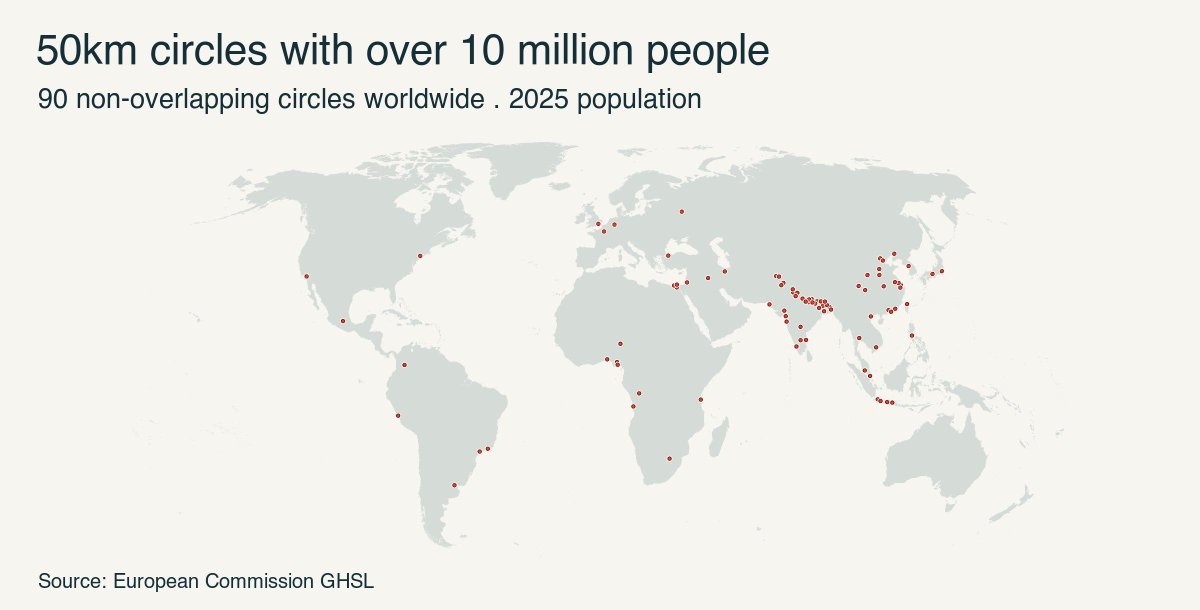
Random geography trivia: There are exactly 90 non-overlapping 50km radius circles with over 10 million people. India has 27 of then and China 16. HT @OwenWntr
This wonderful animation by @milos_gis shows a full year of the Iberian peninsula as seen from space. Spain and Portugal change their colours less intensely than areas in central Europe where the seasons are more distinct.
Just launched https://t.co/Nh0SHW61YO, which puts every key election in one place, shows results in real-time, and calculates majorities and flips.
Both federal and state elections included. Hopefully it makes election night a little easier.
https://t.co/2lJh1tpVtL
Latin America is only becoming a bit more atheistic. Mostly it’s becoming more evangelical. HT @latinometrics (a must follow account if you think Latin America is interesting)
The price of electricity in Victoria’s state grid was lower than every other major economy for the first nine months of 2026, according to Rystad Energy.
This will be devastating news for those who insist the exact opposite is happening.
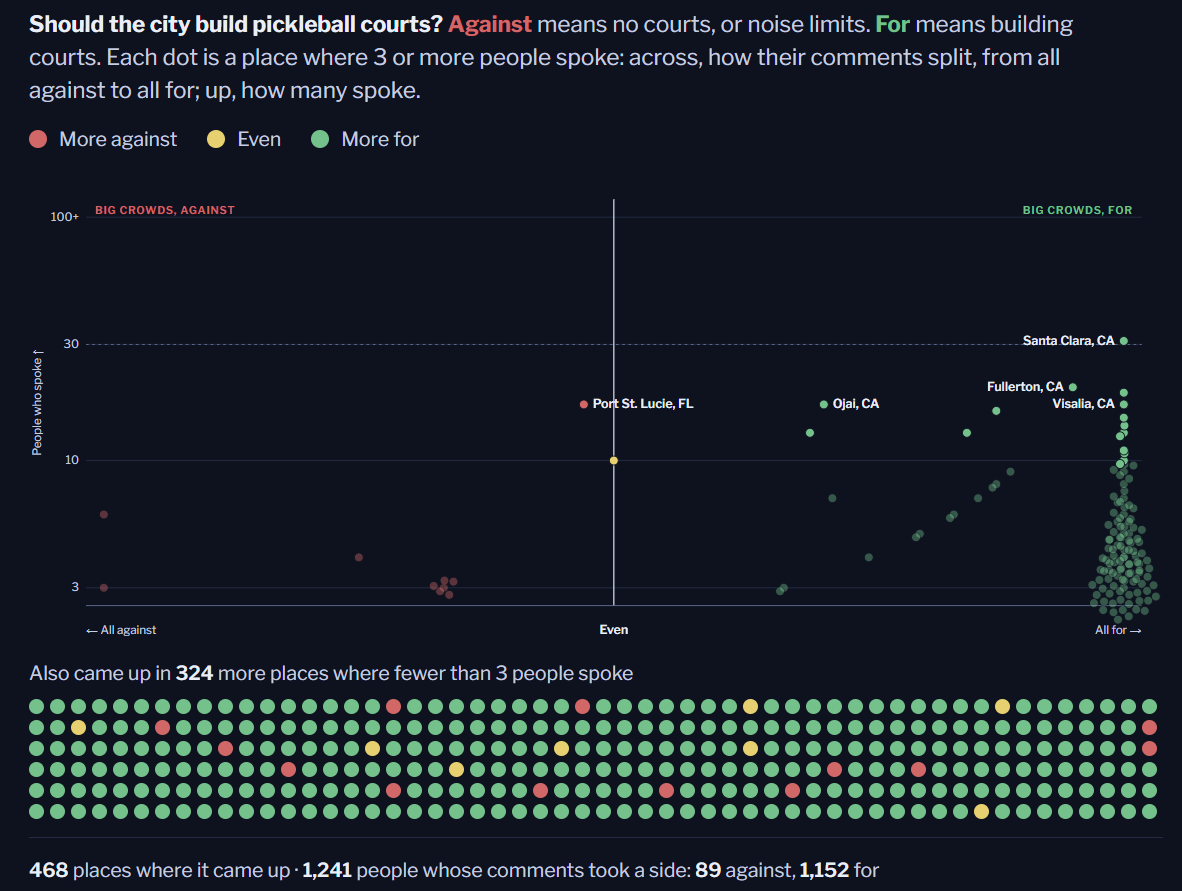
Someone made a site that tracks what people are talking about at public city council meetings across the US.
The only thing discussed more than data centers?
Pickleball courts.
Before standard time zones, the Netherlands used Dutch (Amsterdam) Time: GMT+0:19:32, based on solar time at the Westerkerk tower. Rounded to +0:20 in 1937, it kept clocks and train schedules 20 minutes off until abolished in 1940. Weird. Source: https://t.co/egGbqAGtjm
US imports from Russia rose 24% in 2025 to over $4 billion. Exports dropped to under $600 million (making imports 6.8x higher by value). Over 90% of those imports came down to just three categories: fertilizers, inorganic chemicals, and precious metals. Source: https://t.co/a0TsUEzKDc
Data from India is pretty clear: get phones out of schools. The findings show that restricting phone use can support learning, particularly among lower-performing students. Source: https://t.co/eGvmrwW7Nr