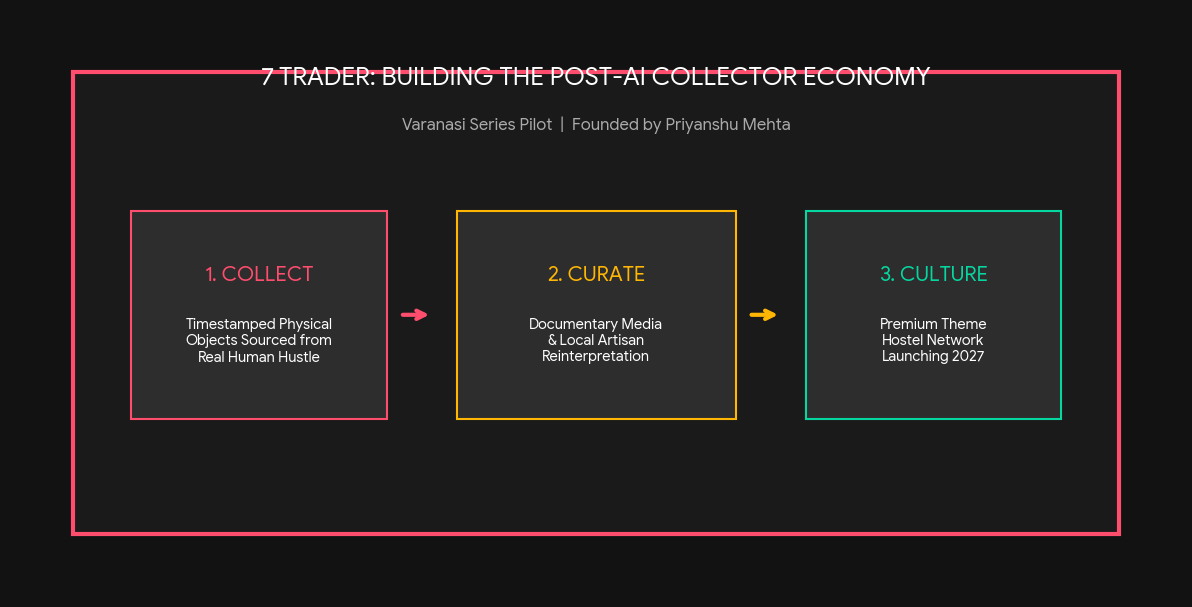
India's first living cultural archive. Ancient + Modern legacy preserved. Artifact program + Collectible theme hostels. Every city. Collect. Curate.Culture.
Every brand alive today will die someday.
Every founder's first signed cheque will be forgotten.
Every celebrity's breakthrough moment will fade.
Every object that built modern India will disappear.
Unless someone preserves it.
I am Priyanshu Mehta (36), and 7 Trader is building that preservation ecosystem.Drawing from 4 years managing culture at different Hostels across mc leod ganj, Rishikesh and varanasi. I am building our flagship Collectible Theme Property in Varanasi for a 2027 launch.
We aren't a digital gallery. We aren't a quiet, dusty public museum.We are an asset-backed network of premium backpacker hostels where global builders, developers, and creators live and co-work directly alongside the physical relics of modern Indian grit.
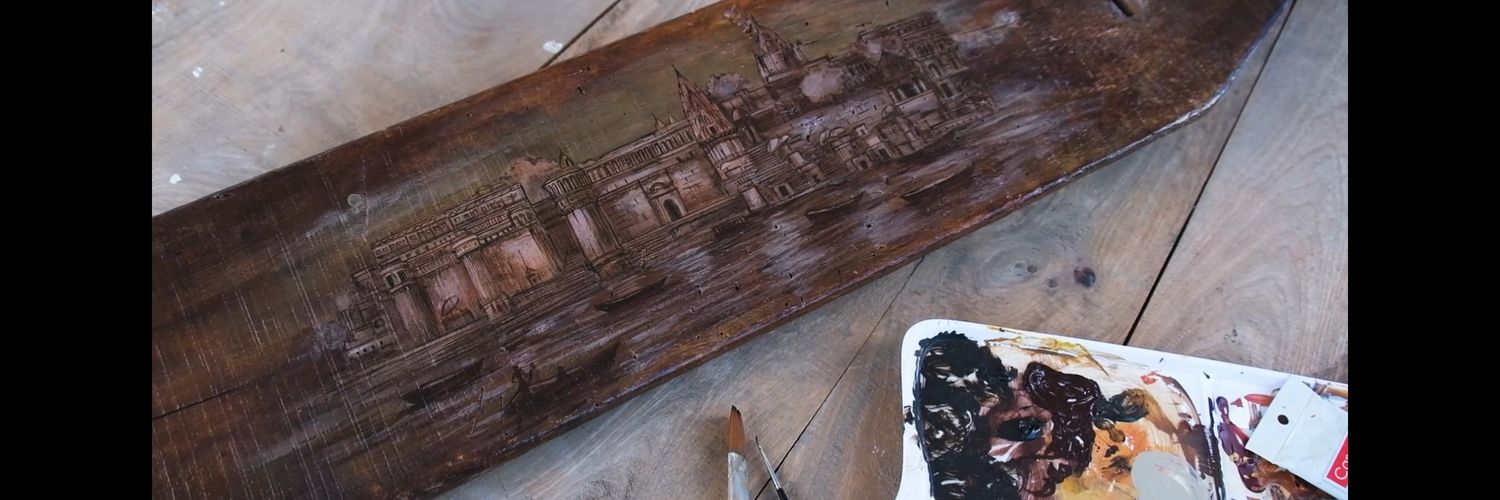
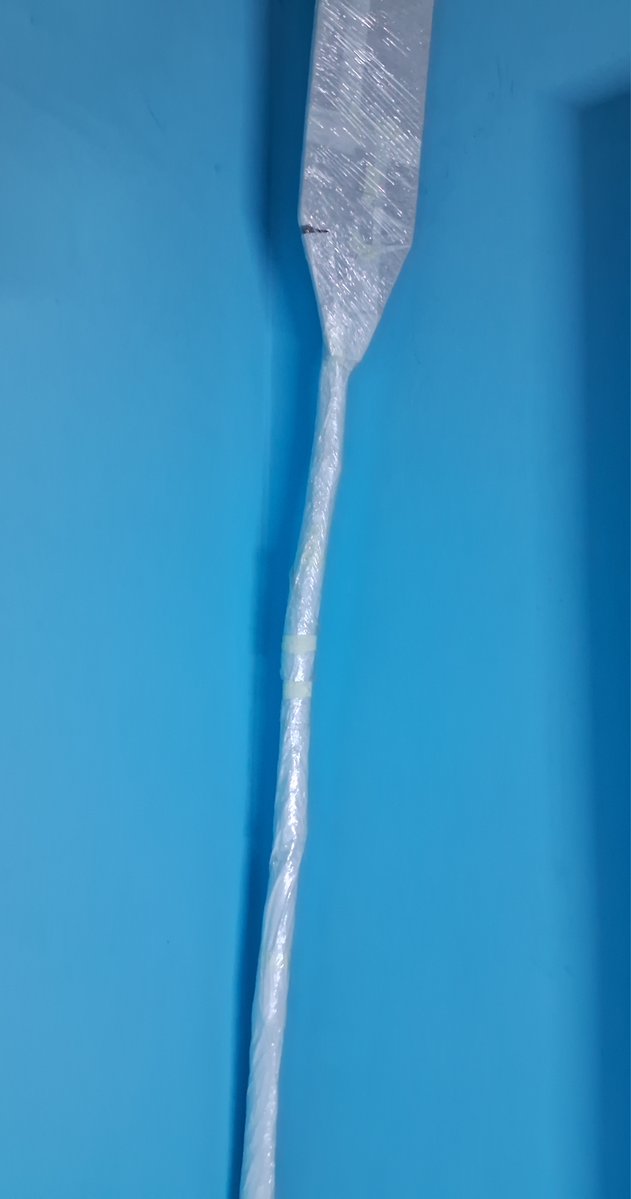
A Varanasi boatman's 20-year-old paddle (Artifact 002 — Fully Completed).Next to a startup founder's first manual https://t.co/9uzMUY0RR7 to an artisan’s handloom saree https://t.co/66yWvfTVY7 to a sneaker that changed street culture.
All in one room. All telling one story:India's complete, un-fakeable cultural memory.
Our Post-AI Thesis: In an era where synthetic digital assets are infinite, premium financial value will aggregate entirely around physical, timestamped authenticity. AI can effortlessly simulate the pixels of a local craftsman; it cannot reproduce the physical wood that navigated the Ganga for two decades.
We have self-funded our initial proof-of-work. The storylines for our founding 12 Varanasi installations are locked. The objects are located. The artisan contracts are notarized.
We are officially opening our Pre-Seed Round for Angel Investors and Cultural Patrons who value raw execution over empty slide decks. Let's construct this alternative asset class together.
💬 CHOOSE A SIDE IN THE COMMENTS:
As an ecosystem builder, what holds a higher long-term valuation model for you?
A) Digital platform networks scaling with pure software leverage?
B) Physical, asset-backed cultural infrastructure engineered for the post-AI economy?
📸 Visual Concept: This image displays our actual, self-funded completed assets, proving our local supply chain and craftsmanship capability are fully operational.
REPOST this manifest to lock your handle into the movement.
Welcome to @7Traderculture! 🔁
#7Trader #Varanasi #StartupIndia #BuildingInPublic #AngelInvesting #PreSeed #HospitalityDisruption #PostAI
Dutch artist Tom Seerden creates these miniature architectural worlds by casting intricate bronze structures directly onto raw pedestals of stone or aged wood.
Inspired heavily by mountain villages, castles, and ruins in Italy (such as Abruzzo), he builds lost, cliffside cities into the natural cracks, veins, and contours of monoliths like slate, travertine, or granite.
The images depict the jeweled Huma Bird finial from Tipu Sultan’s Tiger Throne (c. 1790s).
Crafted in solid gold and encrusted with rubies, diamonds, and emeralds, it perched atop the throne’s canopy as a symbol of sovereignty. Taken after the Fall of Seringapatam in 1799, it resides in the British Royal Collection Trust.
The standardized cubical weights of the Indus Valley Civilization (c. 2600–1900 BCE) reflect remarkable civic organization and economic integration across vast distances.
Carved primarily from chert, these weights followed a strict binary system (1, 2, 4, 8, 16, 32 \dots) for smaller quantities before transitioning to a decimal system for heavier goods—enforcing uniform trade and taxation throughout major Harappan centers.
This breathtaking jade funerary mask belonged to K'inich Janaab' Pakal I (Pakal the Great), who ruled Palenque for 68 years after taking the throne in 615 CE.
Crafted from over 200 tesserae of jade—a stone sacred to the Maya representing life, breath, and rebirth—it covered his face inside his elaborate sarcophagus beneath the Temple of the Inscriptions.
The Palace of Knossos in Crete was the ceremonial and political heart of Minoan civilization (c. 1900–1450 BCE).
Famous for its sprawling, labyrinthine layout, advanced plumbing, and distinctive downward-tapering red columns, it inspired the Greek myth of King Minos and the Labyrinth.
The vibrant structures seen today are largely the result of Sir Arthur Evans' controversial early 20th-century reinforced-concrete restorations.
This iconic 1980s photograph captures Prime Minister Rajiv Gandhi using an early portable luggable computer aboard Air India One.
Known as the architect of India's digital push, his administration established C-DOT (Centre for Development of Telematics) in 1984, reduced import duties on computers, and laid the groundwork for the country's IT and telecom revolution.
Artist Sudarshan Shaw’s artwork captures Similipal’s famous melanistic "black" tigers, unique for their broad, merged stripes caused by a rare genetic mutation (Transmembrane Peptidase RNASEK gene).
By combining traditional folk art traditions with modern wildlife conservation motifs (notice the camera trap tied to the tree), the piece celebrates the intersection of natural heritage and science.
This 17th-century kawari kabuto (extraordinary helmet) shapes the entire bowl into a giant dragonfly (tombo).
In samurai culture, dragonflies were revered as katsu-mushi (victory insects) because they only fly forward and never retreat—making them a popular symbol of relentlessness on the battlefield.
These Aurignacian miniature birds (~2 cm long, <1.5g each) from Hohle Fels, Germany, are among the smallest Ice Age sculptures ever discovered.
Uncovered by University of Tübingen archaeologists, one shows a brooding bird while the other depicts outstretched wings. They highlight astonishing micro-carving skills from 40,000 years ago.
The Rabot in Ghent, Belgium (1491) is a brilliant piece of late medieval hydraulic engineering.
Built right where Emperor Maximilian I’s army breached the city during the 1488 siege, this fortified watergate functioned as both a defense tower and a sluice to regulate canal levels and flood surrounding fields during threats.
Which historical hydraulic or water defense structure do you find most ingenious?
This 19th-century photograph by Eugene Clutterbuck Impey (c. 1858–1865) documents a colossal standing Tirthankara (Kayotsarga posture) at Rajorgarh (Rajgarh) in Alwar, Rajasthan.
It highlights the scale of early medieval Digambara Jain rock-cut art in Gurjara-Pratihara strongholds, often overshadowed by later sites.
Which lesser-known Jain rock-cut site do you find most impressive?
This Punic stele from Carthage (2nd–3rd c. BCE) features the iconic Sign of Tanit at its center, flanked by pomegranates and grapes symbolizing abundance and rebirth.
The solar discs and rosette at the pediment highlight the deep Levantine roots of Carthaginian sacred iconography.
Which ancient Mediterranean symbolic motif do you find most intriguing?
This clay relief from Tapa Shotor (Hadda, Afghanistan, 2nd c. CE) is a classic example of Greco-Buddhist syncretism.
Here, Vajrapāṇi is rendered directly in the likeness of Herakles—complete with a lion skin and club transformed into a vajra—protecting the Buddha.
What other cultural cross-pollination in Gandharan art do you find fascinating?
Benoy K. Behl’s low-light photography revealed what earlier studies missed: Ajanta's murals aren't just sacred scenes, but a vivid record of 5th-century wooden architecture, pavilions, and intuitive spatial geometry long before Western linear perspective.
Which specific architectural detail in ancient murals catches your eye most?
The Walls of Ávila (11th–12th c.) are a masterclass in Romanesque military architecture.
Constructed using granite blocks, Roman spoils, and heavy mortar, their 2.5 km perimeter features 88 semi-circular towers designed to eliminate blind spots for defenders.
Which intact medieval fortification around the world impresses you most?
The Chamber of the Ten Maidens mosaic (Sicily, 4th c. CE) captures Roman female athletes wearing a strophium (breast band) and subligaculum (briefs) for sports like weightlifting and discus.
It’s a rare look at functional athletic wear and victory rituals in antiquity.
Which ancient artifact on everyday life catches your attention most?
This shows the famous Perwa / Dev Giri cave temple in Jawai, Rajasthan, dedicated to Goddess Chamunda Devi.
Unique Coexistence: The granite hills around Jawai are world-renowned for a peaceful human-leopard harmony, where big cats freely roam around ancient cliffside shrines without attacking pilgrims.
Living Heritage: The Rabari pastoralists of the region revere leopards as sacred guardians of the hills and temples.
Have you ever experienced living community-led conservation like Jawai's?
Ali Bahadur I (1758–1802), born Krishna Sinh, was the son of Shamsher Bahadur I and grandson of Peshwa Baji Rao I and Mastani.
* Bundelkhand Conquest: Serving as a Maratha commander, he carved out the principality of Banda in Uttar Pradesh under Maratha suzerainty.
* Kalinjar Siege: He met his end in 1802 during a prolonged, two-year siege attempting to capture the formidable Kalinjar Fort from local Bundela chiefs.
What aspect of the Maratha-Bundelkhand history or Peshwa lineage interests you most?
This shot shows the iconic openwork spiral staircase tower of the University of Mumbai's Convocation Hall (Fort Campus), designed by Sir George Gilbert Scott in the 1870s.
It’s one of the finest examples of Venetian Gothic Revival in Asia—combining local Kurla stone with imported Porbandar limestone and red basalt accents.
Which detail of Mumbai's Victorian Gothic ensemble stands out to you most?
John Smith’s discovery in April 1819 brought Ajanta’s 30 rock-cut Buddhist caves back into global view. He even scratched his name onto a pillar in Cave 10 to mark the moment.
While abandoned around the 5th century CE, the murals preserved an unmatched visual record of ancient Indian life—from textiles and metallurgy to daily attire and sacred art.
Which cave's murals or architectural details do you find most striking?