NIGERIAN ARMY INTENSIFIES ONSLAUGHT ON BANDITS, OVERRUNS CAMPS, CAPTURES FAMILIES, DESTROYS LOGISTICS IN BAUCHI FOREST
The Nigerian Army has continued to record significant successes in its ongoing clearance operations against bandit elements, as troops sustain offensive actions across identified criminal enclaves in Bauchi.
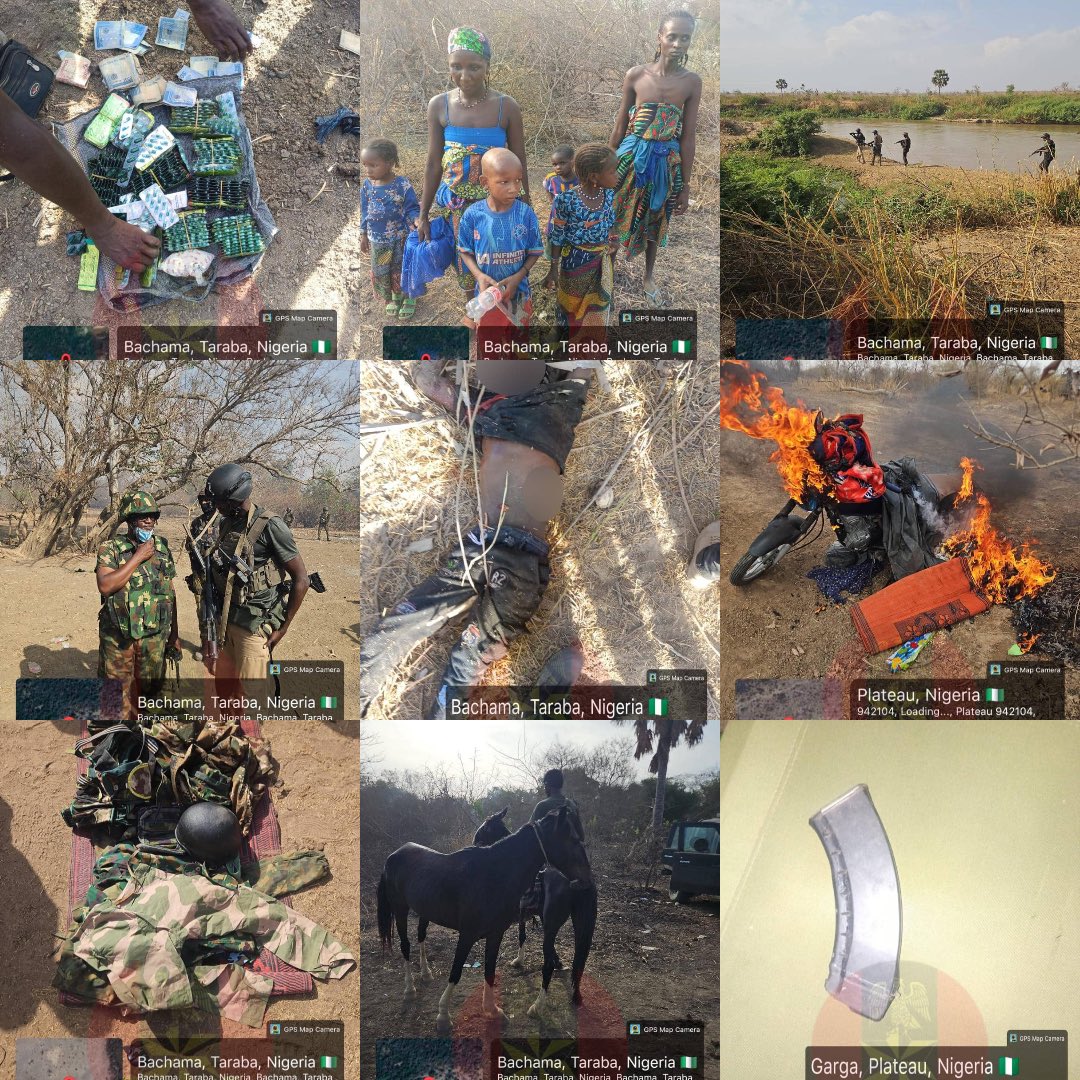
In continuation of ongoing operations, troops of 33 Artillery Brigade, in conjunction with the Office of the National Security Adviser (ONSA) team, conducted a clearance operation within the Dajin Madam Forest. The operation resulted in the successful clearing of several bandit camps, including the notorious Azuge and Hari camps, further disrupting the activities of criminal elements in the area.
During the operation, troops neutralized a number of bandits, while several others fled under sustained military pressure. In addition, bandits’ family members comprising 6 women and 13 children were taken into custody. Several motorcycles used by the criminals for mobility were also destroyed, further limiting their operational capability.
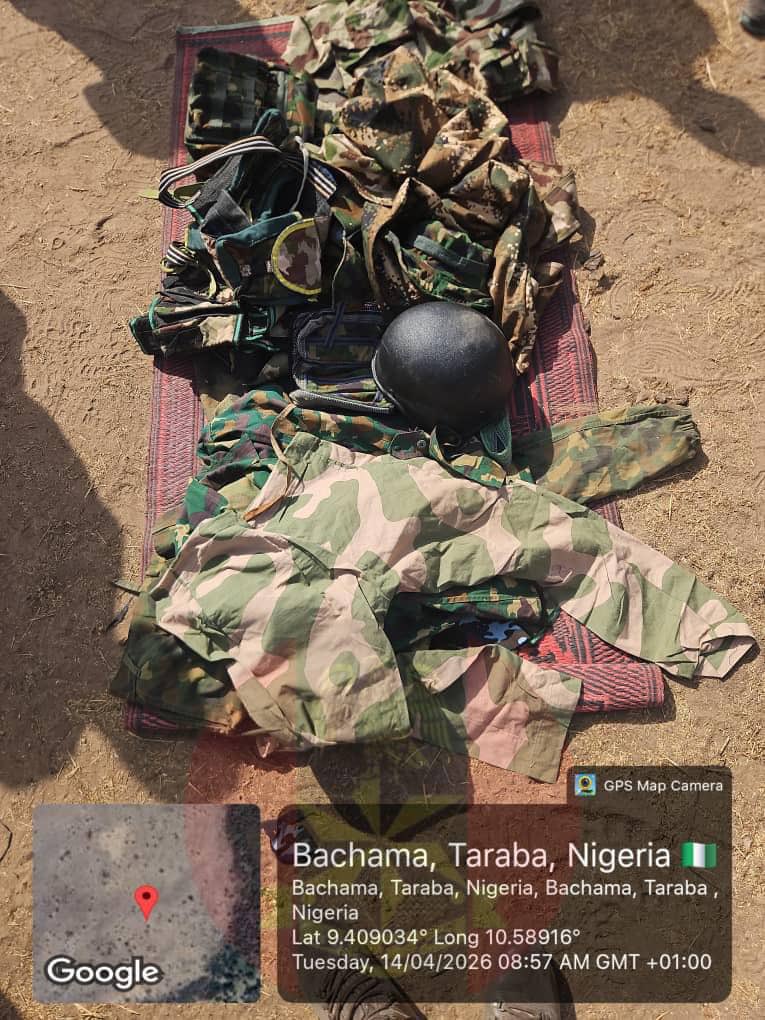
A cache of items was recovered during the operation, including one AK-47 magazine, packs of tramadol drugs, a pair of police uniform, several military uniforms and 2 horses, all indicative of the group’s criminal activities and attempts at impersonation to commit criminalities.
Troops are currently maintaining a firm hold position within the Dajin Madam Forest to consolidate on the gains achieved and prevent any re-infiltration by fleeing bandits.
In a related development, troops conducted a follow-up clearance operation to Mainamaji as part of the exploitation of the general area following recent air strikes on bandit hideouts. The operation recorded no contact, further suggesting that sustained military pressure has significantly degraded the presence and movement of bandits within the area. The continued success of these operations underscores the effectiveness of ongoing military offensives and the increasing dislocation of bandit networks.
The Nigerian Army remains resolute in its commitment to sustaining pressure on all criminal elements until lasting peace and security are restored. Members of the public are encouraged to continue supporting security agencies with timely and credible information.
She called me and was screaming.
she said "I won!" "There were so many people but I was among the winners!".
It was a proud sister moment for me, I was sooo happy!!
But looking at her right now, it feels like she's leaving me slowly, my girl needs help and I can't do it alone.
Why this statement from illbliss matters.
For years now, that region has expressed itself through hip-hop. And unlike the older generation of rappers who felt compelled to relocate to Lagos to break through, this new class don’t migrate—they visit Lagos, collaborate, and return to their base. And they’re not niche either: artists like Jeriq have built massive cult followings and are shutting down stadiums back home.
What does this mean?
That musically, we can start decentering Lagos + Afrobeats as the only viable path.
If the east can consolidate itself as a cultural hip hop strong hold, artists won’t need to uproot themselves to blow; it becomes like the US where different region can specialize in different sounds/genres.
But for this to scale, the industry in the east must be built with intention—structures, stakeholders, investments, chart systems, media, events and award that don’t treat Lagos as the only center of gravity.
If the south east chooses hip hop, we should give it the infrastructure to thrive.
That’s how you diversify a national music economy where everyone can be a part of. Not just “Afrobeats”.
📝- TEARS ARE SALTY FOR A REASON (EP) by Alpha Ojini is 4 years old, today.
what is/are;
— your best track(s)?
— your sincere opinion(s) about the project?
I have not stopped thinking about how Fave handled AI and her song “Intentions.” An AI choir lifted her lyrics, remixed the melody, went viral on TikTok and suddenly the fake version was getting more attention than the original.
Legally and ethically, it was wild to watch. Someone with no rights to the song was building clout and probably coins from her work, while the real artist had to fight for space on her own record. Classic African creative story, upgraded with AI.
What did Fave do? She moved like a business woman. She took the viral melody, re sang her own lyrics, and released that version herself. She stepped into the trend, took back the narrative and positioned herself to own the revenue.
For African creatives, this is bigger than one song. AI will keep touching our voices, lyrics and images. The question is: will we only react with outrage, or will we build smart legal and business playbooks that let us protect our IP and still win.
Fave’s move is a case study. AI can dilute you, but it can also expose new versions, new audiences and new income, if you know how to claim it. The tech is loud, but the power still belongs to the artist who understands both the law and the business.
So basically by this logic, I as a citizen, can rob and kill tomorrow then come to the police for “peace talk” and get absolved, get a few good boy pats on the head and told to go home? Is that it? Bet.