Breaking News: The House voted to end the war in Iran, as four Republicans sided with Democrats in a striking rebuke to President Trump. https://t.co/Oeeox0iq9q
🇺🇸🇮🇷 The war explained in 10 seconds
Venezuelan oil is extra-heavy (very low API gravity, around 8-10° or less), thick like tar/resin, with a high percentage of sulfur, metals and asphaltenes.
It does not flow easily, is difficult to transport by pipeline or ship without heating, and requires expensive refineries for processing. Without dilution, production and exports are limited.
Iran produces light oil (Iranian Light ~34-36° API) and gas condensate (very light and volatile).
This acts as a diluent: it reduces viscosity, increases API gravity and makes the mixture easier to transport and refine.
Typical ratio: 3:1 (3 barrels Venezuelan heavy + 1 barrel Iranian light/condensate) → produces Merey 16 or a similar blend (around 16° API), which is popular with Asian refineries (especially China).
This is what China used to do by importing both of them. Mixing.
This is what the US is now trying to do, huge profits.
🇺🇸🇸🇦President Trump told leaders of Arab and Muslim countries during a Saturday conference call that if a deal to end the Iran war is achieved he wants their nations to join the Abraham Accords and sign peace agreements with Israel. My story on @axios
https://t.co/2wjbpf0Tej
Saudi Arabia is reported to have asked Donald Trump to delay any new strikes on Iran until after the hajj. There remains a fear that, if conflict started again, pilgrims would be stuck https://t.co/tmqv9irPsQ
🚨BREAKING: For the first time, the original Pakistani cypher — cable I-0678, the document that triggered the removal of former Pakistani Prime Minister Imran Khan — is being released in full by Drop Site.
Iranian airstrikes have damaged or destroyed at least 228 structures across bases or sites used by the U.S. military since the war began, hitting hangars, barracks, fuel depots, aircraft, and key radar, communications and air defense equipment, according to a Post analysis of satellite imagery.
The amount of destruction is far larger than what has been acknowledged by the U.S. government or previously reported.
For this examination, The Post reviewed more than 100 high-resolution Iranian-released satellite images. The Post verified the authenticity of 109 of those images by comparing them with lower-resolution imagery from the European Union’s satellite system, Copernicus, as well as high-resolution images from Planet, a major U.S. commercial provider, when available.
A military spokesperson disputed the characterization of base damage by experts as extensive or evidence of failures, saying assessments of destruction are complex and can be misleading in some cases, but declined to provide specifics.
Read the full investigation: https://t.co/aDHdsXUVyq
Tensions between Malaysia and Norway heightened over a scrapped weapons deal as Oslo confirmed it had revoked export licenses tied to a naval strike missile system https://t.co/UvK18fPKH2
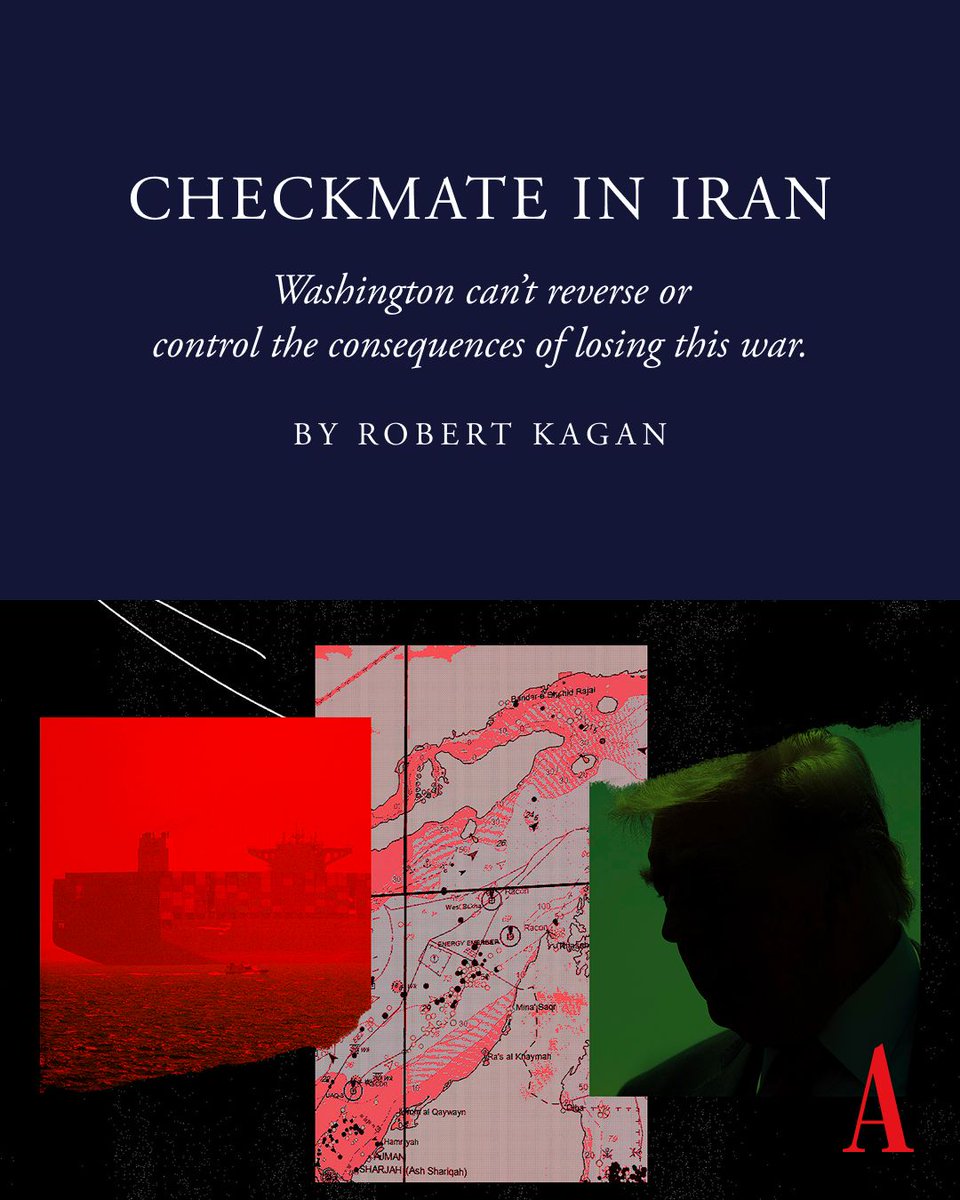
The U.S. is effectively checkmated in Iran—and this defeat will carry lasting consequences unlike any America has endured before, Robert Kagan argues. https://t.co/XIvZxuee3F
🎨: The Atlantic. Sources: Amirhossein Khorgooe / AFP / Getty; Maximillian Mann / The New York Times / Redux; Saul Loeb / AFP / Getty.