TOP SECRET: DO NOT CIRCULATE SO AS NOT TO EMBARRASS JAPANESE GOVERNMENT
The Silent Skies: Japan's Radar Lock-On Embarrassment and China's Long Range Grip on the Pacific Skies
In the tense skies southeast of Okinawa, where the East China Sea meets the Pacific's vast expanse, a quiet drama unfolded on December 6, 2025—one that exposed the fragility of Japan's aerial defenses and the unyielding edge of Chinese technological prowess. Two Japanese F-15 fighters, scrambled to monitor a routine Chinese aircraft carrier exercise, found themselves painted by the fire-control radar of J-15 jets launched from the PLA Navy's Liaoning. The locks were intermittent but deliberate: three minutes in the late afternoon, followed by a grueling 30 minutes into the evening. No shots were fired, no incursions breached Japanese airspace, and the encounters stayed firmly in international waters near the Miyako Strait.
Yet, in the aftermath, Japan's Self-Defense Forces (JSDF) issued a terse protest, summoning China's ambassador and decrying the act as "dangerous." What they didn't release? The gritty technical details—the distances, the radar signatures, the raw data that would paint a picture of vulnerability. This omission isn't mere operational caution; it's embarrassment, plain and simple. Tokyo knows that full disclosure would spotlight a stark reality: China's beyond-visual-range (BVR) dominance has turned routine intercepts into asymmetric threats, leaving Japan—and by extension, its U.S. allies—scrambling to catch up.
Consider the asymmetry at play. The Chinese J-15s, upgraded with advanced active electronically scanned array (AESA) radars capable of detecting and locking fighters at over 250 kilometers, initiated their radar illumination from an estimated 300 kilometers out. This wasn't blind aggression; it was a calculated warning, calibrated to the PL-15 missile slung under the J-15's wings—a weapon with a kinematic range pushing 200–300 kilometers in its domestic variant, propelled by a dual-pulse rocket motor to Mach 4+ speeds. The PL-15 isn't just long-legged; it's network-smart, with two-way datalinks for mid-flight updates from AWACS or drones, turning a single jet into a node in a multidomain kill web. In this encounter, that lock served as a non-verbal shove: "Back off, or become a target before you even see us."
Contrast that with Japan's arsenal. The F-15Js on patrol that day were armed primarily with American-made AIM-120C-series AMRAAMs, whose effective range tops out at around 90–120 kilometers—roughly half the PL-15's reach. Yes, Japan greenlit a massive buy of 1,200 AIM-120D-3 and C-8 missiles in January 2025, promising 130–160 kilometers of extension, but those upgrades are still rolling out, and even then, they lag in datalink sophistication and resistance to jamming.
In a head-on BVR duel, the math is merciless: Chinese pilots could ripple-fire PL-15s from standoff range, downing F-15s before Tokyo's interceptors could reply.
Publishing the telemetry—say, confirming that lock at 300 kilometers—wouldn't just validate Beijing's claims of "routine training"; it would broadcast Japan's outmatched position to the world, eroding deterrence in a region where perception is half the battle. Better to mutter about "safe distances" and move on, lest the public (and allies) question why billions in F-15 upgrades haven't closed the gap.
This isn't isolated tech envy; it's the fruit of China's deliberate sprint to BVR supremacy. By 2025, the People's Liberation Army (PLA) has cemented its lead in multidomain networked warfare, weaving air, space, cyber, and electromagnetic domains into a seamless "system of systems." The PL-15E's combat debut in the May 2025 India-Pakistan clashes—nailing targets at 200 kilometers, shooting down 6 Indian Air Force jets in one night —proved its mettle, with debris analysis revealing AESA seekers and anti-jam resilience that humbled Western rivals.
Rumors swirl of a PL-16 successor already in service, while J-15Bs and J-20s integrate stealth coatings, AI-driven targeting, and real-time satellite feeds from the Gaofen satellite constellation. Beijing's Information Support Force, stood up in 2024, orchestrates this orchestra: drones cue missiles, cyber ops blind radars, and space assets provide unblinking overwatch. It's not brute force; it's precision dominance, where "first detect, first shoot" rewrites the rules.
As the US retreats to the Western Hemisphere as it couldn't compete with China: Japan, tethered to U.S. tech pipelines strained by Ukraine and Taiwan contingencies, watches from afar—its F-15JSIs promising AESA radars and JASSM strikes, but arriving too late for the script flip.
Some Japanese pundits cited CUES - claiming PLA Navy violated CUES which it is a signatory.
Enter the Code for Unplanned Encounters at Sea (CUES), the 2014 voluntary pact signed by 21 navies—including China, Japan, and the U.S.—meant to keep carrier ops from sparking Armageddon. On paper, it's a de-escalation lifeline: standardized radio calls, visual signals, and maneuvering protocols for those "eyeball-to-eyeball" brushes. But in the PL-15 era, it's a relic—designed for visual-range tango, not 300-kilometer shadowboxing.
CUES assumes proximity breeds caution; BVR obliterates that, enabling launches from horizons away, where flares and frequencies mean nothing. A radar lock at extreme range? It's escalation by algorithm, not intent, and CUES offers no playbook for it.
Here's where China's tech lead becomes a diplomatic scalpel. As the BVR multidomain network pacesetter, Beijing has zero incentive to evolve CUES into a binding treaty. Why chain your asymmetric ace? The code's non-binding haze lets China feign compliance in low-stakes patrols—pre-notifying Liaoning's Miyako transit, nodding to "safety procedures"—while hoarding the high-end edge for crises.
Tokyo and Washington push for updates—covering drones, datalinks, even law enforcement vessels in disputed waters—but China stonewalls, framing expansions as "provocative." It's masterful: adhere just enough to claim the moral high ground, exploit the gaps to project power unchecked. In this encounter, the J-15's lock wasn't a CUES violation; it was a feature, not a bug, of a system rigged for the networked hunter.
Japan's silence on the specs isn't cowardice—it's calculus. Releasing the data would ignite domestic panic, strain the U.S. alliance, and embolden hawks in Beijing. But papering over the chasm invites more such probes, testing resolve until a misstep ignites the powder keg. The Pacific's skies are no longer a shared domain; they're China's to shape, one invisible lock at a time. For Tokyo, the real embarrassment isn't the incident—it's pretending the gap doesn't exist. Time to invest in reach, not rhetoric, before the next warning shot echoes louder.
The Japanese X user @WxpvxabXLp6M below deleted his post with my answer after I responded to his question on China violating CUES. Obviously, he cannot handle the truth 😂
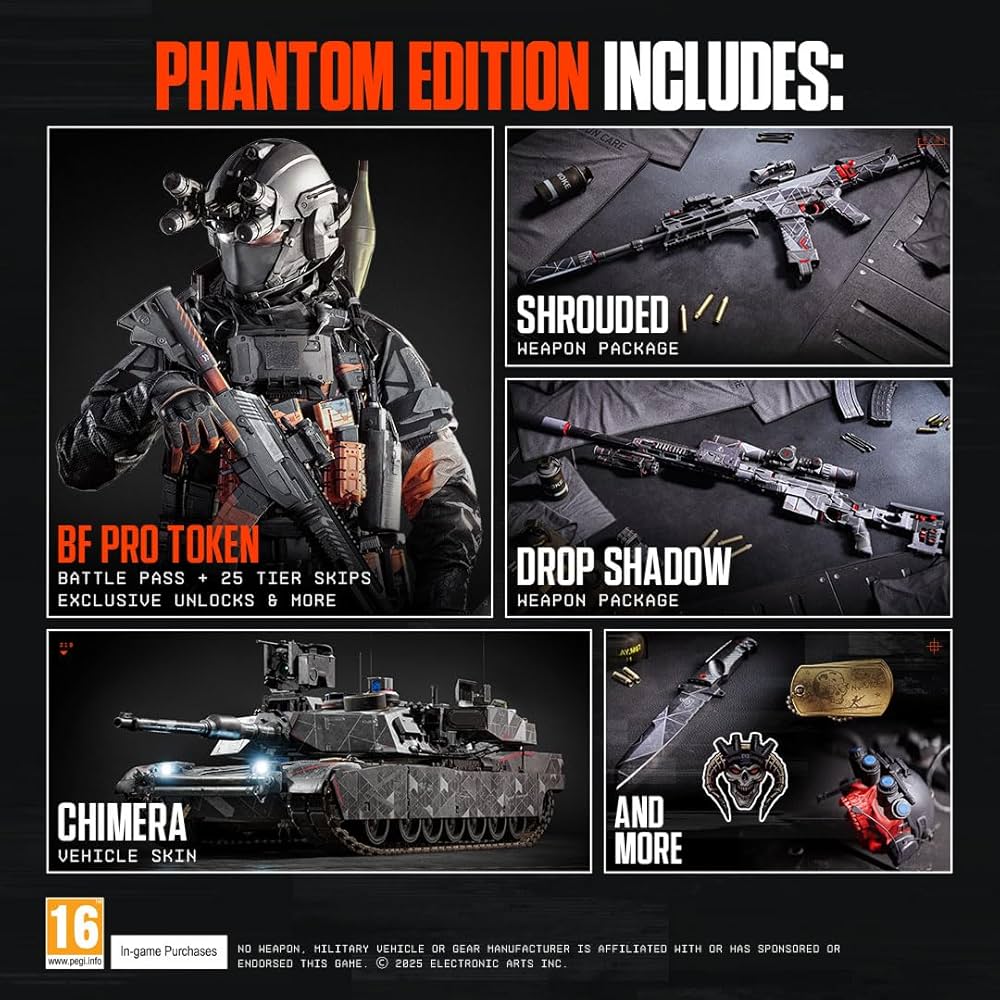
BATTLEFIELD 6 GIVEAWAY 🟧 ⬜️
Every winner will be selected at random.. 125 codes to Giveaway. Good luck & GG!
How to Enter: Comment Below
🟧 FOLLOW ⬜️ PC
🟧 LIKE ⬜️ XBOX
🟧 REPOST ⬜️ PS
#Battlefield6 ▪︎ #Battlefield ▪︎ #BF6