@cschemanske This makes sense for games with sideboarding, since players will go into their deckbox between games, but seems less of an issue in Pokemon. Although certainly 1 card makes way more difference in PTCG than other card games
@panomics I've been on Tatsu Six Flags Magic Mountain which is the predecessor to Flying Dinosaur as well, Dinosaur is far better, but both very unique
@panomics Intimidator 305, when I went on it, was the only other roller coaster I remember greying out on, it's intense. I went on Fury 325 last year, great ride, but I didn't grey
I don't know how to do the 'launching a Kickstarter' thing without it feeling weird so I'm just going to say it: my family made a deckbuilding game called Race to Kepler.
3+ years of weekends & it just went live this morning.
Need backstory? Sure. 1/3
https://t.co/MZY5daHdcy
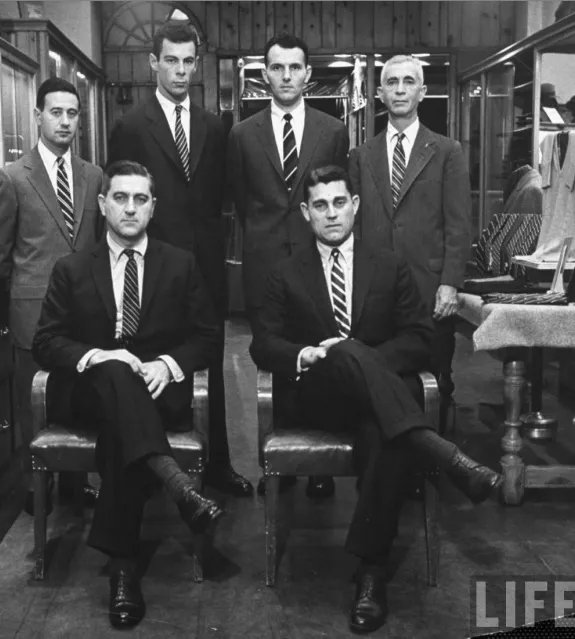
Much has already been said about this post, including smart commentary from people such as @CoraCHarrington and @OgLakyn, who rightly noted that people in the past were more informed about clothing. During the early to mid-20th century, the US Department of Agriculture published pamphlets on how to buy, repair, and take care of quality clothing.
Here is a page from their 1949 guide on how to buy a suit.
Notice how the information here is very sophisicated. There is a discussion of things such as collar interlining, bridle stay, taping, pocket construction, and visual guides that show what goes into the construction of such garments. The USDA doesn't publish such guides anymore (any attempt to revive such projects would be immediately slashed by austerity hawks). Mainstream publications have also become much more dumbed down — larger focus on what celebrities wear; less focus on construction.
But you likely already knew that.
I would like to just point out two things that contribute to the OP's impression above ("it takes too much research nowadays to buy clothes").
First, some of this is structural. While it's true that there was more education around clothing in the past (e.g., home economics courses being taught in high school), many people — especially men — were not particularly informed about clothing. Yet, they looked great. Why is this?
The reason is because they were aided by clothiers and tailors. For a time, men of a certain social station — middle class and above — bought almost all their clothes from one shop. In some cases, a man would introduce his son to his clothier or tailor when they reached a certain age. In Italy, it was not uncommon for a tailor to have dressed three generations of men in the same family.
At Brooks Brothers, the term "CU customer" referred to customers who would come in and ask to "see you," their sales associate. This sales associate knew everything about their clients — chest size, waist size, shoe size, preferences, lifestyle, habits, etc. And thus, they were able to clothe them appropriately. If the customer came in and said he had to go to a summer wedding, the clothier could pull out all the right clothes: wear this suit with this shirt, tie, and pair of shoes. Customer bought the whole thing and followed instructions.
Very few people have this relationship anymore. We buy our socks from sock companies, jeans from jean companies, and shirts from shirt companies. Oftentimes, this process is done online, where you can't even try these things on. These things then arrive at our door and we're expected to put together a coherent outfit, even a wardrobe.
This has offloaded the task of learning about clothes from the clothier to consumer. People don't consider service enough when they shop; they have very little loyalty to clothiers. Many just look for the lowest price, so it's not profitable anymore to run a retail clothing business as people did 100 years ago.
For the second issue, I will stress that I'm only talking about menswear (I know nothing about womenswear and have no opinion on the matter). But for men, I will push back on this idea that clothes automatically fall apart.
The biggest issue with clothing today (again, in menswear) is not physical durability, but emotional durability. Tons of clothes wind up in landfills with the tags still attached. It's not because the items suffer from a material defect, but something metaphysical. The person who purchased the item realized they don't love it anymore.
To me, this is the biggest change in the last 150 years. In the early 20th century, clothing was tied to time, place, and occasion (TPO), such that if you were of a certain social station and had to do a certain thing at a certain place in a certain time, you knew what you had to wear. This was sometimes tied to moral judgements (i.e., those who broke such rules were considered bad people)
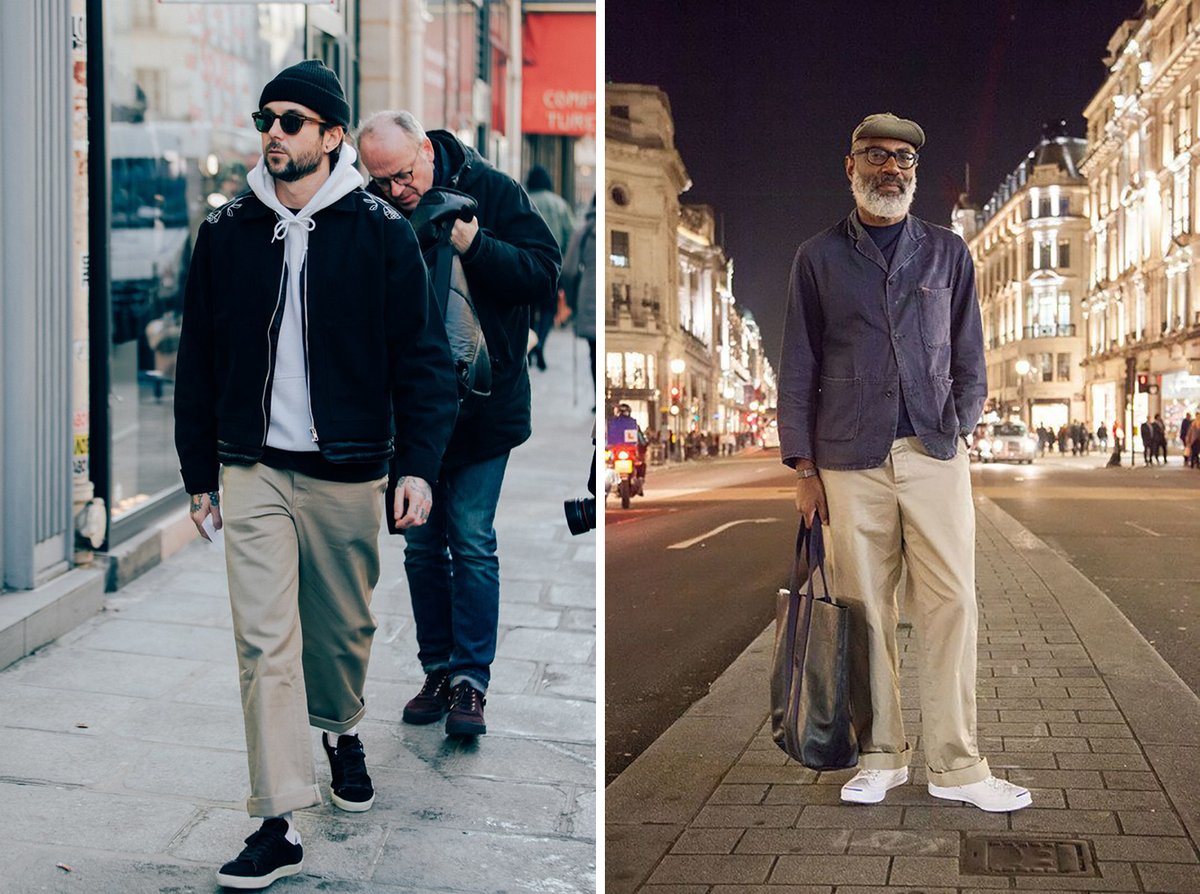
Over time, these social expectations loosened. The explosion of sportswear and designer clothing in the postwar period allowed people to fashion new identities through clothing. You went to Ralph Lauren to fashion together a preppy look; Levi's to put together a workwear look; Armani to look like a languid Italian playboy. By the end of the century, dress was tied to certain cultural identities — punks dressed like punks, jocks dressed like jocks, and so forth.
Today, very few boundaries exist. And so, people feel overwhelmed by the limitless options.
It is not enough to just research clothing quality. You have to know which types of clothing make you *feel* good on an emotional level. This requires some emotional sensitivity and cultural awareness (so you know what you're expressing).
In the responses to this post, I've seen people give suggestions on where to buy "quality" clothing. You could buy the highest quality clothing in the world — bespoke suits from world-class tailors, vicuna overcoats with handstitched lapels — and it would mean nothing if you're ultimately a guy who loves wearing duck canvas hunting coats and jeans. The second set is technically "lower quality" (depending on how you measure quality), but will get more wear because it expresses what you want to express.
IMO, the world is in a better place now that we don't force men to wear suits and women to wear sundresses. Even if you're a guy who loves suits, as I do, the world is still better because you can wear tweed in the city and blue button-up shirts to work (previously not possible in the TPO framework).
However, shifts in the marketplace and culture have made it much more difficult to buy clothes.
IMO, not true that "every option is slop." Dickies 874 work pants are 65% polyester and 35% cotton. Yet, they're great. It's not about the construction or fabric, but their place in culture. They will always be cool because of their place in Chicano and skate history.
The slop I see is generic, business casual stuff that, ironically, is narrowly focused on quality (e.g., "the best chinos" or "best t-shirt to make you look athletic"). The stuff is often culture-less and lacks appealing design qualities.
Building a wardrobe today will always require some research because it requires knowledge of self. You have to know who you are, so that you can dress in a way that expresses what you want and makes you feel like "you." Like my friend Bruce Boyer once said, "real style is being yourself on purpose."
@Pokedata_ovh what you made is great, passion projects are the best! But TPCI doesn't deserve fans fixing their terrible software problems, they should feel the pain of their failures (and unfortunately players have to feel it too)
Hadn't played OPTCG since OP13 came out, but took Ace to a case tournament after a handful of practice games and went 5-0. This format is atrocious, I won the dice roll against Imu and my deck bailed out my misplays all day. Back to SWU
Imu ✅🎲
Zoro ✅
Ace ✅
Imu ✅🎲
Imu ✅🎲
@PokeDadRob520@profpokedad@cschemanske It's certainly tough to overcome habits from a lifetime of years of paper slips. I play 2 other games that were digital-always and it's ingrained to report in app, but even then players forget and have to be tracked down.
@TcEvolutions@DuelSpecTCG@CoachDomTCG@Enzo_TCG | Winners focus on vision, losers focus on competition
So true, I sent this to my business partners as a good reminder if we set our eyes on our competition we'll lose sight of our own goals