Same here…I did not supported Tinubu in 2023 because: the Endsar and economy mismanagement of Apc; it was never because I saw Peter Obi has been competent.
I don’t like dealing in hypotheticals about things that never happened. Claiming that 90% of Obi’s Igbo supporters would still have supported him even if he weren’t Igbo is pure speculation.
Let’s stick to facts.
I supported Peter Obi in 2023 (you can check my timeline for the evidence). At the time I criticised Tinubu and his supporters because it felt like the rational position. Tinubu was visibly unwell, Atiku was not a viable option, and Obi was simply the strongest of the available choices. That support had nothing to do with competence; it was about picking the best option on the table then.
2027 is a completely different contest. Faced with a healthy and coherent Tinubu, it is hard to see how anyone would still prefer Obi. Obi’s main selling point remains that he “saved money.” That is not the primary responsibility of government. You cannot have children going hungry while you boast about the size of the state’s bank balance (we got to know through his successor that he also left significant debt for the incoming government which puts his claim of saving money not true). He is also making promises he failed to deliver even in a much smaller place like Anambra after eight years in office.
Compare that with Tinubu’s record in Lagos: he left a functioning succession and built leaders who have gone on to build others. That is leadership. Obi has built nothing of the sort. Morality alone does not run a country; leaders do. Obi is not a leader. Whether or not he is the moralist many claim is secondary, and I have no interest in arguing that point. You first have to be a leader; morality is a bonus. Obi has not shown he is a leader.
My decision to support Tinubu now has nothing to do with him being Yoruba. It is simply because, at this moment, he is the better choice. Anyone who brands every Yoruba person a bigot merely for choosing Tinubu is revealing their own bigotry.
It is 2026. People are free to exercise their constitutional rights.
This is Pst Poju Oyemade who brought Peter Obi to limelight with his "THE PLATFORM PROGRAMME" which he has since regretted delivering a direct message to that f00l called Peter Obi and his gang of "never do wells terrorists" called Ob!diots
Any Presidential candidate that is promising you reversal of any of the Reform policies of President Tinubu such as FUEL SUBSIDY...is playing to the gallery...is desperate....he is lying and it means he will set you backwards to times when credit institutions and investors found Nigeria too risky to touch....
REJECT HIM OUTRIGHT!!!
It shows one thing....
He lacks knowledge of anything additional he must do to improve the outcomes of the on-going reforms....
This is why some of us prefer CONTINUITY to CHANGE....cos these people FAKING SALVATION have no solution...but to enter Aso Rock and recover 20 years of losses funding FAILED elections....
#ShineYaEye
#Elections2027
MY RESPONSE TO DATTI BABA-AHMED OVER MY COMMENTS ON EX-NIGERIAN MILITARY DICTATOR IBRAHIM BADAMOSI BABANGIDA AT 85: COMPASSION DOES NOT REQUIRE HISTORICAL AMNESIA
Dear Datti Baba-Ahmed,
Yesterday, at the National Peace Committee event, I met Dr. Hakeem Baba-Ahmed, Datti Baba-Ahmed’s elder brother and PRP chairman. I gently tapped him on the shoulder to say hello while he was standing with others. He immediately turned to me and, in the presence of his party’s presidential candidate, former Cross River State Governor Donald Duke, declared that he was my “number one fan.”
We laughed about it, but he reiterated that he wasn’t kidding. Donald Duke and I also exchanged a few words on the sidelines, including about something he has always enjoyed teasing me about. My advocacy for legalization of cannabis.
Later, when all the presidential candidates gathered to sign the “Peace Accord,” Dr. Hakeem Baba-Ahmed met me again. He handed me his business card and told me that no matter what I faced, I should never change my position on social justice. Earlier today, I messaged him to thank him for his kind words at yesterday’s meeting.
He replied, again reassuring me of his admiration, and then asked whether I had read what his younger brother, @dattibabaahmed, had written in @daily_trust, excoriating me over my comments regarding former military dictator Ibrahim Badamosi Babangida on his 85th birthday.
I hadn’t seen the piece. When I told Dr. Hakeem Baba-Ahmed that I couldn’t find it online, he explained that it appeared in the print edition of Daily Trust. I have now read Datti’s response, and I can only pity him.
Instead of confronting the historical record of Ibrahim Babangida’s dictatorship, Datti chose to deliver a sermon about “compassion,” while attacking me personally and attempting to whitewash a legacy that Nigerians have every right to interrogate. I have also been made to understand that Datti belongs to that class of Nigerians whose fortunes and opportunities were substantially shaped by the benevolence of the IBB-era establishment. I learned today he was an ex-military man and probably one of the military officers known as the “Babangida Boys.”
Perhaps that explains some of the reverence.
My own encounter with Datti was only once before now, ironically, also at a National Peace Committee event during the 2023 election cycle. I was seated in an area to deter the National Peace Committee’s attempt to separate those of us it did not consider “frontline candidates” from its preferred candidates. Datti confronted me, claiming I had no right to sit next to Peter Obi, his presidential candidate, because he was supposedly keeping the seat for him. I reminded Datti that he, as a vice-presidential candidate, had no superior claim to a seat designated for presidential candidates.
Then APC candidate Bola Tinubu arrived and sat next to me. What happened next was revealing. The same Datti Baba-Ahmed whose ticket was campaigning fiercely against Tinubu and the APC suddenly became extraordinarily deferential, “Uncle,” “Sir,” “Daddy,” all in practically the same breath; he practically knelt down for Tinubu in my presence. I was stunned. After all the ferocious rhetoric surrounding the election, particularly from the Obidient movement against Tinubu and the APC, here was one of its principal candidates displaying an astonishingly servile attitude toward the very political adversary his supporters were being mobilized to defeat.
When @PeterObi eventually arrived, Datti was moved to the back while I retained my seat, which was where I belonged under the alphabetical seating arrangement.
Interestingly, that same alphabetical principle I fought for was finally respected at yesterday’s event. But the spectacle did not end with Datti.
When the event concluded, I watched Peter Obi himself displaying similar deference toward Tinubu. I walked away, looked back at what was happening, and something became clearer to me, that is, beneath the public political warfare, Nigeria’s establishment politicians are often far more comfortable with one another than their followers are encouraged to believe.
Their supporters fight bitterly online and sometimes in the streets. They insult, threaten and destroy relationships, defending political figures who, behind the curtains, address one another as “Uncle,” “Daddy,” “Sir,” brother, and friend.
That experience stayed with me, and it provides useful context for Datti’s latest lecture about how Nigerians should treat members of the old political and military establishment. The records are there.
Now, let us deal with his arguments about General Ibrahim Babangida, history, compassion, and accountability.
I have read Datti’s lengthy response to my comments about former military ruler Ibrahim Babangida. Datti devoted considerable space to insulting me, suggesting drugs, alcohol, prison, and even an ICU, while simultaneously delivering a sermon about compassion, morality, and human decency. The contradiction is difficult to miss.
First, I did not attack Ibrahim Babangida because he is 85 years old. My criticism was about his record in power and what his decisions did to Nigeria. Age does not erase history; in fact, the world is replete with people facing punishment in old age for atrocities committed in their prime. Ill health does not confer political sainthood, and compassion for an elderly person does not require Nigerians to pretend that decisions made while that person wielded enormous power had no consequences.
I wish no illness upon Ibrahim Babangida, but I will not participate in rewriting his record simply because he has grown old.
Datti asks where Sowore will be at 85.
I do not even know if I will make it to 85; Nigerian wicked leaders, including Babangida, have dealt heavy blows on my body and soul; however, wherever I am at 85, Nigerians will have every right to examine what I did with whatever power or influence I possessed. If I betray the democratic will of Nigerians, they should say so.
If I impoverish people through disastrous policies, they should say so. If I violate their rights, they should say so. If I leave behind institutions weaker than I found them, history should record it. If I killed journalist Dele Giwa with a parcel bomb, I should be judged for it.
If I am credibly implicated in crashing a plane full of junior army officers because I feared they might become ambitious and overthrow me, the public should interrogate and judge that record. That is accountability.
Datti lectures me about compassion while speculating about alcohol, drugs, prison, and ICU. He wrote that perhaps alcohol or drugs would destroy me; politics might confine me to prison; or people might restrict me to an ICU.
Then, almost in the same breath, he preached about humanity. Apparently, his compassion extends to powerful former rulers but disappears when dealing with political opponents. I have already experienced prisons and detention because of my political beliefs and activism. Datti does not need to fantasize about them for me.
Then he describes Babangida as a “revered former Nigerian leader.” Revered by whom?
Datti is entitled to revere him. Millions of Nigerians are equally entitled to remember his disastrous rule differently. History is not determined by the affection of political elites.
Babangida himself has now acknowledged that MKO Abiola won the June 12, 1993 presidential election and has accepted responsibility for decisions taken under his watch. So what exactly is immoral about Nigerians remembering the consequences of that history?
Datti invokes Babangida’s supposed role in “managing” Nigeria’s political crises.
This is precisely the elite rewriting of history that I reject. A ruler cannot create or deepen political crises and then demand eternal gratitude for “managing” them. The June 12 election was not some minor administrative disagreement. Nigerians voted. MKO Abiola won. The democratic process was cruelly truncated for selfish reasons. Babangida himself now admits Abiola won. That is not my imagination. That is history.
Datti also speaks about Babangida’s “support for democracy.” Democracy means respecting citizens’ votes and their right to choose their leaders. You cannot annul Nigerians’ expressed democratic choice and then have your admirers demand that history remember you principally as a defender of democracy. The most elementary democratic principle is that when citizens vote freely, their votes must count.
Datti mentioned that I criticized him in 2023 for calling Tinubu “Uncle.” Yes, I did, and I stand by the principle behind that criticism.
The fact that today you no longer stand with the toxic and fraudulently packaged political expression and company you kept in 2023 only reinforces my view about the deceptive nature of establishment politics. Nigeria’s political establishment has spent decades turning public affairs into a family reunion.
“Uncle,” “Daddy,” “Leader,” “Baba,” “Your Excellency.” This culture of excessive deference to powerful people is one reason accountability remains so difficult. A President is a public servant, not my uncle.
A former military ruler is a historical figure whose record must be interrogated, not a family patriarch before whom citizens must kneel or genuflect.
You want me to worship before the altar of your fallen god. I will not.
Respect is earned; accountability is mandatory.
Datti says courtesy does not mean surrender. Fine. But neither does criticism mean cruelty. I wish I could separate respect for Babangida’s humanity from condemnation of his political record, but IBB’s record leaves me with little humanity to celebrate. A man whose regime executed his close friend, Mamman Vatsa, after a coup trial cannot simply have that history erased by the passage of time.
What I will not do is confuse respect for old age with surrendering historical truth.
Datti says political disagreement should not make us lose our humanity. I agree. So apply that principle universally. Apply it to the poor. Apply it to protesters. Apply it to political prisoners. Apply it to workers whose livelihoods have been destroyed by bad government.
Apply it to young Nigerians whose futures have been repeatedly squandered by leaders celebrated at elite birthday parties. Humanity cannot become a doctrine reserved for powerful men when they become old.
@dattibabaahmed says people like me seeking to rule Nigeria are “the real danger.”
No, Datti.
The danger to Nigeria is not citizens who refuse to worship former wicked rulers. The danger is a political culture nurtured by your types that repeatedly rehabilitates failure, protects privilege, and demands silence from anyone who refuses to participate.
The danger is historical amnesia. The danger is treating powerful people as untouchable while ordinary Nigerians bear the consequences of their decisions.
My politics has never been about hatred of individuals. It is about systems. It is about accountability. It is about institutions that work for all citizens regardless of class or social status. It is about refusing to accept that Nigeria must permanently rotate between the same political families, military-era power brokers, their protégés and their associates. I don’t care whether the person responsible is 35, 55 or 85. If you exercised public power, your record belongs to the public.
Finally, Datti, you are free to respect Ibrahim Babangida.
You are free to call @officialABAT “Uncle.”
You are free to admire whichever members of Nigeria’s ruling establishment you choose. But don’t demand that the rest of us surrender our memory in order to demonstrate compassion.
We remember.
We remember June 12. We remember Dele Giwa. We remember military officers executed over alleged coup plots.
We remember political detainees sent to rot in prison.
We remember the killings.
We remember the controversy surrounding the looting of $12 billion from the 1990 Gulf War oil windfall. We remember the Structural Adjustment Program and the economic devastation Nigerians associate with it.
We remember the corruption. We remember the deception.
We remember the self-styled “evil genius” and the political and economic legacy his years in power left behind.
We remember the endless transition program.
We remember what military dictatorship did to Nigeria.
And we will continue to interrogate the records of those who exercised enormous power over our country.
Growing old is a privilege. It is not immunity from history.
Nigeria must stop worshipping its rulers and start holding them accountable.
That is not hatred.
That is how a serious country learns from its past and builds a different future.
#RevolutionNOW
Hakeem Adenuga vs Peter Obi
Moderator: Hakeem Adenuga from twitter is asking what do think about the green energy initiative the current APC gov't signed?
Peter Obi: Explain make I understand well na..
Moderator explains it to Peter like a kindergarten teacher to a toddler
Peter Obi: aotgdhdkdosbdgdhw haihdvdisj jkagdudijwvd kakstxv.
Moderator: Green energy...Just explain it the little you know
Peter Obi: Abeg o I don't know anything about green energy
TO THE OPPOSITION
You have every right to campaign against Tinubu.
You have every right to criticize his policies, challenge his decisions and present another candidate to Nigerians.
But please, don't make the mistake of thinking everyone who disagrees with you is stupid, hungry, paid, brainwashed or politically inexperienced.
Some of us have listened to both sides. We have watched the administration closely, considered the arguments and reached our own conclusions.
And our conclusion is simple: we support Bola Ahmed Tinubu.
You don't have to agree with us.
Just respect the fact that Nigerians are allowed to make different political choices.
2027 is an election, not a war. Let the better argument win.
Ire oo.
Unfortunately your basis for that conclusion is rooted in puritan illusions.
Peter Obi isn’t what Nigeria needs. He’s a populist. Just because he says things that emotionally resonates with majority of the public doesn’t make him a competent leader. Just because he’s frugal and lives an austere life (on the face value) despite being wealthy doesn’t mean he’s a good leader.
Leadership competence is measured by whether a leader can convert authority, resources, institutions, and political support into sustainable public outcomes. Popularity, charisma, speeches, or electoral victories can matter politically, but none by itself establishes governing competence.
Leadership competence is measured by 8 dimensions
Policy competence: Does the leader correctly identify problems, formulate workable policies, prioritize among competing needs, and adjust when evidence shows a policy is failing? A competent leader distinguishes a politically attractive idea from one that is administratively and economically feasible. Obi is pretty good at identifying and stating the problems. He gives popular solutions. His major weakness is when it comes to the “hows”. In many TV interviews and podcasts, whenever he’s being pressed on the “hows”, he always deflects with stories and almost never answers the question. At best it’s “Trust me, I no fit lie give you”.
Economic and Fiscal Management: Look at growth, inflation, employment, productivity, investment, debt sustainability, government revenue, fiscal deficits, poverty and real household incomes. The crucial question is not simply whether these indicators improved, but how much of the improvement or deterioration can reasonably be attributed to government policy rather than external conditions. Obi as governor was reported to have saved money. He’s reputed to be a frugal leader. Under his watch, Anambra wasn’t heavily indebted compared to other states. He always talks about cutting cost of governance. What does he mean by cutting cost of governance? Is it that the president should cut down on his luxuries, estacodes and aides? That’s where it appears most of his speeches lie on. There was also a time he said infrastructures do not drive the economy but human capital does. That’s a flawed statement because you need both. He talks big on consumption to production but never gives a detailed “hows” on moving the country to a productive economy.
Institutional Competence: Does government become stronger than the individual leader? This includes the civil service, judiciary, regulators, procurement systems, tax administration, central bank, local government and other public institutions. A leader who personally gets things done while weakening institutions may be effective in the short term but poor at governance. During his tenure as governor, obi was reported to personally get some things done despite having commissioners and aides. He said in his interview that he goes to fuel stations with his people to fuel his car. There’s no sufficient evidence that he built strong institutions during his tenure as governor. No evidence of any institutional reform.
Execution and delivery: This is where many governments fail. What percentage of announced policies actually become operational? Examine infrastructure completion, budget execution, electricity reliability, transportation, education, healthcare, sanitation, digital government and other measurable public services. Announcements are inputs; delivered outcomes are the better measure. Obi did well by successfully handing over mission schools to the churches that owned them. Had some road project completion to his credit. However, environmental issues like the erosion remained unresolved under his leadership.
I think we have to be intentional if we want to be rich.
I need 9 other people with me who we can do mutual funds.
10,000 Naira every month for the next one year. We will religiously do this.
We will open an investment account and do 100k every month for the next year. We will review after one year how much we have done and the compound interest.
Each person will have a verified next of kin.
Are you interested? Let’s do this! Drop a comment.
Let’s take this serious. Not a joke please. 🙏 please kindly RT.
There were not clapping not because they are richer than him but because it was a church conference, Seventh Day Adventist to be precise, and it is not in their culture/belief to give applause to mere man.
Deji Adeleke, Davido's father, talking about how a Government Official tried to stop his $2b power plant.
He says he generates 15% of electricity needs of Nigeria.
If you watch this video, you'll notice he had a Chinese partner and a bank that brought debt. Some people think that he has $2b cash to build power plants. It doesn't work that way.
I hate this thing some Obidients always say
You support APC, why are you abroad? Why you no come back to Nigeria and enjoy Tinubu’s good government?
But most of you people supporting Peter Obi are staying in Lagos. 😂
Why not go to Anambra and enjoy the good government he gave Anambra when he was governor? 🤷
See what @greenwoodbritishibadan is doing in Ibadan. Meanwhile, why are Lagos parents quietly moving their children to Ibadan for school.
Are they paying less for more in a safer, less stressful, and more culturally grounded environment?
See what @greenwoodbritishibadan is doing in Ibadan. Meanwhile, why are Lagos parents quietly moving their children to Ibadan for school.
Are they paying less for more in a safer, less stressful, and more culturally grounded environment?
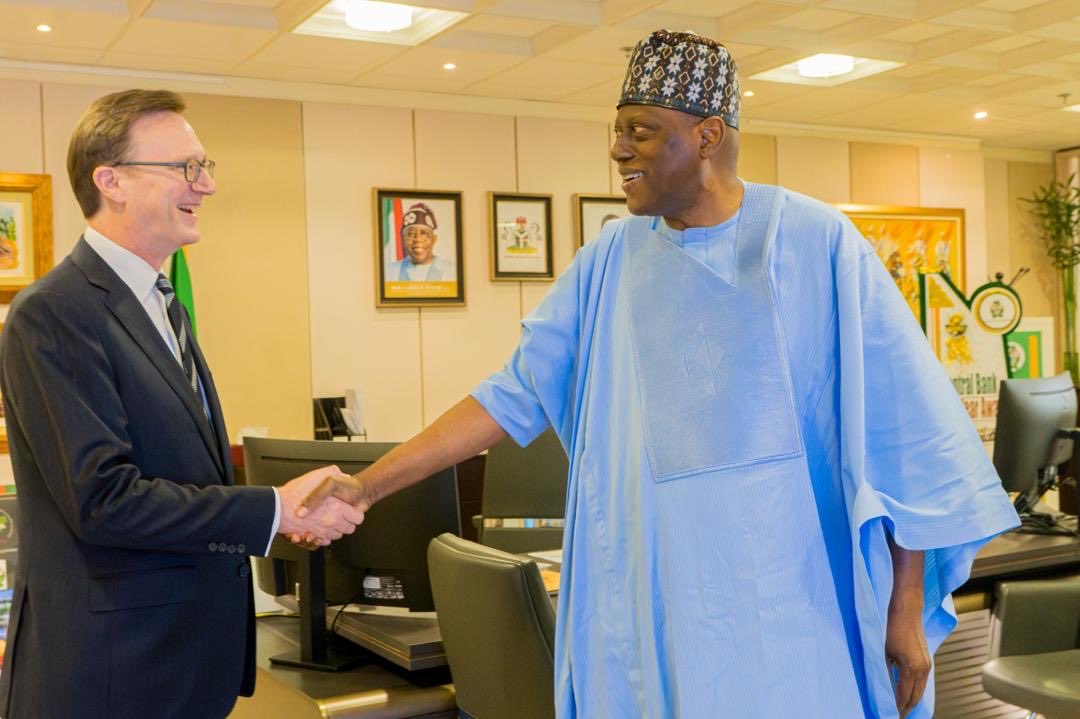
A real pleasure to pay a valedictory call on @cenbank Governor Cardoso. It’s been a privilege to witness Nigeria’s economic turnaround in the last three years, driven his monetary, CBN & banking reforms, and excellent relations with @bankofengland