During the hyper-globalization era from the mid-1980s to the mid-2000s, India achieved the second-highest growth rates, trailing only China.
It is true that India's rise has often been eclipsed by China's unprecedented expansion, which partially explains the prevailing pessimism among analysts who currently categorize India as an 'almost great power'.
This skepticism is further compounded by recent domestic challenges, as productivity growth has slowed, manufacturing has underperformed, and the next wave of structural reforms has stalled.
However, historical precedent proves that the economic reforms launched 35 years ago successfully reversed earlier stagnation and completely transformed international perceptions of India.
Moving forward, a decade or more of sustained economic growth, underwritten by the entrepreneurship of Indian youth and a return to the unfinished business of economic, technological, and social modernization, will bring real change.
By mobilizing its natural advantages and human talent, India can overcome current geopolitical headwinds and accelerate its true rise on the world stage.
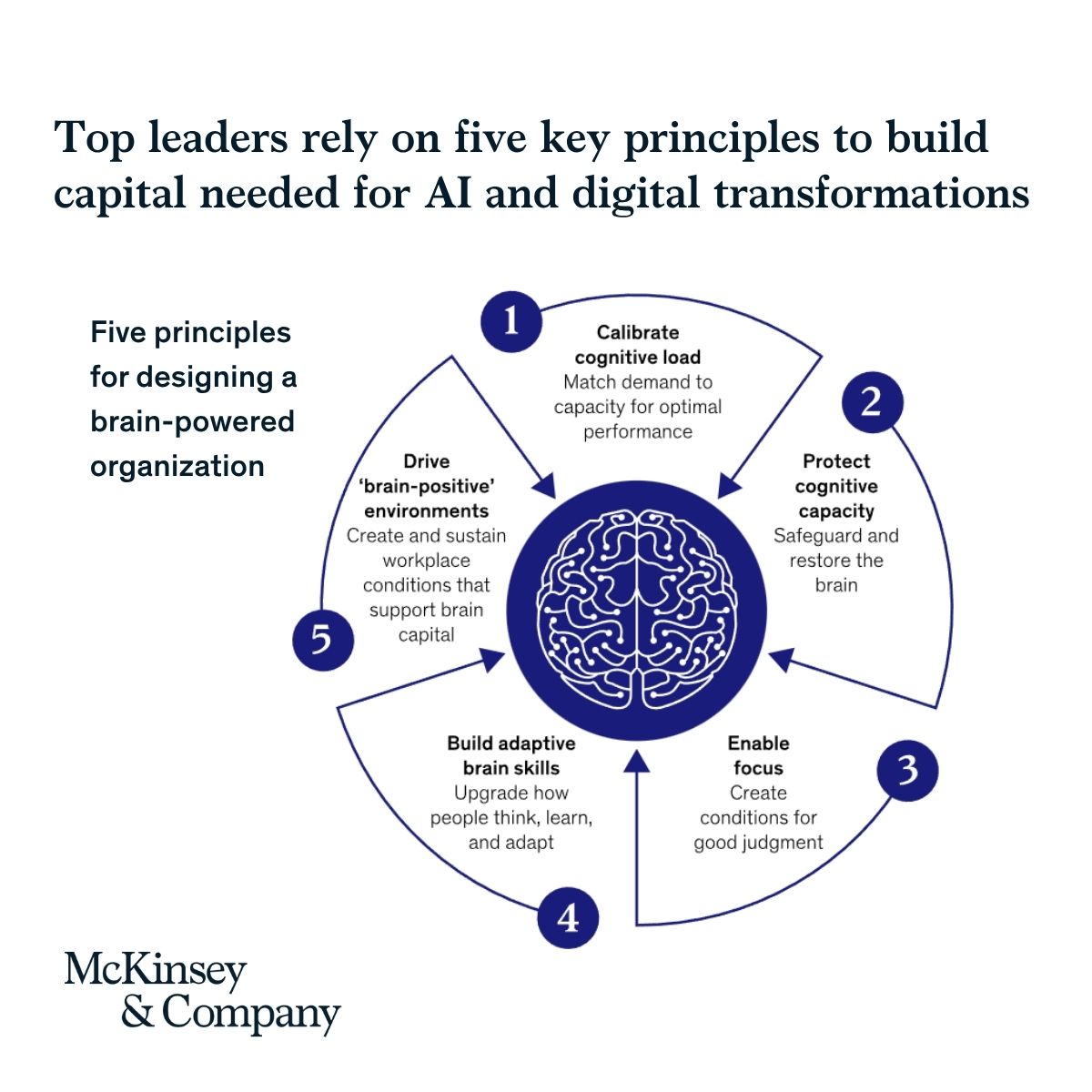
AI is changing the cognitive demands of work.
As people spend more time working with AI, organizations have a new challenge: helping employees think clearly, make good decisions, and adapt without increasing cognitive overload. https://t.co/L9R8xH7B3m
𝐖𝐡𝐚𝐭 𝐢𝐬 𝐭𝐡𝐞 𝐏𝐫𝐨𝐛𝐥𝐞𝐦
Understaffed State:
India's public sector employs only ~3.3% of the workforce, making it one of the thinnest states globally rather than an oversized bureaucracy.
Frontline Shortages:
Critical sectors face severe vacancies, including policing (150 per 100,000 vs. UN benchmark of 222) and judiciary (21 judges per million).
Wage Skew:
High public sector wage premiums over the private and informal sectors exhaust fiscal space needed for frontline recruitment.
𝐖𝐡𝐚𝐭 𝐚𝐫𝐞 𝐑𝐢𝐬𝐤𝐬
Implementation Deficit:
High-level administrative policy cannot succeed when frontline workers like teachers, nurses, and agricultural officers are missing.
Strategic Constraints:
Thin diplomatic and administrative cadres limit India's global engagement in specialized areas like tech governance and climate negotiations.
𝐏𝐫𝐞𝐯𝐢𝐨𝐮𝐬 𝐈𝐧𝐬𝐭𝐚𝐧𝐜𝐞
East Asian Model:
East Asian economies built capable, well-staffed states that successfully coordinated investment and nurtured human capital.
𝐖𝐡𝐚𝐭 𝐢𝐬 𝐒𝐮𝐠𝐠𝐞𝐬𝐭𝐢𝐨𝐧
Intelligent Capacity Building:
Shift from downsizing to building capability by filling vacant frontline roles in health, education, and security.
Any comparative analysis of China and India must rest on a fundamental understanding of three political concepts:
• Marxism: An economic ideology that aims for an egalitarian society through the equal distribution of goods.
• Leninism: A framework designed to accelerate national historical change through the active intervention of a vanguard party.
• Stalinism: A system characterized by absolute loyalty to a supreme leader.
Historically, the Chinese state largely forsook strict Marxist economic distribution during Deng Xiaoping's "great modernization" in the 1970s. However, the state still strictly adheres to Leninism—with the Chinese Communist Party ruling with an iron fist—and increasingly exhibits Stalinist tendencies.
Yet, this authoritarian structure is tempered by a lingering socialist, "people-first" ideology. Despite abandoning pure Marxism, Chinese leaders remain highly attentive to citizen dissatisfaction to prevent revolution, consistently prioritizing the needs of common people and social stability over economists' demands for market deregulation.
This is clearly visible today in sweeping government interventions and court rulings designed to protect workers' rights and employment against the rapid adoption of Artificial Intelligence.
India, on the other hand, operates as a confused khichdi of all three concepts informally. While India attempts to balance democratic welfare with economic growth, its current trajectory contrasts sharply with China's protective stance.
Indian leaders find themselves pushing ahead with market reforms for the 'ease of doing business' by actively diluting the rights of workers to organize.
Unlike China's state-driven protection of labor, India has been a laggard in employment elasticity, failing to create sufficient meaningful employment alongside its GDP growth.
To resolve this confused approach and fix unemployment, India's policies must pivot away from merely prioritizing capitalist rights and ensure that the 'ease of doing business' becomes firmly subordinate to the 'ease of living' and earning for all citizens.
Exactly, the founding fathers of India were aggressively against reservations
Even Ambedkar wanted Reservations to end after a time period of just 10 years
Friends, I have filed FIR against Sreelekha Mitra for the obnoxius poster of our Hon'ble PM. No matter what clarification she gives now, she will face the legal consequences
@SuvenduWB
#WATCH | Mumbai: Model Rhiya Yadav Ahir, one of the faces of the protest at Mumbai's Shivaji Park on July 22, files a Police complaint over social media comments against her.
She says, "We all know whose these people are. I will identify each one of them. When you get a platform, among the crores of people who are appreciating you, you will get a few who will speak against you. Everyone has the right to put forth their opinion but nobody has the right to degrade or malign anyone. This movement was about the rights of all of us, and not about a party, religion or individual...I will continue to take a stand against everything that is wrong. Don't be scared and keep at it..."
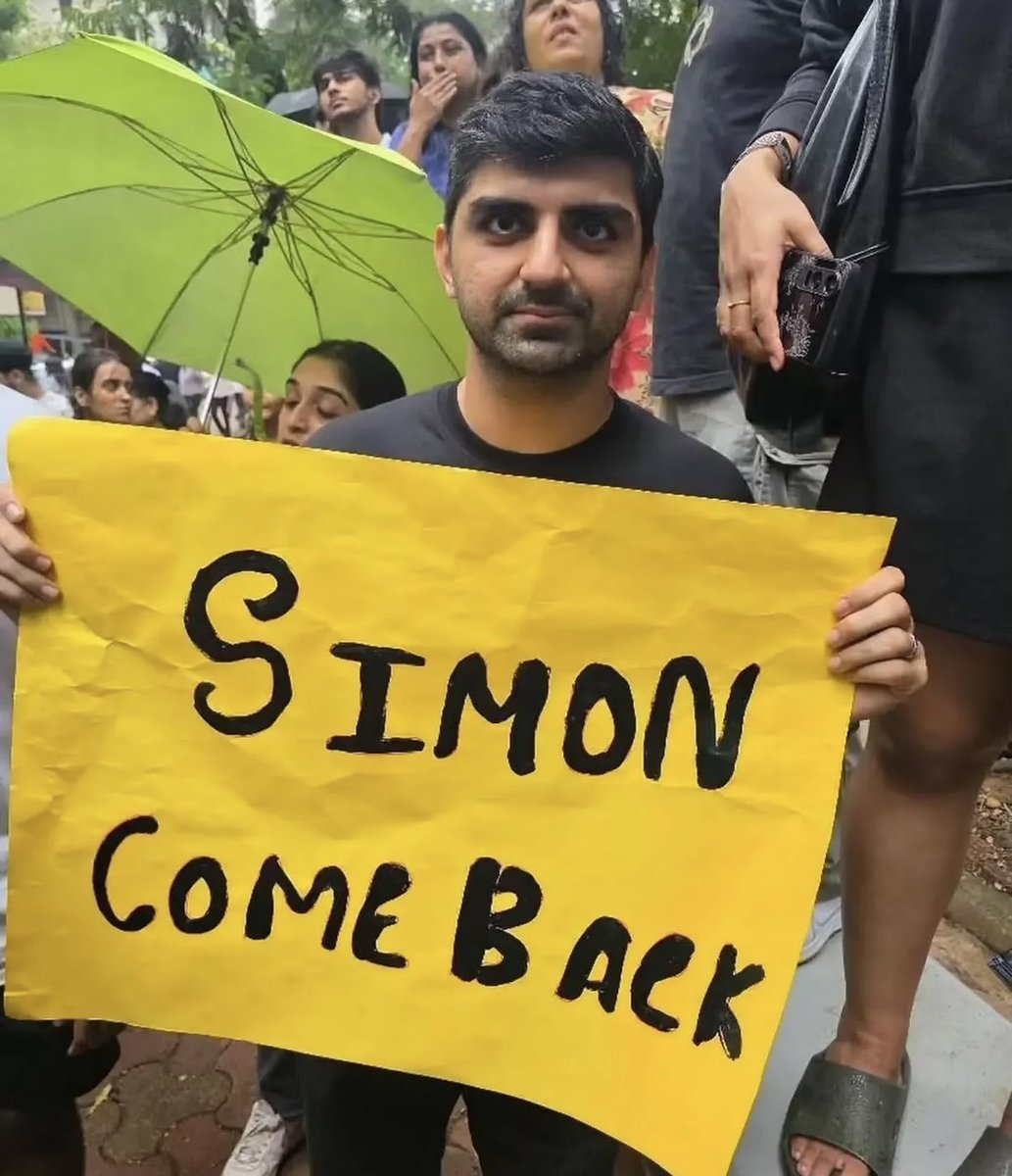
@Nikkiteavity Lala Lajpat Rai sacrificed his life protesting the Simon Commission. To carry a 'Simon Come Back' poster at a public event isn't 'dark humor' or creative protest it’s tone-deaf, ignorant, and disrespectful to the struggles of our freedom fighters. Know your history.
China turned coral reefs into military bases right next to the Philippines.
It built fighter-jet runways, missile systems, and radar on artificial islands after promising not to militarize them.
It drives Filipino fishermen away from Scarborough Shoal with water cannons and ramming.
An international court said the claims are illegal.
China ignored the ruling and kept building.
These aren’t disputed rocks anymore. They’re permanent Chinese military outposts in someone else’s waters.
One of the Zoho group companiee, Vipus Advanced Materials, is focused on carbon fiber composites. A retired ISRO scientist is one of the key people behind it.
Vipus has supplied advanced composite components to Skyroot Aerospace. So Skyroot's successful launch feels even more special!
Vipus is among the fastest companies to qualify as a HAL Class I supplier, with orders for LCA Tejas aircraft structures, and is working with L&T Precision Engineering Systems.
Proud of you Vipus, make Bharat manufacturing great! 🙏
Many international media in the last 7 days: "Massive protests in India", "Govt stalled", "India unsafe".
(To deter investors, tourists, and disillusion Indians to incite more.)
🇮🇳 India in the last 7 days:
July 21st - ONGC reaches a depth of 1 km into the earth for geothermal power. Inaugurates two such wells for 1MW of clean power in remote areas.
----------
July 22nd - Indian Navy commissioned INS Malvan, the second indigenously designed and built Anti-Submarine Warfare with over 80% made-in-India components.
----------
July 23rd - DRDO's Gas Turbine Research Establishment (GTRE), with Hyderabad-based Azad Engineering, delivered India’s first indigenous expendable turbojet engine in the 350 kg thrust class.
----------
July 24th - DRDO successfully conducted the maiden flight test of the indigenous Kusha Long Range Surface-to-Air Missile from Dr. APJ Abdul Kalam Island, Odisha. It is called India's S-400. Big win by DRDO but under appreciated.
----------
July 25th - India got Sarnath (near Varanasi where Lord Buddha delivered his first sermon) inscribed on the UNESCO World Heritage List during the 48th World Heritage Committee session in Busan.
----------
July 26th - India in Commonwealth Games: Mirabai Chanu won gold in women's 48 kg.
Rishikanta Singh won silver in men's 60 kg (Games record in snatch).
Raja Muthupandi won silver in men's 65 kg. India’s early tally included 1 gold, 2 silver, and 1 bronze.
Previous day Para powerlifter Jhandu Kumar won bronze.
----------
July 27th (Coming day) - More commonwealth medals to come for India.
India's first hydrogen powered train (one of the few countries in the world) already saves 3200 liters of diesel in test runs.
High-powered task force on exam reforms constituted to make India’s examination system (especially NTA-conducted exams such as NEET, JEE Main, and CUET) more reliable, transparent, leak-proof, and technology-driven.
The government is set to introduce the Public Examinations (Prevention of Unfair Means) Amendment Bill, 2026 in Parliament (Lok Sabha). Tougher penalties, time bound investigations and sentencing, stronger mechanisms against paper leak.
----------
Everyday India and Indians are achieving some amazing things and taking the country forward.
Issues, protests (and accompanied anarchy) aren't everything that define India. Though they consume all news and media time. Don't get 'black pilled' too much by them.
The future is bright for India as long as the govt is stable and we do not let adversaries take advantage of internal issues.
----------
Indian Gen-Z are achieving great things already. The small number we see engaging in arson & violence hijacking peaceful protests by others, using filthy language, and having perverted thinking are just a small percentage.
They will grow out of it, and more won't become them, if India can take care of the perverse and mind corrupting content they get exposed to as kids and teenagers.
The perception of India by the world has been systematically corrupted by an organized effort. So even if someone have to say something positively, they can't help portray India negatively.
What it could be shown as. What it is shown as.