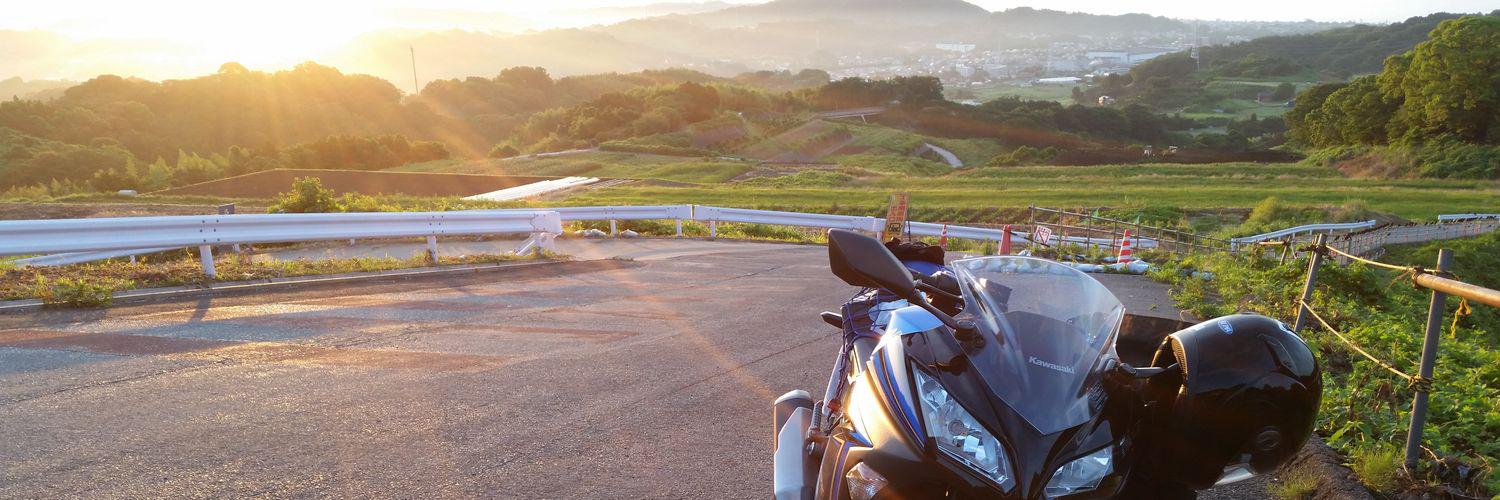
kawasaki ninja250に乗ってます。エンジン出力100%先読み投資の為、あらゆる学問を学び続けます!寸暇で息抜きする!☆無言フォローお許し下さい!”Thank you for following me!I will follow you ,or back after you!Thank you”
Mathematics, physics, programming.
The choices of our lives. The paths untaken. The breathing of reality.
By @FabriceNEYRET, https://t.co/eX9Pwlztn3, Used with permission.
The Sun is not travelling through empty space. As it orbits the Milky Way, it moves through the local interstellar medium, while continuously releasing a stream of charged particles called the solar wind. This magnetized wind pushes against the surrounding interstellar environment, creating an enormous bubble around the Sun and its planets: the heliosphere.
The solar wind travels outward at hundreds of kilometres per second. Far beyond Neptune, it encounters the pressure of the interstellar medium and slows abruptly at the termination shock. It then flows through a turbulent region called the heliosheath, before reaching the heliopause, where the solar wind's outward pressure is balanced by the surrounding interstellar pressure. Beyond this boundary, neutral hydrogen can accumulate in a region known as the hydrogen wall. The heliosphere may also have an extended tail, although its precise shape remains an active area of research.
Only two spacecraft have directly crossed the heliopause. Voyager 1 crossed in August 2012 at approximately 122 AU, and Voyager 2 followed in November 2018 at approximately 119 AU. By November 2026, they had travelled roughly 172 AU and 144 AU from the Sun, respectively. Their measurements provide our first direct observations of the boundary between the Sun's plasma environment and interstellar space.
The heliosphere does not stop every galactic cosmic ray, but it does reduce the number reaching the inner Solar System. It is a dynamic magnetic environment that helps shape the radiation conditions around our planetary neighbourhood.
Nos enseñaron que la Tierra orbita al Sol en un círculo cerrado. En realidad, la Tierra nunca ha regresado al mismo punto en el espacio en una vez en 4.5 mil millones de años.
En este momento, el Sol está arrastrando a la Tierra y a todos los planetas alrededor del centro de la Vía Láctea a 230 km/s (828,000 km/h), más de 18,000 kilómetros cada 80 segundos.
Porque el Sistema Solar está inclinado 60.2° respecto al plano galáctico y sube y baja a través del disco galáctico aproximadamente cada 30 millones de años, los planetas trazan hélices de corcho tridimensionales abiertas a través del espacio profundo en lugar de bucles planos.
La última vez que el Sol se encontró donde se encuentra hoy, hace un Año Galáctico (230 millones de años), los primeros dinosaurios apenas comenzaban a aparecer en la Tierra. Desde que se formó hace 4.6 mil millones de años, nuestro Sol solo ha completado 20 vueltas.
Tekrar Tanıştıralım...
Bu GAZAP Bombamızın geciktirilmiş patlama biçimi..
Ortadoğu çevresi çok yakında değişecek..
Müslüman Türk, atıldığında 3 bin metrekare alanda tek bir canlı bırakmayan bir silahı kullanmaz..
Lakin vadedilen gün geldiğinde kendisi düşmana GAZAP olacak...!