Kim Jong-un imports $30 million worth of Emmental and Gruyère every year while the citizens he owns boil tree bark into soup. You should understand exactly why this happens. This system works as designed.
Socialism never abolishes scarcity. It relocates it. In a market, prices ration scarce goods toward whoever values them most and can produce something others want in return. Strip out prices and private property, and you don't get equality. You get a single decision-maker (or a small clique around him) allocating everything by command. The cheese flows to Pyongyang. The grass goes to the provinces. Ludwig von Mises explained the mechanism in 1920: without market prices for the means of production, no central planner can calculate whether any given use of resources creates value or destroys it. So the planner stops pretending to calculate. He simply takes.
Consider the famine of the mid-1990s, when somewhere between 600,000 and 2.5 million North Koreans starved. The regime kept exporting, kept importing luxuries, kept feeding the army and the Party first. Kim Jong-il reportedly ran a personal cellar of Hennessy that ran into the hundreds of thousands of dollars a year. His son upgraded the menu to Swiss dairy and Bordeaux. Meanwhile the official food distribution system, the one that was supposed to make hunger impossible, delivered nothing to people it had already forbidden from farming or trading on their own.
This is the part the Western admirers of central planning never sit with. The man with the cheese and the man with the bark are not separated by bad luck or insufficient foreign aid. They are separated by a wall of guns that exists for one reason: to keep prices, ownership, and exchange from ever returning. Every gram of imported Gruyère is a receipt. It records who controls the guns and who does not.
You don't fix this with better intentions or a kinder dictator. You fix it by letting the farmer own the field, sell the harvest, and tell the Party to go buy its own cheese.
John Maynard Keynes lived as a quintessential elitist who despised the very people his theories claimed to help. While you hear endless praise for his "compassionate" economics, the man himself viewed workers and savers with open contempt, calling them irrational actors who needed enlightened technocrats to manage their affairs.
The Cambridge don made his fortune speculating in currencies and commodities while simultaneously advocating for government controls that would eliminate such opportunities for ordinary people. He lost his shirt in 1928, then again in 1929, proving himself a mediocre investor despite his theoretical "brilliance". His personal financial disasters never dimmed his confidence that he could engineer prosperity for entire nations.
Keynes openly admitted his theories served political expediency rather than economic truth. In a 1944 letter to Friedrich Hayek, he wrote that he expected his ideas to be temporary measures, lasting perhaps 25 years before sounder thinking would prevail. He never intended his deficit spending prescriptions to become permanent doctrine.
The man who gave intellectual cover to every government's spending addiction actually agreed with free market economists on the long run. He simply believed political reality made sound economics impossible. His famous quip "in the long run we are all dead" was political cynicism: politicians need solutions that work before the next election, consequences be damned.
You celebrate Keynes as the savior of capitalism, but he designed his system to give politicians exactly what they wanted: intellectual permission to spend money they didn't have on programs that bought votes. He knew this would end badly. He just figured someone else would clean up the mess after he died.
Starting and running a business in Britain in 2026 - let’s go through it, step by step…
You've got a good idea. You've worked hard, saved some money, and decided to take a risk. A big decision. Let's say you want to open a coffee shop - nothing overly extravagant. Surely this is possible, right?
Available unit on a local high street, you see a gap in the market.
A simple ambition to build something. Create jobs. Generate wealth. Contribute to your local community. Maybe even build a better future for your family.
Exactly the sort of person politicians claim they admire.
Unfortunately, you've chosen the wrong country to do it in.
Britain. 2026. Labour. Bugger.
The first thing you discover is that absolutely nothing is straightforward.
You register the business. Not impossible, but hardly simple. The foreign vape shop owners manage it, so why not you? Done. In fairness, not the most challenging part of this story...
Then comes the bank account - you’d think opening a business account would be a routine matter.
Instead, you're treated like a criminal. You want to sell coffee, not arms. The banks are simply out of control in this country. Just like the lawyers, but that’s a different story.
Legitimate entrepreneurs should not be waiting weeks while faceless compliance departments shuffle paperwork between themselves and refuse to answer questions - slash it all back and let people just get on with it.
Eventually you get through that hurdle and secure the premises.
Perfect location. Lots of footfall. Not a total dump. It can work.
Then reality arrives.
The rent is eye-watering - contracts have clause after clause after clause. How can anybody understand it all?
Insurance is through the roof. And before you've served a single coffee, the local authority is already getting its grubby hands on your money. Energy costs are so very painful...
Business rates - one of the most destructive taxes in Britain. And for what? What do we get from that money?
You are effectively punished for occupying premises and creating economic activity. For PAYING TAX. It is insane. A Restore Britain Government would abolish business rates entirely for small high street businesses. Pubs, cafes, bakeries. All of it. No business rates.
Then come the inspections. Oh joy. The paperwork. The bureaucracy. The council gnomes.
Nobody objects to basic standards. Of course cafes should be clean and safe.
The problem is that too much of the system now exists to justify the existence of regulators rather than help businesses succeed. They are there to prove that their job needs to exist. So rules get put on rules, on top of more rules. It is endless.
Many of the people enforcing these rules have never built a business, never employed anybody and never risked their own money. Never done anything. Work half weeks, with 30+ days holiday a year. Fridays at home, of course.
A profession filled with nit-picking gits.
Restore Britain would conduct a full bonfire of unnecessary regulations and introduce a simple principle. Every regulation should have to justify its existence - if it doesn't prevent genuine harm, it goes. It will be glorious. We will tear it all down.
But let’s say you get through this. You stumble on. The cafe opens, and goes well. People like it. It grows. The coffee is good. You need help. Another bureaucratic nightmare.
PAYE. National Insurance. Pensions. Employment contracts. Holiday entitlement. Workplace policies. Health and safety obligations.
The worst of all - HR.
You look at it all, and just think what’s the point? Is it worth the risk? That is a disaster for our economy, and a disaster for youngsters looking for work.
Restore Britain would slash back employer National Insurance, simplify employment law for small firms and create a framework that protects good employees without treating every employer as a potential criminal.
The HR-ification of Britain will end. If I had to pick a 'profession' I hate the most, HR has to be number one.
Employers will be able to sack employees for not doing the job properly.
It doesn’t matter if they’re black, gay, Muslim or whatever else. This ‘protected characteristic’ nonsense will be stripped away. The only protected characteristic we’re interested in is competence.
We will repeal The Equality Act 2010. This is key. This is where so much of the bullshit emanates from.
But let’s say you don’t want to bother. Maybe bringing in contracting services could work. Wrong.
IR35 - one of the most economically illiterate policies ever introduced by thick idiots in the civil service who have never created a job in their lives.
Restore Britain would scrap IR35 entirely - if two consenting adults wish to enter a genuine contracting arrangement, the state should keep its nose out. Who does what, when and for who is between those two individuals. IR35 is the first thing to go. Burn it and bury it.
But we do want apprenticeships. This is the way forward, and we would give companies tax breaks for developing and building local skills for young men and women. Crucial. I’ve been running an apprenticeship campaign in Great Yarmouth - looking to link local businesses with colleges. Progress made, but lots more to do.
As your business grows, your accountant becomes indispensable. Not because your accounting is particularly complicated or he’s a good bloke, but because the tax system has become absurdly complex. I used to do my own returns. No chance now.
Restore Britain would begin simplifying the tax code from top to bottom.
Tax should be low, simple and transparent. That’s what Restore Britain stands for.
Then comes one of the most notorious barriers in British business.
The VAT threshold.
You finally start making progress, and your turnover approaches the threshold.
Looks good on the face of it, but it’s actually horrific news - cross the line and suddenly everything changes. VAT is applied. What are you supposed to do? Pass the cost on to customers? What are they going to do when the cost of their morning order shoots up? Many firms deliberately limit growth because crossing the threshold creates such a financial shock. That is insanity.
Restore Britain would double the VAT threshold.
Growth should be rewarded, and we would do exactly that.
Somehow, you’re limping on and decide an expansion is needed - maybe a covered outdoor area let’s say. Add more seating. People like to eat outside. Surely this is straightforward?
Planning. The worst people on the planet, whose sole aim is to destroy economic ambition, growth and hope. I detest them all so very much.
Restore Britain would overhaul the system with a presumption in favour of economic development. If planners cannot make a decision within a fixed timeframe, approval should be automatic. We will not keep businesses waiting for months and months. It is simply unacceptable and unfair.
Same for licences to stay open later, host music, even god forbid serve alcohol - the bureaucrat’s nightmare. We wouldn’t want people enjoying themselves, would we?
Restore Britain would introduce another presumption backing small business activity unless there is a compelling reason to refuse it. If customers want to enjoy a drink later on with their friends, let’s make it happen - the burden should be on the regulator to justify their restrictions, not on the entrepreneur to justify growth. Again, let’s give them a time frame to object. If they can’t, it goes through. Job done.
That is what Restore Britain will deliver.
Then there are card payments. Every coffee, sandwich, bottle of water. People just are not using cash. So a small slice disappears off everything, but that turns into thousands. Restore Britain would review payment processing fees and increase competition in the sector.
We must reduce the cost of doing business. This is vital.
We come to HMRC. I hate these people so much. It’s far quicker for a benefits claimant to get hold of the DWP than it is for small business owners to speak to HMRC.
How mad is that?
Restore Britain would introduce meaningful accountability when HMRC gets things wrong, or simply doesn’t pick up the phone. Let’s link senior leadership pay to response times. That will get them jumping.
When you pay the tax, and sign it all off? The anger I feel when I think about where that money goes is not a positive experience. Funding hotel fry ups for Afghan men who have broken into our country. Restore Britain would indiscriminately deport the illegals, as you know, but this is a post about starting a business…
Back to HMRC. They whack me with tax inspection after tax inspection. I wonder why…
Awful people. If I ever get a sniff of power, I will tear that place apart limb by limb.
Then comes the final insult. The salt in the wound. The knife in the back.
You want to pay yourself. You've worked sixteen-hour days, seven days a week. You've risked everything.
You've missed weekends, holidays and family events.
You have carried all the risk.
The wife or husband is constantly pissed off because the phone doesn’t stop ringing.
Now perhaps you'd like some reward. Let’s look at what’s left...
Corporation tax takes a slice. Dividend tax takes another. Student loan repayments take more. National Insurance takes more. Income tax takes more. What’s left?
By the end of it, government has its sticky fingers in your pocket at every stage.
Restore Britain would establish the lowest corporation tax rate in Europe.
We would increase dividend allowances. Slash NI. Cut back income tax. Scrap interest on student loans.
In short - reward your hard work.
Entrepreneurs all over Britain are asking this question...
Why not take a comfortable public sector job, collect the salary, enjoy the pension, work from home, avoid the stress and leave somebody else to create the wealth? Why bother? What's the point?
If enough ambitious people think that, the economy stops functioning. We become even more reliant on the fat, bloated, squid like state.
Politicians in Westminster DO NOT understand what they are doing to businesses in Britain.
I listen to them talk about business and my ears bleed - you do not understand just how thick some of these people are. However bad you imagine, double it. You’re half way there.
It is time for a different sort of politics, a different type of politician.
Restore Britain will make Britain the easiest country in Europe to start, grow and succeed with your own business.
To our cafe owner, wondering if all the endless bullshit is worth it? My message is this…
Keep going. It will get better. Britain needs you.
There is good news - there is finally a political party on your side.
Restore Britain.
Milton Friedman's greatest regret.
The federal government discovered the perfect crime in 1943: make employers collect taxes before workers ever see their paychecks. You think you earn $60,000 per year, but you actually earn $75,000 and hand over $15,000 to politicians without ever touching it. The psychological difference is enormous.
Before payroll withholding, Americans wrote quarterly checks directly to the Treasury. Picture yourself sitting at your kitchen table, writing a $3,750 check to the IRS every three months. The pain was immediate and visceral. Politicians faced constant pressure to justify every dollar because citizens felt the extraction in real time.
Withholding transforms this concrete loss into an abstract accounting entry. Your employer becomes an unpaid tax collector, and you never experience the actual cost of government. Worse, most people celebrate their tax refunds as government generosity rather than recognizing them as interest-free loans they provided to politicians. The Treasury collects your money throughout the year, spends it immediately, then returns your own cash and receives gratitude.
This system enables the explosion in government spending you witness today. Defense contractors billing $640 for toilet seats, agricultural subsidies for corn syrup, and congressional salaries for 535 people who rarely show up to work. When taxation feels painless, voters stop demanding accountability for how their money gets spent.
Milton Friedman helped design withholding as a wartime emergency measure and later called it his greatest regret. Free market economists recognized that the psychological pain of direct taxation creates political pressure for fiscal restraint. The temporary always becomes permanent in government hands, and the emergency justification disappears while the extraction mechanism remains forever.
Military Keynesianism remains the most destructive economic myth in modern politics, convincing generations of politicians that blowing things up creates prosperity. You hear this fallacy every time Congress debates defense spending: wars ended the Great Depression, World War II saved the economy, military contracts create jobs.
The broken window fallacy explains why this thinking fails so catastrophically. When you build a bomber, those resources cannot build hospitals, factories, or consumer goods that people actually want. The almost $1T Pentagon budget in 2026 represents $1T not spent on productive capital formation. Every F-35 fighter jet costs $80 million+, which could have funded dozens of small businesses or manufacturing equipment. The opportunity cost stays invisible because you never see the prosperity that never existed.
War production destroys wealth by definition. Tanks and missiles provide zero utility to consumers once manufactured. They sit in warehouses or get blown up overseas. Compare this to a smartphone factory: the phones improve lives, generate ongoing economic value, and create real consumer surplus. Military contractors like Lockheed Martin and Raytheon understand this perfectly. They lobby for endless conflicts because war transfers wealth from taxpayers directly into their accounts.
The employment argument collapses under basic economic logic. Yes, Raytheon employs engineers and factory workers. Those same engineers could design medical devices, electric vehicles, or semiconductor equipment if the market allocated their labor instead of political decisions. Military jobs represent capital and labor trapped in unproductive activities by government fiat.
Politicians love military Keynesianism because it lets them claim economic benefits while pursuing geopolitical goals. You cannot bomb your way to prosperity when every explosion represents wealth destruction funded by wealth confiscation.
The 1920-21 depression was the sharpest economic contraction in American history, yet you've probably never heard of it. Industrial production collapsed 32%. Unemployment spiked from 4% to 12% in twelve months. By every measure, this downturn dwarfed the initial shock of 1929.
President Warren Harding faced enormous pressure to "do something." Labor leaders demanded public works programs. Businessmen begged for bailouts and trade protection. Treasury Secretary Andrew Mellon advised Harding to slash government spending and let wages fall. Commerce Secretary Herbert Hoover (yes, that Hoover) pushed for massive federal intervention.
Harding chose Mellon. The federal budget dropped from $6.4 billion to $3.2 billion in two years. No stimulus packages. No bailouts. No alphabet soup of new agencies. Government employment fell 40%. When you let markets clear, they clear fast.
The recovery started in July 1921. By 1923, unemployment had dropped to 2.4% and industrial production reached new highs. The entire episode lasted eighteen months from peak to full recovery. Compare that to Japan's lost decade of intervention, or the European debt crisis that dragged on for years, or our own jobless recovery after 2008.
Most economics textbooks omit this episode because liquidating malinvestments and allowing price adjustments works exactly as free market theory predicts: a fact that destroys the Keynesian narrative that government must spend its way out of recessions. Politicians today claim they learned the lessons of the 1930s, but they studiously ignore the more important lesson of 1921.
Ronald Coase destroyed the entire justification for environmental regulation with a single theorem, and bureaucrats have spent sixty years pretending he never existed. The Coase theorem proves that when property rights are clearly defined and transaction costs are low, private parties will negotiate efficient solutions to externality problems without any government intervention whatsoever.
Consider the classic pollution case. A factory dumps waste into a river that fishermen downstream depend on for their livelihood. The statist reflex screams for EPA regulators, environmental impact studies, and a bureaucratic apparatus that costs billions while solving nothing. Coase demonstrated that this approach is economic illiteracy dressed up as policy.
If the fishermen own the water rights, they can charge the factory for pollution or negotiate compensation. If the factory owns the rights, fishermen can pay the factory to reduce emissions. Either way, the parties reach the economically efficient outcome through voluntary exchange. The initial assignment of rights determines who pays whom, not the final result.
You can watch this work in practice when neighbors negotiate noise disputes, when airlines buy and sell landing slots, or when cap-and-trade systems actually function (the rare cases where government accidentally creates real property rights instead of regulatory theater). Transaction costs matter, but they're usually lower than the deadweight losses from bureaucratic "solutions."
The state creates externalities by refusing to define and enforce property rights, then uses the resulting chaos to justify its own expansion.
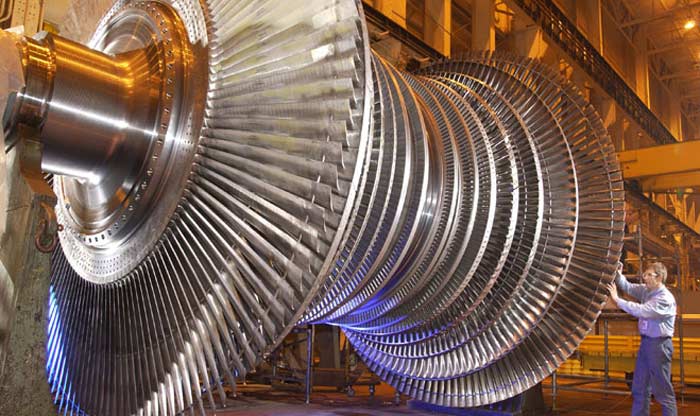
When you turn on a light in your house, turbines can feel it!
Normally, steam turns a turbine which produces electricity.
But the grid can also PUSH BACK on the turbine itself.
And this draws MORE power from the turbine, stabilizing the grid.
GRID INERTIA THREAD 🧵👇
Prohibition handed organized crime the most profitable business model in American history on a silver platter.
Before 1920, the Mafia operated small-time rackets: numbers running, loan sharking, petty extortion. The Volstead Act transformed these street gangs into billion-dollar enterprises overnight. They gave criminals a monopoly on a product that 100 million Americans still wanted to buy.
Al Capone's Chicago Outfit pulled in $60 million annually by 1927. That's $1 billion in today's money. Meyer Lansky built a financial empire. Lucky Luciano created the modern crime syndicate structure that still exists today. Congress criminalized a market that never stopped existing.
When you ban a product people want, you don't eliminate the market. You eliminate legal competition. Every brewery that shut down was replaced by bootleggers who settled disputes with Tommy guns instead of lawyers. Every saloon that closed reopened as a speakeasy with police protection bought and paid for. The government created a business environment where violence was the only enforcement mechanism.
The murder rate in major cities doubled during Prohibition. Chicago saw 729 gang-related murders between 1920 and 1930. These weren't just random crimes, they were the predictable result of forcing commerce into black markets where contracts are enforced with bullets.
When Prohibition ended in 1933, organized crime didn't disappear. These organizations had thirteen years to build networks, corrupt officials, and diversify into other illegal markets. You can draw a straight line from the Volstead Act to every major crime family that terrorized American cities for the next fifty years.
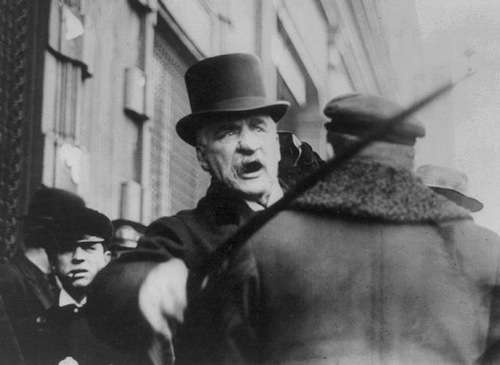
The Panic of 1907 is the most brazen financial coup in American history: a calculated assault on the nation's monetary system orchestrated by J.P. Morgan himself.
J.P. Morgan engineered the entire catastrophe for his own benefit. The collapse of the Knickerbocker Trust Company in October 1907 sent depositors racing to withdraw their money from banks across New York. Morgan had advance knowledge of Knickerbocker's copper speculation losses and chose exactly when to pull the trigger on public confidence.
Watch how the dominoes fell. Morgan controlled the flow of information about which banks were "sound" and which weren't. He decided which institutions received emergency loans and which died. When the Trust Company of America faced runs, Morgan theatrically examined their books for hours before announcing they deserved saving. The performance was calculated: create maximum panic, then position yourself as the savior. Charles Barney, Knickerbocker's president, killed himself rather than face the disgrace. Morgan played puppet master while the human cost mounted.
The endgame was always a central bank. Morgan had watched European central banks coordinate responses to financial crises and wanted that power centralized in America. He needed public demand for it first. Nothing creates demand for government intervention like a crisis that private actors supposedly can't handle. Conveniently, only Morgan had the resources to stem the panic he had created. He forced the Treasury Secretary to deposit federal funds in his chosen banks. He personally decided which financial institutions lived or died.
Congress took the bait perfectly. The Aldrich-Vreeland Act passed in 1908, creating the National Monetary Commission that would design the Federal Reserve System. Morgan's associates staffed the commission. They had their central bank blueprint ready before the panic even ended.
The Federal Reserve Act passed in 1913, giving Wall Street exactly what it wanted: socialized losses and privatized gains, with the government's money printer backing their plays.
You can forget everything you think you know about government needing to be permanent, territorial, and imposed from above.
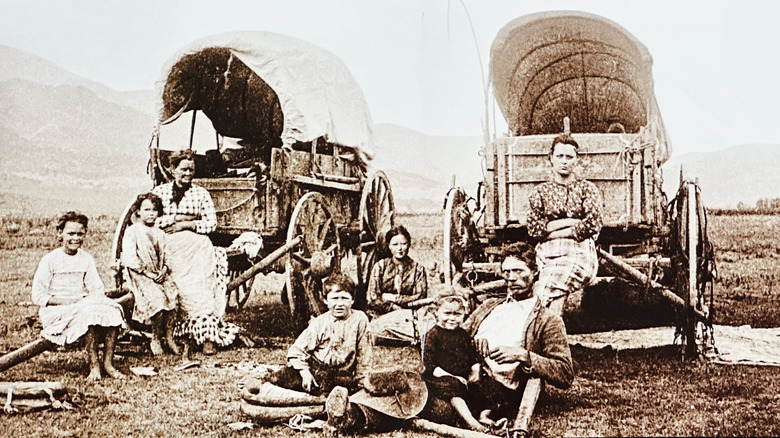
Picture yourself standing next to a dusty wagon in Independence, Missouri in 1843. You're about to embark on a 2,000-mile journey to Oregon Territory with 120 strangers. No sheriffs. No courts. No government infrastructure for the next six months.
What do you do? You write a constitution.
These wagon train constitutions weren't theoretical exercises. Real people facing real problems created real governance systems from scratch. The Applegate Company of 1843 elected a captain, established voting procedures, and set penalties for rule violations. All voluntary. All temporary. All functional. Think about what's happening here. It's pure contractual governance in action. Nobody forced these travelers to join specific wagon trains. They shopped around, compared rules, and chose the arrangement that best suited their needs and risk tolerance.
Some trains ran tight ships with strict schedules and harsh penalties for slacking. Others operated more loosely, trading efficiency for flexibility. The Bidwell-Bartleson Party of 1841 famously split apart when members disagreed about routes and rules. People voted with their feet, literally.
Free market economists call this "polycentric law" but the concept is simple: competing legal systems serving different customer preferences. Wagon trains prove you don't need a monopoly government to maintain order. You need voluntary association and the right to exit. The genius lay in the details. Most constitutions included sunset clauses, automatically dissolving the government when trains reached their destinations. Every territorial and state government that emerged later became permanent, growing, and impossible to escape without moving.
Captain election processes varied wildly between trains. Some held democratic votes every few weeks. Others appointed leaders for the entire journey. The market sorted out which approaches worked best for different groups and circumstances. Enforcement happened through social pressure and economic incentives rather than violence. Break the rules repeatedly and find yourself expelled from the train's protection. Good luck surviving alone with hostile weather, difficult terrain, and occasional Native American raids.
Critics love pointing out that some trains descended into chaos or split apart. True enough. But this misses the point entirely. Failed experiments in voluntary governance don't justify permanent coercive alternatives any more than restaurant failures justify government-run cafeterias. The Oregon Trail offered laboratory conditions for testing governance theories. People could exit bad arrangements, join better ones, or start their own. Competition disciplined bad leaders and rewarded good ones. Success meant survival and prosperity. Failure meant death or disaster.
Modern westerners live under the opposite system: permanent, territorial monopolies with no real exit options. You can't shop for better police services or competing court systems. You can't dissolve your city government when it stops serving your needs.
Wagon train constitutions remind us that governance is just another service industry. Remove the monopoly protection and watch innovation flourish.
Keynesian stimulus doesn't magically create prosperity from thin air. It redistributes existing wealth from productive citizens to those with the best lobbyists and campaign contributions.
When Congress passes a trillion-dollar "infrastructure" bill, you don't see bulldozers materializing from the ether. The government pulls capital from entrepreneurs who would have built factories, funded startups, or expanded payrolls. Instead, that money flows to Halliburton, Bechtel, and whatever construction firm hired the right former senator as a "consultant." The politically connected get guaranteed profits while you get higher taxes and inflation.
The process works like a sophisticated laundering operation. Politicians promise jobs and growth while funneling taxpayer dollars to their cronies. Boeing gets defense contracts. Goldman Sachs underwrites the debt. Big Tech companies score "green energy" subsidies. Meanwhile, small business owners struggle with regulatory compliance costs and compete for the remaining scraps of capital.
Free market economists identified this wealth transfer mechanism decades ago. Keynesian mythology persists because it serves powerful interests. Politicians love spending other people's money. Corporations love guaranteed returns. Wall Street loves bond issuance fees. The only losers are productive citizens who fund the whole charade.
You can spot this corruption every time politicians claim stimulus will "create jobs." Jobs doing what? Building bridges to nowhere? Manufacturing solar panels that cost more than the energy they'll ever produce? Productive jobs emerge from genuine consumer demand, not political theater. Everything else just moves money from your pocket to theirs.
These two paragraphs of my verdict are crucial for everyone to read and understand.
"Even if all of the statements made by Van Langenhove are based on scientific evidence and statistics, it makes no difference to the criminal intent. Van Langenhove is not charged with spreading false information. He is charged with presenting facts in a way that incites hatred against persons on the grounds of one or more of the protected criteria in the Anti-Racism Law.” 1⃣
"For Van Langenhove to have committed a crime, it is not necessary for him to have incited concrete acts of hate or violence. It suffices that others are incited to take on a general attitude of intolerance or disapproval regarding a group protected under the criteria of the Anti-Racism Law." 2⃣
This means you can go to jail for "inciting hatred" even if your statements were 100% factual (see 1⃣) and even if you did NOT incite concrete acts of hate (see 2⃣).
The benchmark of "inciting hatred" , a crime punishable by prison, is thus "saying something that has the potential of inciting someone to have a general attitude of disapproval regarding a protected group". This means literally any criticism of mass migration is now a punishable offence. If you cite a statistic, and someone could potentially think less of a protected group (like migrants) because of it, you can be jailed.
The craziest part is that there is no defence possible against this. I brought the scientific studies that I cited to court, but the judge didn't care 1⃣. I also proved that the hundreds of students present at the lecture included students of all different political affiliations, and everyone was able to voice their opinion or ask questions. The lecture went very calmly, so obviously nobody was incited to hatred. But this too did not matter 2⃣, because if the judge says he believes there is the possibility that someone COULD be incited to "a general attitude of disapproval", this is enough for the judge to send me to jail, even without any evidence.
I'm telling you this to warn you that by the time these hate speech laws have come into place, it's already too late. You will NEVER be able to beat these laws in court. You have to stop them before they are implemented. Let my fate be your warning.
🇧🇪 Belgium just convicted Dries Van Langenhove for “hate speech” because he linked mass migration to crime and social decline during a university lecture using statistics and scientific sources.
The judge openly admitted the facts themselves were not false.
That’s the terrifying part.
The ruling basically says you can still be punished even when what you say is true, if the government decides your framing is politically unacceptable.
He’s already spent over €420,000 fighting these cases and says more prosecutions are coming.
Welcome to Europe
Source: @DVanLangenhove
The deadliest famines in recorded history share one common trait: government control over food production and distribution. Stalin's Holodomor killed 3.5 million Ukrainians in 1932-33. Mao's Great Leap Forward starved 15-45 million Chinese between 1958-1962. Pol Pot's agricultural collectives murdered 2 million Cambodians through starvation from 1975-1979.
Each disaster followed the same script. Central planners seized private farms, eliminated price signals, and replaced voluntary exchange with bureaucratic allocation. They destroyed the knowledge embedded in market prices that coordinates millions of individual decisions about planting, harvesting, storing, and distributing food. Without profit and loss guiding resources to their most valued uses, crops rotted in fields while people starved in cities.
Compare this record to countries with functioning food markets. Even during severe droughts, floods, or other natural disasters, market economies avoid mass starvation. Prices rise to signal scarcity, encouraging conservation and attracting supply from other regions. Entrepreneurs profit by moving food from areas of abundance to areas of need. Speculation smooths consumption over time by rewarding those who store food during abundance and release it during scarcity.
Free market economists have explained this pattern for centuries. Policy makers continue treating markets as the problem rather than the solution. They impose price controls during shortages (creating more shortages), restrict food exports during domestic abundance (reducing incentives to produce surpluses), and subsidize inefficient agricultural practices (misallocating resources away from actual food production).
The next time someone claims markets fail to feed people, remind them that every major famine occurred when governments replaced market allocation with political allocation.
Turns out the Soviet flag depicts the hammer of government destroying the sickle.
I did not see this coming, but my election has become an inflection point for our whole country. Today we make history.
Will you be part of this historic day by voting, calling friends who can vote, posting to social media, or making a donation?
Spread the word fellow patriots!
There is only one thing you need to know about @RepThomasMassie campaign and it’s not even that he’s the best congressman in the country with a voting record second to none.
It’s that the Israel lobby is attempting to unseat a congressman for the crime of exposing them and their disastrous war.
No self respecting nation can allow that to happen.
Don’t believe the bs last minute accusations and betting market shifts. These are obvious signs of a concerted effort.
Just double down, send him money if you can, call whoever you know in his district, share his videos or posts.
We need to win this one.
Today, in true stories from history you didn't know:
The Federal Reserve caused the Great Depression!
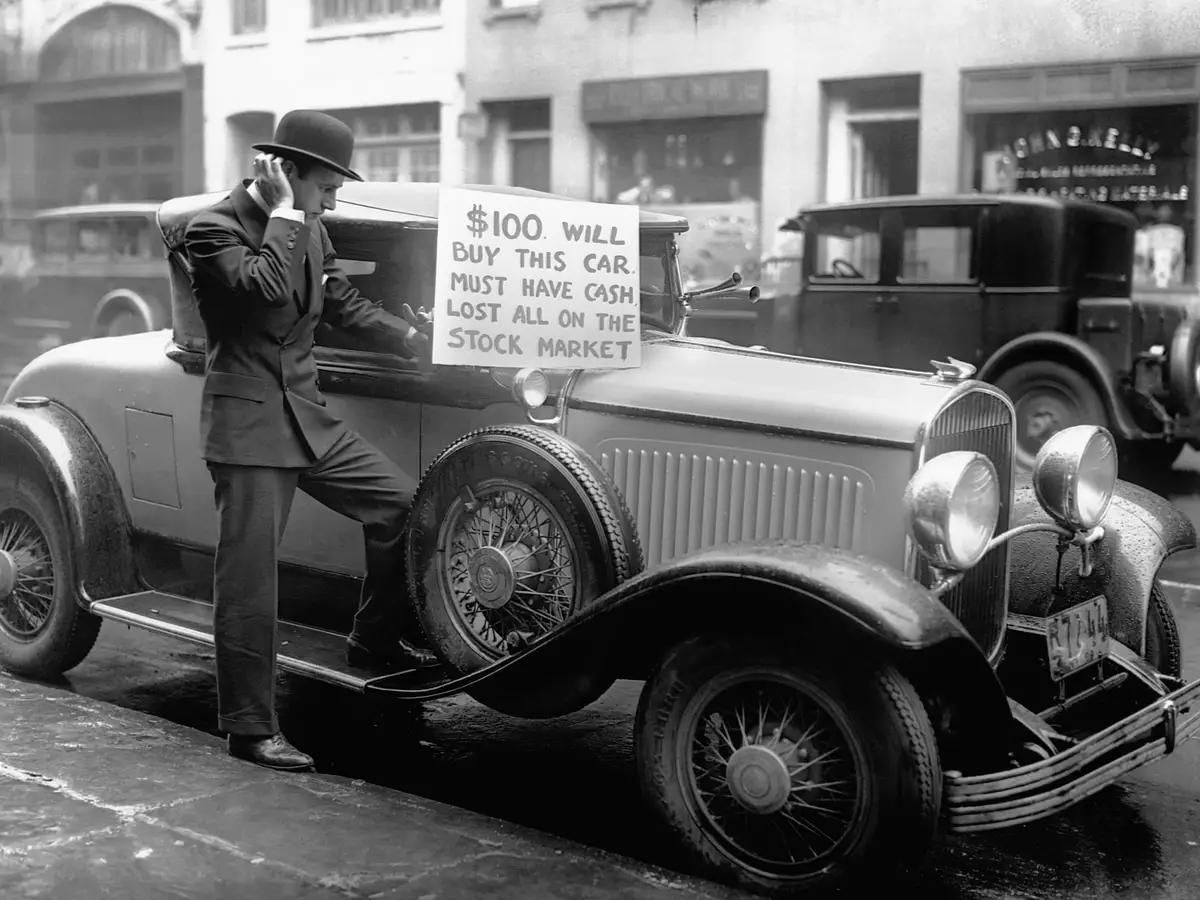
The Federal Reserve's money printing spree from 1921 to 1929 manufactured the greatest economic delusion in American history. Fresh off their first decade of existence, the central bankers at the Fed slashed interest rates from 7% to 3.5% and kept them artificially low throughout the decade. They doubled the money supply through credit expansion, turning sound investment calculations into gambling chips.
Wall Street became a casino where everyone thought they were Warren Buffett. Stock prices tripled between 1924 and 1929 while corporate earnings barely budged. Margin buying exploded as banks, flush with newly created Federal Reserve credit, handed out loans like Halloween candy. You could buy $1,000 worth of stock with just $100 down. The Dow Jones climbed from 100 to 381 in five years. American productivity had not suddenly quadrupled. Cheap money was chasing the same assets into the stratosphere.
The boom was malinvestment on an epic scale, not genuine economic growth. Entrepreneurs, fooled by artificially low interest rates, launched projects that made no sense at market rates. Resources flowed into stock speculation instead of genuine capital formation. Radio Corporation of America shot up 5,000% in four years. People quit their jobs to trade stocks full-time, convinced they had discovered the secret to effortless wealth.
Every artificial boom contains the seeds of its own destruction, and the Fed's easy money party was no exception. When reality finally crashed the party in October 1929, the hangover lasted a decade. The central bank that promised to smooth out the business cycle had just created the most violent boom-bust cycle in American history. Then they somehow convinced everyone the crash was capitalism's fault.