The Concept of Consiliums: A Revolution in Interoperability
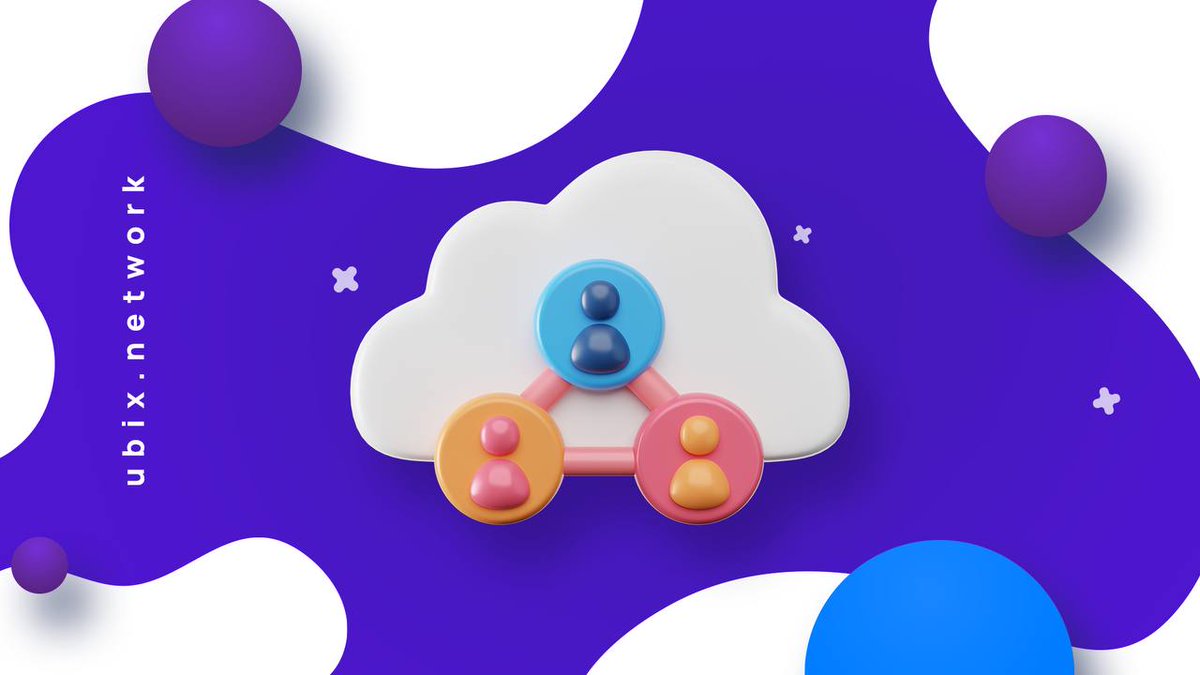
The Whitepaper introduces the concept of Consilium — logical blockchains within a single unified network.
Each Consilium:
▪️ has its own rules, ▪️ its own consensus mechanism, ▪️ its own economy, ▪️ its own access model.
At the same time:
▪️ a single physical node can serve multiple Consiliums, ▪️ blocks form a unified DAG rather than separate chains, ▪️ the use of bridges is not required, completely eliminating the class of vulnerabilities inherent to cross-chain solutions.
This radically solves one of the main problems of Web3 — the fragmentation of the blockchain space.
https://t.co/C0GK6ec9vP (https://t.co/LZy8q6XLtz) effectively implements true interoperability without bridges, which is a key industry trend.
https://t.co/nTjzBZegyE offers a cohesive architecture for the Web3 and AI economy, in which the L0-DAG architectural layer and the Legal Framework are inextricably linked. This makes it possible to address scalability, interoperability, and legal certainty simultaneously, while also enabling a new class of applications to be built on top of the protocol—legally meaningful AI agents and services
The algebraic formalization of the protocol core provides tools for rigorous analysis and systematic evolution of the system, while the AI Web3 Framework transforms UBIX into a natural infrastructure for the next wave of AI applications focused on real-world business and regulatory environments.
Let’s build more this year 💪🏻
@AITECHio The record exists, but who acted, in what capacity, with which rights/obligations, and under which jurisdiction is not always reconstructable in a rigorous way.
For autonomous AI agents, the requirement is not just an auditable ledger.⬇️
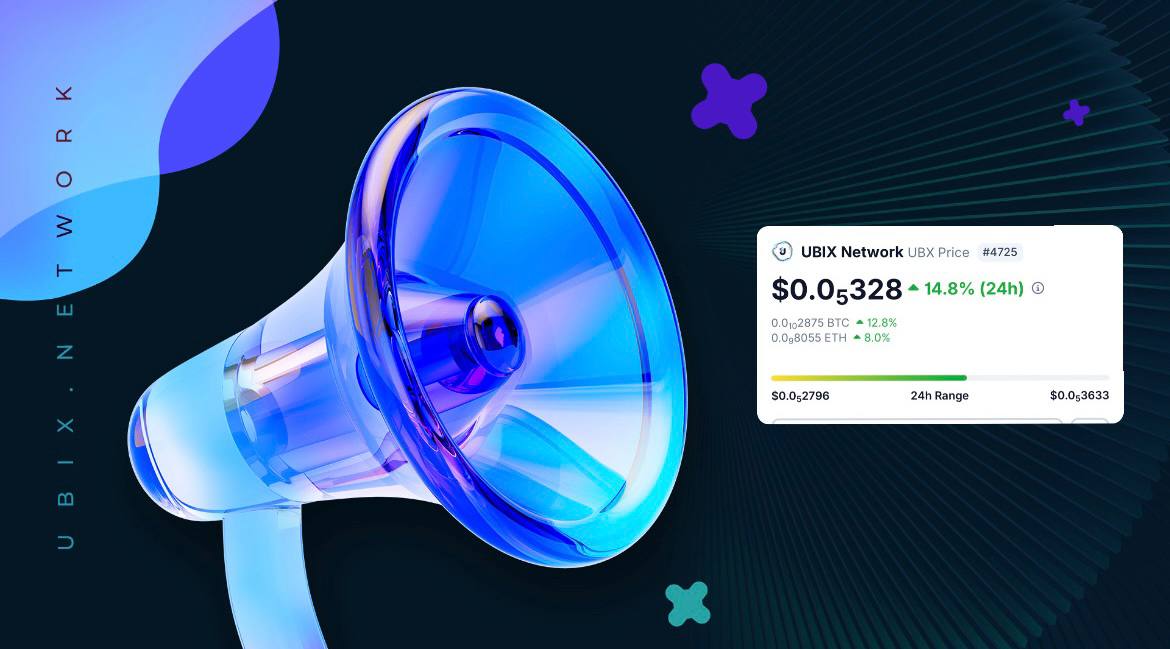
Amid the global market downturn, $UBX is starting its growth 🍀
It’s the perfect time to fill up your bags 💼
https://t.co/nTjzBZegyE is a hybrid blockchain / Directed Acyclic Graph (DAG) ecosystem
The native token is UBX. There are also staking / masternode-like components, reward systems, and project-based dividends on the https://t.co/0SfrO59Z0D or https://t.co/TaNRj6gcWo
$UBX available on the Mexc, BingX and other exchanges
#DYOR
Classical public blockchains were designed primarily as distributed ledgers for token transactions. As the ecosystem evolved, at least three fundamental problems emerged:
Scalability and parallelism: the need for horizontal scaling and support for different consensus rules and usage models within a single network layer.
Interoperability: the need for convenient and secure interaction between different blockchains and services without complex bridges and wrappers.
Legal certainty: the lack of an explicit connection between technical actions (transactions, smart contracts) and legal relationships (offers, consent, obligations, liability).
This problems gas fixed by @Ubix_Network
More details 👉🏻 https://t.co/LZy8q6XLtz
On the @UBIX_Network ecosystem, every transaction is a legally significant action.
The core difference between UBIX and traditional public blockchains lies in the explicit legal interpretation of technical actions. This is achieved through two key elements of a transaction:
▪️ ConsiliumId — indicates under which public agreement and rules the transaction is executed;
▪️ EDS (Electronic Digital Signature) — confirms the subject’s expression of intent and their consent to the terms of the consilium.
The public consilium agreement defines:
▪️ the rights and obligations of participants (users, agents, nodes);
▪️ applicable law and jurisdiction;
▪️ terms for data processing, licensing, and liability;
▪️ dispute resolution and arbitration mechanisms.
Each transaction signed with an EDS and submitted to a consilium with a specific consiliumId is regarded as an act of accession to that agreement with respect to the corresponding action.
@Ubix_Network — a blockchain that takes the law into account.
More details on the our updated White Paper 📄 https://t.co/LZy8q6XLtz
📝We’re excited to announce that https://t.co/gWd0xE8UJo is preparing for launch! 👩💻
To celebrate, we’re offering an exclusive opportunity:
Get 1 year of free access when your company joins up and provides a detailed review for publication on our website.
And there’s more — if your companies ready to start using the service immediately, your organization will receive 1 year of free access when you bring them onboard.
This special offer is available for the first 5 companies to make contact.
Be among the first to experience the future of digital signing with Sign IT now. Online!
👉https://t.co/gWd0xE8UJo
For proposals: [email protected]
The Quantum Computing Threat
Every few weeks the same tired narrative resurfaces: “Quantum computing is going to break Bitcoin.”
Every time it spreads, it’s the same routine - loud voices, shallow understanding, and zero connection to the actual science.
Here’s the facts:
Yes, early Bitcoin used P2PK outputs, and yes, those expose public keys directly on-chain. That includes the Satoshi-era coins. Those are, by definition, the most vulnerable class of addresses in a future where quantum computers can run Shor’s algorithm at full scale. That part is true.
What’s false is the timeline people attach to it.
A machine capable of breaking Bitcoin’s signatures doesn’t exist. Not in prototype form. Not in secret. Not in a lab somewhere. It’s not “a few years away.” It’s not “Google is almost there.” The level of hardware required is measured in millions of error-corrected qubits, operating coherently for hours. We aren’t remotely close. We aren’t even at one reliable logical qubit.
The institutions that actually understand this - NIST, NSA CNSA-2, MIT, Waterloo, Google’s own quantum researchers - are effectively unanimous:
Bitcoin is not vulnerable this decade.
Bitcoin is not vulnerable next decade.
The earliest plausible window for a cryptographically relevant quantum computer is somewhere around 2045–2055.
It’s entirely possible the field never reaches that point at all.
That’s the part the fearmongers leave out: physics may simply not cooperate.
Even if quantum progresses faster than expected, Bitcoin won’t be caught off guard. Post-quantum signature schemes already exist on paper. Migration paths already exist. Bitcoin would have decades of clear warning before anything becomes an actual threat, and decades is more than enough time for a smooth transition.
So yes, Satoshi’s coins sit in the vulnerable category. But no, quantum is not an imminent cliff for Bitcoin. And anyone pushing that narrative today is selling panic.
The truth is simple: quantum is a long-term engineering challenge, not an incoming existential crisis.
🫡 From the depths —
The White Whale 🐋
We've updated our roadmap!
🪄 Details are in the link Below.
https://t.co/StjMvZnJ0l
New: We plan to attract 200-800 investors to the Ubix_Network ecosystem every month!
We are also Planning to develop the launchpad of the Ubix_Exchange.
We'll share more updates in the future posts!
Follow us to get news as it drops🗞️
Hope you have a nice week $UBX holders!
Please read our new article and follow our news on a regular basis!
“UBX: The Web3 On-Ramp”
👉🏻 https://t.co/46ACw5TahD
We have been less active lately, we apologise and are quickly correcting this. We have several news breaks planned for the coming weeks ✌️
First of all we would like to present to you, our exciting new utility on https://t.co/nTjzBZegyE — https://t.co/xhlmoe8I8G (https://t.co/gWd0xE8mTQ)
SignItNow is a decentralized electronic document signing system. We do not store customer data, thus we have a good advantage over compeditor projects 📂
At the moment, SignItNow is being finalized. We are taking into consideration the client's wishes, and active marketing of the platform in the Web2 space will begin soon ✔️
🌍 Why Xcavate is Essential:
By the end of 2022, global real estate was valued at over $378.7 trillion, making it the largest store of wealth. Yet, this asset class often remains inaccessible to the average person due to:
1️⃣ High capital requirements
2️⃣ Complex investment processes
3️⃣ Reliance on intermediaries
At Xcavate, secured by @Polkadot, we believe real estate should be accessible to everyone! We're building a future where anyone can invest in real estate, no matter their starting point. 🏡✨
ANNOUNCEMENT - IF YOU ARE PART OF THE @hedera ECOSYSTEM, WE WANT TO FOLLOW YOU!
Like, retweet and comment your @ Tag and we will follow back. If you are an #HBARBARIAN we want to follow and grow the community together!
Let’s get a follow #HBAR train going!
COMMUNITY STRONG!
🚨 Major Development: Visa’s US Patent Grant Mentions #Algorand! 🚀
Global payment giant @Visa has secured a US patent, explicitly citing the power of #Algorand in its specification.
While it’s yet to be seen which #blockchain (if any) will be chosen for X’s P2P payments, the mention of instant finality in the context of payments adds fuel to speculation that $ALGO could be a strong contender. 👀🔥
Could this be a game-changing moment for Algorand? Let’s see how this unfolds! ⚡️
@AlgoFoundation
🚨 BREAKING: 🇮🇹 Italian energy giant @EnelGroup, Europe’s largest electricity producer and the second largest in the world, has partnered with @conio to launch a solar panel tokenization product on Algorand⚡️
Italian residents can now purchase solar panels, have Enel manage them, and apply the energy produced directly to their bills—no rooftop required.
RWAs on Algorand.
🚀 Exciting News Alert! 🚀
We're thrilled to announce the launch of an innovative partner project that marks a game-changing milestone in AI development 🫶
🌟 Introducing AIPedia — the "Wikipedia for AI"! 🌟
While Wikipedia structures information for human understanding, AIPedia does it for AI, providing structured knowledge to fine-tune LLM (large language models).
What makes AIPedia unique?
✨ It uses a combined reward model to incentivize knowledge sharing
✨ Contributors earn tokens that double as access keys for AI
✨ Early adopters gain massive advantages (think "Satoshi" levels of early!)
Let’s build the future of AI together!
Click below to get started 👇🏻
👉🏻 https://t.co/CRMiwVUGfU (https://t.co/XMgCa5dkY8)
👉🏻 https://t.co/7jNpi6Y1MC