perspective.
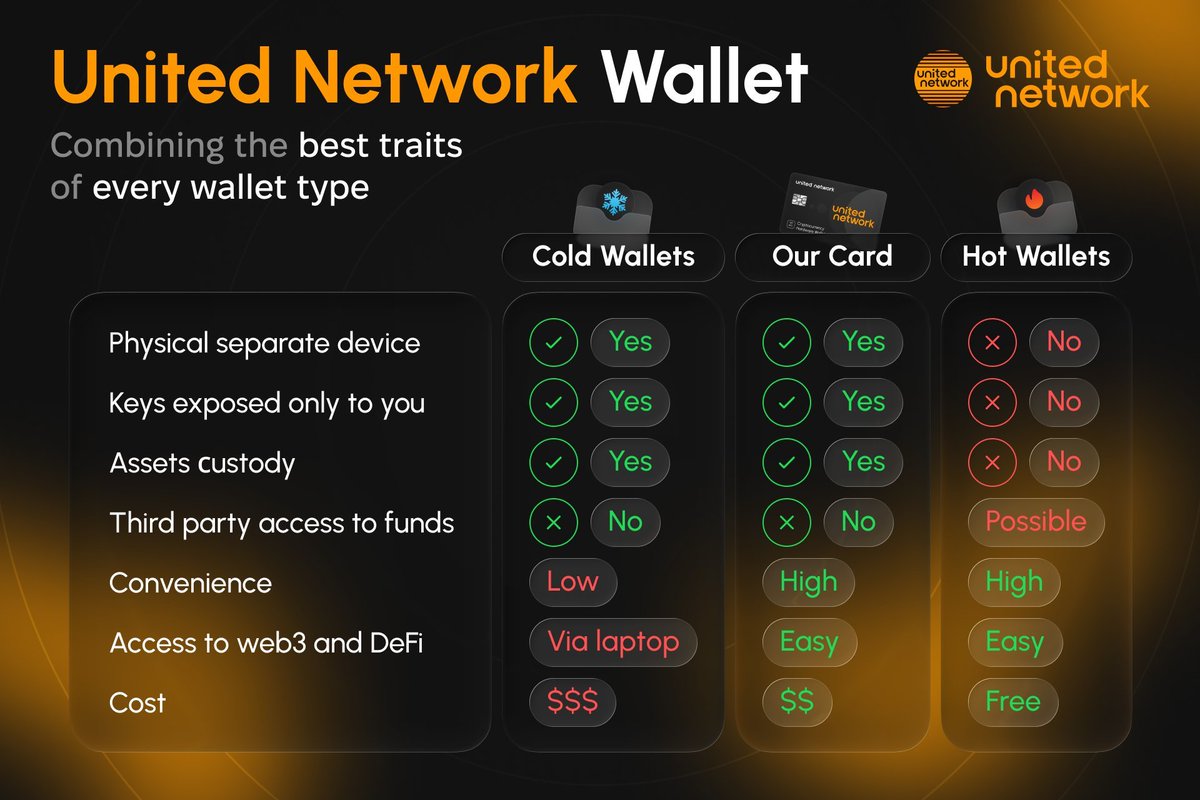
That's why @UN_wallet uses an NFC card.
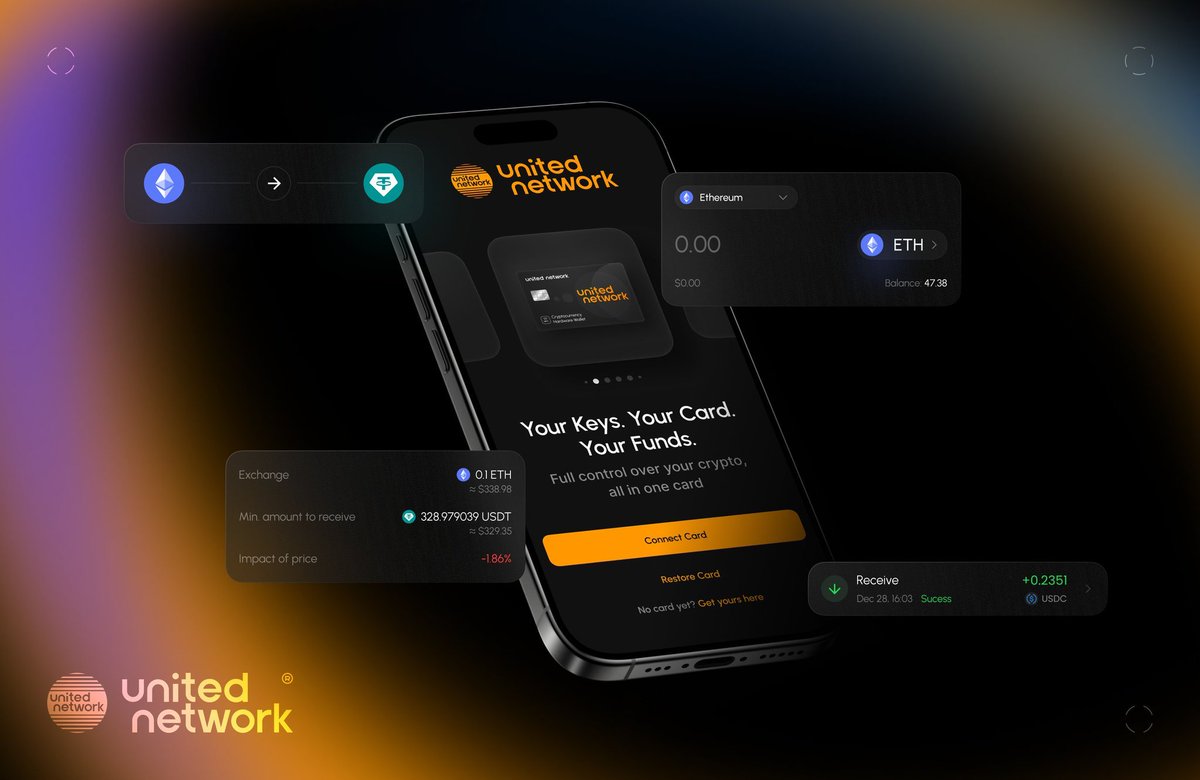
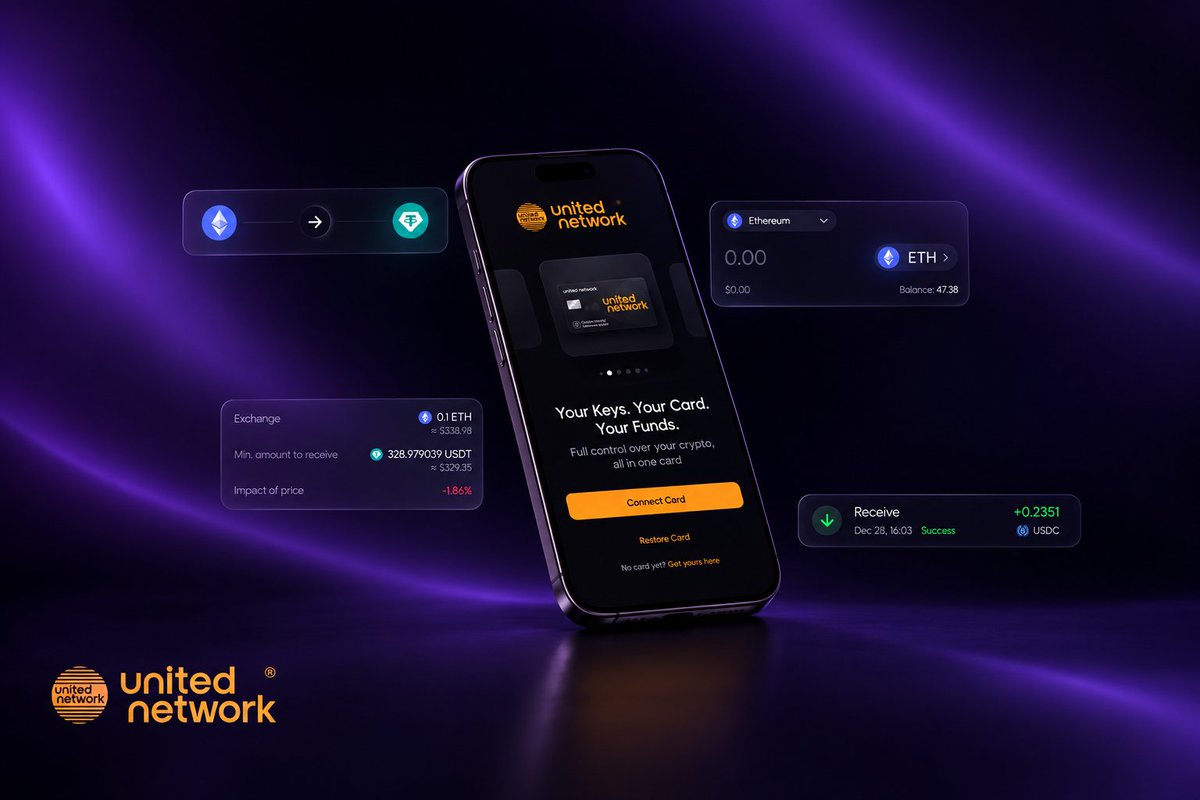
Your phone handles the interface.
The card handles the key.
And you decide what gets signed.
Read more 👉🏽 https://t.co/7FJudyyHbj
🧵
The real difference between a hot wallet and a cold wallet isn't where your crypto sits.
It's where your private key lives.
A hot wallet keeps the key on an internet-connected device.
A cold wallet keeps the key offline and brings it into the process only when you need to_
sign.
That difference matters.
We just saw a real example of why.
The recent crypto wallet (name undisclosed) incident that affected parts of its hot and warm wallet infrastructure, while its cold wallets remained unaffected.
It puts the hot vs cold wallet conversation into_
@BankXRP I’ve been looking at @UN_wallet lately. The NFC card approach is interesting — private keys stay protected on the card while your phone remains more of the interface. Still comes down to being careful about what you sign, though. https://t.co/7FJudyyHbj
@Jacob16Roy@TokenProbeApp This is the mindset behind hardware wallets like @UN_wallet too. Keep the keys protected offline, and be intentional about what you use that wallet to sign. Cold storage shouldn't become your DeFi playground. https://t.co/7FJudyyHbj
@UN_wallet 2.3
wallet to verify what you're signing before giving approval.
Because in crypto, the final security check is still you.
Protect the key. Understand the transaction. Sign intentionally.
2.1
The biggest risk in crypto isn't always where your keys are stored.
Sometimes, it's what you're signing.
You can have your private keys protected offline and still approve the wrong transaction, the wrong amount, or a permission you didn't fully understand.
That's why_
2.2
self-custody needs more than just key protection.
It needs a moment where you stop, look at what you're approving, and make the decision yourself.
That's where a hardware wallet like @UN_wallet comes in.
Your keys stay protected on the NFC card, while you use the wallet_
@CryptoarticlesO Buying crypto is only the first step. Knowing how you’ll store it, access it, and approve transactions is where self-custody really starts to matter. A hardware wallet gives you that extra layer of control. Read more 👉🏽 https://t.co/7FJudyyHbj
@CryptoPromots Exchanges are convenient, but keeping long-term assets there means relying on a third party for custody. Moving to a hardware wallet puts signing back in your hands.
That’s where an NFC hardware wallet like @UN_wallet makes sense — your keys stay protected https://t.co/UxFJ2COmmT
@UN_wallet 1.3
From your phone.
Tap the card.
Check what you're signing.
Approve it.
The phone gives you the interface. The card gives you control.
Check link below for more information https://t.co/jH09i3n6MP
1.1
Most people think of a crypto wallet as the place where their assets are stored.
But increasingly, the interesting part is happening when you actually make a transaction.
You connect your wallet, check the details, and decide whether you're giving that transaction permission
1.2
to go through.
That makes the wallet more than somewhere your keys live.
It's becoming part of the security process itself.
That's where @UN_wallet gets interesting.
Instead of carrying around another bulky device, you can use an NFC card to authorize transactions directly
Be Intentional. Protect Your Assets. — @un_wallet
Keeping the key protected is only half the job.
Because your private key can be perfectly secure, yet you can still lose funds by signing something you didn’t understand.
Think about it:
• Sending 10 ETH instead of 0.1 ETH
@UN_wallet@EminenceTribe1 The security model should be:
Keep the key protected → Understand the transaction →be attentive → Verify the details → Sign.
Your phone can show you the transaction.
Your physical signing device should give you control over the decision.
Security isn’t just about protect_