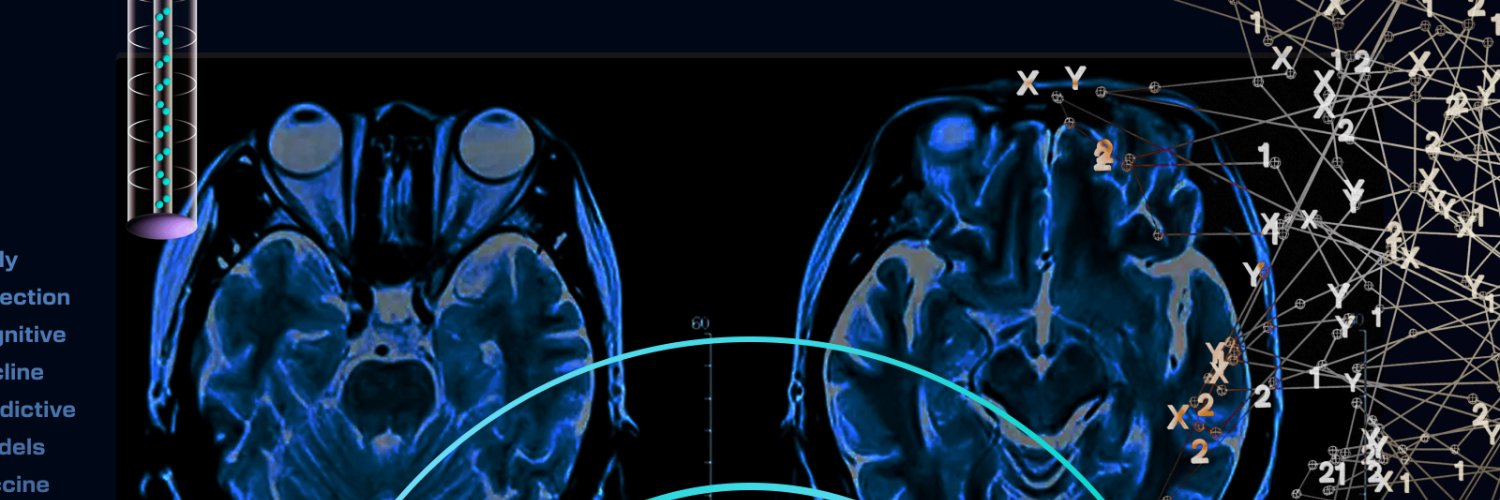
What if I told you that right now, someone you love might be developing Alzheimer's... And we won't know for another 10-15 years.
By then, it's too late.
By then, 70% of their brain cells will be dead.
This is why we're building $AB4AD - to catch it at 5%, not 70%.🧵👇
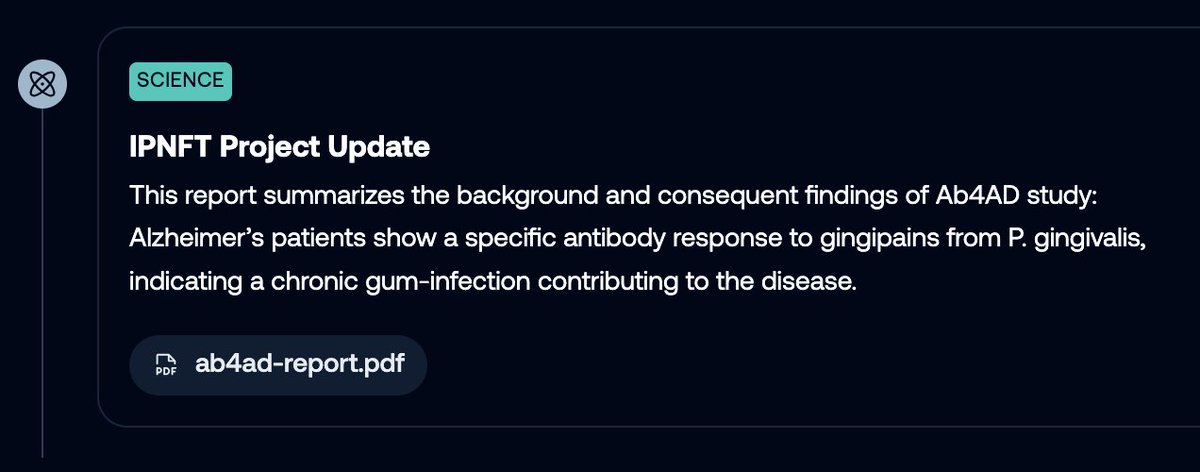
By profiling immune responses at scale, we uncovered pathogen-linked antibody signatures - including a strong signal around P. gingivalis gingipains - now validated across cohorts.
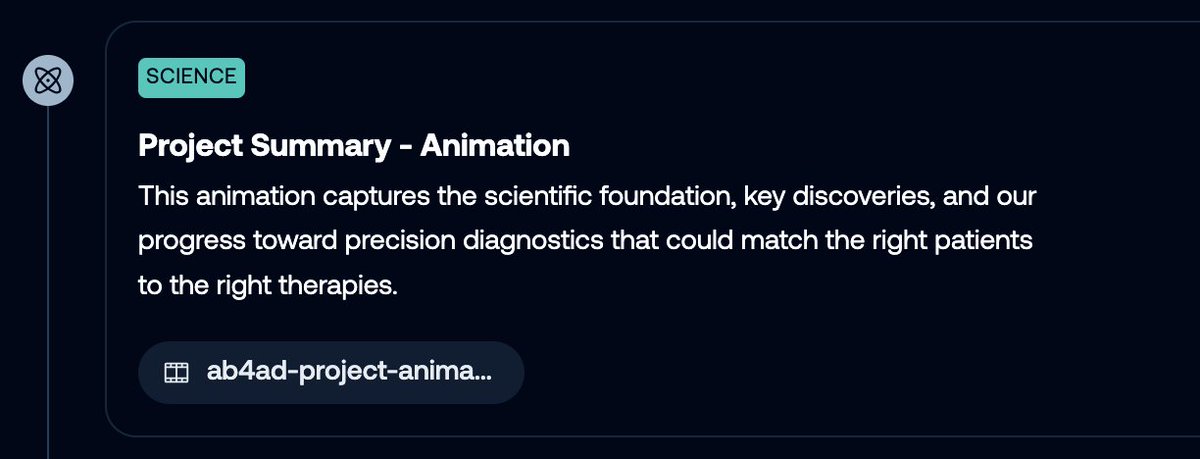
Whether you’re new or have followed AB4AD from the start, Danny - the scientist behind the project - put together a short video for the community here to walk through how it all started and where we are now.
Find it on @molecule_sci's platform: https://t.co/ri5VHWTqng
By focusing on the right patients, this approach could bring back anti-gingipain drugs that failed in earlier, broad trials, even though they may work well for a specific group.
The appeal is that it uses simple, inexpensive blood tests instead of complex brain scans.
Data collection and analysis: done.
Lab results are live on @molecule_sci.
Now it's time to drive the next steps forward ⤵
• Test these findings in a larger group of people
• Re-examine samples from clinical trials
• Identify which patients respond to which infection pathway
By identifying antibody signatures against gingipains (made by a gum-disease bacterium), we’re paving the way for a simple blood test that could pinpoint the subgroup of AD patients whose disease is driven by gum infection.
Learn more, and be part of it → https://t.co/ri5VHWTqng
By clearly identifying which patients are affected by this form of Alzheimer’s, this biomarker could help turn past trial failures into future treatment successes and bring effective drugs to the patients who need them most.
What is the relationship between common infections and Alzheimer’s disease? We’ve been doing intensive data collection, and there are interesting results to share.
Science funded on DeSci rails → Final lab results on @molecule_sci's platform: https://t.co/ri5VHWTqng
TLDR ⤵
How we're trying to catch Alzheimer's early?
Your immune system is like a security guard that remembers every intruder. 🧠We're reading that memory.
If certain "intruders" predict Alzheimer's, we can sound the alarm early.
Early diagnosis = Early care
Shoutout to everyone who's been following since the beginning.
You're not just watching science happen.
> You're funding it.
>> Governing it.
>>> Owning it.
> Big pharma spent 20 years chasing the wrong target.
>> We spent 6 months looking where they never looked.
Sometimes the outsiders see what the insiders miss.
LAB UPDATE
Our team just processed saliva samples. AD patients vs healthy 90-year-olds.
The antibody patterns are... different. Really different.
Can't say more yet, but the data is speaking.
Why does Alzheimer's research keep failing?
Most drugs target amyloid plaques, the "junk" in Alzheimer's brains.
But what if plaques are just the aftermath? What if the real culprit is hiding in plain sight?
Have you ever heard of pathogen hypothesis: the infections that sneak past the blood-brain barrier
Maybe Alzheimer's isn't genetic destiny.
Maybe it's immune dysfunction.