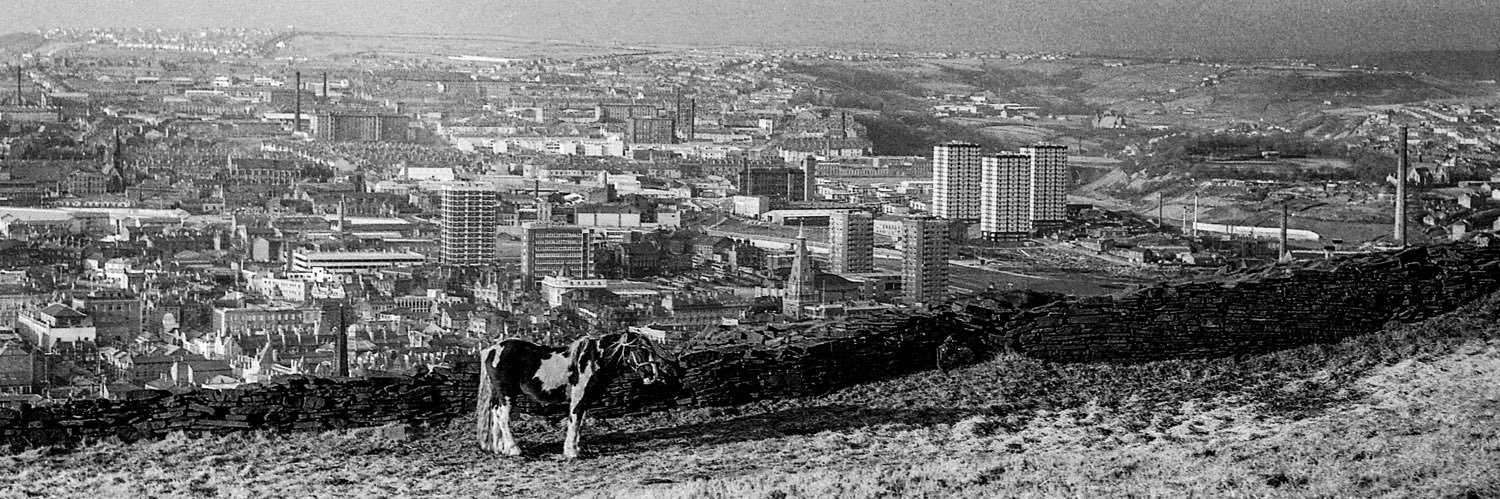
In dating pictures of old Halifax, there are certain events that – rather like the destruction of the dinosaurs in geological times – mark the changeover between major epochs. One such event was the stone cleaning of Halifax Town Hall, bringing about its transition from soot-black to golden-stone, in 1972.
I took this photograph in Sheffield, forty-odd years ago. Could you take a similar photo now? The bin will certainly be gone, replaced by some overgrown plastic box. I'm not sure about the stairs and the railings. Today's photo would be digital, and, by default, in full colour - and that would somehow change the scene. Let's not pretend that black and white was more realistic; it wasn't. The lack of colour did, however, concentrate the eye and the mind.
At first glance at this old family photograph, you might think something went wrong with the print's dimensions: everything appears far too wide for its own good. However, that was my grandmother, Harriet Ellen Burnett, and she really was very small and very wide. And that was the door of her house on Arctic Parade in Great Horton, Bradford and that was equally small and wide.
This is a proper gable end, not some half-hearted apology for a wall stuck onto the side of an over-delicate bungalow. It's seen life, this gable end: horses and carts, trams and trolleys, bikes and boats. Some might not see its beauty, but I did when I took this photo fifty-odd years ago - and I still see it today. This gable end was built to last.
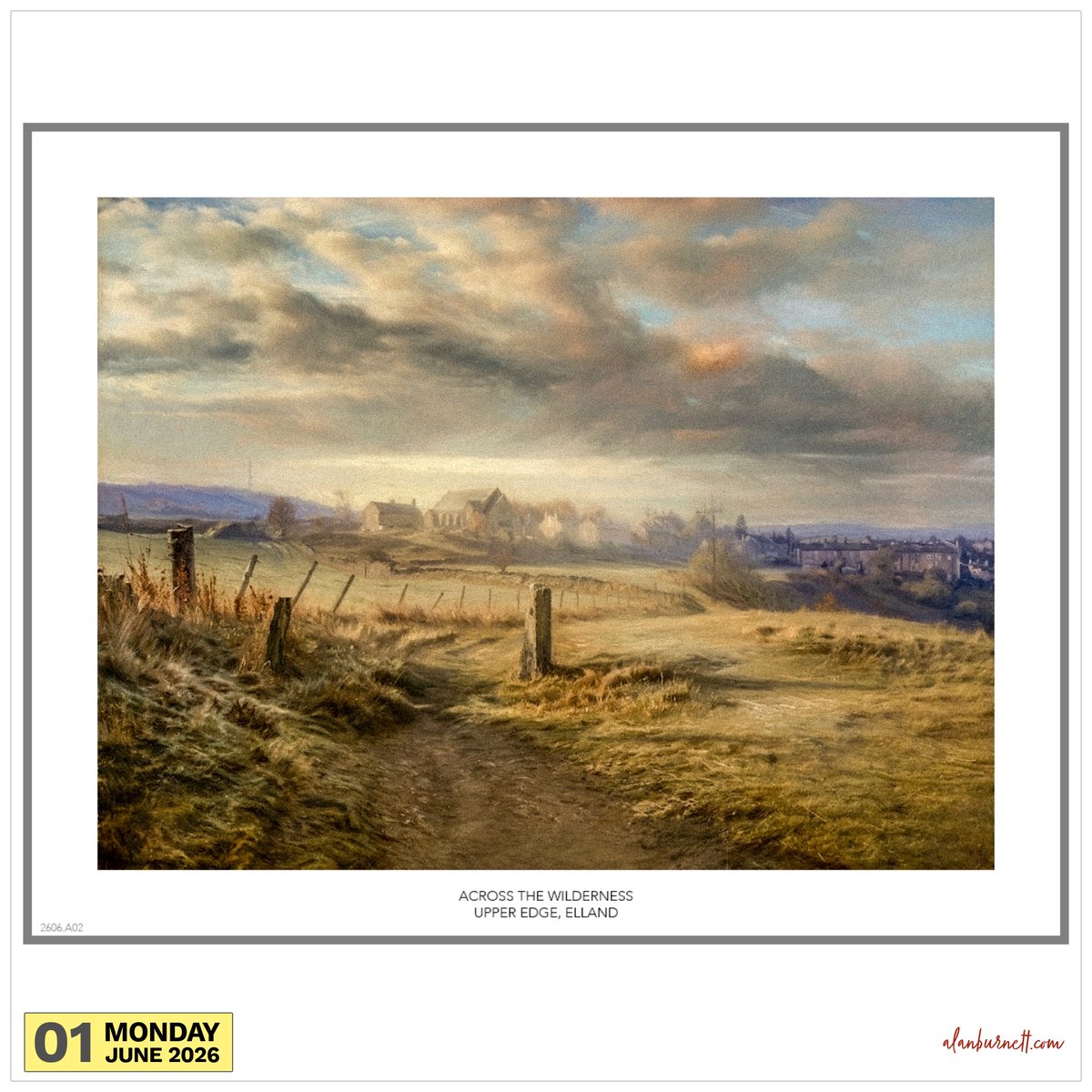
Let's start a new month with something pretty. This begins with a photograph I took a few years ago of a bit of land near Upper Edge, Elland, known locally as "The Wilderness". I fed that photograph into an AI machine and instructed it to come up with something interesting. This is the image that came out the other end - pretty good start to June, all told.
For status and gravitas, you can't beat a triumphal arch. Rome has several, Paris has a famous one, and now Donald Trump is getting in on the act in Washington. Few of them can match the triumphal arch you have to pass under when you enter Slaithwaite in West Yorkshire. Here's a photograph I took the other day just in case Washington wants to copy the design.
I know that look; I know that stance. This chap might be in a shed surrounded by pots of this and jars of that, and I might be in my room, buried under piles of paper and layers of ephemera. The message is the same, however: "This might look like chaos to you, but I know where things are. This is my space. Keep out."
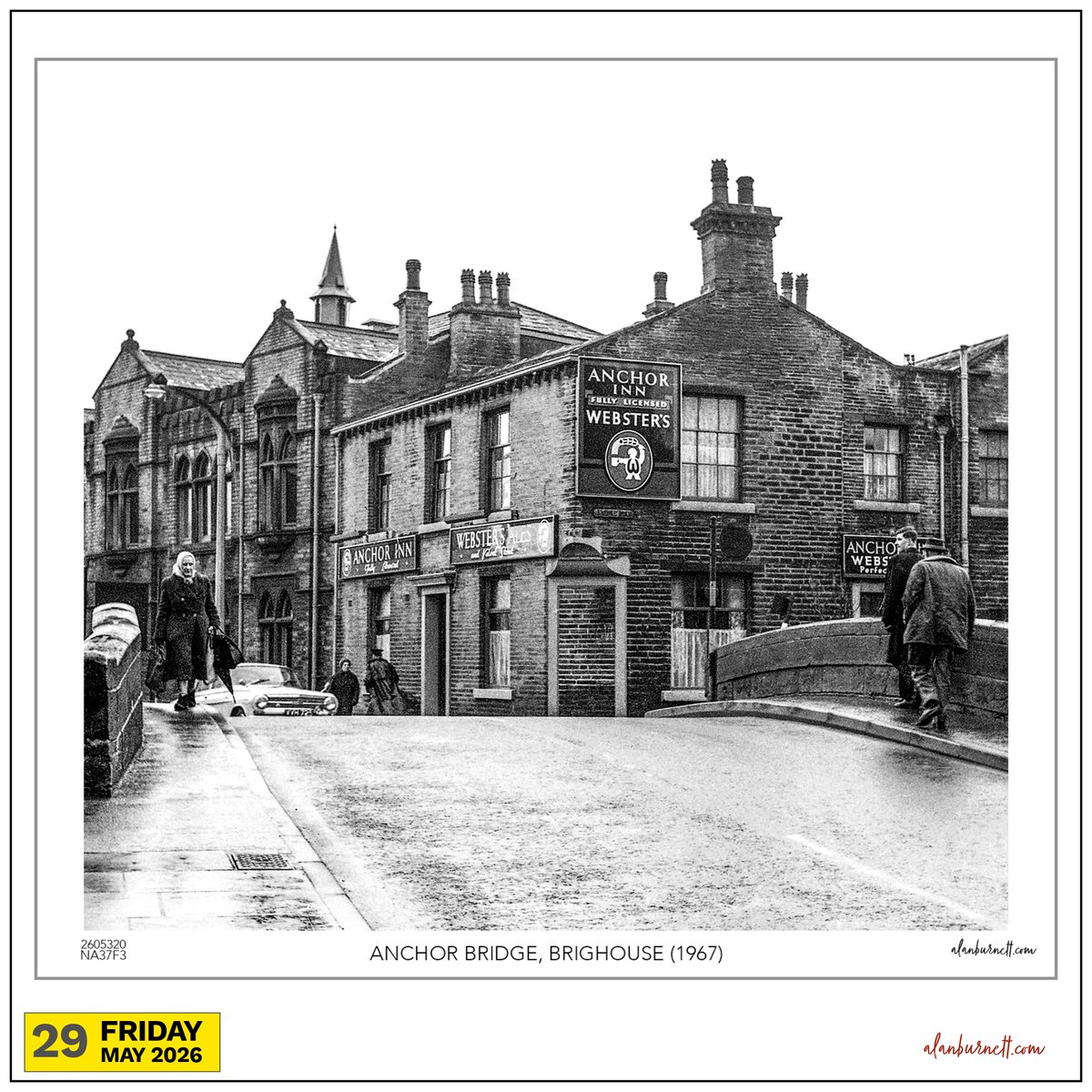
There has been a pub next to the Anchor Bridge over the Calder and Hebble Navigation in Brighouse ever since the canal was constructed in the 1750s. For most of that time, the pub was quite reasonably called the Anchor Inn, but for some reason it was decided that it needed a new name for the twenty-first century and it was rechristened The Bridge. My photograph pre-dates that change of name and takes us back to the 1960s, when it was a famous local live music venue.
The cubist painters of the early twentieth century revolutionised art by breaking objects down into geometric, fragmented forms. If Picasso, Georges Braque, and the rest had wanted a real challenge, they could have done a lot worse than coming to Halifax and applying Cubist techniques to Square Church. Once they had finished they could have popped in for a pint at The Triangle Inn.
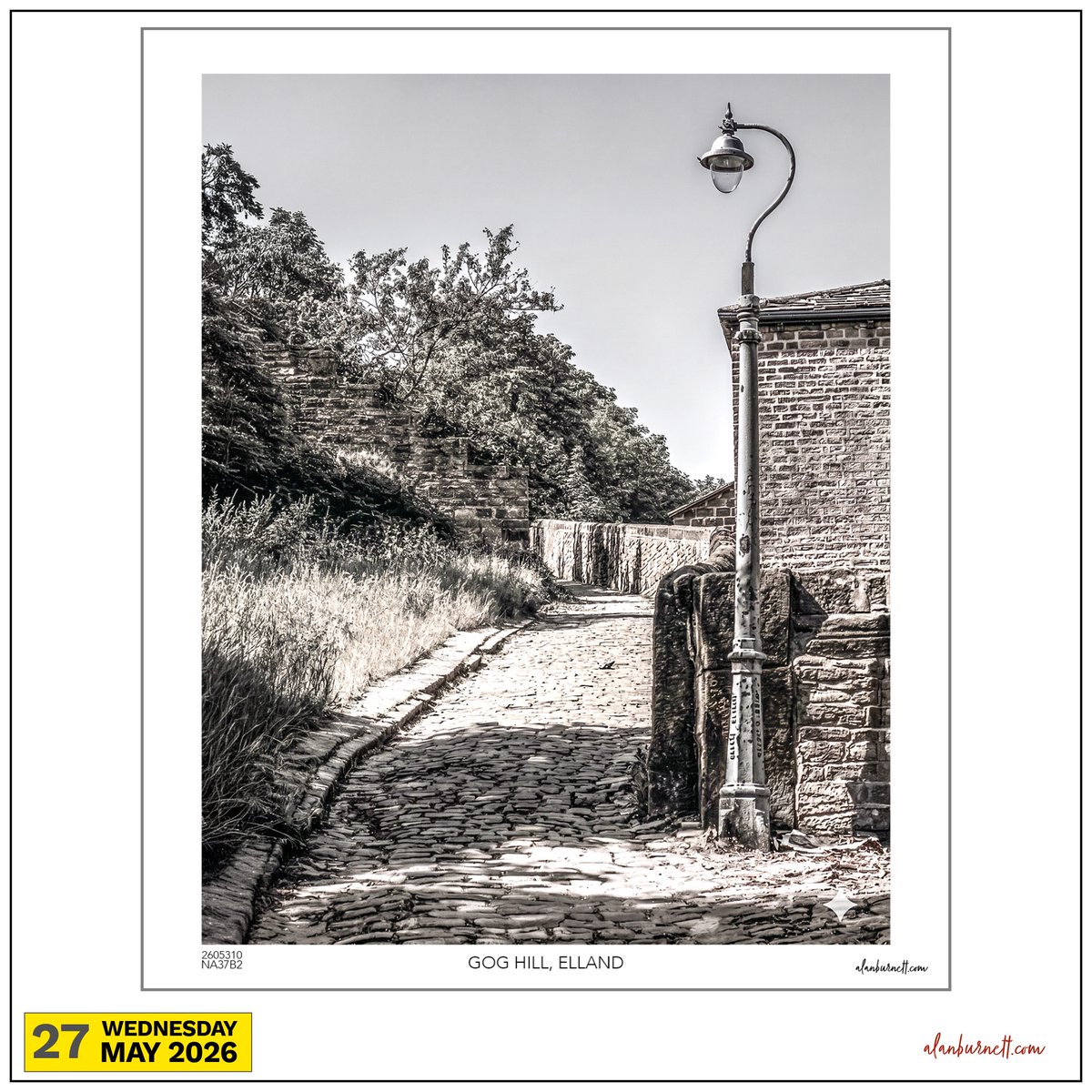
This is a photograph I took at the bottom of Gog Hill in Elland about fifty years ago. Because my in-laws were living near the top of Gog Hill at the time, I assume I was about to walk up the hill - which is a substantial climb at the best of times. Of course, the sun always shone in my youth, so we can assume it was warm. I considered retracing my steps yesterday but quickly abandoned the idea and stayed inside instead.
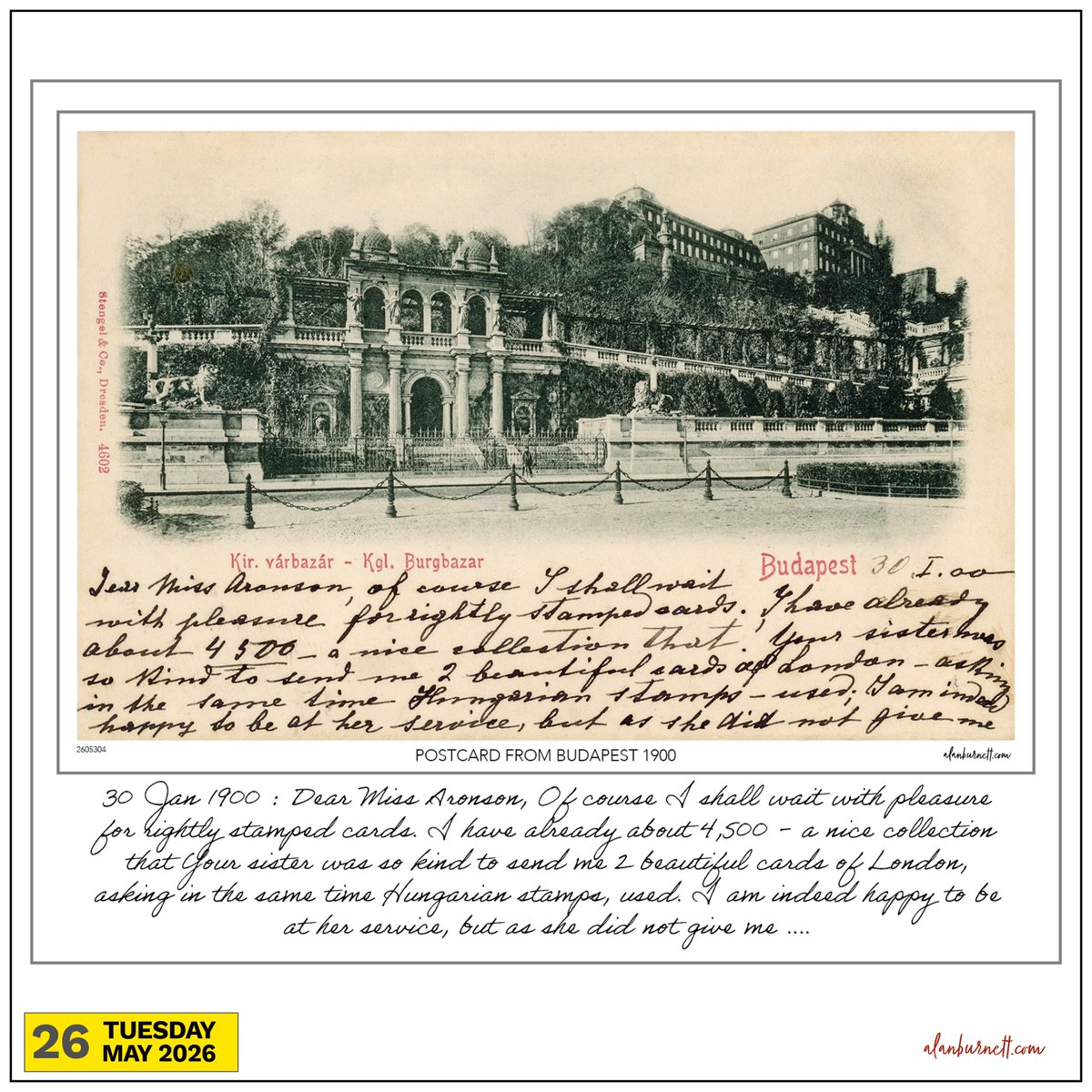
This postcard was sent from Budapest to North Wales 126 years ago, during the height of the early twentieth-century postcard-collecting boom. It dates from the period before the postcard backs were divided to accommodate both the address and the message, so any message had to be squeezed onto the front of the card. No problem - after a century and a quarter, the message becomes more interesting than the view.
What better way to celebrate a Bank Holiday Monday than to stride across the green fields of Yorkshire, leaving the smoke-filled streets behind, and then scale the gorse-clad valley sides in search of a perfect English pub and a foaming pint of ale? Or, alternatively, you can retreat to the safety of your room - free from UV rays and stinging wasps - and tidy up a 56-year-old photograph of the green fields of Yorkshire (the Shibden Valley, actually).
These days, if you buy shares in a company, the best you can expect is a pro-forma PDF digital certificate - with all the elegance of a breeze block. Back in the last century, you'd receive a work of art to record your acquisition, with classical figures and semi-naked gods welcoming you into the realm of capitalism. I bought my share certificates as a job lot for a few pence: devoid of property, rich in art.
This is an old photograph, picked at random from the boxes and drawers of old photographs I live with. There is nothing special about it - I have no idea who Mac and Burbidge were - other than that it sums up everything I love about old photographs. I could no doubt feed it through an AI machine and it would come out looking clean and new ... and somehow false. It's the sepia patina of time that makes it special.
While we’re on the subject of ancient monuments (see yesterday’s post), what about this fine obelisk? Built as a temple to Steam, the god of industry, it was worshipped by thousands of acolytes who would gather in its shadow daily. Mill chimneys are the monolithic heads of West Yorkshire.