A large population-based study found that higher dietary nitrite intake over 20 years was associated with an increased risk for colorectal cancer in men. The link was strongest for distal colon cancer, where men with the highest nitrite consumption had a 50% higher risk. Read more: https://t.co/N3nQIZEaDQ
AI chatbots may be fueling delusions and even triggering psychosis in people with no history of mental illness, in some of the first systematic clinical evidence linking chatbot interactions to psychotic symptoms.
A retrospective review of more than 215,000 patient records at a large US medical center identified 28 cases in which chatbot interactions appeared to contribute to emerging or worsening psychosis, a phenomenon that until now has been documented largely through individual case reports. Tap the link to read more: https://t.co/VukB18EuYH
@elonmusk I do not regret travelling a very long way to see this with my own eyes. It's something I will remember for the rest of my life. More people should see Starship!
Obesity may leave lasting biological changes in adipose tissue that keep levels of the hunger hormone asprosin elevated, potentially contributing to weight regain and increased obesity susceptibility in offspring, new preclinical research suggested.
“We found that obesity leaves a lasting ‘memory’ in fat cells that keeps the hunger hormone asprosin turned on, even after weight is lost,” senior author Atul Chopra, MD, PhD, investigator and associate director of the Harrington Rare Disease Program at the Harrington Discovery Institute at University Hospitals and associate professor of genetics and genome sciences at the School of Medicine, Case Western Reserve University, both in Cleveland, told Medscape Medical News.
“It’s like flipping a light switch that stays on after you remove your finger,” he said. “Even after the original trigger is gone, fat cells keep producing extra asprosin, which drives hunger and pushes the body to regain lost weight.” Tap the link to read the full report. https://t.co/zIhOKle9AQ
According to new research, caffeinated energy drinks and supplements are linked to a disproportionate wave of cardiac events in young healthy adults. Researchers screened product names using a curated keyword list of stimulant keywords and brand names, including:
- Caffeine and methylxanthines: Theobromine, guarana, yerba mate, and green tea or coffee extracts
- Sympathomimetic agents: Synephrine, yohimbine, ephedra, dimethylamylamine, and higenamine
- Commercial caffeinated brands: Red Bull, Monster, Bang, CELSIUS, 5-hour
Nitin Chetla, an author of the study and medical student at the University of Virginia School of Medicine in Charlottesville, Virginia, encouraged clinicians to ask young patients who have palpitations, chest pain, or fainting whether they use these products.
“Asking directly can open the conversation and can surprise both the patient and the clinician with how much total daily caffeine or stimulants are actually involved,” he said. To learn more about this study. tap the link: https://t.co/RO9ugEHf8s
Our Turning Point USA family is heartbroken over the loss of Hunter Stokes, president of our Fort Myers High School Club America chapter.
Hunter was a young patriot who loved his country and led by example. From attending our Chapter Leadership Summit this summer to helping lead his chapter’s 9/11 Flag Run in honor of the victims of the September 11 attacks, Hunter was dedicated to making a difference in his community.
We are grateful to have had Hunter as part of our TPUSA family. Please join us in lifting his family, friends, and fellow chapter members up in prayer.
In this installment of Med Op-Ed: Should obesity drug trials do more to protect participants from excessive weight loss? Does feeling full switch off attention to tempting foods in people with overweight or obesity? And does a drugmaker’s campaign against weight stigma steer the public toward a clinical-first view of obesity? Tap the link to read on: https://t.co/OHvratpS3s
Glutathione supplements are marketed for detoxification, protection against oxidative stress, and even cancer prevention. Manufacturers promote glutathione as an effective antioxidant with a wide range of health benefits. In fact, this naturally occurring molecule plays an important role in cellular protection and the body’s natural detoxification processes; however, clinical evidence has not established that supplementation provides these health benefits. What do the studies actually show? https://t.co/08Ud985zli
After spinal cord injury surgery, hours matter. One researcher says “the difference between 2 hours is somebody not moving their hands.” A tiny ultrasound implant could help doctors spot problems faster. Here’s what experts say about its promise and its limits: https://t.co/hVsxku8Vj6
A new ultrasensitive blood test has shown promise for identifying advanced tau pathology in Alzheimer’s disease (AD) and may offer a more scalable way to assess disease stage and severity.
In a cross-sectional study, a plasma immunoassay for endogenously cleaved microtubule-binding region tau (eMTBR-tau) accurately identified advanced tau pathology in the brain and performed comparably to a more complex mass spectrometry method. This “scalable immunoassay could broaden research access and support clinical evaluation,” the authors wrote. https://t.co/dvNaxLvYkI
ADHD is often described as a lack of attention, but researchers say it may be more accurate to think of it as difficulty controlling focus. Many people with ADHD can concentrate deeply on things that interest them, but struggle when a task feels less rewarding. A new commentary explains why this matters for how ADHD is understood and treated. https://t.co/ThrsSYga2F
Many of us breathe unconsciously and automatically, unaware of each inhale and exhale. While breathing is fundamental to life itself, there’s still so much we do not yet know about how our brains monitor it.
To be more specific, how our forebrain interprets internal breathing signals has long been a mystery: Some patients fail to recognize life-threatening shortness of breath caused by asthma, opioid use, and infections such as COVID pneumonia, while other people can experience persistent breathlessness with lungs that appear healthy and function as normal.
In a recent study led by researchers from the Feinstein Institutes for Medical Research in Manhasset, New York, the team discovered a dynamic brain circuit deep within the anterior insular cortex (AIC) that can act as an “internal alarm system” and rapidly detect breathing sensation mismatches, or when inhaling suddenly feels harder than expected, for example. https://t.co/TTSuSWOLmI
Longer exposure to estrogen over a woman’s lifetime is associated with better cerebrovascular health in later life, including less damage to the brain’s small blood vessels and healthier tissue.
In a population-based study of more than 300 women, a longer reproductive span — the time between the first menstrual period and menopause — was associated with 8% lower odds of having two or more signs of cerebral small vessel disease (SVD). The condition affects tiny blood vessels in the brain and can damage surrounding brain tissue.
A history of menopausal hormone therapy (MHT) was also associated with lower burden of cerebral SVD and greater white matter integrity. Women who had used oral contraceptives earlier in life and MHT after menopause had the lowest disease burden and greatest white matter integrity. https://t.co/heoqFTbqRK
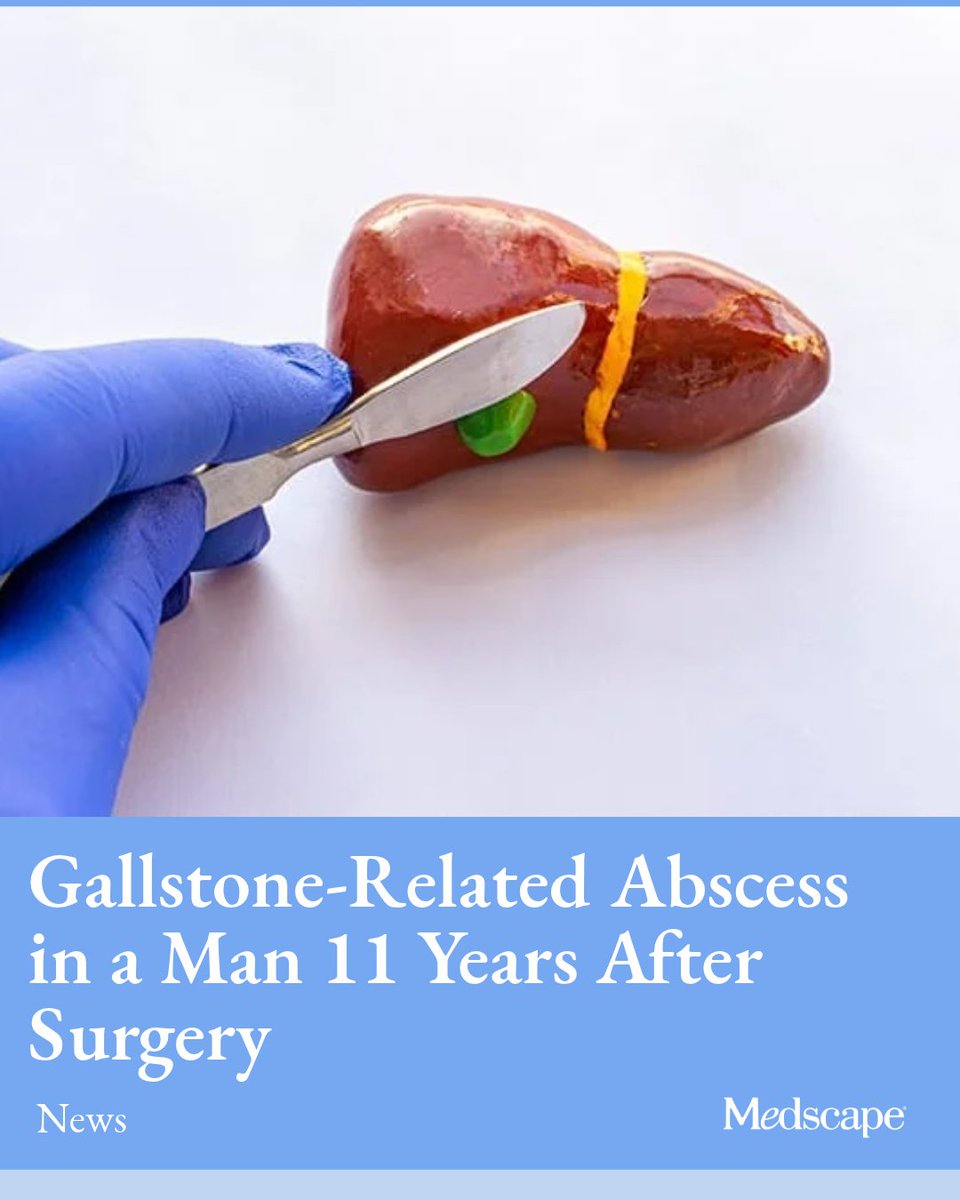
A retained spilled gallstone following laparoscopic cholecystectomy can cause a delayed perihepatic abscess and present with persistent thoracic pain and recurrent fever. This case highlights the importance of considering previous surgical complications when investigating unexplained symptoms and reassessing imaging findings when the initial clinical assessment does not establish a diagnosis.
The case report by Alaa Kansoun, MD, and colleagues at Hôpital Saint Joseph in Marseille, France, described this rare complication and its management. Read more: https://t.co/sqyZeiRMCR
Recently, a major betting platform called Kashi started letting users bet on whether new medical treatments will succeed in clinical trials. In response, doctors and medical researchers are speaking out about this, warning that research centers would have to spend more time and money enforcing red tape in an effort to safeguard patients' trust.
Clinical trials rely on volunteers. Without new laws banning these bets, patients' may be less likely to volunteer for clinical trials and extra red tape could slow down the release of new medicine. Kalshi argues that doctors are overreacting, are regulated by the federal government, and have added safety rules to protect traders and patients alike.
To learn more about how it started and what happens next, tap the link: https://t.co/D3qJFspY5G
Regulators in Australia have updated psychedelic medicine guidelines, but disagreements persist about who can and can’t lead therapy sessions.
https://t.co/BBLJkNiGCa
A healthy diet, regular exercise, and stress management — these are well-established factors that promote weight control. But emerging evidence suggests that sleep also plays a powerful role in obesity and related conditions, which is one reason the American Heart Association added sleep to its list of “life’s essentials,” and most recently published a scientific statement on sleep health and its implications for cardiometabolic health. https://t.co/VrERRKkx9o
Marco Rubio is a loyal ally of King Reza Pahlavi and the Iranian people.
With JD Vance gone, he must lead all efforts (with Pete Hegseth at his side) to destroy the mullah regime once and for all.
The tide is turning in our favour. We will win and free Iran! Javid Shah!
Below is one of the very few photos from immediately before the killing.
Riding Azar is Molla Khalkhali, the infamous “Hanging Judge,” the butcher who murdered Azar.
When asked about his actions that day, he bragged: “I tortured the King’s horse to death in front of the other horses, so that they, too, would learn a lesson.”
Completely psychotic. Beyond evil.