As her six-year term as Chair of ACAMH comes to an end, @GMilavic reflects on @acamh's development, achievements, and acknowledges the members, staff, Board and wider community whose commitment has made them possible.
Thank you, Gordana, for your outstanding leadership, dedication and contribution to ACAMH over the past six years. We are incredibly grateful! https://t.co/3Q2udHj1Ym
Insomnia or circadian rhythm influences? Understanding the distinction and overlap matters. Professor Michael Gradisar explores how clinicians can assess sleep difficulties in adolescents, differentially diagnose sleep disorders, and learn brief interventions.
Book now to attend! https://t.co/XYQkiiQuvE
🧠 Why do good memories fade differently from bad ones? Explore the 'fading affect bias' and how it may help protect #mentalhealth during adolescence in this episode of #MindtheKids.
Listen to the full podcast with @ClaraGFaria1 & @ab_roe to learn more. https://t.co/ipKuU3gk8c
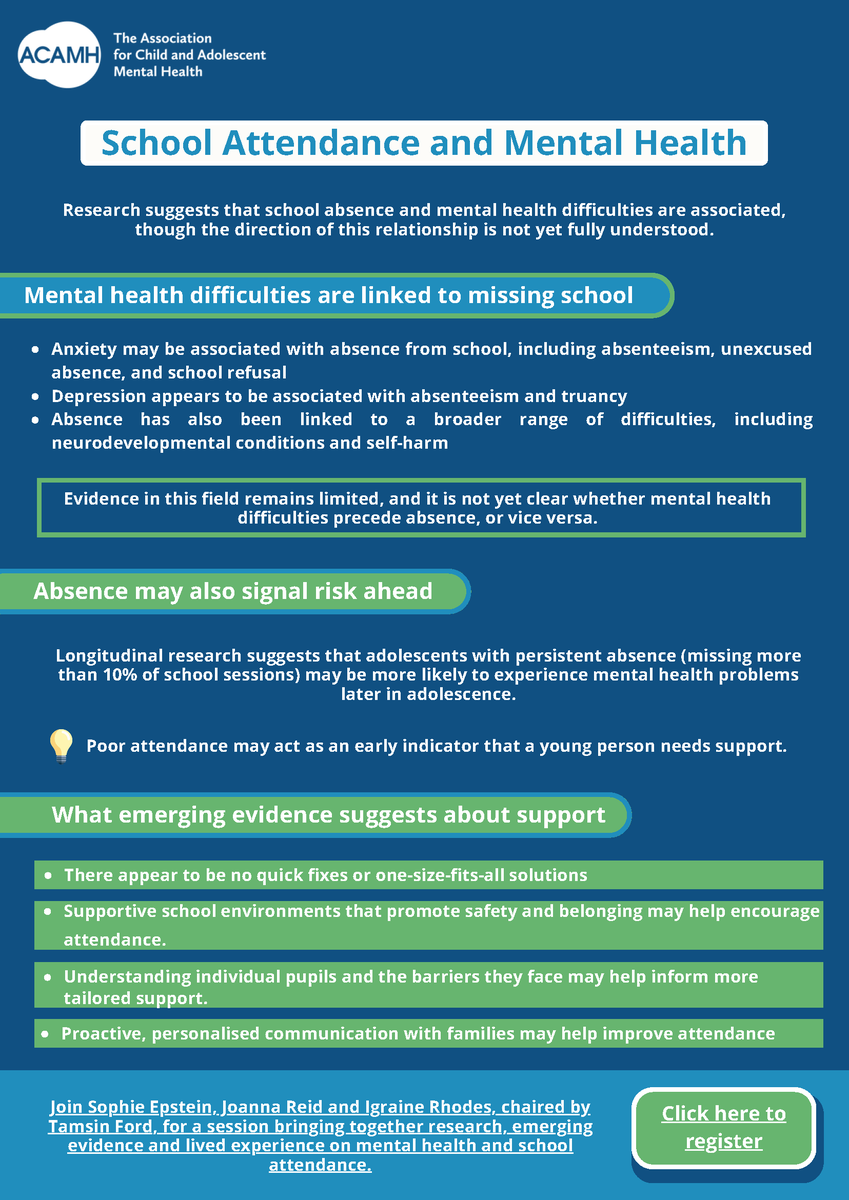
Teachers. CAMHS professionals. Educational psychologists. School leaders.
If you're supporting young people struggling to attend school, this ACAMH Advanced Session led by Professor Tamsin Ford CBE is for you.
https://t.co/imQurD0JDx
#MentalHealth#SchoolAttendance
In this #OpenAccess@TheJCPP paper, Demetris Avraam et al. examined associations between early-life socioeconomic conditions and children's externalising and internalising problems and assessed whether early-life risk factors mediated these associations. https://t.co/Vs7AXnKY9Z
In this #OpenAccess@TheJCPPadvances paper, Sophie Epstein et al. tested the longitudinal relationship between school absence and later mental health amongst secondary school children in the UK, utilising a data linkage comprising over 40,000 pupils.
Full paper 👉 https://t.co/HFmbTy1vDi .
Can small changes in how #teachers interact with pupils make a difference for children with #ADHD?
Missed the webinar? Explore our Reflections from the Room blog for key takeaways. https://t.co/HvPsqat0U2
Selecting treatment thoughtfully, addressing adverse effects and maintaining developmental and functional goals are central to individual care. Discover more about evidence-informed #psychosis management in our latest blog. https://t.co/2OSiNwboSo
Why are more adolescents self-diagnosing #mentalhealth conditions? 🎧 Explore the role of TikTok, online communities and identity in this episode of #MindtheKids with @ClaraGFaria1 and Katie Cunningham-Rowe. https://t.co/yyRPbUZYpZ
What is the most effective treatment for self-harm in adolescents?
Find out more FAQs on "Understanding and Responding to Self-Harm: Latest Evidence and Clinical Practice" at https://t.co/thR9ai80B8
Evaluate the evidence for an association between #autism and #eatingdisorders, including prevalence, diagnostic challenges, and differences across eating disorder types. with @WillClinPsy in this #ACAMHLearn talk. https://t.co/fXJ85v8YQQ
Weight concerns don’t always align with BMI. So, who gets the support they need — and who gets left behind? 🎙️ On #MindtheKids, @ClaraGFaria1 & Dr Melissa Little explore adolescent body image, weight-related distress and gaps in care.
Listen now! https://t.co/OF969RomW8
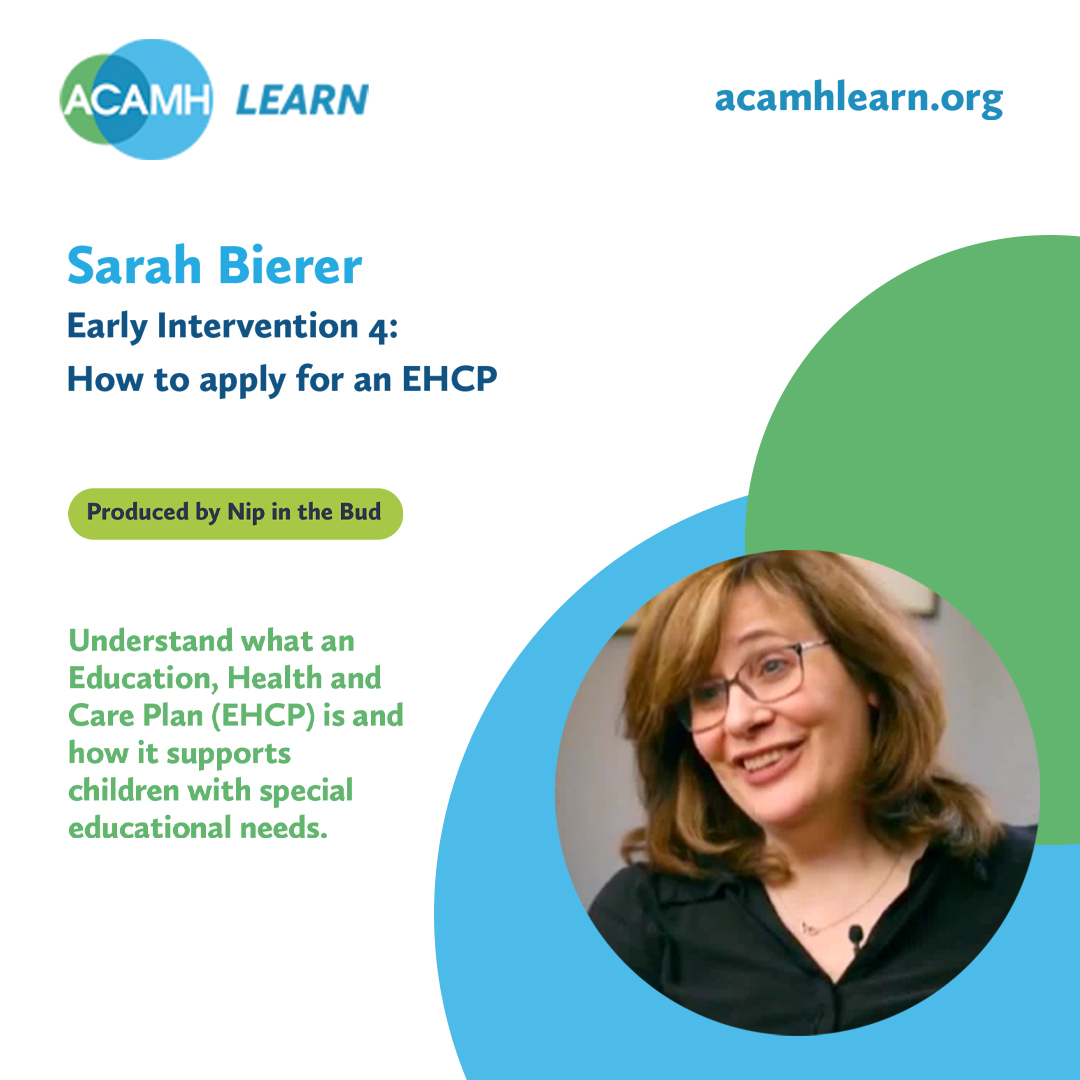
Understand what an Education, Health and Care Plan (EHCP) is and how it supports children with special educational needs with this 8-min @NipintheBudFilm film, part 4 of a four-part Early Intervention series, featuring insights from a SENCo and an Educational Psychologist. https://t.co/E1EBnn62eU
What stops clinicians from going beyond the safety plan? Read our Reflections from the Room blog, looking at Prof. David Jobes' talk at our #ACEs conference, to explore the challenges of suicide care and why understanding a person’s distress matters. https://t.co/z1NfPgCGf3
Why does early assessment matter? Recognising self-injury early and understanding the developmental and behavioural factors involved is vital. Explore the evidence in our blog on self-injury in CYP with learning disabilities. https://t.co/9FgswH0uA4
🚬 How might #smoking affect #mentalhealth?
Discover the main biological mechanisms that might explain causal effects of smoking on mental health, including (neuro-)inflammation, oxidative stress and nicotine binding.
Watch the talk: https://t.co/Zbgc907jsg
📚 Want to strengthen your approach to adolescent assessment?
Join ACAMH as we welcome Dr Saul Hillman to explore the Adolescent Story Stem Profile (ASSP), its evidence base and practical clinical applications.
📅 24 November 2026 https://t.co/NB9LRjufjG
Could one word be getting in the way of effective care?
Dr. Rachel Bryant-Waugh examines the widespread use of the term "complex" and asks whether it sometimes limits access to support rather than improving understanding.
https://t.co/luvoUM0jFt