The Australian Centre for Space Engineering Research (ACSER) at UNSW aims to develop local space capabilities through research & education.
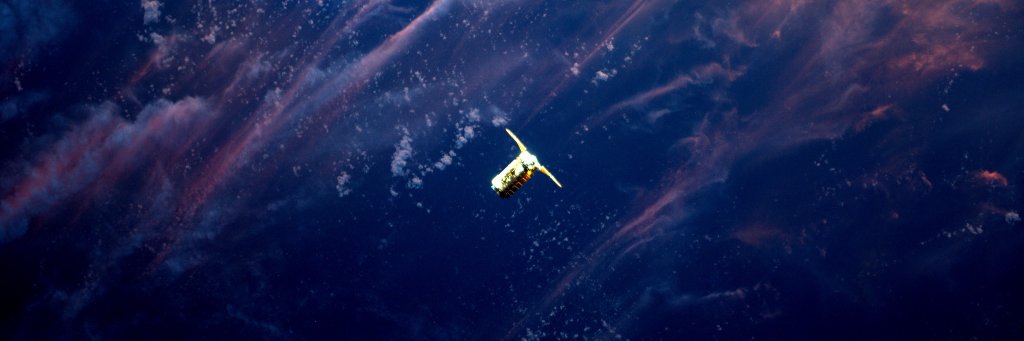
Image: ESA/NASA
Such amazing news - the worlds biggest and most exciting space event will be here in Sydney in 2025! So much to do, so little time! We look forward to welcoming the world's best, brightest and most forward thinking, optimistic minds to our sunny shores!
The world's biggest space event is coming to Sydney!
Thank you to the @iafastro. We look forward to working together and saying G’day to the global space sector for #IAC in 2025.
This achievement wouldn't have been possible without @spaceindustryoz, @InvestmentNSW and @BESydney
Great to see ACSER's own Stuart Bartlett catching up with our old friends Florian & Benny from @UniBremen! Looking forward to more collaborations with these guys very soon! #IACParis2022
Profs Dempster and Saydam and the world's largest dirty thermal vacuum chamber at KICT Korea. KICT and UNSW/ACSER are collaborating on characterising lunar regolith.
@EamonnGlennon presented progress on @ACSERUNSW 's ISI project to enhance the Kea GPS receiver. Benchtop prototype can now navigate with Galileo E1, and track and decode GPS L5 data. Hardware design needs a re-spin.
#Cubesat2022
Ignatius Rivaldi from @ACSERUNSW has been working on adapting the Kea GPS receivers so that they can be used for performing GPS reflectometry on CUAVA-2.
Received SNR has been improved, power consumption lowered, EMI reduced and usability improved.
#Cubesat2022
Maquarie University's Dr Ediz Cetin has been working on making cubesats reliable using reconfigurable logic. They have a product called TLegUp that converts high level C into a triplicated FPGA implementation.
#Cubesat2022
Kanyini incorporates a HyperScout 2 hyperspectral scanner operating in a 'push broom' configuration, says Nadia Sarunic from the @SmartSatCRC
It will perform on-board processing to detect bushfires.
#Cubesat2022
A charge exchange thruster (CXT) is a novel thruster technology that will be tested on CUAVA-2.
Prof Iver Cairns presents on behalf of Richard Bowde-Reid and Joe Khachan, who were unable to attend.
A special magnetically levitated thrust balance was built to test it
#Cubesat2022
Shagun Aggawal is an @ACSERUNSW PhD candidate working on an electrodynamic tether to be used to de-orbit CUAVA-2. The @SaberAstro DragEN tether is
between 30 - 50 m in length. Correct deployment is critical if it is to be successful.
#Cubesat2022
Zihao Wang is a Sydney University PhD candidate who has designed a novel #magnetorquer that will be flown on the CUAVA-2 cubesat. Very low power, very high torque and rapid detumbling are features of this design.
#Cubesat2022
Fitting a multispectral imager into CUAVA-2 is a challenge. Dr Chris Betters from Sydney University explains at #Cubesat2022 how a commercial camera lens was repurposed to achieve this.
CROSS is a star-tracker that will be flown on CUAVA-2. University of Sydney PhD candidate Joshua Critchley-Marrows explains at #Cubesat2022 how star-trackers are specialised payloads with limited global suppliers. There are only 2 global suppliers of the required coatings .
Interesting payloads scheduled for launch on the CUAVA-2 cubesat being launched by @Arc_Cuava, including the EDDI payload that will be used to detect plasma in space. Mr Quinn Musulin explains:
#Cubesat2022
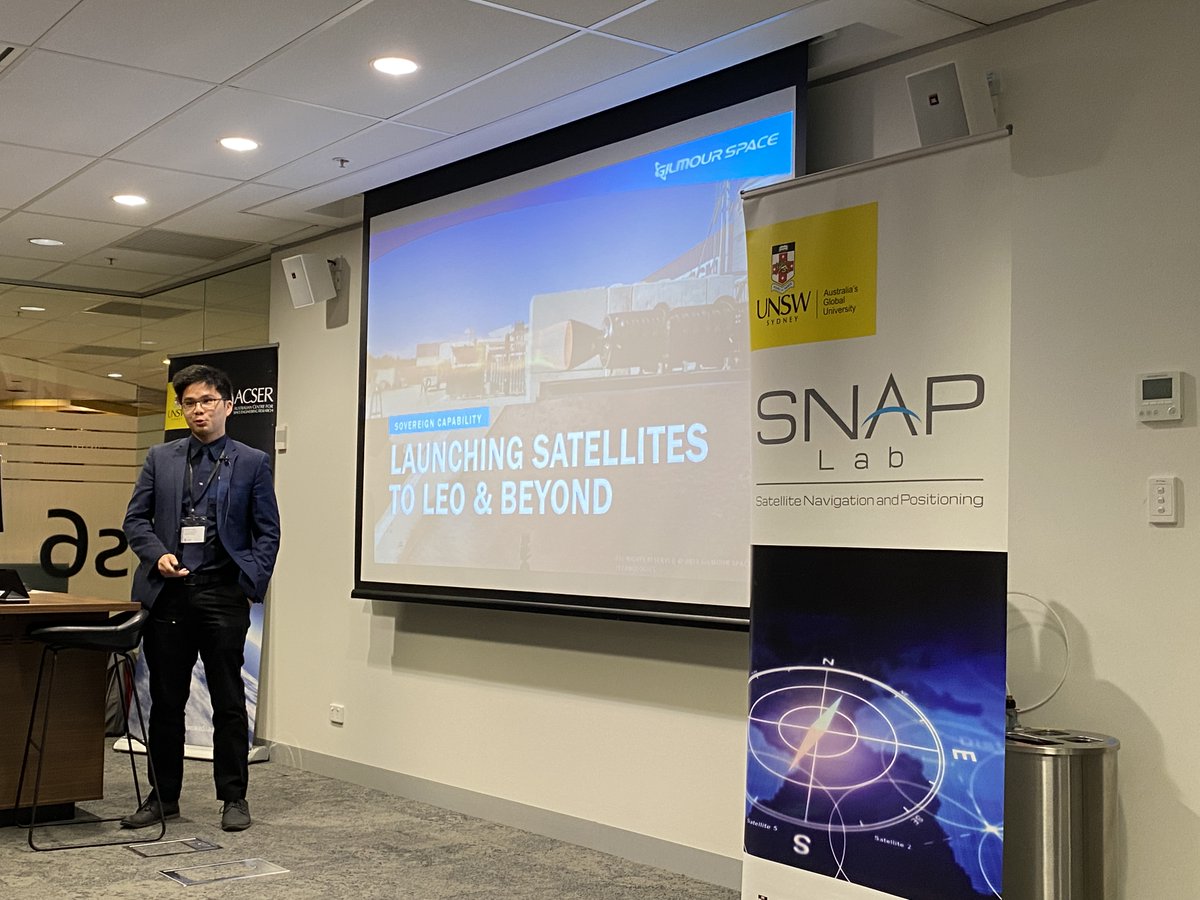
@GilmourSpace is Australia's largest VC backed space company. Adrian Yang from Gilmour is presenting an update on Gilmour's progress at #Cubesat2022.
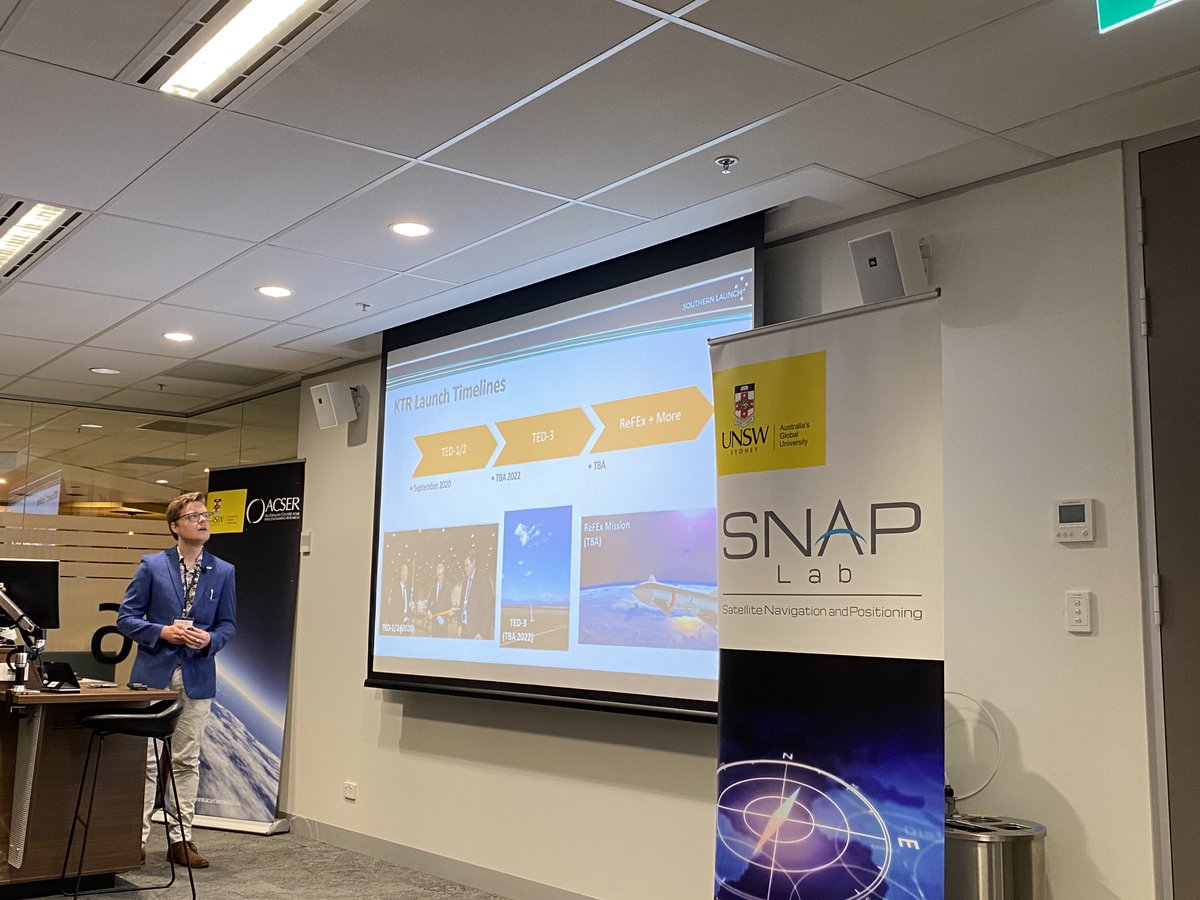
Looking forward to launches later this year.