“Go back” implies that what South Africans did at some point in the past actually worked.
The reality is that Somalis and Pakistanis don’t dominate the spaza shop industry because they’re just more determined.
They dominate because they have far more structural advantages than any individual owner can ever hope for.
For instance, while individual South African shopkeepers buy from local wholesalers as end-users, immigrants create dense networks of dozens, even hundreds of operators integrated into a supply chain.
These networks go way beyond just buying together; they import together or buy directly from the manufacturer’s factory gate.
So, instead of hiring a bakkie to go buy individual stock, they share the high cost of fuel, big trucks, and security.
To them, the business is the network itself. This way, if one shop in a network is looted or burned, the broader collective provides the interest-free capital to restock and reopen immediately, while a local entrepreneur might have to take a high-interest bank loan or use a credit card.
There’s also the information network, where if bread is R1 cheaper in a town 50km away, the entire network knows instantly and organises to buy 2000 loaves at a wholesale discount, while the individual owner is stuck ordering 25 loaves at a 25% premium.
The competition is so one-sided that even the loudest anti-immigrant “patriots” still shop at Somali tuck shops.
More importantly, this dominance is not unique to South Africa, Pakistanis and Somali shop operators outcompete individual operators in every country they appear in, not just SA.
There’s only one way for South Africans to compete: Cooperatives and buying clubs. Otherwise, the idea of ownership without a cooperative network is just a recipe for failure, and the evidence is all around us.
Lastly, imploring South Africans to “go back” assumes that the past was a golden era that was interrupted by immigrants, when the reality is that township retail economics was always hand-to-mouth.
The spaza shop was never a reliable path to a good income. It was an Apartheid survival mechanism when Black South Africans were legally excluded from formal commerce.
There’s literally nothing to go back to.
If South Africa had capitulated to Israel from the outset or dropped our case against them, guess what? We'd still be paying for the consequences of their war out of our pockets. Even countries that have supported Israel are suffering. You know who isn't suffering though?
While countries that privatised services are now attempting to renationalise these failed services, SA wants to have its own opportunity at failing. Just to not feel left out.
Dear Mister president @CyrilRamaphosa it would be great if Glencore, the company that your brother in law is involved with stops selling coal to Israel.
When it comes to the security of electricity supply, a lot more countries are becoming pragmatic.
Japan to allow more coal-fired power to cope with energy shock - The Japan Times https://t.co/AaufiXuSM7
🚨🚨🚨Breaking:
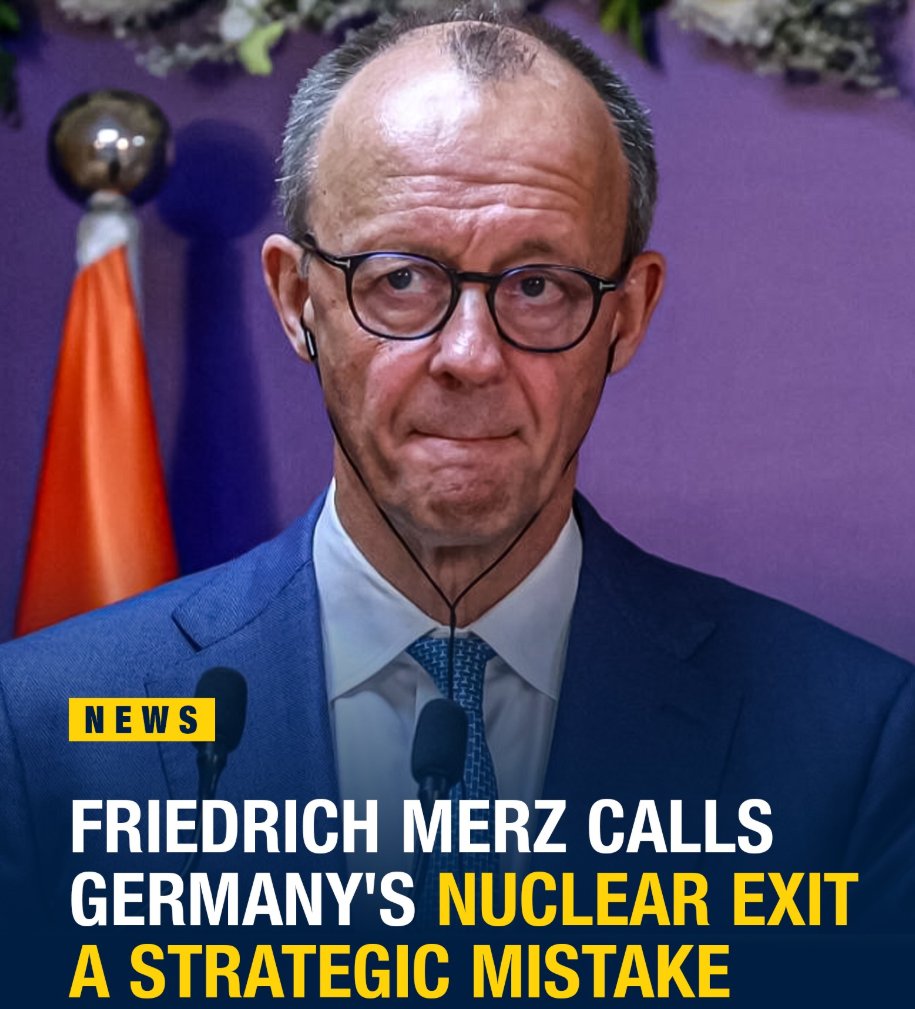
The German government to build 15 new nuclear power plants and lift sanctions immediately on all Russian oil and natural gas.
German Chancellor Merz has also agreed to pay to rebuild the Nord Stream pipeline to Russia.
All wind and solar projects have been cancelled.
"It's time for Germany to open our energy economy. The best way to do this is via free markets, lowering taxes and regulations".
For Immediate Release.
Berlin, April 1 2026.
My question to the Mayor was simple:
Why has it taken over 8 years to consult on a draft affordable & inclusionary housing policy for Cape Town while selling land to private developers?
5 minute response including being called Stalinists for asking about inclusionary housing
No country hands over its national communications infrastructure because someone is rich, influential, or promises speed. The US wouldn’t. The EU wouldn’t. Neither would China, India, or Brazil.
South Africa’s connectivity challenges are real, but pretending they are caused by regulation rather than decades of inequality, infrastructure gaps, and market concentration is intellectually lazy.