We have recruited our 10,000th participant to ADDRESS-2! Thank you to all our participants, our funders @DUK_research@BreakthroughT1D, the hard work of all the research nurses and the support from the @NIHR CRN.
We're now taking a look at machine learning with Dr Bobbie-Jo Webb-Robertson. This is a form of artificial intelligence used to analyse data.
In biology, we look for features of interest. Machine learning helps us find those features faster, with more accuracy.
#IDS2018
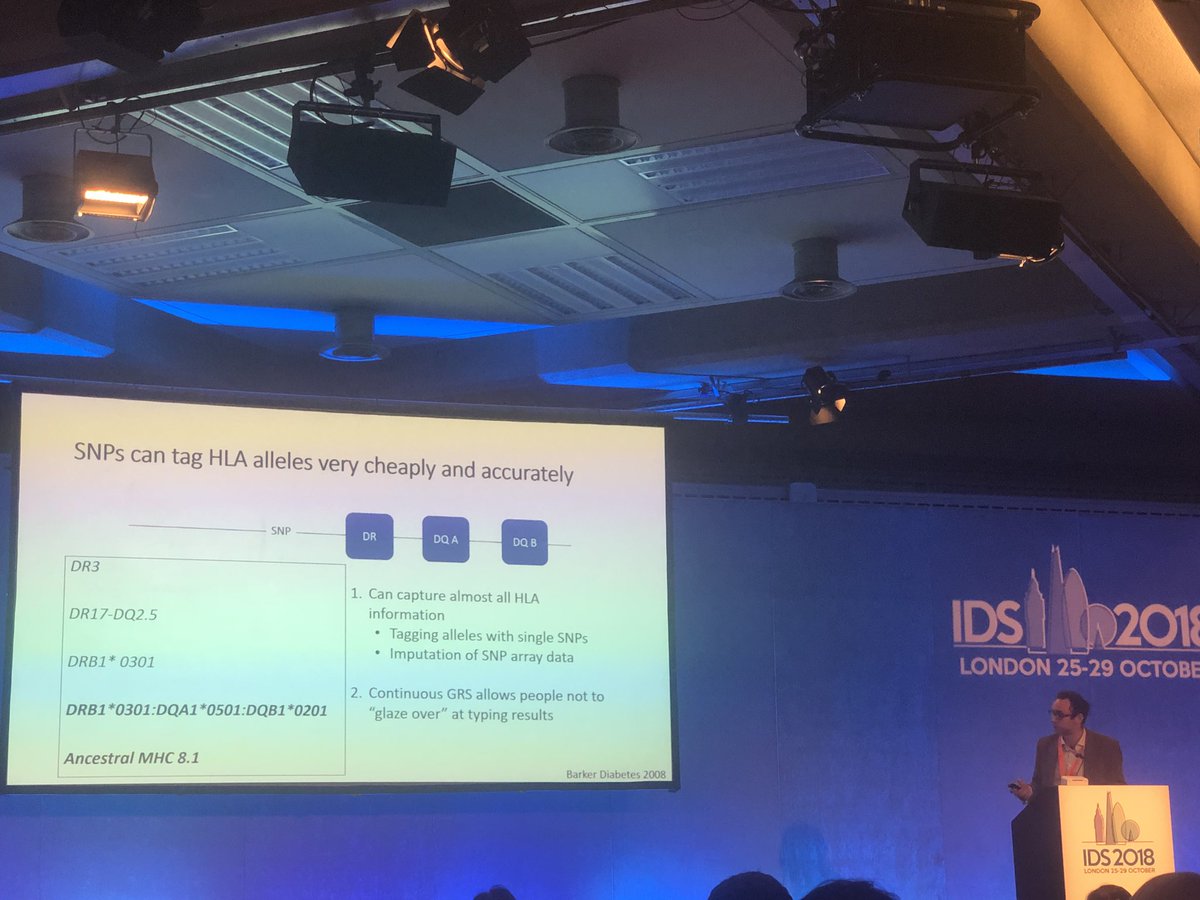
@RAOram gives a fantastic talk explaining applications of a #T1D genetic risk score 👏🏽👏🏽👏🏽
Looks to be a powerful tool for stratification
Can’t wait to use it in the MY DIABETES cohort to assess validity in other ethnic groups!
#IDS2018
Dr Oram points out that the genetic language of #Type1diabetes is pretty confusing, and it's easy to 'tune out'. But with new, cheap technologies, we can turn this confusing language into a genetic risk score.
The score discriminates Type 1 diabetes from Type 2.
#IDS2018
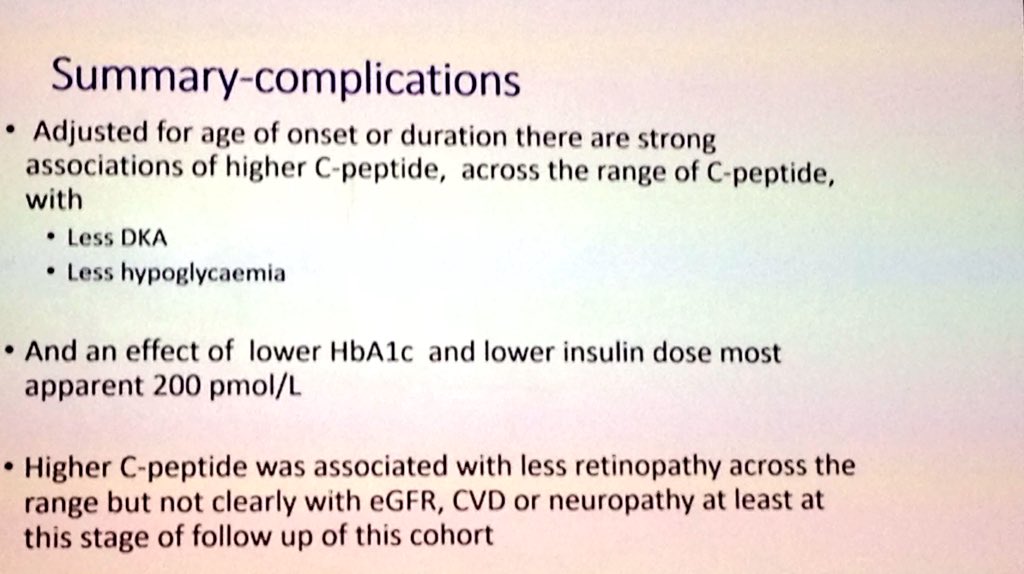
Looking for patterns between c-peptide & complications, signs that:
high c-peptide levels appear to be linked to ⬇️ HbA1c, ⬇️ insulin doses, ⬇️ risk of DKA, ⬇️ risk of hypos & ⬇️ risk of retinopathy. No clear effects on neuropathy, CVD or kidney disease yet.
#IDS2018
Median age of onset of type 1 diabetes in the UK is now 18yrs of age, so Scottish Diabetes Research Network type 1 diabetes bioresource DOES NOT restrict itself to collecting data on cases of type 1 diabetes under age 30 unlike many other biobanks and #T1D cohorts #IDS2018
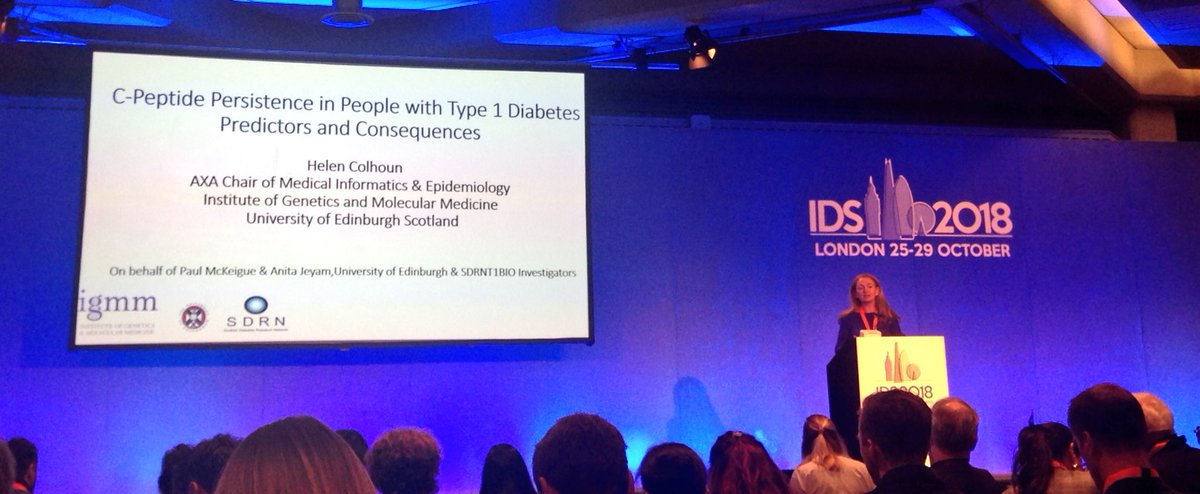
Looking forward to the next series of Big Data talks. Starting with Helen Colhoun talking about C-peptide in a large population of samples of #T1D from the Scottish Diabetes Research Network Type 1 Bioresource #IDS2018
David Wraith highlights some differences in approach to Bart Roep and suggests that therapy for autoimmune disease may not be a ‘one and done’ induction of tolerance but a repeat ‘reminder’ to regulate immune response #IDS2018
Dsence trial tried to see if these ideas would work in clinic. No mouse work before going to people as they’d be a useless model in this case. Trial participants being prepared to take a risk here were vital! #IDS2018
Looking forward to the debate on:
The Achilles Heel of #T1D is....
1) innate immune response
2) CD8 t-cells
3) B cells
4) Viruses
5) T-reg
Let the session and voting begin! #IDS2018
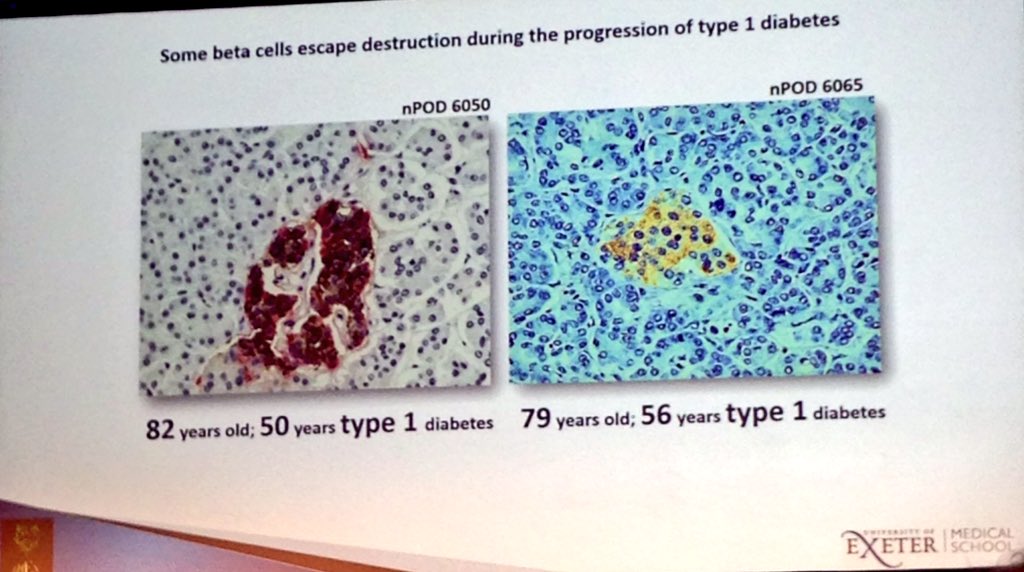
Amazing talk by @ngmorgan1 - so clear and very interesting. Understanding more about why come beta cells in the pancreas escape destruction during the process of #type1diabetes#IDS2018
Fascinating. Proportion of remaining islets (which contain beta cells) in pancreas sections from people with type 1. We typically say type 1 presents when people have under the red line left. But we can see there’s a huge range in the aggressiveness of type 1 #IDS2018
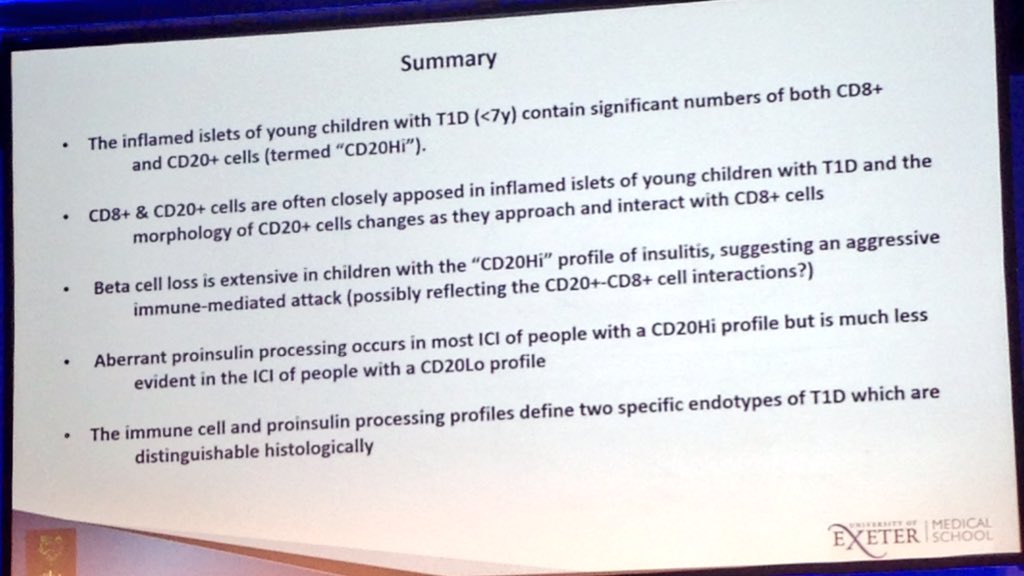
They’ve worked out there appears to be two distinct immune responses depending on the age you’re diagnosed, characterised by differences in the types of immune cells you find in islets #IDS2018
Have I got a treat for you! I’ve managed to grab a few minutes of our @JDRFUK researchers’ time while they’re here. Watch below for Dr Kerry McLaughlin ⬇️⬇️ #IDS2018
What shape is risk? Appears to go up and then down for those who go on to develop type 1. But appears to go slowly up for those who don't. So things are not that straightforward #IDS2018
This is fascinating from Eoin McKinney, looking at which genes are transcribed (active) as people in TEDDY move to antibody positivity and then on to clinica diagnosis. Looks as if this may not be a straightforward linear process #IDS2018