We're proud to join the global celebration of #WorldPatientSafetyDay by illuminating some of our buildings 🧡
Tonight, Bristol Royal Hospital for Children & the BRI will be lit up as a visible sign of our commitment.
Thanks to @thegrandappeal for lighting up Lollipop Be-Bop!
Collaboration & co-creation are not the same thing.
Collaboration means working with others - who often have their own goals & agendas. These goals have to be matched & if they're not, one person’s gain can be another person’s loss.
Co-creation is about jointly creating something new with input from everyone involved. If we want to do things differently in future, collaboration isn't enough. People need to be near the creation process (co-creation) to work in creative ways.
Research from Google shows that to co-create we need to:
- have a shared vision
- think in questions instead of problems & solutions,
- work in ways that level the playing field so the loudest voices don’t get the most attention,
- create psychological safety for people to open up
- offer good guidance/coaching to facilitate the process in a way that manifests the values of co-creation
- make stuff & not just talk:
https://t.co/O6sYd4n0mM. By @dhambeukers.
I've been working with @Goranhenriks & hundreds of leaders of change to identify the enabling factors for systemic, profound change (at a deeper level than incremental improvement). One of the nine interrelated themes that has emerged is "leading people through transitions in situations of uncertainty". So it was great to see this focus pop up in a new article in @HarvardBiz. The authors say that to support people to transition in change in uncertain times we need to:
1) Ask big questions ("What do you value?"; "Where do we stand"; "How can we move ahead?")
2) Focus on the fundamentals (the things that stay the same, things that need our attention & where we can make a tangible difference).
https://t.co/NXJy28Fmud. Via @JHoward_Grenvil
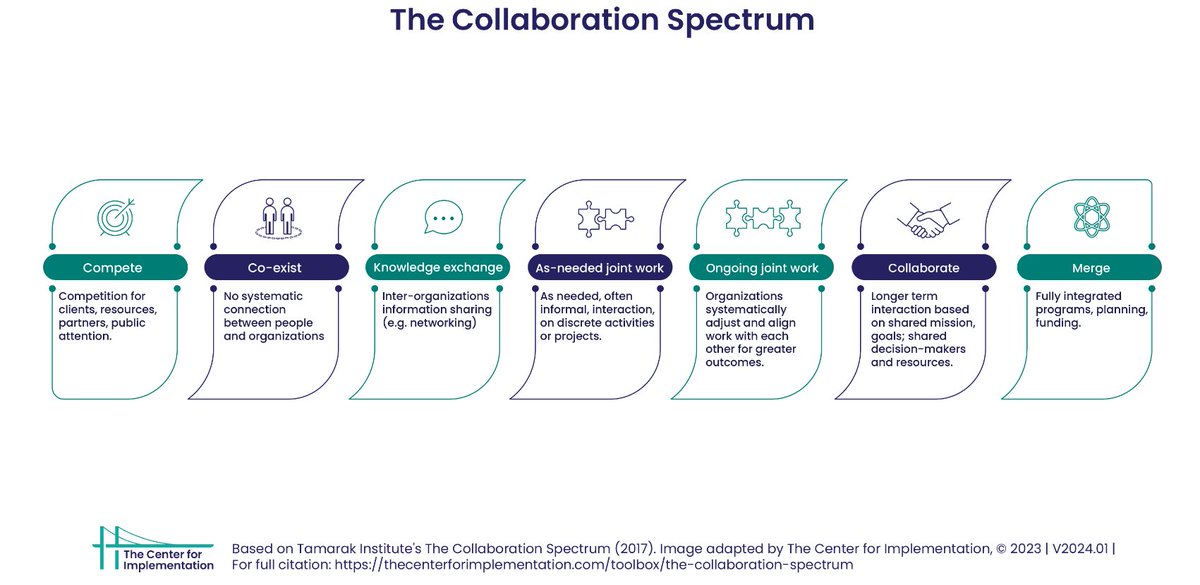
When we're action planning for change, we need to think about relationships & connections, not just about changing processes & pathways. The "Collaboration Spectrum" is a useful tool for discussing where we are now in our relationship with key partners & where we want/need to be in the future to deliver our improvements. We can use it for thinking about other teams in our organisation or other partners in our system: https://t.co/rDfRsp0CZx. Thank you @TCI_ca
Loneliness at work has become an epidemic, leading to workplace stress, people being absent & leaving their jobs. New research has highlighted multiple myths that lead to many leaders making the workplace loneliness situation worse. Myths:
1) Loneliness can be solved by coming back to the office
2) Teams will solve loneliness
3) Lonely people are needier socially than others at work
4) Loneliness is a personal problem, not an organisational problem.
Practical actions that leaders can take to reduce work loneliness include measuring loneliness, designing slack in workflows, creating a culture of connection, building socialising into the rhythm of work & maximising each work mode (remote or f2f) for connection.
https://t.co/eVFBcpoUxD. Via @HarvardBiz
In this open access paper we look at how we can move beyond the AI sales pitch by empowering clinicians to ask the ri... https://t.co/Hv6REfs1kO @IHabli@CfAA_York
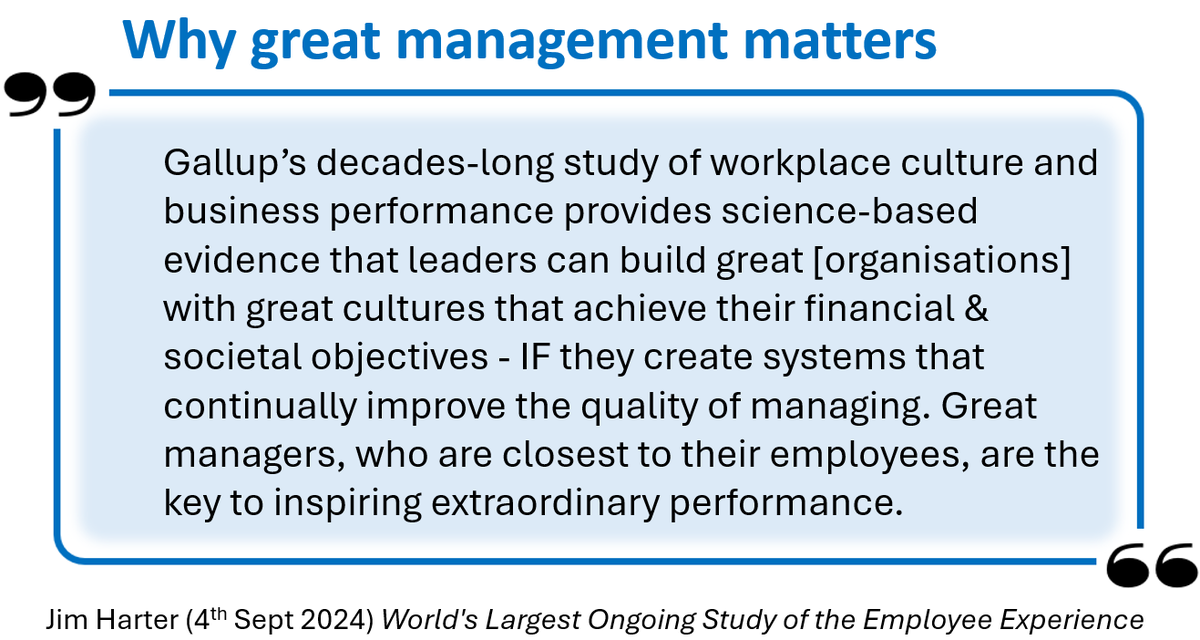
See the importance of the quality of management to organisational performance set out in stark terms. The @Gallup employee engagement meta-analysis is the world's largest ongoing study of workforce experience, involving 183,806 business units & teams worldwide. Key findings include:
1. The variability in employee engagement within teams at a given organisation is nearly as great as the variability in employee engagement for teams across all organisations.
2. The differentiating factor in this variability is the quality of management, which explains 70% of the variance in team engagement.
3. Team employee engagement consistently relates to performance outcomes such as productivity, retention, safety and delivery.
https://t.co/qTHuhPiYJ5. Via Debra Barrath.
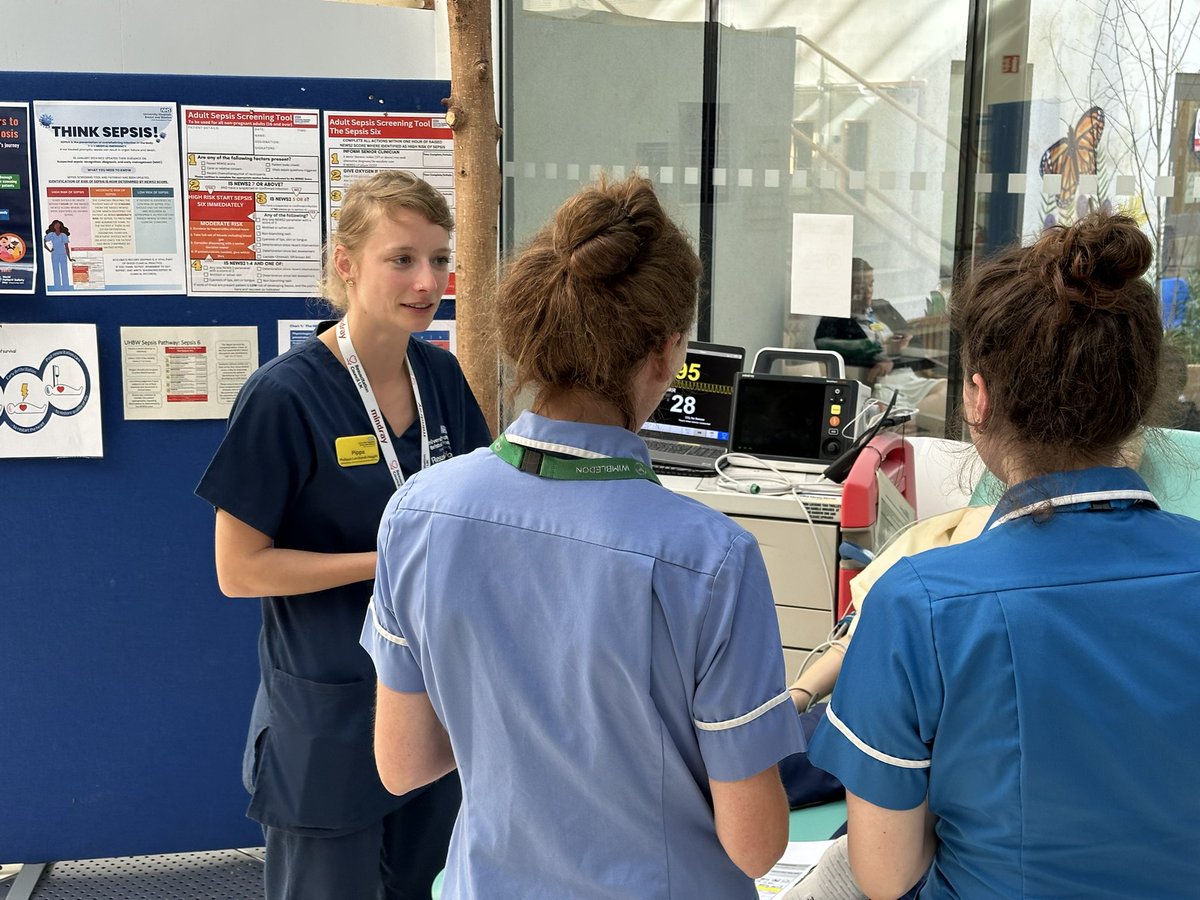
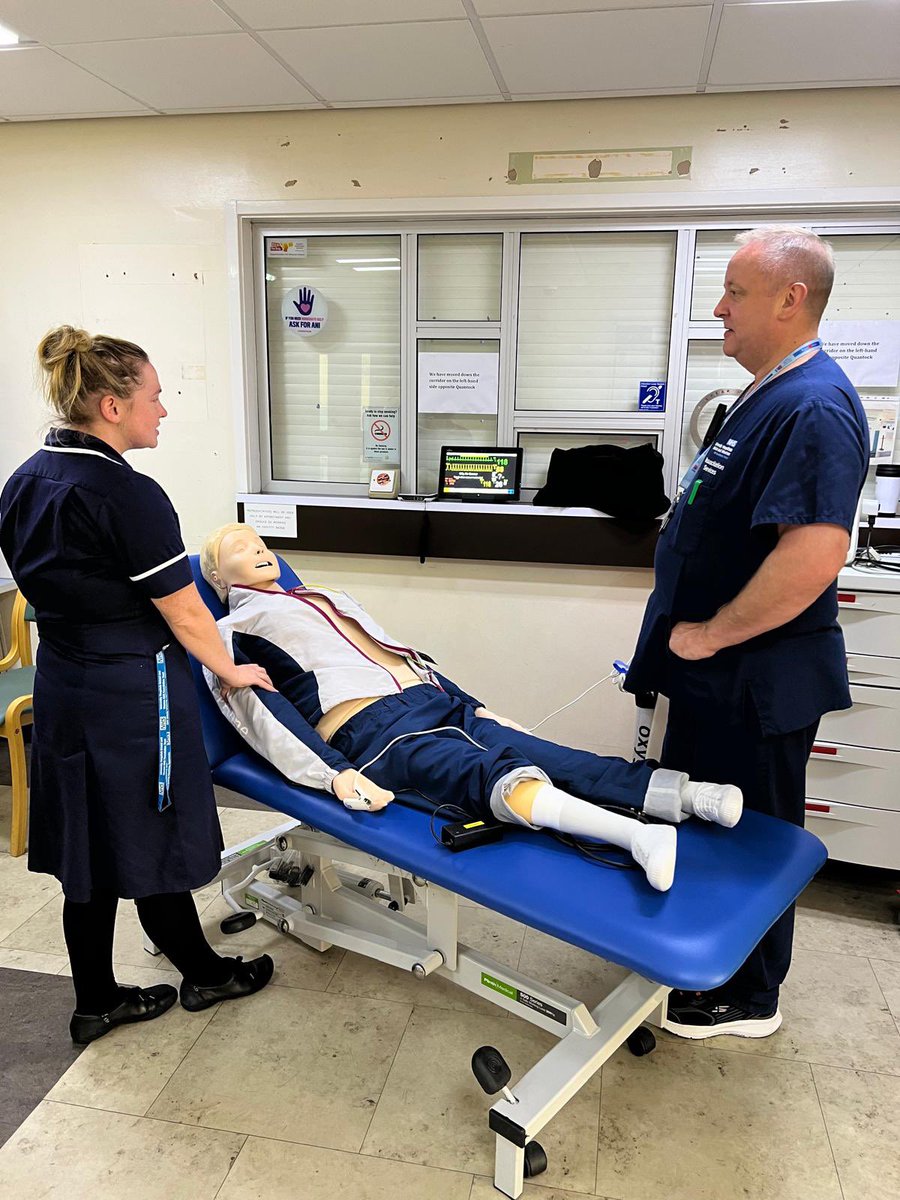
A great day celebrating World Patient Safety day (tomorrow). Team Resus delivering A to E workshops on our Weston and Bristol sites
Also covering the new sepsis pathway at UHBW. Come and join us again tomorrow. #WorldPatientSafetyDay@uhbwNHS
Culture is a patient safety issue.
Working environments effect quality and safety; they impact on staffing, on retention, and ways of working.
This World Patient Safety Day, speak up for safety.
#SpeakUpforSafety#WorldPatientSafetyDay#Culture
Today is #WorldPatientSafetyDay!
In a new blog on the hub, we set out the need for a transformation in our approach to patient safety and consider this year’s theme, ‘Improving diagnosis for patient safety’ https://t.co/X4psaqhuFC #WorldPatientSafetyDay2024#WPSD2024#WPSD
Today is #WorldPatientSafetyDay. This year's theme is #ImprovingDiagnosis.
We want to reduce delayed, missed, and incorrect diagnoses.
Our principles for better patient safety, launching in October, could help address this issue.
What does the evidence tells us about the role of human factors and ergonomics in healthcare, and why the approaches haven’t been more widely adopted? Watch @humanintheloop@KenCatchpole @SusannaStanford and @MarkSujan discuss: https://t.co/UsVcV3sgNB
Sepsis survivors can experience long-term problems which include physical, emotional and social issues. THIS Institute is working with @stopsepsisnow to learn from experiences of sepsis survivors, carers & healthcare professionals.
https://t.co/3cqNPfML3B #WorldSepsisDay
Are you looking for a senior nurse position in Bristol.... how about Matron for Acute and Internal Medicine @uhbw. I can honestly say this it's been a honour to be matron in these amazing teams, but time to move on. Please feel free to get in touch. 😃
https://t.co/njR4Vte6Og
An @NHSEngland report on "NHS Productivity" in May 2024 highlights the growing % of NHS staff who are new/inexperienced as a barrier to productivity & the need to get them up the learning curve faster.
New research suggests one catalyst for learning that is often lacking at this critical early career stage: psychological safety (PS). PS is needed for people to learn, collaborate & perform at work. People lose their sense of PS when they start a new job & it can take years to recover. However, departments with high PS reduce that decline & facilitate recovery: https://t.co/TmDZCBzvLN. By @DerrickBransby@MichaelaJune & @AmyCEdmondson.