"A socially totalizing, surveilling, information-monopolizing, biopolitical, and martial state disguised in the feel-good casing of liberal democracy is becoming the standard regime in the West."
@ArtaMoeini writes in AGON.
Still Free. Subscribe today.
https://t.co/YzBRZAWzDB
Genuinely amazing the delusional cope of the modern online right, who seems to think Uncle Sam backs left wing movements in Latin America (?????) and not right wing ones that happily open up their state to auction off their sovereignty to American finance and corporations.
Welcome to Fortress Iran.
This is the most informative analysis you'll read anywhere on how and why Mojtaba Khamenei is reshuffling the Iranian regime's security apparatus.
By @ArtaMoeini for UnHerd.
https://t.co/QFjgBjoduM
🚨 ✍️ 🇮🇷 🇺🇸
Mojtaba Khamenei's new appointments at the highest levels of Iran's national security apparatus suggest that Iran's new supreme leader and his inner circle are preparing to unveil the third iteration of the Islamic Republic.
With "security-firster" like Mohsen Rezaei at the helm, Iran could become an autarkic, post-revolutionary state: an anti-neoliberal fortress that swaps religious zeal for the fierce pursuit of militarized sovereignty and maximum deterrence. The result is a security state that is simultaneously insular and regional: more authoritarian and inward-looking, but unyielding in its red lines and strategically aggressive in defending its bounded sphere of interest in a multipolar, post-American Middle East.
Paradoxically, though, this emerging Iran presents Donald Trump with a unique, Nixonian opportunity to withdraw from the Middle East and leave it to the region’s key powers — namely the ME5 ( 🇹🇷 🇸🇦 🇪🇬 🇵🇰 🇮🇷) — to handle their own security as a region.
...
You can read my full analysis of Mojtaba's battle to tame Iran's deep state and remake the Islamic Republic in his image — exploring the internal rivalries between Iran's conservative technocrats & Machiavellian autarkists, and what this all means for future US policy in the Middle East — @unherd.
Link follows 👇
Kagan talking here about how he isn't a neocon but rather a liberal is worth noting. He isn't wrong really if you acknowledge that neoconservativism is but one bluntly honest faction of liberal internationalism in general. And the blob's problem is the assumptions of liberalism.
Iran prepared for this war for decades, harnessing its geography and its local interests. America, whose strategic vision is diluted by the quest for global hegemony, has thinly spread tripwire bases and alliance capture. My latest for @Diplomacy_Peace :
https://t.co/DPmWJi68Ph
This is strategically sound, but it exposes the core flaw in the US's hegemonic approach to non-proliferation: the presumption that Washington is the sole arbiter of who gets nuclear technology, when, and on what terms.
The UAE remains permanently dependent on foreign fuel imports. Saudi Arabia’s proposed deal allows domestic enrichment, yet forfeits control of the fuel cycle to US companies.
Tehran sees this model as a strategic trap — a bitter echo of the 20th century, when Iran’s oil production remained under foreign control until PM Mossadegh’s intervention.
Accepting the US civil nuclear framework thus means outsourcing energy security, placing a permanent cap on domestic technological capabilities, and surrendering Iran's honor and strategic autonomy.
So at its core, Iran’s refusal isn't just about nuclear policy — it’s about sovereignty. And this is precisely what Trump can't fathom, because he views Iran as just another Gulf state he can bribe or intimidate.
Great piece!
“Stripped of diplomatic euphemisms like ‘strategic alliances’ and ‘security partnerships’, most Persian Gulf monarchies in the Gulf Cooperation Council (GCC) operate less as sovereign states than as hyper-wealthy protectorates... geopolitical hostages in the global American empire.
Their wealth did not buy them sovereign control over their mercenary protector. Instead, the US imperium weaponized the Gulf states’ dependency on the security umbrella to capture their foreign policy, shape their energy decisions, and hold their sovereign wealth hostage. The GCC’s desire for a security guarantor against historical regional hegemons, such as Iran and Turkey, ended up financing a more menacing global imperial architecture—one that constrains these states more than it protects them.
The region’s geography and the realities of asymmetric conflicts shatter the illusion of a localized Pax Americana. Compared to Iran, the GCC states possess virtually no strategic depth. Their critical infrastructure and economic lifelines—desalination plants, hydrocarbon processing facilities, ports, air bases, cloud computing centers, and financial hubs—are glass houses mere minutes away from Iranian launchpads.
Such protectorates do not possess meaningful strategic choices. To claim strategic autonomy without sovereign capacity for enforcement amounts to state suicide, proving yet again how capital isn’t power, and sovereignty can’t be purchased from abroad.
In the brutal calculus of geopolitics, a leased shield or a hired gun is merely a deferred casualty. Trapped within a paradox of inverted agency, the GCC states maintain a gilded fantasy of ownership and control, desperate to prolong a fading post-Cold War status quo. In truth, they are hyper-wealthy tenants paying exorbitant ‘security’ rent on land they do not truly control—sacrificing genuine sovereignty for a dream of self-aggrandizement that ignores both history and the structural balance of power in the Persian Gulf.
And when the geopolitical architecture inevitably catches fire, the imperial overlord will never burn itself to save its vassals”.
Read the whole piece: https://t.co/ZIUZAEh8C1
The GCC’s geopolitical model of overdependence and outsourced deterrence has devolved into an imperial protection racket disguised as a foreign security umbrella.
Sovereignty isn't something to be borrowed or purchased from abroad.
AGON's new editorial.
Amid escalation in the Persian Gulf due to the Iran war, sovereignty is no longer merely theoretical. It's an existential imperative that shapes the battlefield. States that attempt to lease their protection discover—too late—that survival can't be subcontracted.
New @AGON_Mag.
We have a great new piece up at Agon today about how the Gulf states outsourced their sovereignty for short term profit only to lose big on all fronts when that gamble made them Iranian target practice.
Sovereignty, not petrodollars, is the ultimate currency in geopolitics.
The GCC’s geopolitical model of overdependence and outsourced deterrence has devolved into an imperial protection racket disguised as a foreign security umbrella.
Sovereignty isn't something to be borrowed or purchased from abroad.
AGON's new editorial.
https://t.co/reT1ShRZBs
The GCC’s geopolitical model of overdependence and outsourced deterrence has devolved into an imperial protection racket disguised as a foreign security umbrella.
Sovereignty isn't something to be borrowed or purchased from abroad.
AGON's new editorial.
The Iran war is a geopolitical watershed, completing a global rupture and signaling a shift to a "multi-world": a world (re)centered on regions, where civilizational-powers replace nation-states as principal nodes and actors.
Many mistakenly claim that these shifts herald a "multipolar world". But the correct term is multi-nodal. After all, even after this misconceived war against Iran, the United States and China will remain the world's only TWO great powers. And yet, in the wake of this war, our modern paradigm—our decidedly globalist, petty-nationalist, and liberal conceptions of the world—may finally dissolve.
Multipolarity is a realist concept political scientists use to describe the global balance of power as it is. In practice, however, the term is now used in imprecise, value-laden, and often normative ways. It has also inherited many of the same globalist biases that characterize International Relations as a modern academic field.
In truth, the world was never "one" or a single, unified system; that was an illusion concocted by our all-too-modern ideologies. The 'world' has always been comprised of a plurality of distinct regional spheres (a "pluriverse") with different geographies, cultural outlooks, and forms of life.
The collapse of the postwar order and its "rules" is therefore not a temporary crisis but a long-brewing reckoning with the contradictions of modernity itself.
Now the mirage of "oneness" may be fading away to reveal particularity and rootedness. Behind the deeper reality of the regional-civilisational shift at play lies an epochal transformation: not merely in the distribution of power but in the very conception of world order.
Link to full essay is below.
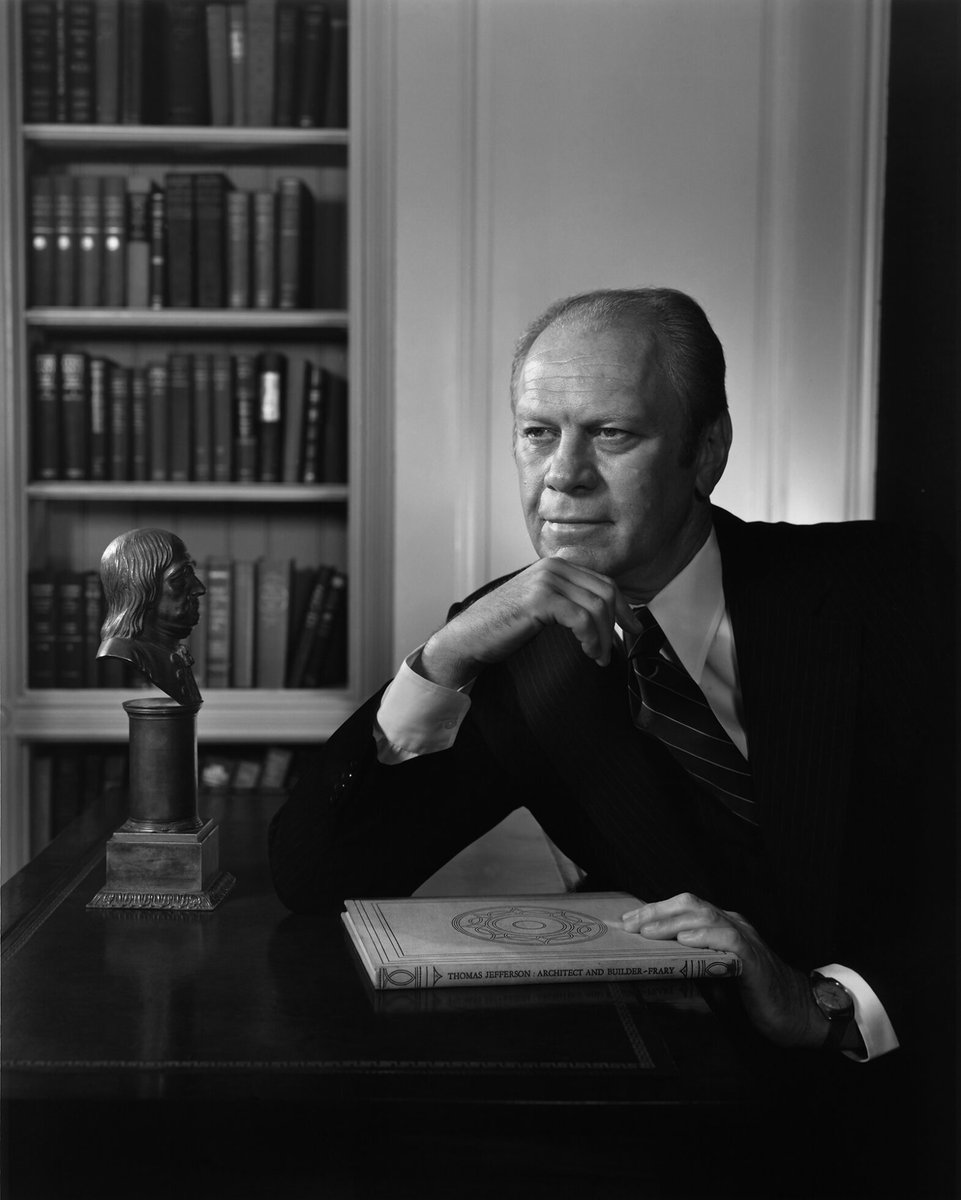
It was Gerald Ford's loss to Carter not this. Arguably Reagan's primary challenge to Ford before that.
The Carter Doctrine, neoliberal offshoring, and Reagan's war on infrastructure came soon after, laying the long term seeds of decline.