@American_Heart’s official account for meetings, science news, funding opportunities and membership. RTs/Follows not endorsements. Pump up your career, here.
This Scientific Statement summarizes the present state and future directions of exercise training for these high-risk populations, including functional deficits, responses to exercise training, modifications in training programs required to maximize safety and efficacy, and knowledge gaps in this field. https://t.co/dSgYYFWv1h
✍🏼 @JRGolbus@FrailtyMD
Although the health-related benefits of higher fitness and exercise training in both healthy individuals and patients with major comorbidities are widely recognized, participation in regular exercise and exercise training (ET) remains underutilized, especially in high-risk individuals. https://t.co/dSgYYFWv1h
Certain high-risk populations, such as those with frailty, stroke, spinal cord injury, rheumatologic conditions, genetic cardiomyopathies, or recipients of advanced heart failure therapies or cardiac implantable electronic devices, warrant special considerations with regard to ET.
✍🏼 @JRGolbus@FrailtyMD
📷 Supporting exercise among high-risk populations.
Science Central gives you fast access to guidelines and statements, journal articles, education, and more ➡️ organized around your focus areas so you can move from search to insight faster.
Find what matters faster.
Explore Science Central: https://t.co/uCH8QY019j
As we begin a new fiscal year at the @American_Heart, I’m grateful for the leadership of Lee Shapiro, our volunteer chairperson, and Dr. @manesh_patelMD, our new volunteer president. Their vision, expertise and deep commitment to our mission will help advance a world of longer, healthier lives.
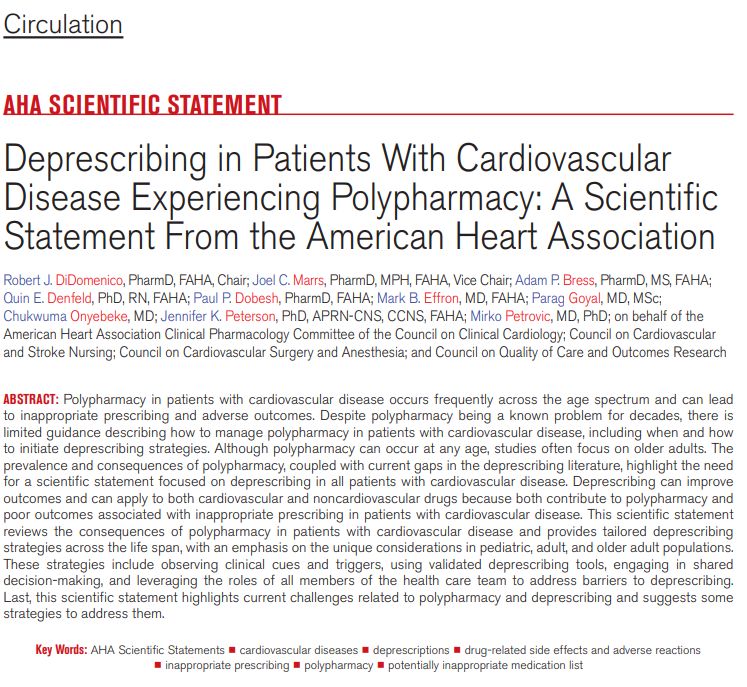
Polypharmacy is common in cardiovascular care because guideline-directed treatment often requires multiple medications across coexisting conditions and comorbidities, increasing medication burden. https://t.co/jj69ofMNlb
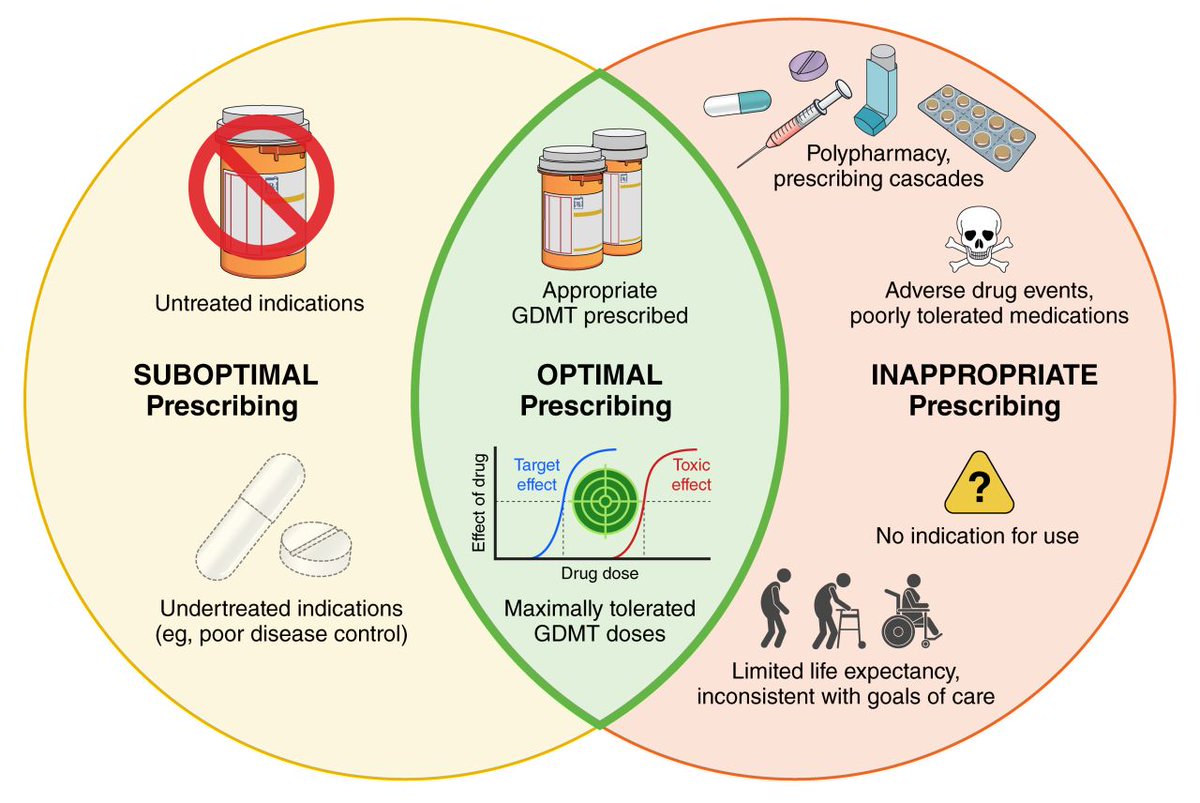
Deprescribing is a proactive, patient-centered strategy to reduce medication burden and can be effective not only after adverse drug events, but also when polypharmacy, prescribing cascades, poor adherence, or changing goals of care warrant reassessment.
Safe deprescribing requires a structured, multidisciplinary approach that uses systematic review tools, shared decision-making, careful tapering, and close follow-up to align treatment with patient goals while minimizing adverse events.
✍🏼 @robdeedo@adambress@quin_denfeld@PaulDobesh@ParagGoyalMD
Published today, Deprescribing in Patients with Cardiovascular (CV) Disease Experiencing Polypharmacy A Scientific Statement from the American Heart Association. https://t.co/jj69ofMNlb
Guideline-directed medical therapy in CV care often requires multiple medications across coexisting conditions and comorbidities, making polypharmacy common in routine practice.
📷 Optimal prescribing
✍🏼 @robdeedo@adambress@quin_denfeld@PaulDobesh@ParagGoyalMD
For decades, Circulation has guided the field. Now, a new editor continues that legacy while shaping what comes next. We're excited to announce Bradley A. Maron, MD (@bradleymaronmd) as the next Editor-In-Chief.
Join thousands of researchers shaping the future of stroke science and brain health. Submit your work to #ISC27.
⏰ Deadline: Aug. 18
#ISC27 Chairs: @bijoymenon@MarionBuckwalt2
Submit your science: https://t.co/obQLWAJZLH
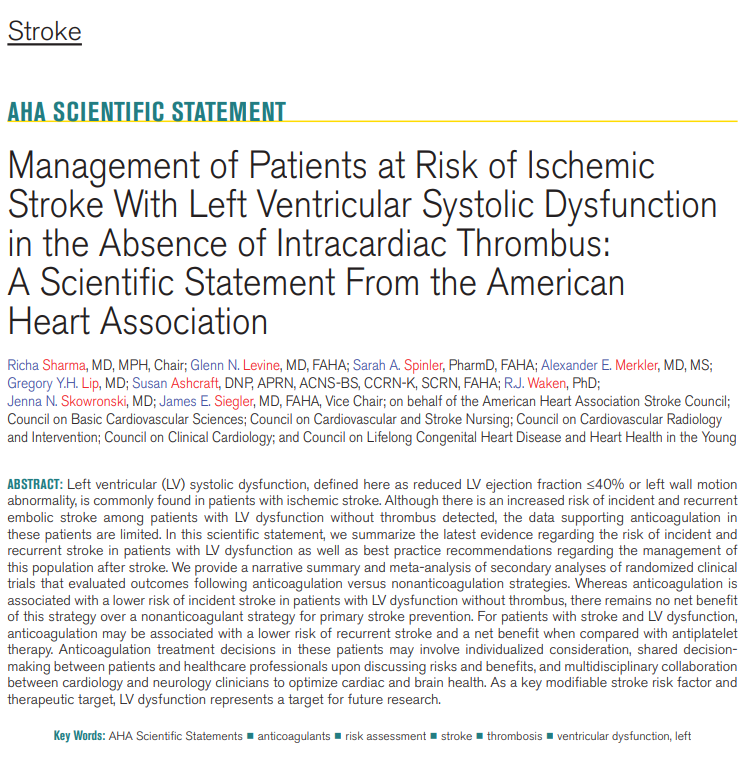
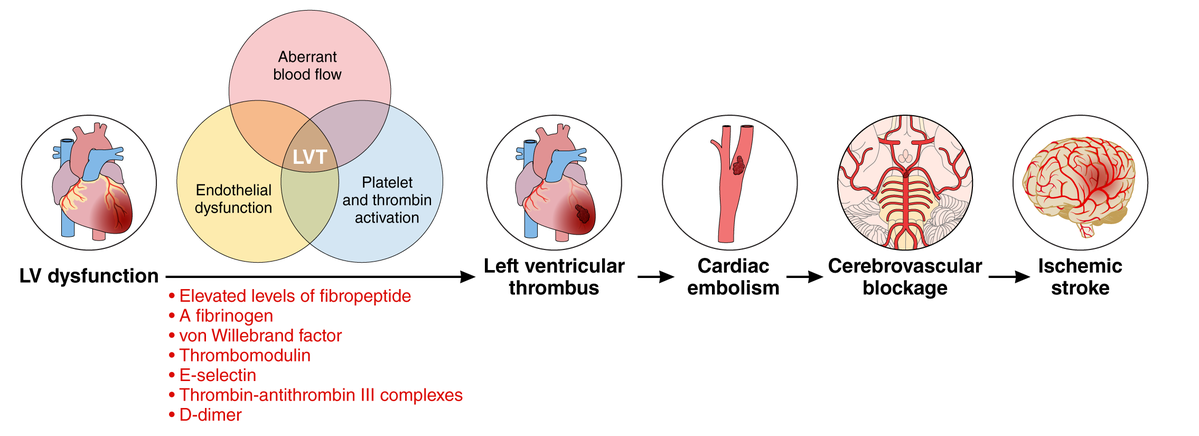
Left ventricular systolic dysfunction is not uncommon in the ischemic stroke population with some studies showing between 5%- 25% with ischemic stroke in persons with a lower left ventricular ejection fraction (LVEF). https://t.co/Jgu23h0BQV
This scientific statement summarizes the latest evidence regarding the risk of incident and recurrent stroke in patients with LV dysfunction as well as best practice guidance regarding the management of this population after stroke.
✍🏼 @RichaSharmaMD@JimSiegler@LiverpoolCCS@JennaSkowronski
Published today, Management of Patients at Risk of Ischemic Stroke With Left Ventricular Systolic Dysfunction in the Absence of Intracardiac Thrombus: A Scientific Statement from the American Heart Association. https://t.co/Jgu23h0BQV
✍🏼 @RichaSharmaMD@JimSiegler@LiverpoolCCS@JennaSkowronski
📷 Mechanisms of stroke with left ventricular systolic dysfunction
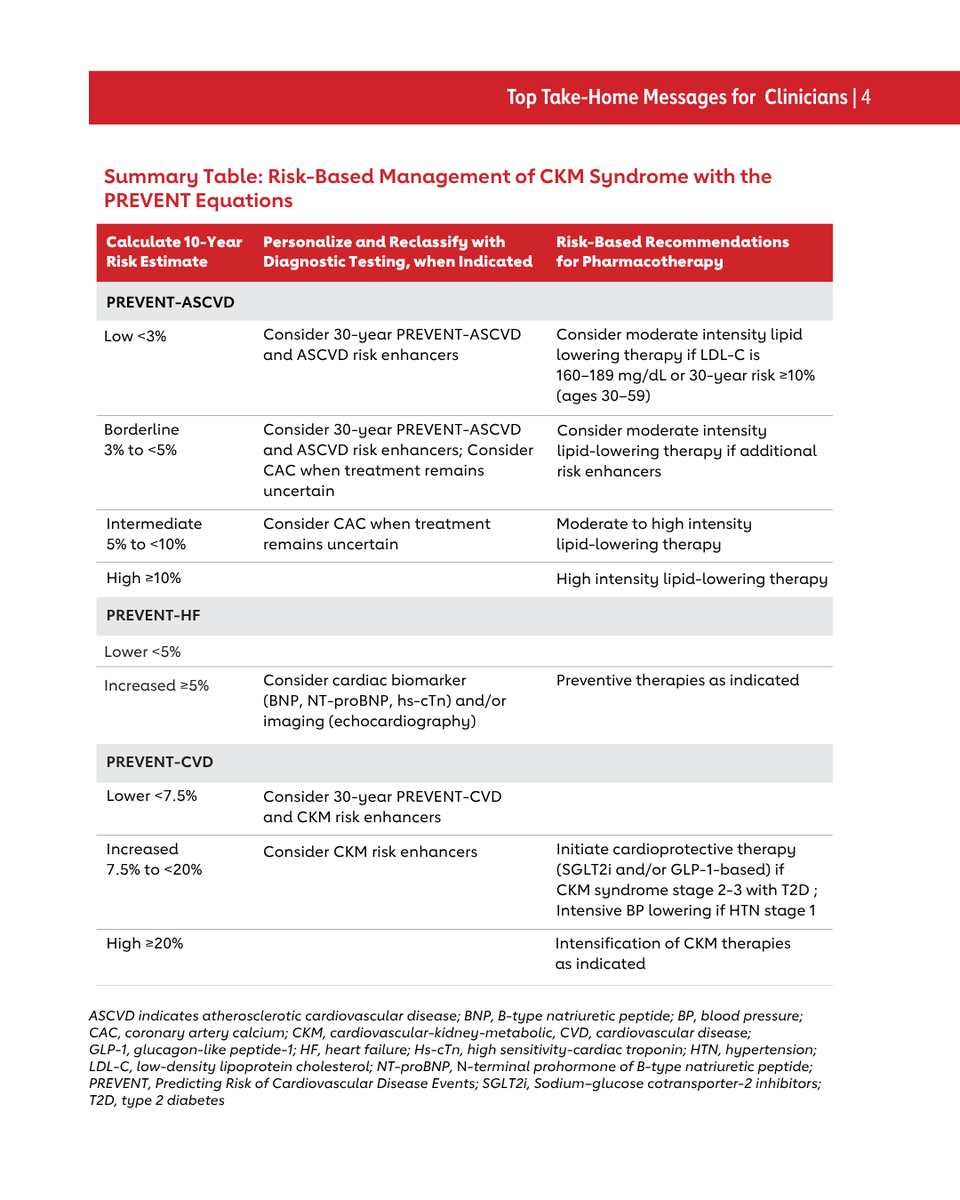
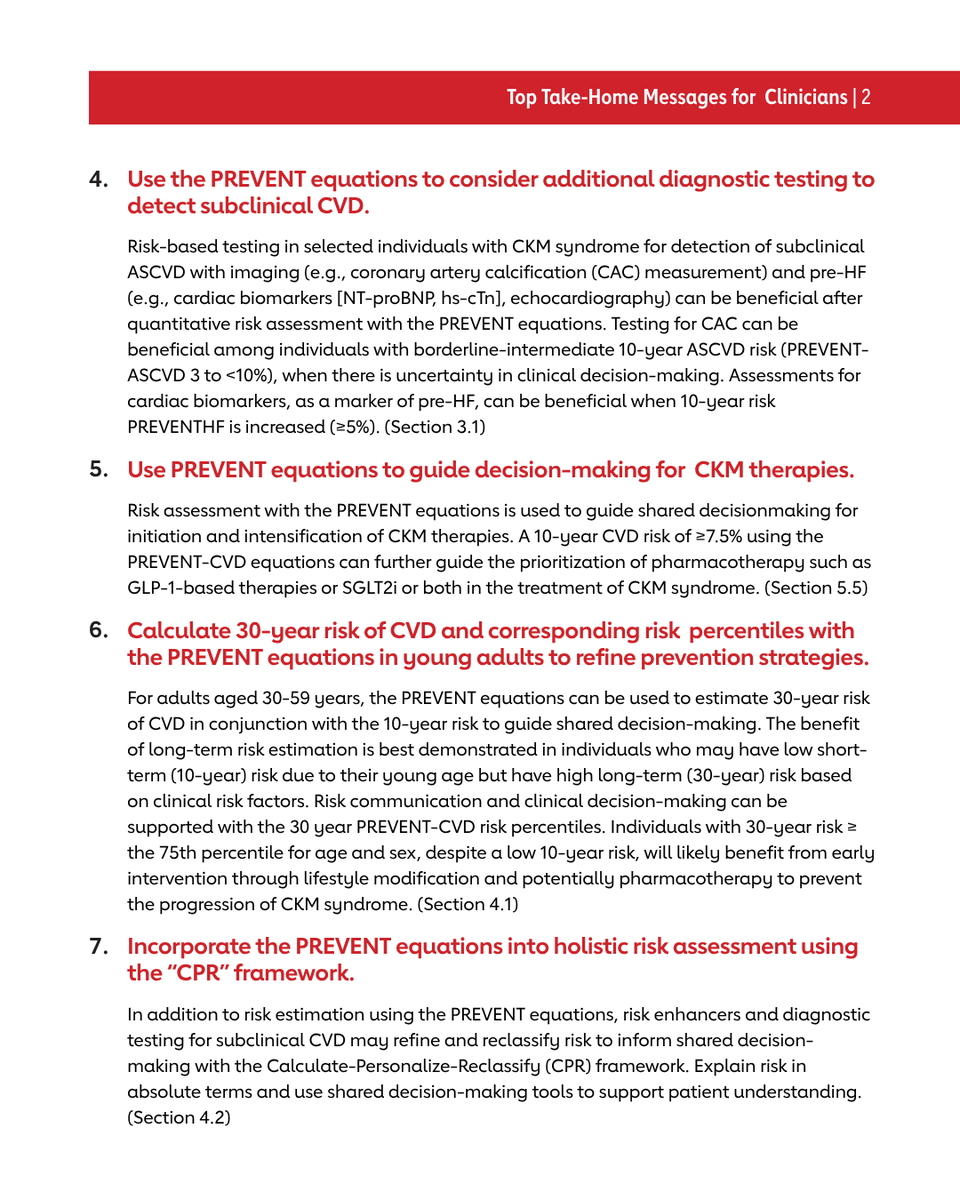
CKM Syndrome and PREVENT: Top Things to Know
The 2026 Guideline on the Management of CKM Syndrome was recently published.
Individuals at risk for cardiovascular disease (CKM syndrome stage 0-3) should have their risk quantified with the PREVENT (Predicting Risk of cardiovascular disease EVENTs) equations to estimate 10- and 30-year risk for atherosclerotic cardiovascular disease, heart failure, and total CVD.
PREVENT estimates inform CKM syndrome staging, with ≥20% predicted 10-year CVD risk serving as one criterion for CKM syndrome Stage 3. A ≥7.5% predicted 10-year CVD risk further informs the prioritization of pharmacotherapies
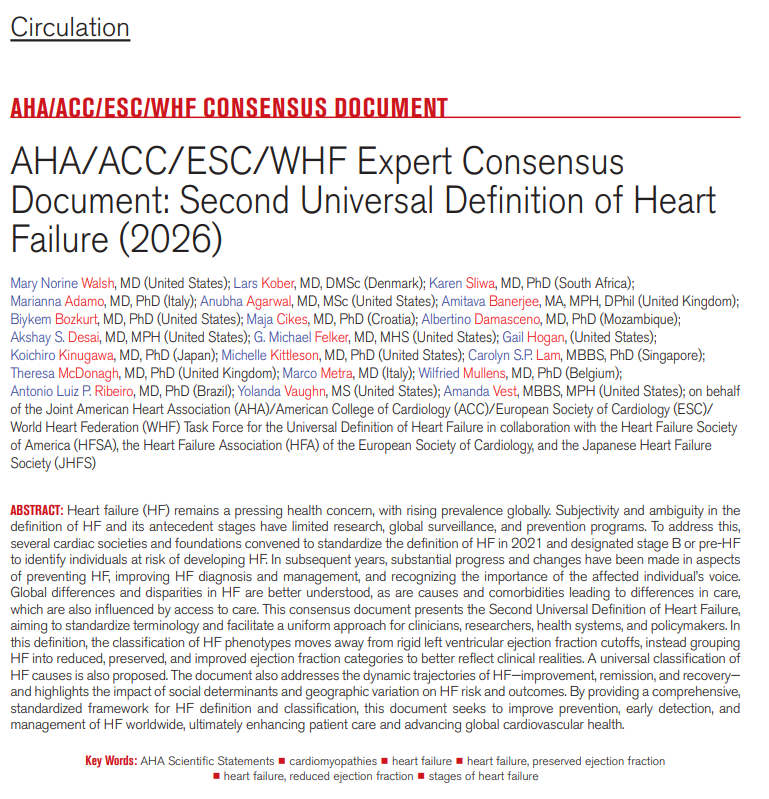
Building on the First Definition of Heart Failure, the Second Definition refines HF staging with sharper stage criteria, emphasizing early detection and individualized risk reduction and introduces the universal classification of HF causes, with explicit acknowledgment of geographic variation in HF risk and outcomes. https://t.co/YDuE4stb5s
This updated document provides a unified, internationally harmonized framework intended to standardize terminology. It addresses changes in disease manifestations, diagnostic strategies, and understanding of pathophysiology.
✍🏼 @MinnowWalsh@KarenSliwa@amibanerjee1@BiykemB@akshaydesaimd@DukeHFDoc@MKIttlesonMD@lamcardio@WilfriedMullens@NutritionHF
One of my favourite people in our field, Professor @josephahill is a stellar servant leader.
With a focus on research quality and teamwork (and no fanfare), he has led @CircAHA to its remarkable impact factor of 41.3 this year!
Grateful to be part of his team & learn from him
Congratulations @josephahill on an incredible 10-year run as EIC of @CircAHA You advanced CV science and clinical care, & brought the journal to new heights. And you led the best international weekly journal club for the amazing group of AE’s. Thank you! https://t.co/HkJ3frU9Th
Poor sleep quality is associated with adverse cognitive outcomes.
This paper highlights links between insufficient sleep, obstructive sleep apnea, impaired cerebral blood flow, and increased risk of cognitive decline and dementia.