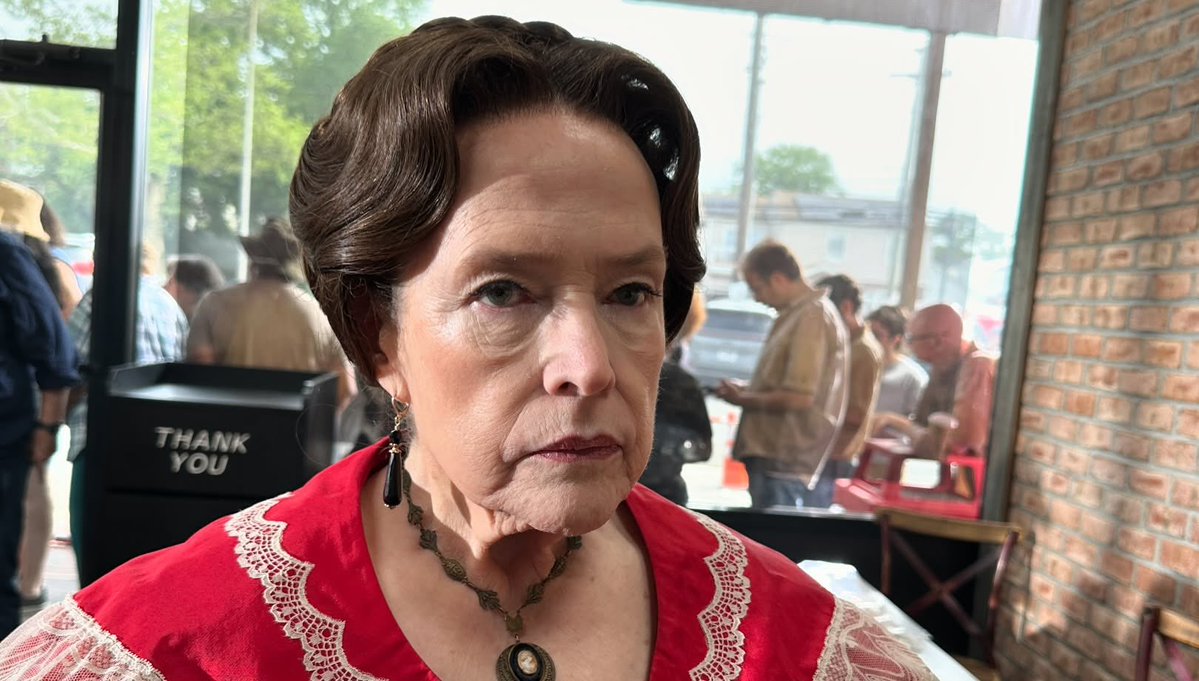
1. In the script and in production. The extras in that scene were specifically cast as 1990s satanists as well.
2. Again, this is your headcanon. There’s nothing in the text to support the idea that rapid aging is at play here (mainly because it’s not the case) or that these are the same characters. The season is incredibly sloppy when it comes to the treatment of the spawns of Satan and makes clear that whatever we thought we knew about their trajectories is not something the writers had any interest in honoring.
3. You cannot in the same breath point to the aging of Michael in Apocalypse as “proof” that Ben is Devan and then argue that the canon of previous seasons like Apocalypse is outdated and needs to be ignored. It is illogical.
It is not safe or predictable to prioritize internal consistency and respect for the audience, many of whom have watched 12 other seasons of the show and know it inside and out at this point. That was the bare minimum for the writers to bring to the table this season and they couldn’t even do that. It’s why we now have one of the worst-rated episodes in television history. Not the kind of surprise I’m looking for 15 years into watching a groundbreaking show, but I guess your mileage may vary!
What you’ve outlined here is textbook headcanon. Ben DeSoto is not Devan Campbell. The childhood flashback scenes in Episodes 5, 9, and 10 were written to take place during the 1990s, not post-2020. That’s not even to get into the glaring racial discrepancy or the deep dive we got into Ben’s childhood and teenage years, but nevertheless, they are two separate characters united only in their ultimate irrelevance to the story of AHS: 13. It’s yet another example of what’s been previously established being trampled over for no real reason.
As a conclusion to the war between the witches and Satan, the season is anticlimactic and threatless to put it mildly. The witches deal with one attack in the goofiest way imaginable, then they get killed but Satan gets bored, so he throws in the towel and brings them back, only to get Ghostbusters II’d into a painting, despite not even really acting on his evilness after the Devil’s Night killers get taken out. It is ultimately pointless and there is no new or elaborated message imparted by the season.
As a nexus point for the first twelve, it’s also a failure. It was fun to catch all of the references hidden in the set decoration, and the reuse of props and costumes, but they had no material relevance to the story. The characters who came back served no other purpose than ticking boxes on a checklist. Beyond that, their absences would have made no difference at all.
I agree with you that the writers have no business taking direction from the fandom. I think the fans’ lack of understanding (or lack of articulation) of why the early seasons worked is exactly why a season like 13 was able to happen. But as writers, it’s their job to resist the temptation of playing to the crowd and to prioritize cogent, quality storytelling over doing what they think will be popular. Unfortunately, that didn’t happen this season and that’s okay to admit.
1. Words have meaning. A “headcanon” is an unconfirmed but unfalsifiable interpretation or theory about some open-ended aspect of a story. Headcanon has nothing to do with the examples I gave.
The point of those was to illustrate that there were any number of fairly simple ways for the writers to provide a narrative justification for all of the jarring choices and changes they made to the established lore. I’m not even arguing that that the content of the season should have played out differently than it did, but rather that providing additional context for what did play out would have gone a long way. It came across as if AHS: 13 was being written by people who only had a surface-level familiarity with the show or who paid no mind to the contradictions these developments would bring about. That is particularly egregious considering how heavily the creators were involved.
What difference would it have made to the season if they hadn’t decided Constance and Fiona were the twin daughters of Satan and Sister Jude? NONE! It added nothing but a cheap shock and did not further the story at all. It didn’t even enrich the story of the original seasons, and hate that choice as I may, there was a missed opportunity there to wink at why Fiona Goode had no soul in Coven. In addition to the contradictions though, there was no rhyme or reason to these changes whatsoever and that is why people are mad.
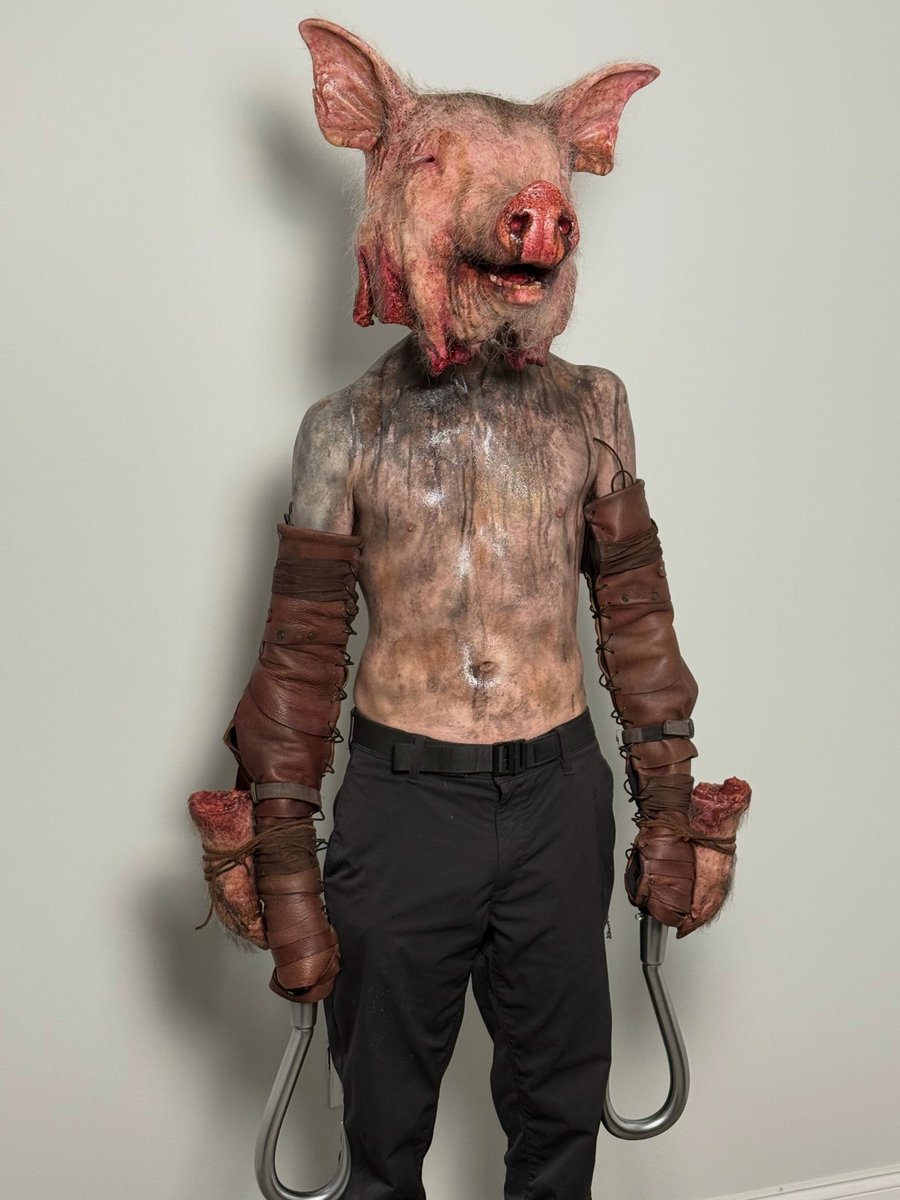
2. The returning characters are almost all excisable or, in the best of cases (like Venable), easily replaceable. The story of the season — which is completely linear, by the way — is Satan’s bet with God to make it to 100 years old as a mortal human and how he chooses to cut corners in the eleventh hour. Beyond the two I named, not a single returning character serves as an essential catalyst or impediment to that journey. Either another or a new character altogether could have fulfilled the exact same function that they each do, as written, or they could have been taken out without altering the events that take place whatsoever. When your cast is Sarah Paulson, Angela Bassett, Jessica Lange, Kathy Bates, Evan Peters, and so on — revisiting characters who were integral to the original seasons they hailed from, no less — that is completely unacceptable. There’s room for fan service and fun, like Delphine and the Piggy Man popping back up in cameos, but there was no more substance to the witches or the Langdons coming back than there were to those two, and they had the lion’s share of screen time.
3. Recontextualizing or filling in existent gaps is not the same thing as overwriting what has been previously established… especially without any acknowledgment (or apparent recognition) of the fact that there was contradictory information previously established in the first place. Apocalypse builds the world out on the foundation of what was set up in Murder House, Coven, and Hotel, and at worst, forgets to address a couple notable-to-the-audience absences. Any changes S8 makes to what was established previously are rooted in a recognition that they are consciously making a change. The same cannot be said for S13.
You say the intention of the season was not to deliver a Marvel-style revenge tour, and yet we had Ryan Murphy, Billie Lourd, Evan Peters, Leslie Grossman, Gabourey Sidibe, Charlie Carver, and more drawing comparisons to the Avengers and waxing poetic about it being a greatest hits season dealing with the battle between good and evil. I agree wholeheartedly that AHS: 13 was a subversive deconstruction of the mythos of American Horror Story; from beginning to end, at every turn, it took a sledgehammer to the legacy of a franchise that deserved so much better for its 15th anniversary reunion.
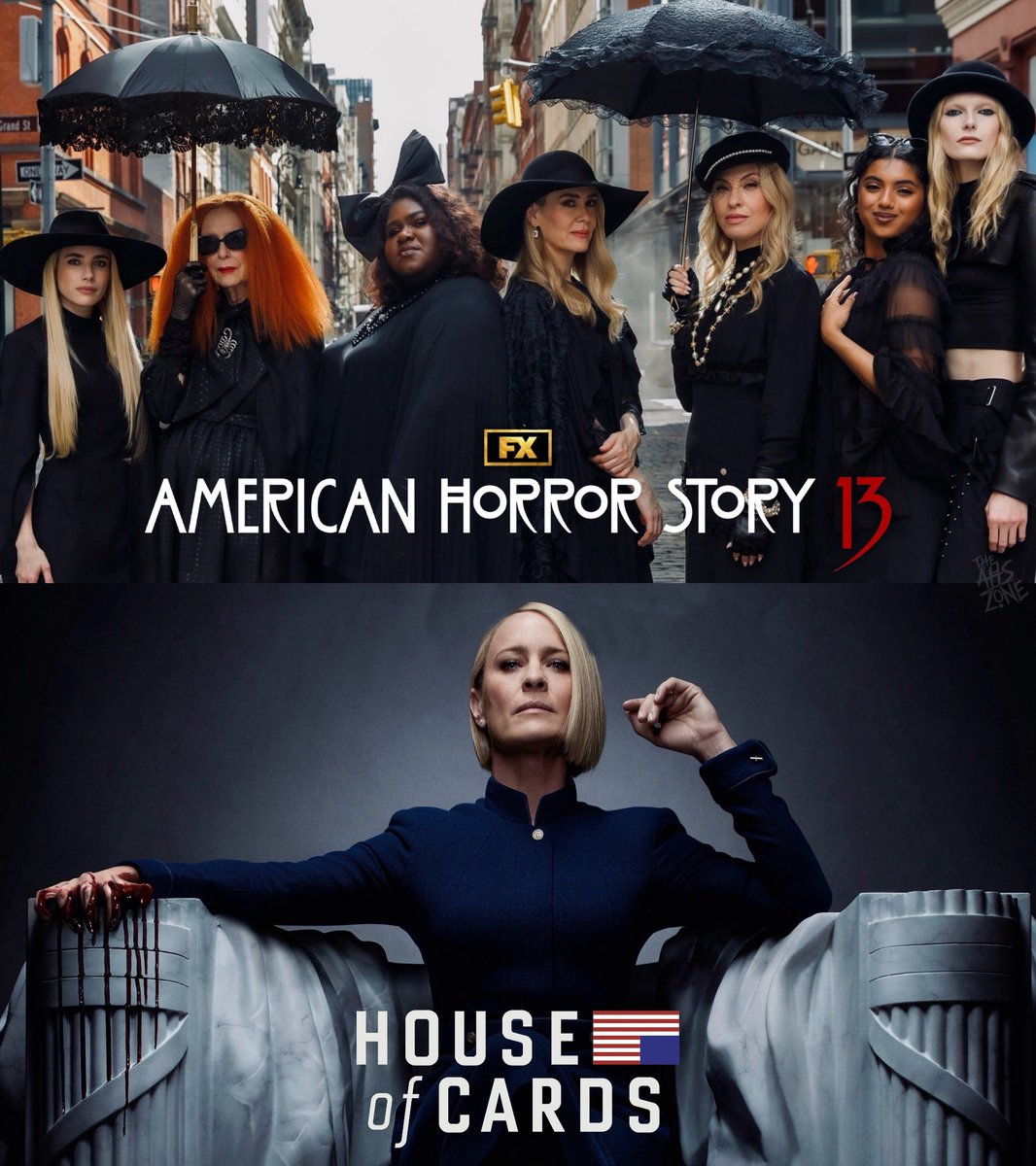
“American Horror Story: 13” is now officially tied with “House of Cards” for the worst-rated episode in the history of American scripted TV.
The season finale of “AHS: 13” and the series finale of “House of Cards” each have a score of 2.5/10 on IMDb, with over 1000 user ratings.
It is absolutely scapegoating. We’ve had four broadly unpopular seasons in a row and like clockwork, the fans come out to blame the newest name they can find in the credits of any given episode.
They did it to Manny Coto with Double Feature, as if Brad Falchuk didn’t write every episode. They did it to Halley Feiffer with Delicate, as if she chose to adapt the most uncinematic book in history, and wasn’t given a list of 8 actors to find roles for, whether the source material had roles for them or not.
And it’s happening now to Ned Martel and Charlie Carver, who were essentially hired to combine 12 distinct miniseries into one (which they didn’t create and which were never designed to be connected), given 15+ actors juggling outside projects they cared about more (each with pre-selected roles, some doing multiple), and expected to do it in half-hour episodes.
Even if you suppose that individual writers should be blamed above all, at some point you have to ask who hired them? Who had creative control over what they were doing?
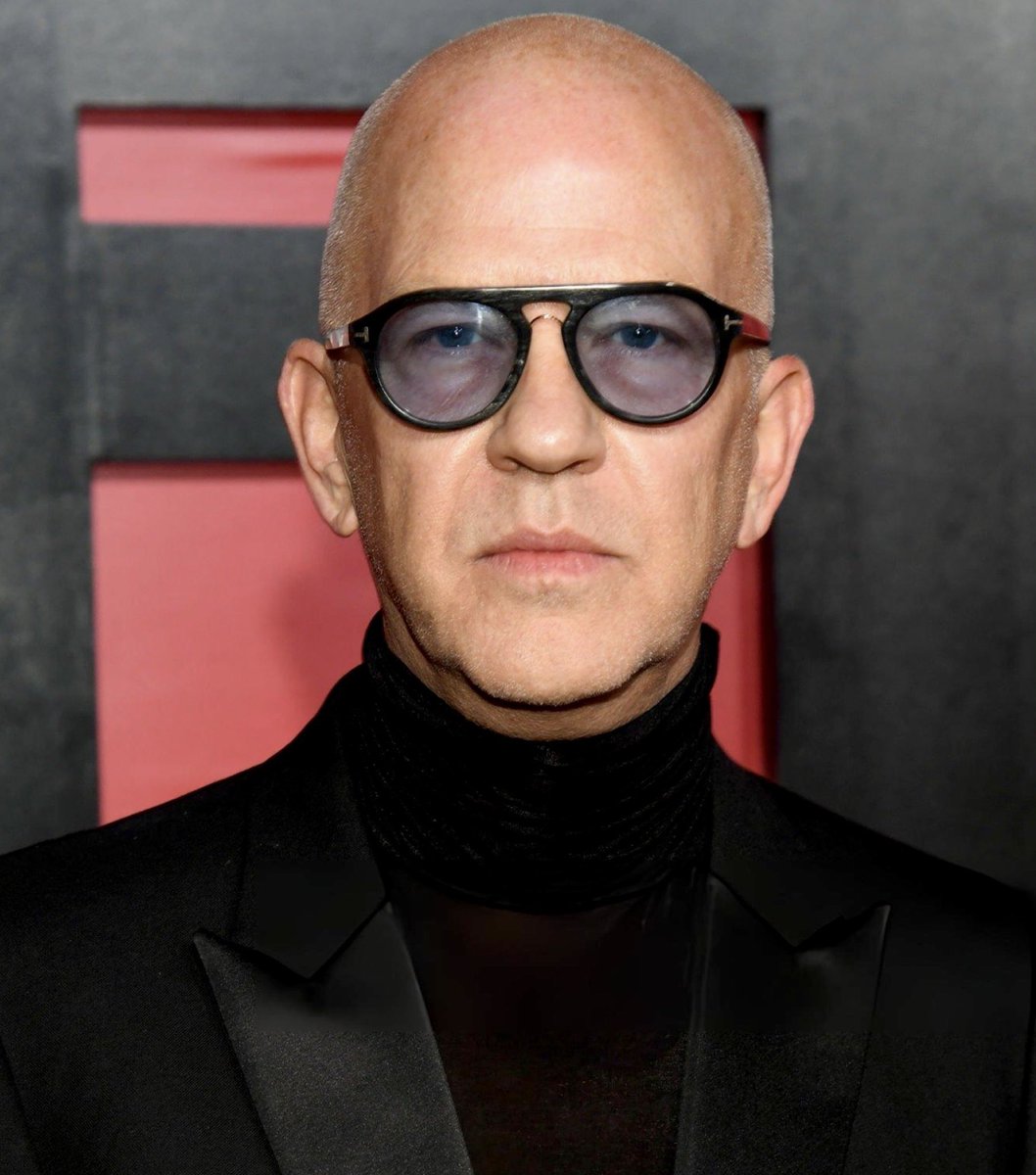
@Megalopolisian@IMDb@AHSFX Scapegoating the writers who were tasked with executing Ryan Murphy & Brad Falchuk’s vision under ridiculous constraints, while accommodating the random whims and schedules of the cast, is a mistake. Blame the creators (and Disney/FX for allowing them to do it with no oversight).
@xcxanton@IMDb@AHSFX Scapegoating the writers who were tasked with executing Ryan Murphy & Brad Falchuk’s vision under ridiculous constraints, while accommodating the random whims and schedules of the cast, is a mistake. Blame the creators (and Disney/FX for allowing them to do it with no oversight).