What do 45 million real commits actually reveal about how developers use AI coding tools?
@PhantomCupcake mines data from 2.4 million public GitHub repos to show how agentic coding is really being adopted in production.
Watch the recording → https://t.co/ATlAEwWVLa
Who reviews the AI that's reviewing your AI-generated code?
@sogldaniel shows how layering AI review tools on top of linters and type checkers closes the loop on agentic development.
Watch the recording → https://t.co/uzQ3ta31Lj
When did writing code with AI stop being about prompts and start being about systems?
@VladimirNovick traces the shift from single prompts to multi-agent orchestration, and lays out what it actually takes to keep those systems reliable.
Watch the recording → https://t.co/wpKvOsV95F
What happens once you stop re-inventing your AI coding workflow every single time?
@dani_avila7 breaks down how to turn ad hoc prompting into repeatable systems using Claude Code Skills, Subagents, hooks, and MCP servers, drawing on his open-source Claude Code Templates project.
Watch the recording → https://t.co/QpoH0421xl
🚨 Call for Papers is open for AI Coding Summit Berlin!
Share your expertise on AI coding, agentic programming, AI engineering, testing, CI/CD, observability, security, and more.
🗓️ Deadline: August 12
🎤 5–20 min talks
🌍 Berlin or Online
Apply: https://t.co/sc473cKGzg
Software quality now depends on the constraints you set around your agents.
When humans manually wrote most of the code we could look at the code itself for signs of quality. Is it clean? Is it thoughtful? Is it fast? Can another engineer understand it? Does it have tests?
Agents can now generate more code than people can read. When code generation scales beyond review, quality - checks for one or more of correctness, maintainability, security, performance etc - increasingly has to live somewhere else.
It moves into the harness, environment and operating system around the agent.
This can be the tests and deterministic checks that decide what the system is allowed to do (amongst others). Your constraints are what may eventually enable loops of agents to deliver production software reliably. They can include unit tests, property tests, acceptance tests, mutation testing and quality metrics.
This back-pressure lets the system resist bad work before it becomes somebody elses problem.
Set your constraints. They decide whether the code your agents generate is good enough to ship.
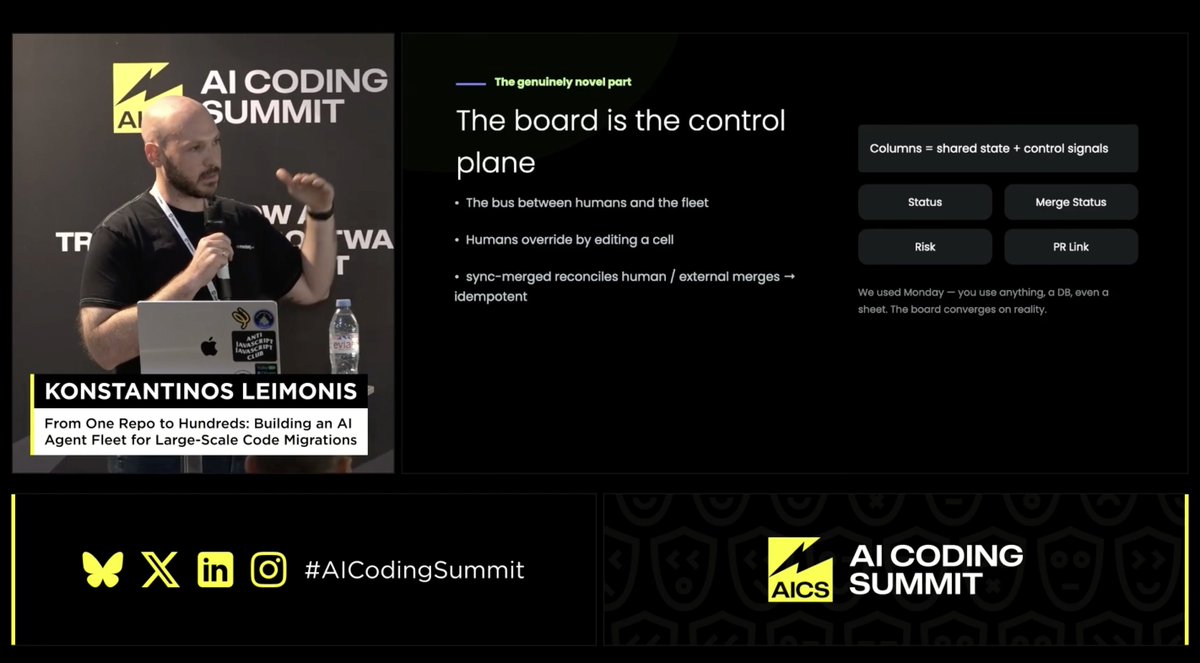
🤖 One migration skill. Hundreds of repos. Zero manual PRs.
@leimonio walks through building an AI agent fleet for large-scale code migrations.
Watch now → https://t.co/kLCGN3YJ6Y
📊 Opus vs GPT. Kimi vs GLM. 100+ experiments later, clear patterns emerge. @PovilasKorop shares his findings in "Learnings From 100+ Experiments Comparing LLMs for AI Coding."
Watch the recording → https://t.co/LW5SL026uC
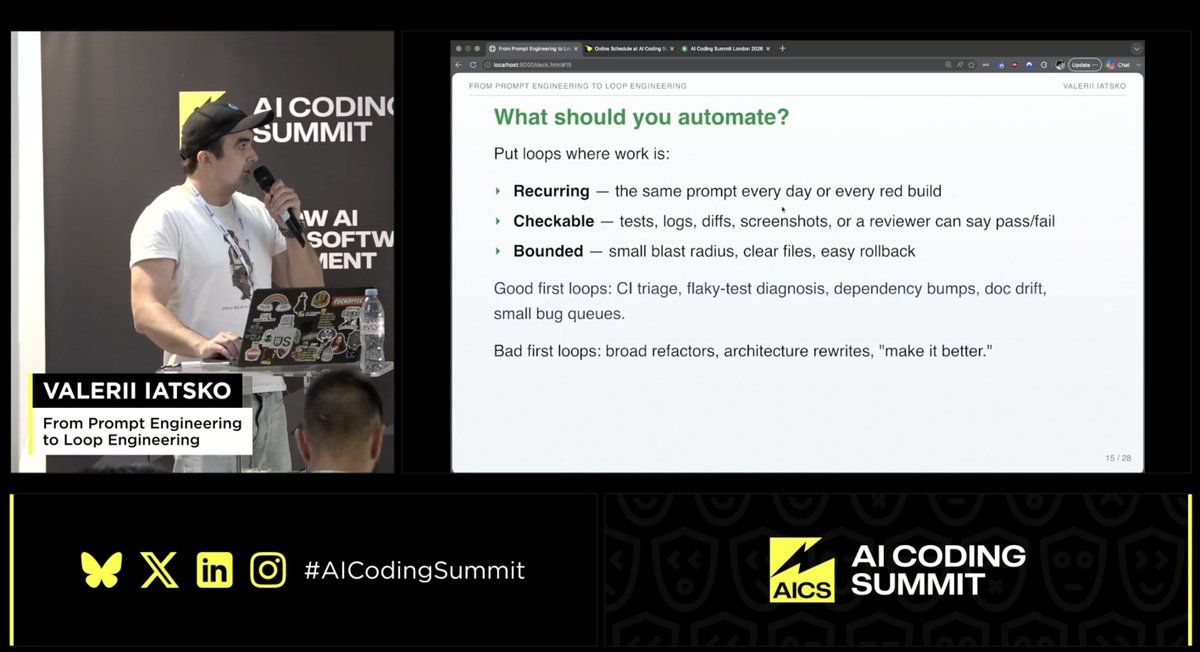
🔁 Stop prompting. Start building the loop.
Valerii Iatsko shows how to move from one-off prompts to self-directed agent systems in "From Prompt Engineering to Loop Engineering."
Watch it → https://t.co/mWVnmg8kU3
👀 Your coding agent might be doing more than you think.
@MariusHobbhahn shares findings from tens of thousands of real agent traces in "Real-Time Observability and Control for Coding Agents."
Watch the talk → https://t.co/GaM48NkPbf
🛠️ Most agent skills fail quietly — until they don't. @mgechev breaks down how to design, generate, and validate reliable LLM agent skills in his talk "Skill Design for LLM Agents."
Watch now → https://t.co/ScwIcfmJkb
What's still worth being human for, once AI writes the code?
@kentcdodds tackles judgment, product engineering, and what separates great engineers from merely productive ones in his talk "The Last Software Engineer."
Watch the recording: https://t.co/oDZtSAQObv
I Fried 2 Chips and Argued With AI to Build a Face-Controlled Car 🎤
Jonathan Estephan used AI - right up until it confidently recommended hardware that fried his boards 📛 So he stopped prompting and leaned on his mechatronics training instead.
The best part isn't what the AI got right. It's everywhere it was confidently wrong - and what it took a human to catch 👇
📹 Full talk: https://t.co/fw1VicvEhc
London 🇬🇧 New York 🇺🇸 Berlin 🇩🇪
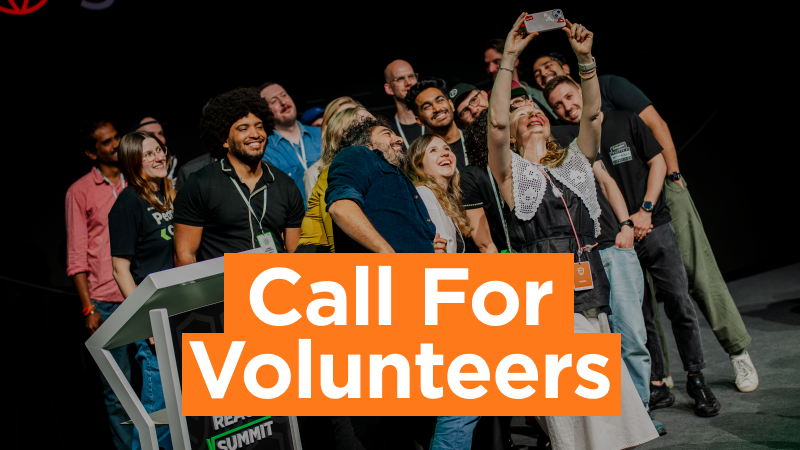
GitNation is looking for volunteers! Go behind the scenes, help us with workshops, meet industry leaders, and catch incredible tech talks!
Fill out the form here: https://t.co/ikwDhQXbJY
Shoutout to Julia Kordick — the person who speaks both developer and management fluently, and loses neither side 🤝
Julia, Software Global Black Belt at Microsoft, helps large-scale orgs accelerate dev workflows through platform engineering — and she's bringing that to AI Coding Summit Berlin.
🎟Tickets: https://t.co/cXtyQJLjfx
AI Coding Summit (London Edition) has officially wrapped! 🔥
Huge thanks to our speakers who brought the fire, every developer who showed up ready to learn, our amazing partners, MCs, program committee members - and crew who made it all happen behind the scenes. It was packed with ideas worth taking back to our teams!
See you at the next edition! 🚀
#AiCodingSummit
Big welcome to @grabbou — Codex Ambassador, React Native contributor, CTO at Callstack 👏
Mike is one of the sharpest minds at the intersection of React Native & AI coding — and he's coming to Berlin.
👉 Learn more: https://t.co/Av8JqL8G3o
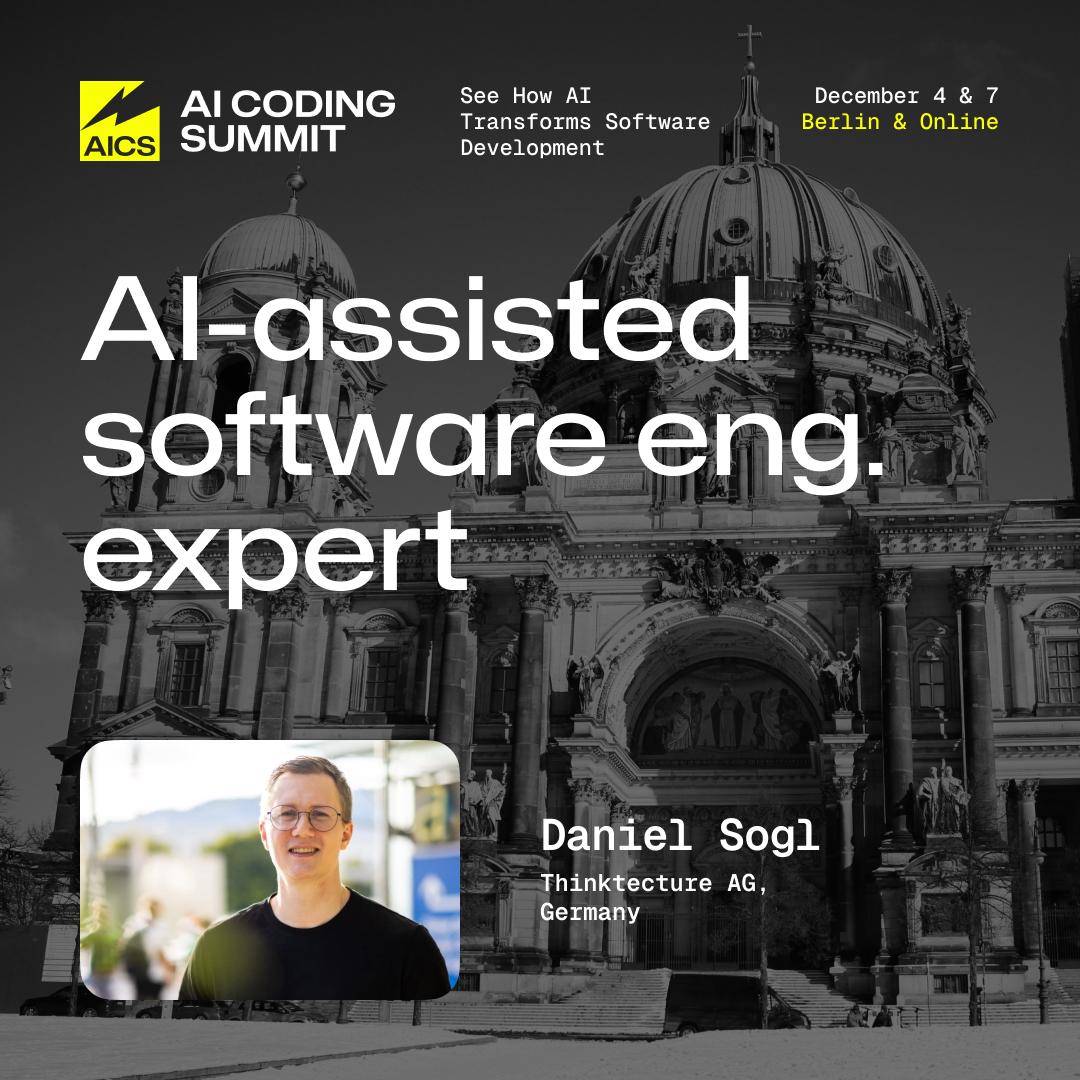
Cheers to @sogldaniel — Microsoft MVP helping teams ship smarter with AI! 🙌
Daniel brings deep expertise in AI-assisted development and generative AI to the stage at AI Coding Summit Berlin.
😎 Reserve your spot: https://t.co/Av8JqL8G3o