🌍 Changing the world: @AIHealthMIT faculty lead @BarzilayRegina was recently awarded an honorary doctorate from her alma mater @bengurionu for her groundbreaking work in developing AI models for treating and diagnosing diseases.
"She is a brilliant and visionary researcher, whose research in the field of artificial intelligence has opened new paths. Her achievements expand the boundaries of knowledge and actually improve the lives of people around the world."
📰: https://t.co/NwXSaqBeSQ
Thanks to everyone who joined us at #MoML2026 yesterday! We had a blast 🤩 And congrats again to @MIT PhD student Tally Portnoi on being awarded the Best Paper Prize for her work on "zPocket: Finding Pockets with Frozen Cofolding Features"! 🏆
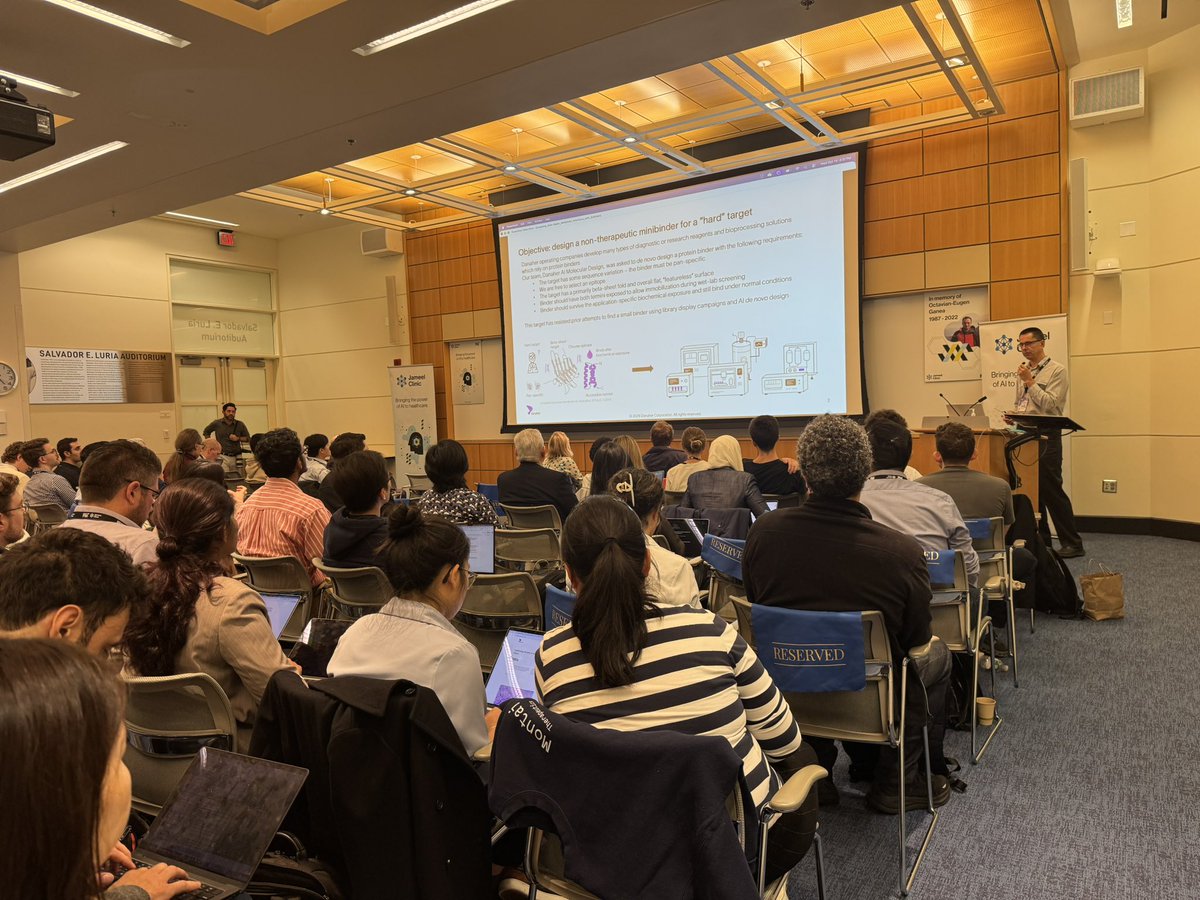
Industry talk #2! Danaher’s Andrey Tovchigrechko talks about how his team used @boltz_bio’s BoltzGen to design beta-zipper mini binder interfaces while using agentic tools to optimize the in silico pass rate in BoltzGen. #MoML2026
How are industry experts using ML in their research? @ByteDanceSeed_’s @chengyenhsieh presents on Protein Autoregressive Modeling: Taking initiative from the hierarchical nature of proteins, PAR generates backbones by forming a global topology & performing refinements. #MoML2026
Starting now, @ISTAustria’s Alex Bronstein talks about developing a general inference time optimization framework that can maximize log-likelihood and incorporate external constraints while eliminating dependence on diffusion length and removing initialization bias. #MoML2026
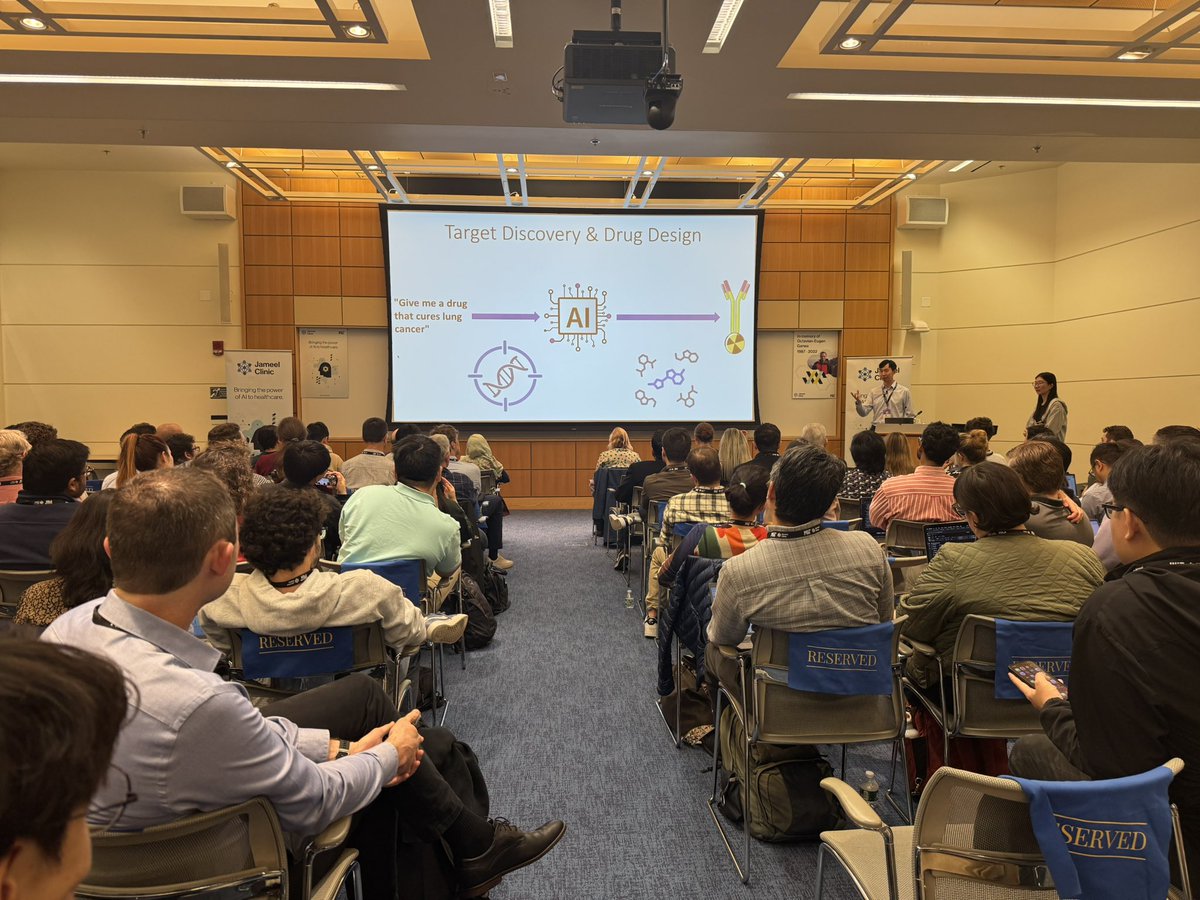
How can we improve target discovery for better drugs? @omenndarlingbio’s @idmjky talks about how EVOLVEpro demonstrates the usefulness of language models in optimizing protein function. He also introduces MESSI, for immunogenicity aware binder design.
Now hearing from @FU_Berlin’s @CecClementi on the short-sightedness of GNNs and potential solutions. She introduces a framework for efficiently and accurately simulating biomolecular complexes. #MoML2026
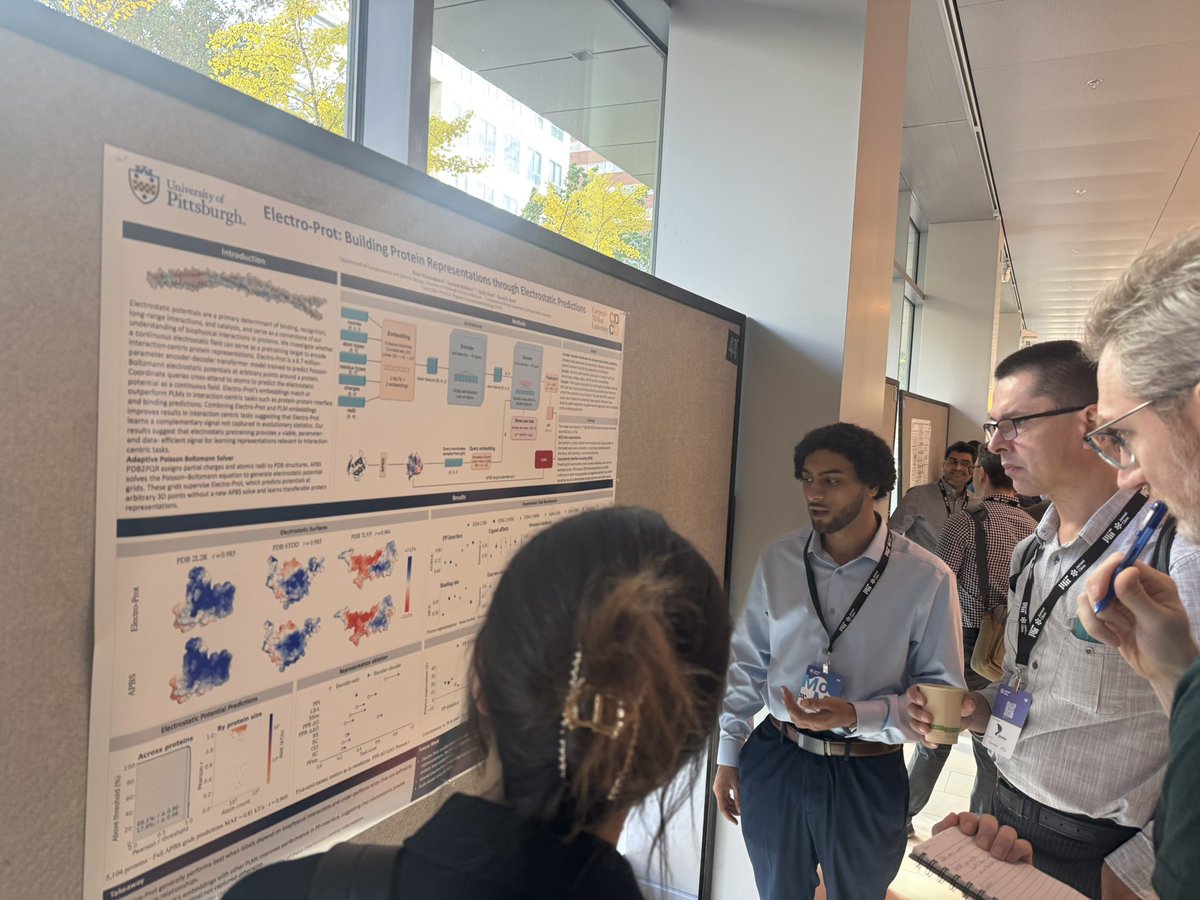
#MoML2026 Top 4: @PaulSharoubeem presents Electro-Prot, 6.7M-parameter encoder-decoder transformer trained on 162,980 APBS calculated fields to predict Poisson-Boltzmann potentials at arbitrary points around a protein!
#MoML2026 Top 4: @Northeastern and @broadinstitute’s Yikun Zhang presents on MolSAGE, a framework that accumulates and and reuses experience across tasks to build state-of-the-art drug models efficiently!
#MoML2026 Top 4: @mit’s Tally Portnoi introduces PocketWatch, a curated dataset of biologically relevant ligand pockets, and using this dataset to develop zPocket, which trains pocket-prediction heads on top of frozen features from co-folding models.
#MoML2026 Top 4: first up is MIRAGE, presented by @UCF’s Mehdi Yazdani-Jahromi. MIRAGE is a plug-in benchmark that applies the family-support axis to affinity and pose prediction.
Can we design proteins from motion? Check out SPINET, our cellular sheaf-based inverse folding network: https://t.co/THiwkL4gmV
Curious how it works? Stop by poster #40 at the #MoML conference tomorrow (Oct 14) organized by @AIHealthMIT to meet co-first author Jens Lundsgaard!
👀 Next up: @pas_saro and @NoahBGetz from @boltz_bio present on their approaches to maximizing performance on structure and affinity prediction in the Boltz model series, and their work on using BoltzMol-1 to identify a target inhibiting DNA damage repair. #MoML2026
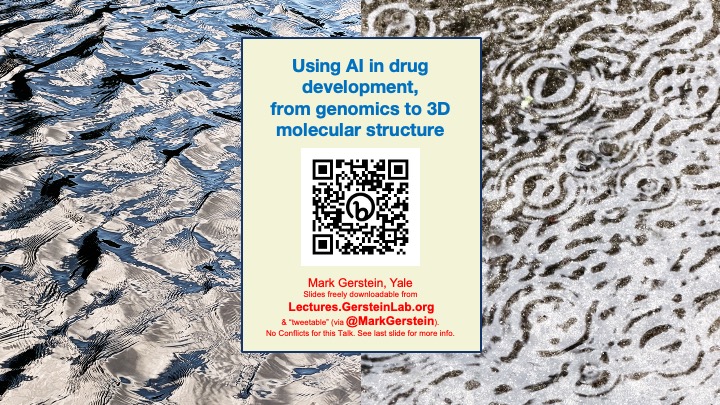
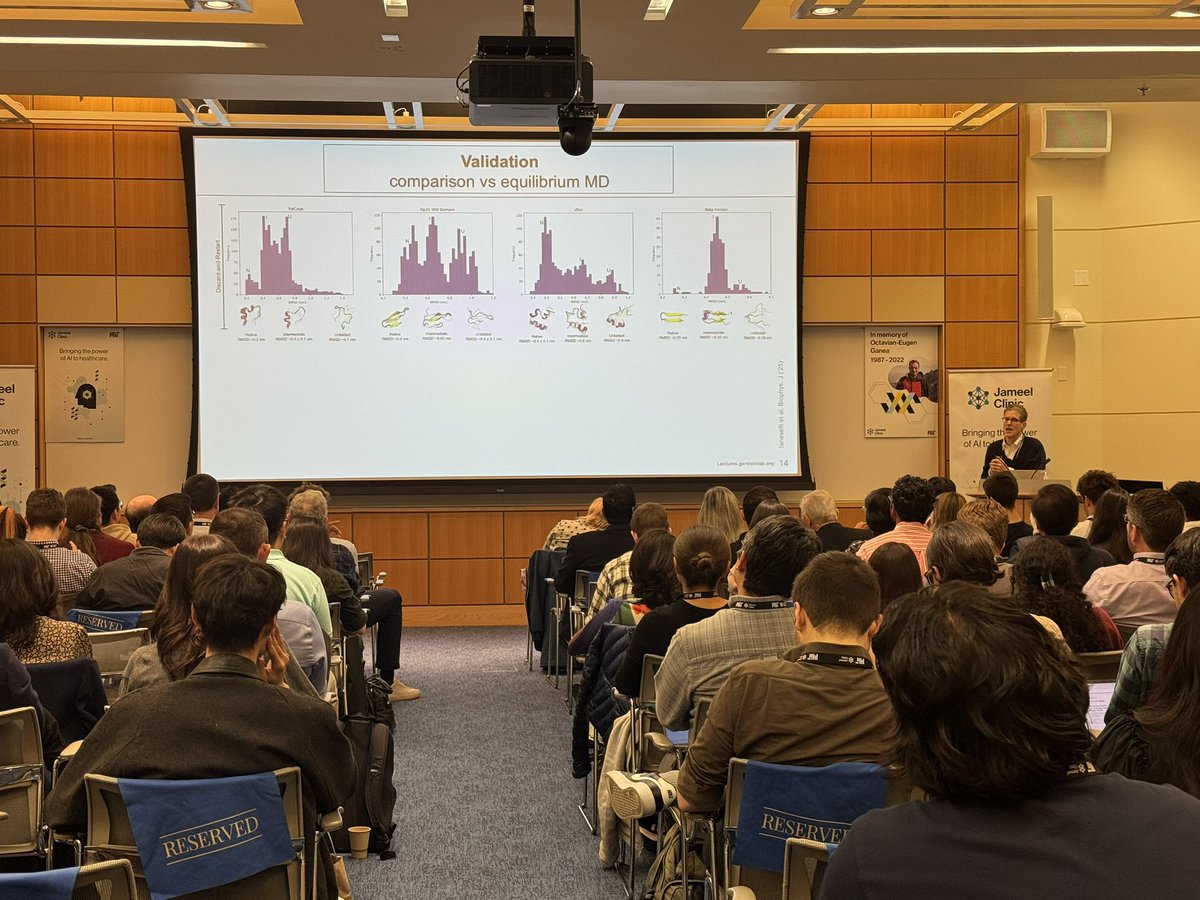
Posting my talk tomorrow at MoML 2026 at @MIT (organized by @AIHealthMIT https://t.co/LKnt6bApyw New slides on World Modeling for drug dev. & its integration with @daifengwang's drug repurposing
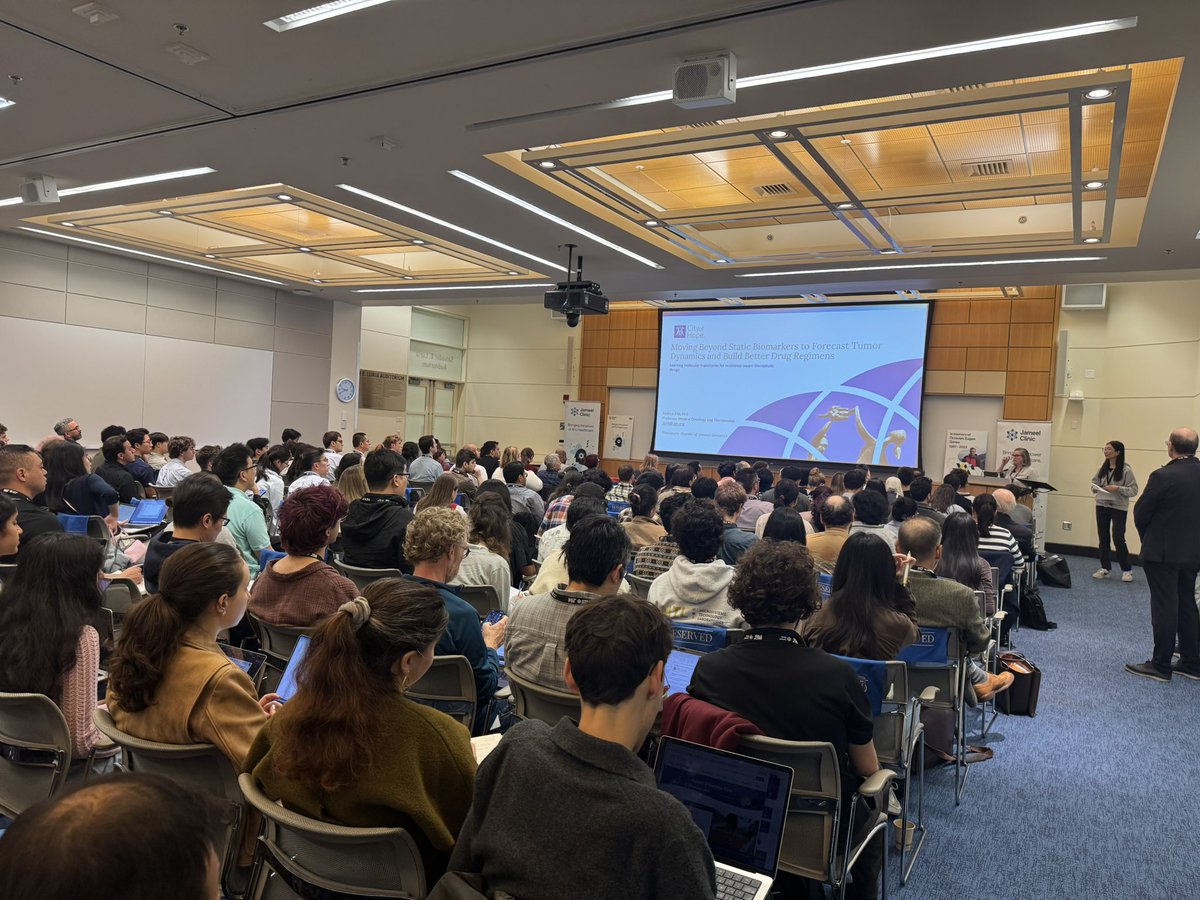
#MoML2026 is underway! #JameelClinic faculty lead @BarzilayRegina opens the conference with a presentation on the state-of-the-art in molecular modeling.