(1/7) The end of a wonderful journey, #PhDone!
Last Tuesday, I defended my PhD “Structural brain damage and cognition in MS: an AI approach” 🧠🖥️, a collaboration between the @AIMS_VUB lab at the @VUBrussel and @icometrix.
Link to PhD 🔗: https://t.co/fWbq9Er6zI
More info👇
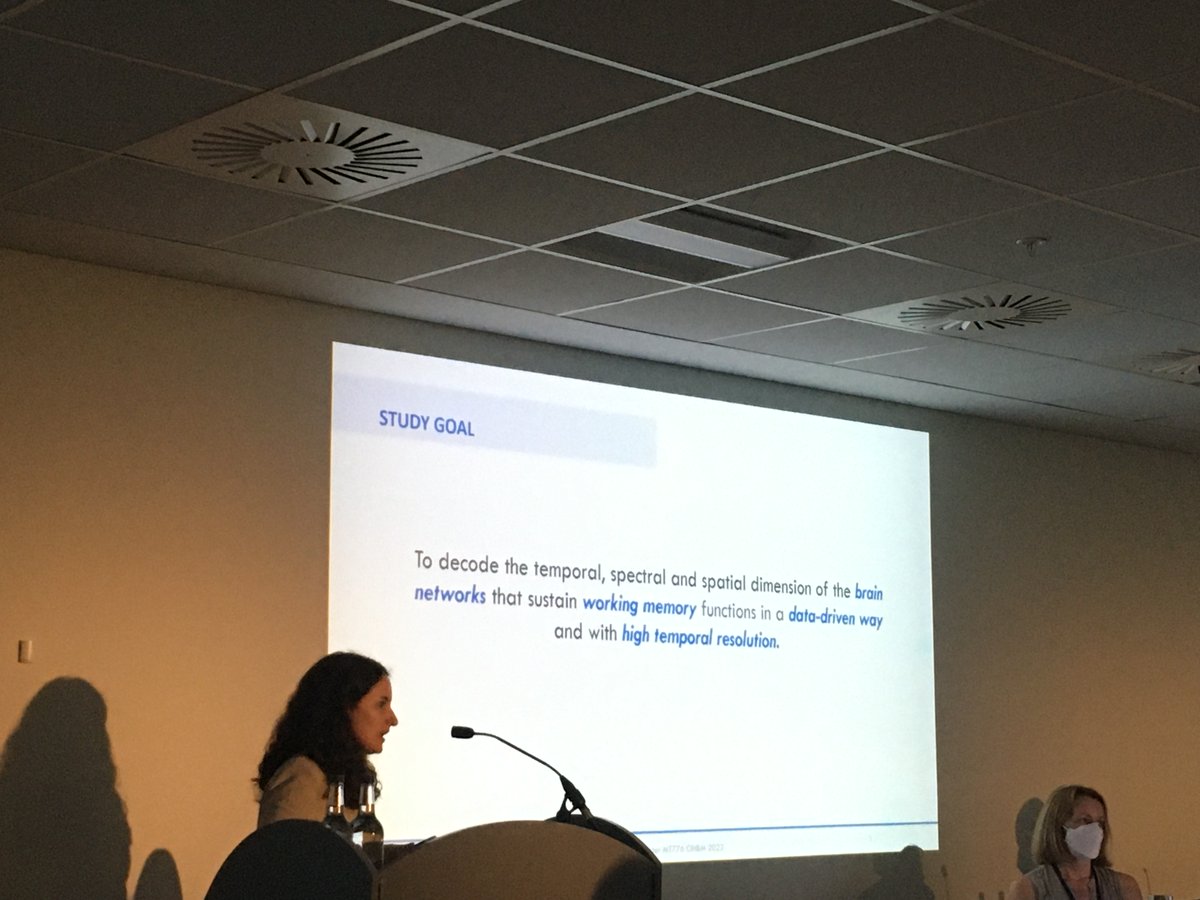
Great presentation at @OHBM by @Chiara__Rossi on transient brain dynamics during an nBack task! Come and check out her posters to discuss the results in healthy subjects (MT776) and people with multiple sclerosis (WTh300)!
With a bit of a delay, but nevertheless very proud that @larscosters successfully presented his PhD at @AIMS_VUB and is now officially entitled to use the one-and-only AIMS seal!
Cognitie, wat is dat eigenlijk? 🧠Onze PhD studenten @vl_delphine en @DenissenStijn nemen je mee door het doolhof van cognitie in deze 2e blog van onze blogreeks "Hersenspinsels" in @WtnschpBXL ! Click the link👇 and enjoy! 🤓
https://t.co/Nw6FgBfB1e
Trots om aan te kondigen dat ik als huisauteur van @WtnschpBXL zal gaan bloggen voor ons lab, @AIMS_VUB! "Hersenspinsels" neemt je mee in een wereld van hersenen 🧠, data 🔢 en computers💻. First up: Wat is Artificiële Intelligentie 🤖? #scicomm#AI#brain https://t.co/vjdhBvFsO3
PhD student @DenissenStijn lanceerde zojuist onze blog "Hersenspinsels" bij @WtnschpBXL! Interesse in hersenen, data en computers, en hoe ze ons inzicht in neurologische aandoeningen zoals #MultipleSclerosis kunnen bieden? Check it out👇, and stay tuned for more!
Trots om aan te kondigen dat ik als huisauteur van @WtnschpBXL zal gaan bloggen voor ons lab, @AIMS_VUB! "Hersenspinsels" neemt je mee in een wereld van hersenen 🧠, data 🔢 en computers💻. First up: Wat is Artificiële Intelligentie 🤖? #scicomm#AI#brain https://t.co/vjdhBvFsO3
Check out the shiny new website 🕸️ and blog ✍️ of our brand new research group:
AI-supported Modelling in Clinical Sciences (AIMS) at the Vrije Universiteit Brussel
🧠 https://t.co/7Ygyyzwmt0 🧠
Proud to say that our paper is now published in Human Brain Mapping 🎉 Together with @Jeroen_VS@AIMS_VUB
🧠🧲
The role of hippocampal theta oscillations in working memory impairment in multiple sclerosis
https://t.co/j4sXzyayCi
GitHub repositories:
- Understanding the normalization: https://t.co/evSGpO3h3A
- Performing the normalization on your own data: https://t.co/Khpc3Y439U
The original paper was published by @larscosters in 2017. Link to paper: README files of the repositories.
(2/2)
Proud to announce that we are now actively contributing to #OpenScience and #reproducibility by publicly sharing python code (GitHub) to facilitate the normalisation of BICAMS cognitive test scores in #MultipleSclerosis in a Dutch-speaking population! (1/2)
📢New post-doc opening at the @AIMS_VUB lab in Brussels 🇧🇪 Interested in AI, EEG and neurodegenerative disease (Alzheimer's disease, multiple sclerosis)? 🧠👨🏫👩🏫 Contact us! More info: https://t.co/90rMmd09VK
Many thanks to all participants from @UZBrussel and the National Multiple Sclerosis Center Melsbroek, to @neurovidaurre for his incredible help and patience, and @FWOVlaanderen for funding!
(6/6)
Our newest paper by @Jeroen_VS on transient brain dynamics in multiple sclerosis is out now in Human Brain Mapping: https://t.co/6JN0qb5tUm
We analysed resting state eyes closed MEG in MS patients and controls. Let me take you through the main results: (1/6)
(-) although the effect of benzodiazepines on transient brain dynamics seems to be stronger than the effect of MS, a group-level distribution demonstrated a reduced dynamic of the default mode network in MS patients
(5/6)