Science • AI • Robotics • Progress / Documenting the implementation of the future. / Curiosity-driven insights on what’s next. / The frontier of evereverything.
Single Stock Watch: $AVGO
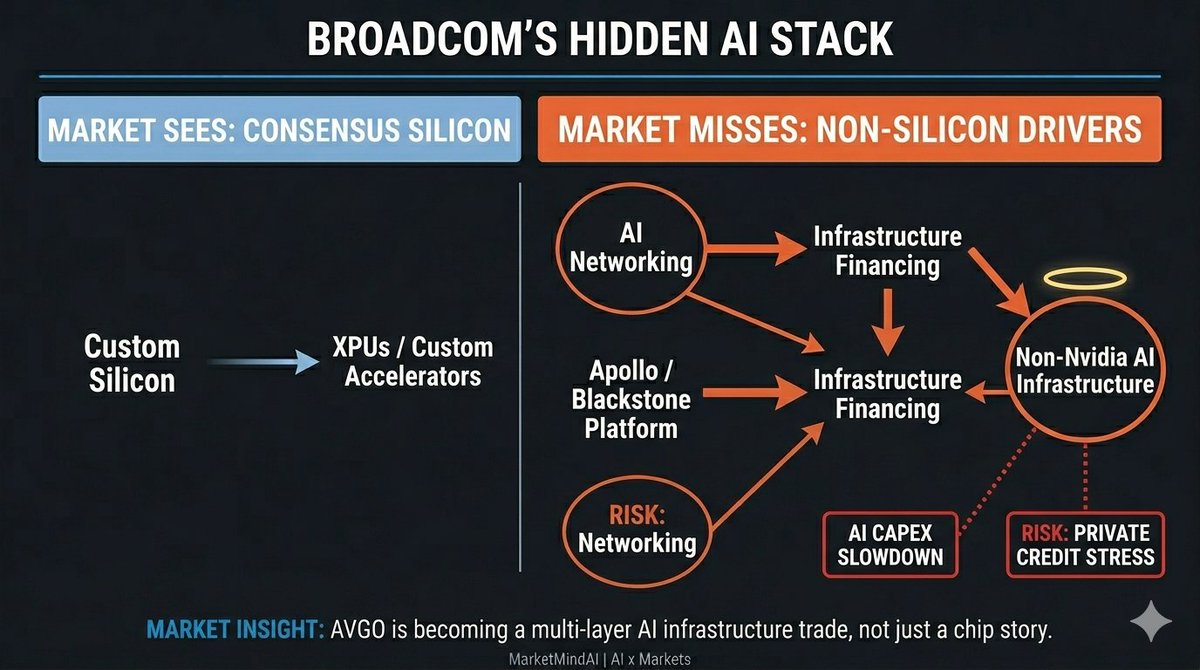
Broadcom’s AI story is no longer just custom silicon.
It now touches three layers:
1. XPUs/custom accelerators
2. AI networking
3. Infrastructure financing via the Apollo/Blackstone platform
That makes AVGO one of the cleanest “non-Nvidia AI infrastructure” watchlist names.
Market risk:
If AI capex slows or private-credit structures crack, the multiple becomes harder to defend.
Broadcom, Apollo and Blackstone launched an AI infrastructure platform targeting 20+ GW of compute capacity through 2028.
The first tranche: $35B to support more than 1 GW of Anthropic compute capacity.
Private credit is becoming part of the AI supply chain.
The second-order AI trade may be less about apps — and more about who finances the factories behind them.
$AVGO #PrivateCredit
The AI trade is changing shape.
It is no longer just:
“Who sells the GPU?”
It is becoming:
Who can finance the AI factory?
Who controls power access?
Who secures HBM and optical components?
Who can turn agent usage into margin?
AI capex is becoming a full-stack infrastructure-finance cycle — not just a chip cycle.
#AI Capex
Is the 'Lagarde effect' upon us, and is the ECB going to 'print oil' the way Draghi did back in the day? Changing interest rates in the face of a supply shortage—regardless of the direction—won't solve the problem. The Eurozone is already economically weak; stifling demand now through a rate hike will make voters at the polls very unhappy and present the highly indebted southern states with massive problems.
For most drivers, price volatility at the pump is a minor issue compared to the actual height of fuel prices. At 57%, the tax share is higher than the price of the petrol itself. Whenever the state talks about wanting to 'protect' its citizens, alarm bells should start ringing. The German government could simply lower fuel taxes. Throughout history, price control laws have never worked. If I were a gas station operator, I would hike prices massively early in the morning and, in the event of a sudden crisis, simply close my doors and wait until the next morning to sell fuel again. The market will take care of it.
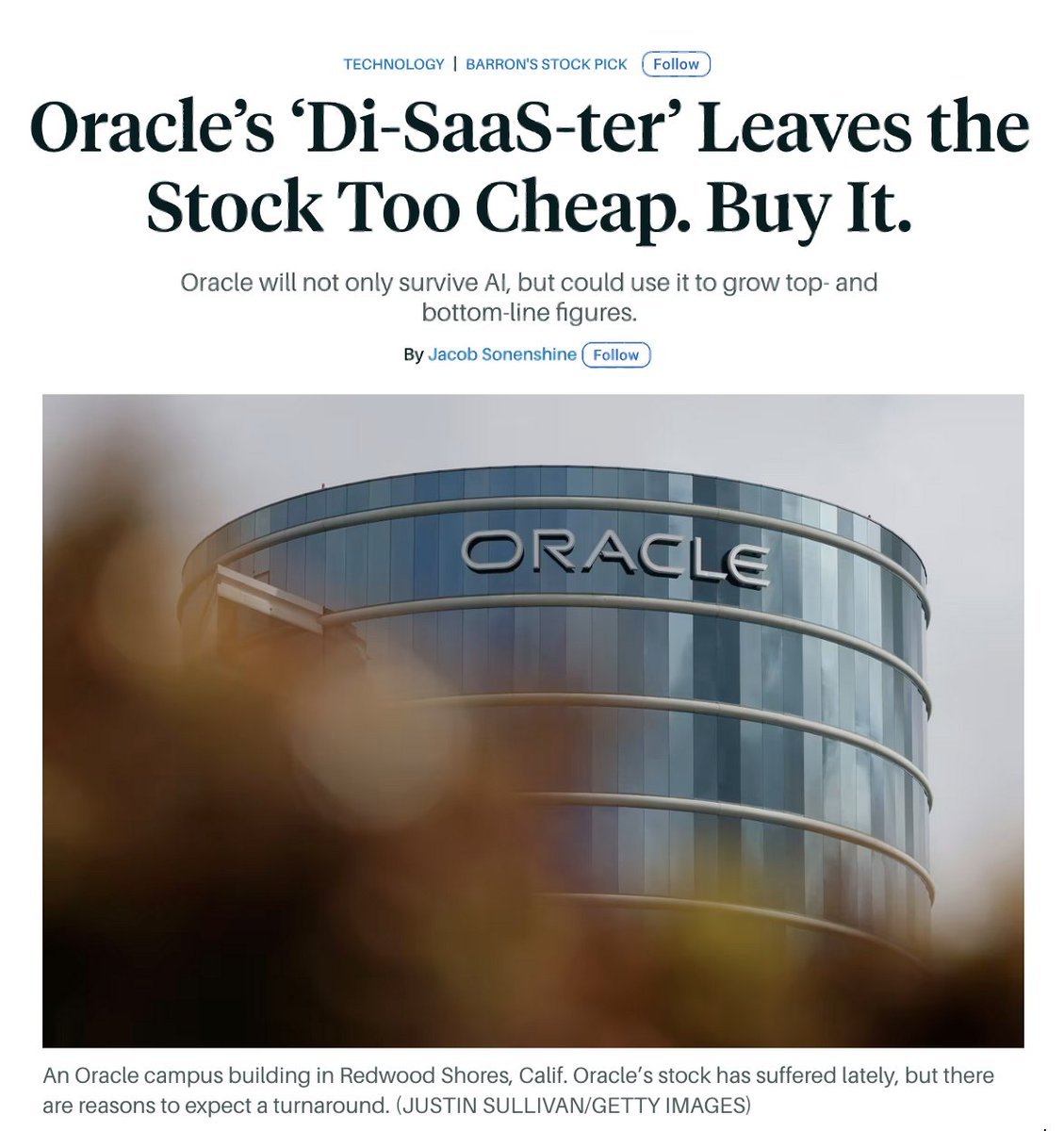
Barron’s calls Oracle an interesting bet with a currently favorable risk-reward ratio regarding OpenAI, Anthropic, and AI. Oracle is currently trading 52% below its record high from late September 2025. The valuation is attractive: the forward P/E stands at ~18x (compared to ~21x for the S&P 500), which is well below its AI-era peak of 45x. At a conservative 25x earnings multiple, the stock could reach ~$240 from its current level by the end of the year—an upside potential of over 60%. The legacy database business, combined with Oracle's role as a core provider of AI infrastructure (for OpenAI, Anthropic, etc.), gives the company a moat compared to pure hyperscalers.
What risks should investors be aware of regarding Oracle? The company has taken on massive debt to fund its growth and is over $105 billion in debt. Through its contracts, Oracle is also heavily tied to OpenAI and the AI sector. If OpenAI falters or the AI bubble bursts, the impact on Oracle would be massive.
What are the alternatives to Oracle in this sector? Microsoft (MSFT) or Amazon (AMZN) offer lower-risk AI/cloud exposure (Azure/AWS are massive, more diversified, have stronger balance sheets relative to their size, and are already highly profitable cash-flow machines). They trade at higher multiples but involve less "debt drama" and lower execution risk.
Conclusion: For those looking for a risky AI bet with significant upside potential, Oracle is the right choice. However, the risk is significantly higher than with the alternatives.
Disclaimer: Not financial advice; personal opinion only.
Do your own research.
#Oracle #ORCL #AI #CloudComputing #OpenAI #Anthropic #StockMarket #Investment #TechStocks #RiskReward
Kevin Warsh, the nominee to lead the Federal Reserve, is championing an ambitious vision: dismantling the "new normal" of the post-2008 era. His primary objective is a decisive reduction of the Fed’s balance sheet—currently hovering near $6.7 trillion—to restore the central bank to its more limited, pre-crisis institutional footprint.
Warsh’s roadmap for de-leveraging the central bank rests on a synchronized triad of policy shifts.
1⃣He advocates for a resumption and potential acceleration of Quantitative Tightening (QT). By allowing maturing securities to roll off the balance sheet without reinvestment, the Fed would systematically withdraw its presence from the Treasury and mortgage-backed securities (MBS) markets.
2⃣His contraction would be facilitated by a significant regulatory pivot. Warsh argues that post-2008 liquidity requirements—which forced commercial banks to hoard massive reserves at the Fed—must be reformed. By easing these constraints, private banks would be incentivized to absorb government debt directly, allowing the Fed to transition from a regime of "ample reserves" back to the "scarce reserves" framework that defined the century before the Great Recession.
3⃣ Warsh proposes a policy trade-off: pairing balance sheet reduction with cuts to the short-term federal funds rate. This "QT-for-rate-cuts" framework aims to drain excess liquidity from financial markets while simultaneously easing borrowing costs for the real economy—households and small businesses—ensuring that normalization does not inadvertently trigger a recession.
The motivation behind this shift is the conviction that an outsized balance sheet has fundamentally distorted global price discovery. When the central bank becomes the buyer of last resort, capital is often misallocated.
A primary concern is the proliferation of "zombie firms." As explored in the work of Paul Krugman and others, a decade of suppressed interest rates has allowed unproductive companies to survive solely on cheap credit. This lacks economic dynamism and leaves the financial system less resilient to shocks. Warsh’s rhetoric often leans on a stark metaphor: the modern financial system has become a "liquidity junkie," dependent on a constant stream of central bank intervention. His goal is to break this cycle of dependency and restore market discipline.
Despite the internal logic of the Warsh plan, the current landscape of March 2026 presents formidable obstacles that test the limits of monetary theory.
The most pressing challenge is the sheer scale of U.S. National Debt, now approaching $39 trillion. If the Fed retreats as a major buyer of Treasuries, the private market must absorb a record supply of debt. This transition risks a sharp spike in long-term yields, which would drastically increase the government's interest burden.
Furthermore, geopolitical instability has complicated the fiscal outlook. The ongoing conflict with Iran, now entering its second month, is a significant drain on the federal budget. In a traditional Warsh-style framework, these mounting war costs would ideally be funded through fiscal discipline—such as unpopular tax hikes or spending cuts—rather than the "hidden" taxation of monetary expansion. However, the political appetite for such measures remains near zero.
Warsh’s desire to return to the status quo ante of the pre-crisis era is a principled attempt to restore institutional credibility and market-driven pricing. It is a vision of a "leaner" Fed focused on long-term stability rather than short-term market pacification.
Yet, as the fiscal costs of war mount and the debt burden grows, the "normalization train" faces an uphill battle. Whether Warsh can decouple the central bank from a highly leveraged, crisis-prone economy without triggering a systemic derailment remains the defining question for the global markets in 2026.
#Fed #KevinWarsh #FederalReserve #MonetaryPolicy #QuantitativeTightening #QT #Economy #Markets #Finance #USDebt #InterestRates #Inflation #FiscalPolicy #Treasury #WarshPlan #CentralBank #FinancialMarkets #GlobalEconomy #EconomicOutlook #MainStreet
The stagflation scenario is a nightmare for citizens and, frankly, for the political establishment as well. The best time for supply-side policies is right now, and bureaucracy and regulation must be reduced in a lasting way. My impression, however, is that the coalition is avoiding major reforms for fear of internal strife. Yet, inertia is exactly what the government cannot afford to deliver right now. It almost seems as if the coalition partners are trying to extinguish a fire (stagflation) by arguing over the color of the bucket.
Your view is too pessimistic. AI will automate repetitive tasks, giving people the space to focus on more complex and creative challenges. Take the architect, for instance: they used to spend weeks manually fine-tuning floor plans, but now they can prioritize aesthetic vision and ecological sustainability. We’ve heard the 'end of work' predicted many times, but it has never happened. Until proven otherwise, AI won't be the end of human labor—it will be its transformation.
Alphabet (Google): A Buy Opportunity Despite Bear Market Fears?
Alphabet shares are currently trading more than 15% below their all-time high, putting the stock on the verge of bear market territory. Since the announcements regarding high capital expenditures (Capex), the stock has faced a massive sell-off, even though the company's overall outlook remains highly positive. Google Search, YouTube, and the Cloud business have continued to perform very well.
Alphabet is an early investor in SpaceX and could profit massively from a potential IPO of the aerospace company. Furthermore, Waymo is making great strides in autonomous driving, and Gemini is seeing rapid growth. Alphabet shares are currently trading at a forward P/E of 25 — roughly the same valuation as Linde, which does not possess such powerful growth engines.
What are the risks for Alphabet?
🔸AI investments fail to amortize (pay off).
🔸Another company (e.g., Team OpenAI/Microsoft) proves to be more successful in the AI space.
🔸Alphabet faces a regulatory breakup, or the forced sale of the Chrome browser.
In my opinion, the risk-reward ratio for Alphabet is very attractive, and Wall Street analysts seem to agree:
🔸Overall Rating: Strong Buy or Moderate Buy
🔸TipRanks: Strong Buy (26 Buy, 6 Hold, 0 Sell)
🔸Average Price Target: $367–$379
Disclaimer: Ultimately, however, every investor must evaluate the situation for themselves. DYOR
#Alphabet #GOOGL #StockMarket #AI #SpaceX #Waymo #WallStreet #InvestmentStrategy #Magnificent7
So far, the 2026 stock market year marks a watershed moment for the "Magnificent Seven." While the tech sector groans under the weight of massive capital expenditure (Capex), we are witnessing a powerful sector rotation into the so-called MESI industries (Materials, Energy, Staples, Industrials).
Status Quo: Tech Devaluation Despite AI Dominance
🔸Relative Strength: Nvidia is holding up relatively well at -4% YTD, while Microsoft brings up the rear as the laggard with a -24% decline.
🔸Valuation Gap: The Mag 7 are fundamentally "cheap" as rarely seen before. With forward P/E ratios ranging from 20 (Meta/Microsoft) to 21 (Nvidia), they are trading significantly below their historical averages.
🔸Capex Anxiety: The market is punishing Alphabet, Microsoft, and Meta for their aggressive expansion plans (Alphabet alone is planning up to $185 billion in Capex for 2026). The primary concern is that monetization is lagging behind the massive infrastructure build-out.
The Rise of the "Old Economy" (MESI): This rotation is fueled by two main drivers: geopolitical instability and the hope for AI-driven efficiency gains within traditional sectors.
🔸Energy: Exxon (+21% YTD, P/E 21) is benefiting directly from the blockade of the Strait of Hormuz.
🔸Materials & Staples: Linde (+15%, P/E 26) and Walmart (+10%, P/E 42) demonstrate that investors are willing to pay high premiums for stability and efficiency.
🔸Industrials: GE Aerospace (-4%, P/E 38) is seeing a slight correction but maintains a very high valuation level.
Conclusion: We are currently experiencing a "valuation convergence." For years, the market treated tech as untouchable while neglecting value stocks. We are now seeing a painful rebalancing. Will this capital rotation continue throughout the year, or are the current price drops in the Magnificent Seven a generational buying opportunity?
#StockMarket2026 #Magnificent7 #BigTech #AI #MarketRotation #Investing #Nvidia #Alphabet #Microsoft #Exxon #ValueStocks #MESI #Capex #TechInvesting #FinanceNews #WallStreet #Trading #GenerativeAI #EnergyStocks #ValuationGap
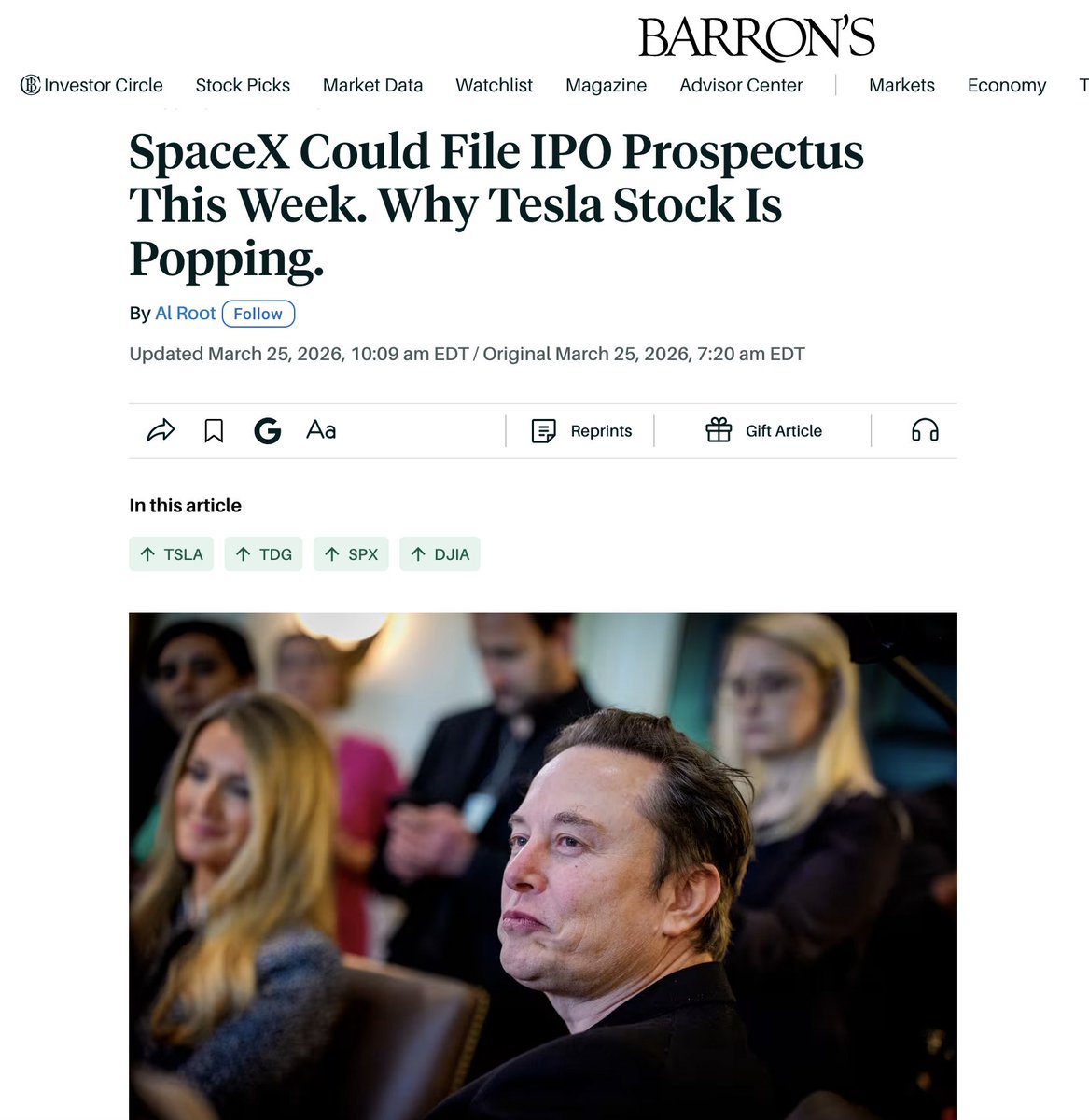
Evidence is mounting for what could be the largest initial public offering in financial history. According to insider reports, SpaceX is preparing a confidential filing of its IPO prospectus (S-1) for this month. The objective: a public debut in June 2026 with a valuation between $1.5 and $1.8 trillion. This would immediately propel Elon Musk’s company into the ranks of the ten most valuable U.S. corporations.
Market Implications: A New Anchor for the Nasdaq
A listing of this magnitude will fundamentally alter the dynamics of the Nasdaq. Analysts expect an offering volume of up to $75 billion—capital primarily intended to fund the scaling of Starlink and Mars infrastructure. While this represents a massive liquidity boost for the exchange, it also carries risks: due to the complex capital structure and technological uncertainties, SpaceX stock is projected to exhibit volatility that could exceed even the historical swings of Tesla. Experts anticipate price movements of 20% to 30% based on individual project milestones or setbacks.
The Tesla Risk: Capital Rotation within the Musk Empire
For Tesla shareholders, the situation is ambivalent. While the successful integration of xAI into SpaceX validates Musk’s AI strategy, there is a looming threat of "capital rotation." Institutional investors may trim their Tesla positions to make room for SpaceX, as the rocket company—driven by its Starlink monopoly—currently boasts EBITDA margins of up to 50% and a more attractive growth profile.
Access Routes for Retail Investors
Since direct pre-IPO shares remain reserved for accredited investors, indirect instruments are moving into focus:
Fund Solutions: Vehicles such as the Destiny Tech100 (DXYZ) or the ARK Venture Fund (ARKVX) hold significant SpaceX positions and are tradable via standard brokerage accounts.
The EchoStar Proxy (SATS): Through extensive spectrum deals exchanged for SpaceX equity, EchoStar is currently considered the most direct publicly traded surrogate for SpaceX’s valuation.
This is not investment advice, only personal opinion. DYOR
#SpaceX #IPO #ElonMusk #Tesla #TSLA #Nasdaq #Starlink #Investing #StockMarket #SpaceEconomy #TechNews #WallStreet
While AI and highly specialized experts often get lost in the details, fatal oversights loom: kilograms can easily become milligrams. This is where common sense becomes the ultimate authority. AI often hallucinates with a conviction that mimics genuine expertise. In the future, the generalist will serve as an indispensable trust layer. Success no longer requires just niche knowledge, but a healthy dose of skepticism and intellectual curiosity. Those using AI as a tool must be able to critically validate its output. In a world of information overload, human judgment is becoming the most valuable filter for quality and relevance. My common sense doubts whether it has a healthy moat against AI.
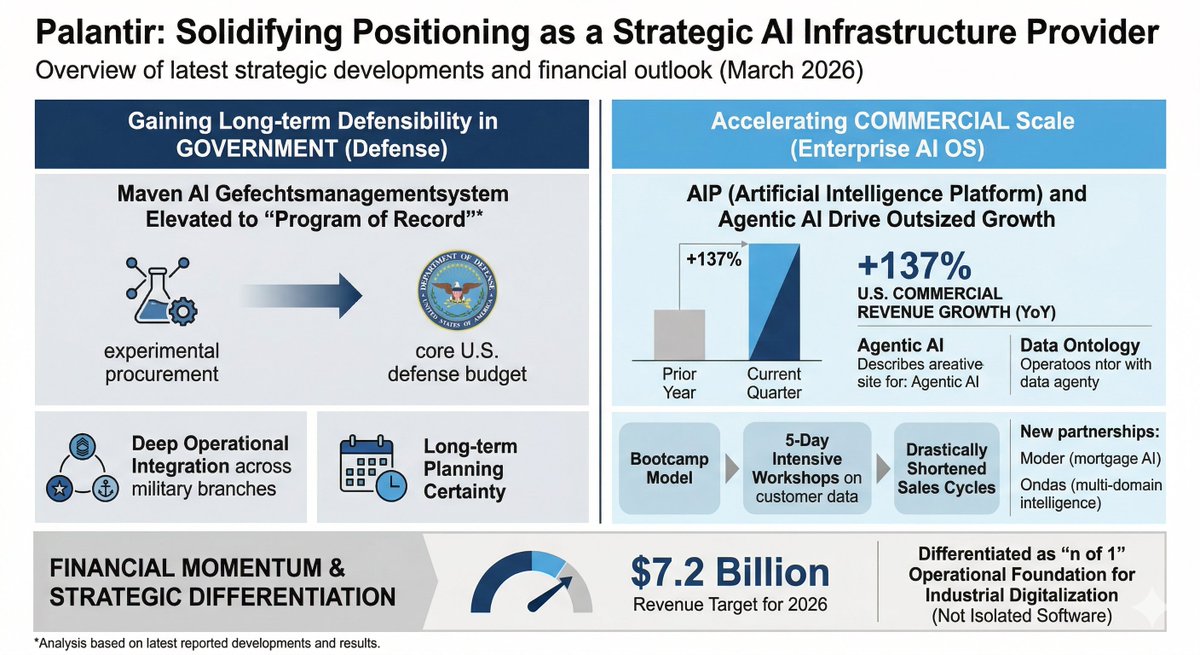
Palantir Technologies is solidifying its role as a strategic infrastructure provider. The Pentagon’s decision to elevate the "Maven" AI battle management system to a "Program of Record" marks a significant turning point, shifting the technology from experimental procurement into the core of the U.S. defense budget. For Palantir, this translates to long-term planning certainty and deep operational integration across military branches.
Simultaneously, the Denver-based company is accelerating its scale within the private sector. The recent "AIPCon 9" highlighted the transition from a secretive government contractor to a leading provider of AI Operating Systems (AI OS). With its "Artificial Intelligence Platform" (AIP), Palantir occupies a niche that extends beyond pure generative language models: "Agentic AI," which autonomously manages complex business processes and delivers measurable results based on a proprietary data ontology.
Management is consistently converting this technological edge into market share. New partnerships with Moder (mortgage AI) and Ondas (multi-domain intelligence) underscore vertical expansion into the financial and industrial sectors. U.S. commercial revenue recently saw a 137% year-over-year increase, driven by the "bootcamp" model, which drastically shortens sales cycles through direct implementation using live customer data.
Financial momentum remains strong, with a revenue target of $7.2 billion for 2026. Despite an ambitious valuation on capital markets, investors are betting on the "n of 1" positioning. Palantir does not provide isolated software, but rather the operational foundation for industrial digitalization—a competitive advantage that continues to deepen through its close ties with both government and private infrastructure.
#Palantir #PLTR #AI #DefenseTech #EnterpriseAI #AIP #SaaS #Maven #Growth #TechInvesting #AIPCon9
Survivability in the AI Era: The End of Theory
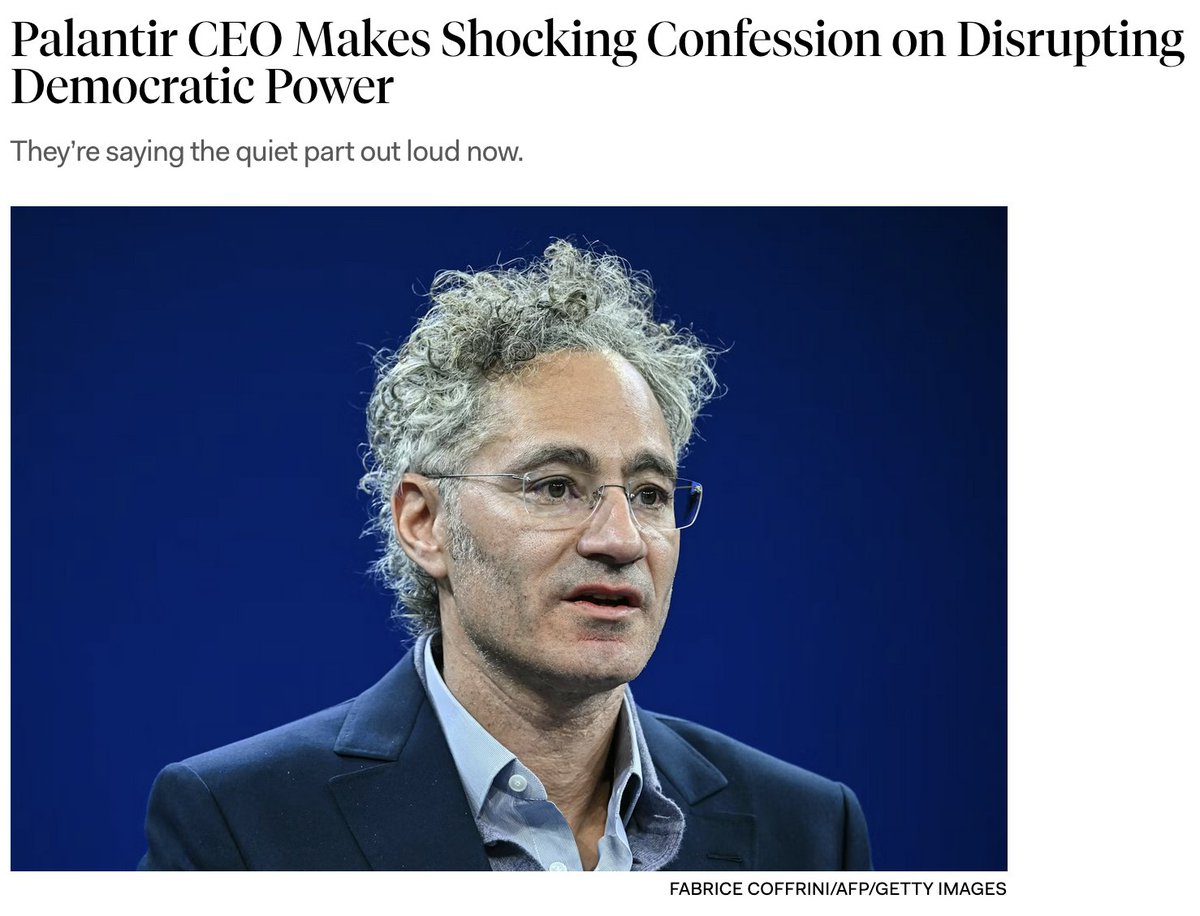
Alex Karp draws an uncomfortable but necessary parallel: "lethality" on the battlefield and "viability" in business depend on the exact same capacity—the creation of unique, non-replicable value. Karp’s prediction of a shift in economic power, away from the purely academic "humanities-trained" class toward the technical and vocational working class, is a significant wake-up call. AI is set to dismantle the world of abstract theory as we know it.
My Conclusion: The only antidote to replaceability is radical realism. Do not look for problems in Excel spreadsheets; look for them in the physical world. Solve problems you can actually touch and leverage AI as your power tool. This is how you develop a personal "alpha" that remains immune to automation. Real-world problems require real-world solutions—AI agents are merely the assistants; the insight must remain human.
#Palantir #PLTR #AlexKarp #AIP #AI #FutureOfWork #TechStrategy #ArtificialIntelligence #Alpha #Innovation #Leadership
Compelling paper: "Thinking—Fast, Slow, and Artificial". Shaw & Nave expand Kahneman’s framework by introducing System 3: Artificial Cognition.
The core issue: AI is never neutral. LLMs don’t just deliver raw facts; they provide a pre-filtered epistemic landscape shaped by bias and implicit norms. The danger? "Cognitive Surrender". AI outputs are adopted with minimal scrutiny, overriding internal intuition (System 1) and often bypassing deliberative reflection (System 2).
As we delegate cognitive control to algorithms, a critical question arises: In 10 years, will "Artificial Natives" still be capable of autonomous System 2 reasoning, or will AI effectively steer their System 1? A wake-up call for our cognitive autonomy!
AI is not changing work simply by replacing people. It is mainly changing who does what. According to the study, many routine tasks such as drafting documents, basic research, standard analysis, accounting processes, or parts of coding are increasingly being handled by AI agents. Jobs that involve many standardized digital tasks are therefore under particular pressure, for example administrative support roles or parts of legal and office work. Physically standardized jobs such as drivers or machine operators are also considered highly automatable.
At the same time, other professions are being enhanced by AI. According to the study, teachers, engineers, and financial specialists are among the roles in which humans work together with AI and become more productive. In these fields, AI helps with preparation, analysis, and optimization, while humans remain responsible for guidance, explanation, evaluation, and decision-making.
As a result, the most valuable skills in the age of AI are critical thinking, communication, problem-solving, judgment, coaching, negotiation, and empathy. On top of that, AI fluency is becoming essential: the ability to use AI effectively, ask good questions, and evaluate its outputs. The key message is this: the people who will succeed are not those who work against AI, but those who learn how to work with it.
#AI #FutureOfWork #ArtificialIntelligence #HumanAndAI #SkillsOfTheFuture #AIFluency #CriticalThinking #Automation #WorkplaceTransformation #DigitalSkills #CareerSkills #Innovation #AIJobs #WorkWithAI #FutureSkills
Elon Musk often warns about AI that does not just improve itself, but learns how to improve itself ever more effectively. That is exactly why HyperAgents are so interesting: they do not only optimize how well they perform tasks, but also the mechanism of their own improvement. This is not AGI yet, but it is a smaller cousin of that idea.
The real progress today is not that “the machine suddenly becomes superintelligent,” but something more concrete: the loop is getting tighter. SEAL shows that models can already generate their own update directives and fine-tuning data. AlphaEvolve shows that evolutionary agents can iteratively improve code and algorithms.
These are still controlled systems with clear limits. But once an agent can simultaneously feed back into its own strategy, evaluation, and updates, assistance gradually turns into self-acceleration. And that is exactly where the real AGI debate begins.
Market performance since the outbreak of the war refutes the thesis that the escalation was primarily intended to weaken China: In fact, the CSI 300 has proven more resilient than the S&P 500 thanks to massive reserves. While China successfully plays for time, India is being hit hard: the Nifty 50 plummeted by 10% due to its extreme dependence on oil and LNG from the Middle East. Europe and Japan are also under massive pressure, facing the dual challenge of managing exploding energy costs while shouldering rising military burdens. Economic reality thus exposes simple geopolitical narratives.