In our @LancetRH_Americ paper, Seungyeon Lee, Wenyu Song, @DBatesSafety, Richard Urman and I explore longitudinal co-prescription patterns of opioid and stimulant drugs and look for origins of “twin epidemic” of combining the two classes of drugs. Thanks Emily for the news.
The combination of prescribed central nervous system stimulants, such as drugs that relieve ADHD symptoms, with prescribed opioid medications is associated with a pattern of escalating opioid intake, a new @OhioState study has found. https://t.co/yLANUhhAZb
Sepsis is a deadly reaction to infection that is hard to identify.
Researchers at @OhioState are developing a new AI tool called SepsisLab to help physicians predict a patient's sepsis risk by suggesting data it needs to improve predictions.https://t.co/61OYSgZpVu
📸:Nicolle Fuller, NSF
Congrats @ruoqiliu77 "Ohio State, where the top engineering program meets the top medical school in Columbus, has grown Ruoqi as a rising star in AI for healthcare" @OSUengineering@OhioStateMed@OSUbigdata
PhD Student Ruoqi Liu has joined the 2024 cohort of Rising Stars in Data Science. Liu has been selected to present a talk in the Rising Stars in Data Science workshop, hosted by the University of California San Diego. Congrats Ruoqi! https://t.co/vntOX3FwIp
An #AI tool proposed by @OhioState scientists to support decision-making about patients at risk for sepsis accounts for its lack of certainty & suggests what clinical data it needs to improve its predictive performance. https://t.co/oo2rHK2Q9H
.@OhioState scientists have designed a new #AI model that emulates randomized clinical trials at determining the treatment options most effective at preventing stroke in people with heart disease. @OSUEngineering@OhioStateMed https://t.co/bqsCkfkCIF
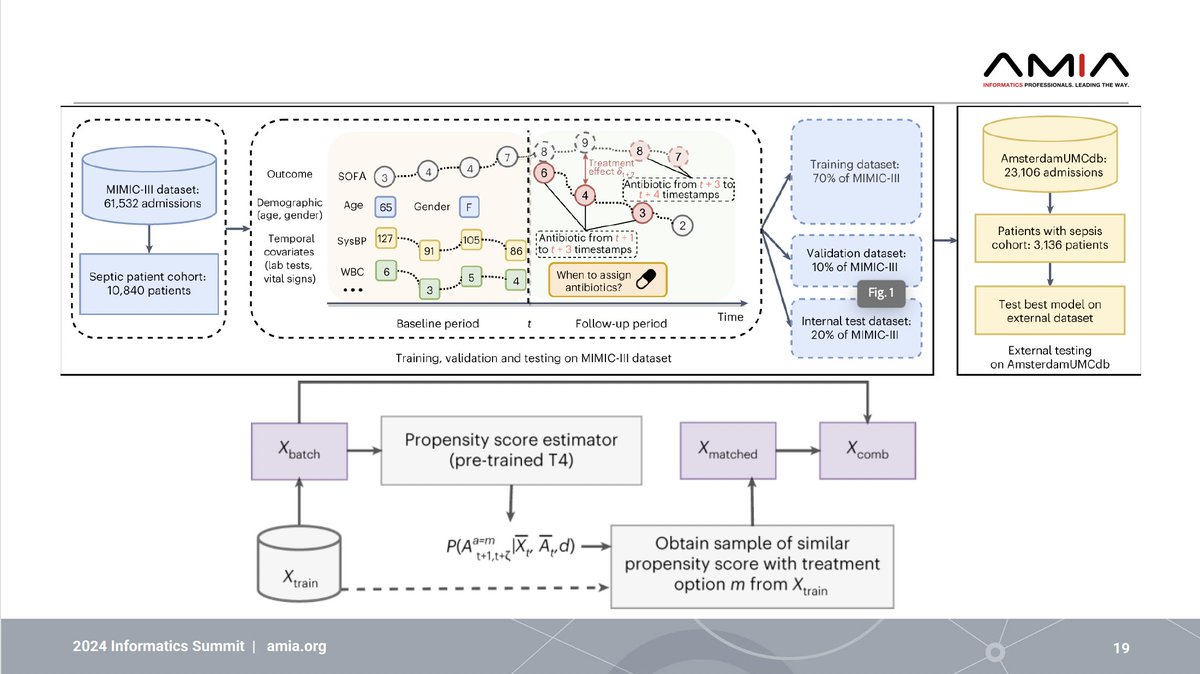
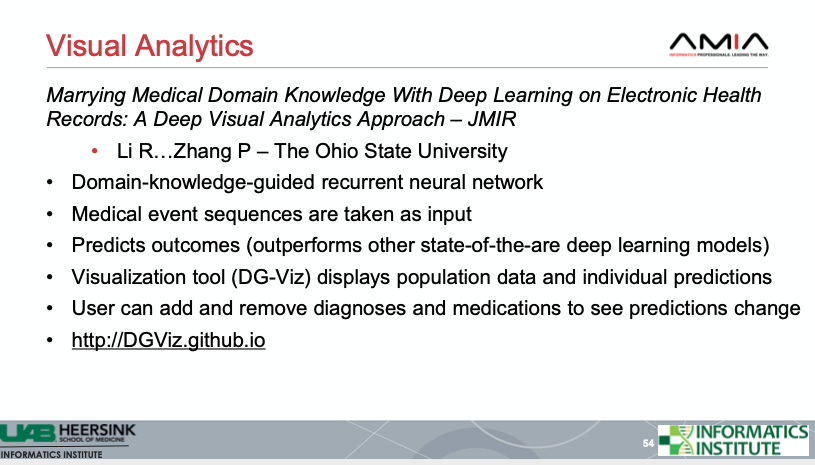
Thrilled to share that our paper was highlighted at @AMIAinformatics#IS24 AI and Data Science Year in Review! 🌟 Thanks to all our collaborators Dr. Ping Zhang @AIMedLab, Dr. Katherine M. Hunold, and Dr. Jeffrey M. Caterino https://t.co/UQLSN0Q7eh
Registration and abstract submission are now open for the DahShu 2024 Data Science Symposium, May 16-18, @michiganstateu. This year’s symposium will feature ten scientific sessions and four short courses from over 40 outstanding speakers. https://t.co/vQxyKKmVO6
Our new tool for clinical risk prediction to reduce the temporal data shift (such as patient population changes or data format changes after several years) on electronic health records. @OSUengineering@OhioStateMed@OSUbigdata
Our new paper on Diabetic Retinopathy (DR) Grading and Image Quality Estimation Challenge. We have released a DeepDRiD dataset containing 2,000 regular DR images (500 patients) and 256 ultra-widefield images (128 patients), both having DR quality and grading annotations.
Ping Zhang, asst. prof. of computer science and #engineering & #biomedical informatics earned a $556k #NSFCareer award for his research project “Developing Actionable Methods for Observational Health Data,” integrating #AI to advance precision medicine.
https://t.co/GAz85ynw0Z
We are very honored and excited to receive the @NSF CAREER Award. We will integrate deep learning algorithms and causal inference techniques to develop actionable methods for observational health data. @OSUengineering@OSUbigdata@OhioStateMed
https://t.co/UZzmimeqj6
In a recent Article, @gyuanfan and colleagues propose a statistical modeling method to generalize right censored data to a standard regression problem (https://t.co/YF4iZbq2ay). https://t.co/8lZYlMBcMj
Drug Repurposing: Expediting Discovery Through a Novel Algorithmic Framework https://t.co/712sg5YXmA Full paper: https://t.co/JWPG7HMX9A Thanks Mary Beth Nierengarten from @FirstReportMC
"I can run clinical trials on 55 drugs at the same time"
Artificial intelligence can sift through clinical data to find the hidden potential of drugs to treat conditions beyond what they were originally intended for.
@SilverJacket@AIMedLab@OhioStateMed https://t.co/ITJVofKZCi